
Kirjahaku
Etsi kirjoja tekijän nimen, kirjan nimen tai ISBN:n perusteella.
1000 tulosta hakusanalla Jessica Innes

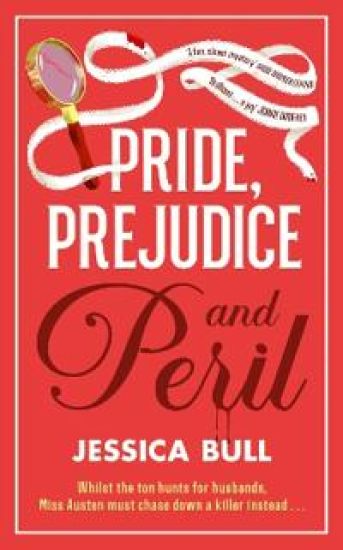
*PRE-ORDER NOW! THE LATEST INSTALMENT IN THE DEVILISH AND DELIGHTFUL MISS AUSTEN INVESTIGATES SERIES* 'Exceptional - the Austen whodunnit I feel like I've been waiting my whole life for! I loved it' SOPHIE IRWIN ***** Jane Austen is preparing for the summer season. As guests of their wealthy relatives Mr and Mrs Leigh-Perrot, Jane and her sister Cassandra will be holidaying in Bath Spa – the world-famous health resort, and more importantly, the epicentre of the marriage mart. For many, the summer will be spent hunting husbands. But for Jane, when a series of murders breaks out across the city, she must chase down a killer instead. With her beloved sister by her side, Jane is determined to bring the murderer to justice. Can she stop this villain from taking any more victims, before the summer ends? Or will her only dance of the season be with death… ***** Why readers LOVE the Miss Austen Investigates series! 'Delightful and entertaining' 5***** reader review 'Jane Austen makes a perfect detective!' 5***** reader review 'This book is such a joy!' 5***** reader review 'A very clever whodunnit!' 5***** reader review 'Kept me entertained throughout' 5***** reader review


A festive cosy crime caper starring Jane Austen as amateur sleuth, celebrating the 250th anniversary of the literary legend's birth! The festive season is fast approaching. Jane Austen fears that without her siblings at home, there won't be much Christmas cheer in the Austen household this year. But when she uncovers a skeleton in the cellar of Deane Rectory, Jane soon forgets her woes. Who needs merriment, when there's a mystery to solve? Her investigation leads her to the legend of a young bride who's long been thought to haunt the woods nearby. After fleeing her wedding breakfast, the bride was never seen again. Has Jane found her at last? Or is there more to this mystery than meets the eye? Tis the season for Jane to embark upon festive delights, making merry, and solving murders...

Ash is a failed actress who is done trying to ‘make’ something of her life. Until a golden opportunity drops in her lap: a job at Retro, an agency who organise trips into the past for the ultra-wealthy. Energised by her new role, Ash throws herself into leading bachelorette parties in the Old West, birthday parties at Woodstock and a situationship with a hard-drinking detective from 1937. But as time goes on, it becomes clear that Retro’s shadowy founder Ro has terrifying designs for the company’s future – and for the part Ash herself can play in it.

'A fabulous new writer' Richard Osman'Compelling, tense and pacy' Observer-------------HE LOVES YOU. HE CONTROLS YOU. HE'LL NEVER LET YOU GO.He's been looking in the windows again. Messing with cameras. Leaving notes.Supposed to be a refuge. But death got inside.When Katie Straw's body is pulled from the waters of the local suicide spot, the police decide it's an open-and-shut case. A standard-issue female suicide.But the residents of Widringham women's refuge where Katie worked don't agree. They say it's murder.Will you listen to them?An addictive literary page-turner about a crime as shocking as it is commonplace, KEEPER will leave you reeling long after the final page is turned.AN OBSERVER TOP DEBUT NOVELISTS OF 2020A SUNDAY TIMES STYLE HOT DEBUT: 'READ IF YOU LIKED GONE GIRL AND LULLABY'A COSMOPOLITAN BOOKS TO WATCH-------------'Gripping, devastating... breathtaking' Clare Mackintosh, Hostage'Powerful and chilling, with a shocking twist' Guardian'A compelling story . . . a writer to watch' Independent'A feminist whodunnit' Sunday Times'A powerful book telling stories that need to be heard' Rosamund Lupton, Three Hours'A new young writer I believe in' Jeanette Winterson, Oranges Are Not The Only Fruit'Extraordinary and compelling' Cara Hunter, The Whole Truth'Vastly impressive . . . Deeply affecting and superbly told, it demands to be read' Daily Mail'Jess Moor's debut novel made me want to shout out in anger' Val McDermid, 1979'This is a thriller, but its pacy insights make it one that you need to read' Cosmopolitan'A pacy crime novel that will have you gripped, and get you thinking' Stylist'Grips from the first page' Erin Kelly, Watch Her Fall

HIGHLY COMMENDED FOR THE WAINWRIGHT PRIZE FOR NATURE WRITING 2024SHORTLISTED FOR THE INDIE BOOK AWARDS 2025LONGLISTED FOR THE JHALAK PRIZE 2025‘An invigorating cross-pollination of memoir and natural history, both beautifully phrased and delicately structured – this book deserves your time and attention’ Cal Flyn, author of Islands of AbandonmentBorn in Canada to a Taiwanese mother and a Welsh father, Jessica J. Lee is a perfectly placed observer of our world in motion.In Dispersals, she examines the echoes and counterpoints in the migration of plants and people – and the language we use to describe them. Combining memoir, history and scientific research, Lee questions how both plants and people come to belong – or not – and reveals how all our futures are more entwined than we might imagine.‘Contemplative, elegant’ New Statesman'At once expansive and intimate, and most of all, gorgeously written. This is a book I will return to often over the course of my life’ Nina Mingya Powles, author of Small Bodies of Water
This unique book is for anyone who is conducting research projects in social sciences, humanities and philosophies. Inside this journal, you will find hundreds of questions, reflection tasks and critical thinking exercises to help you to reflect on your methodology, ethics, philosophies, biases and the real world impact of your work.Fill your journal right from the beginning of your research journey until you are ready to write up your findings. Learn more about your own decisions, assumptions, knowledge, study strengths and weaknesses and even the impact your studies might be having on your own wellbeing. No matter your level of study or years of experience, this journal will encourage you to think differently about your research and to ensure your work is ethical and impactful.A journal for the conscious, critical researcher who is ready to dig a bit deeper into their own work.

Why Women Are Blamed For Everything: Exploring the Victim Blaming of Women Subjected to Violence and Trauma
Jessica Taylor
Lulu.com
2020
nidottu
She asked for it. She was flirting. She was drinking. She was wearing a revealing dress. She was too confident. She walked home alone. She stayed in that relationship. She was naive. She didn't report soon enough. She didn't fight back. She wanted it. She lied about it. She comes from a bad area. She was vulnerable. She should have known.Victim blaming of women is prevalent and normalised in society.What causes us to blame women who have been abused, raped, trafficked, assaulted or harassed by men? Why are we uncomfortable with placing all of the blame on perpetrators for their crimes against women?Based on three years of doctoral research and ten years of practice with women and girls, Dr Jessica Taylor explores the many reasons we blame women for male violence committed against them. Written in her unique style and backed up by decades of evidence, this book exposes the powerful forces in society and individual psychology which compel us to blame women subjected to male violence.
Woman in Progress: The Reflective Journal for Women and Girls Subjected to Abuse and Trauma
Jessica Taylor
Lulu.com
2020
nidottu
This journal has been created for women and girls who would like to explore and reflect on their personal experiences of trauma, abuse or harm they have been subjected to by others. Every experience of abuse or trauma is unique. Our feelings, thoughts, memories and bodily responses mean different things to all of us. Whilst many women and girls have lived through violence, abuse, oppression, trauma and fear - lots of us still have unanswered questions, memories which need to be processed and feelings which need to be understood. Inside this journal you will find hundreds of reflective writing, doodling and thinking tasks which you can do in your own time, at your own pace. Whether you are using this journal alongside therapy or whether you choose to work through this journal in private, you can use this space to process the experiences you have been through. For any girl or woman subjected to abuse and trauma who is ready to process and explore her own thoughts, on her own terms.
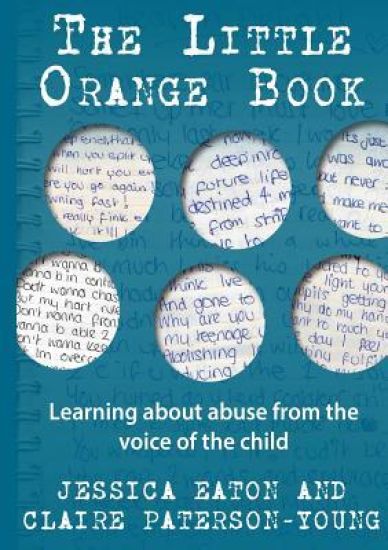
What can we learn from this unique example of writing from a child experiencing severe abuse, rape and daily violence? What can we learn about how she coped with and understood what was happening to her? Jessica Eaton and Claire Paterson-Young work through the poems, performing thematic analysis and grounding the voice of the child in empirical literature to inform our understanding and to improve the way we support children during and after abuse. A must-read for parents and professionals alike.
Between the ages of eleven and seventeen, a child experiencing sexual abuse kept a secret journal of poetry. Throughout the abuse, she kept her little orange book hidden whilst she filled it full of poems questioning what was happening to her, whether the abusers really loved her and whether she was normal. Named after the original journal, The Little Orange Book by Jessica Eaton and Claire Paterson-Young contains a unique analysis and exploration of the poems and their themes. Each poem is presented along with evidence from literature and practice in child sexual abuse. The book explores key questions and examples such as: How do children understand the difference between abuse and romance? What is the impact of abuse on children's self-image and self-trust? How do children use fairy tales, films and popular culture to understand abuse? What coping mechanisms do children use to cope with sexual abuse - and how are they perceived by society?
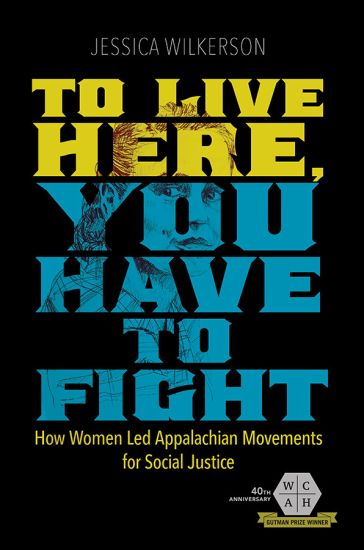
Launched in 1964, the War on Poverty quickly took aim at the coalfields of southern Appalachia. There, the federal government found unexpected allies among working-class white women devoted to a local tradition of citizen caregiving and seasoned by decades of activism and community service. Jessica Wilkerson tells their stories within the larger drama of efforts to enact change in the 1960s and 1970s. She shows white Appalachian women acting as leaders and soldiers in a grassroots war on poverty--shaping and sustaining programs, engaging in ideological debates, offering fresh visions of democratic participation, and facing personal political struggles. Their insistence that caregiving was valuable labor clashed with entrenched attitudes and rising criticisms of welfare. Their persistence, meanwhile, brought them into unlikely coalitions with black women, disabled miners, and others to fight for causes that ranged from poor people's rights to community health to unionization. Inspiring yet sobering, To Live Here, You Have to Fight reveals Appalachian women as the indomitable caregivers of a region--and overlooked actors in the movements that defined their time.
Launched in 1964, the War on Poverty quickly took aim at the coalfields of southern Appalachia. There, the federal government found unexpected allies among working-class white women devoted to a local tradition of citizen caregiving and seasoned by decades of activism and community service. Jessica Wilkerson tells their stories within the larger drama of efforts to enact change in the 1960s and 1970s. She shows white Appalachian women acting as leaders and soldiers in a grassroots war on poverty--shaping and sustaining programs, engaging in ideological debates, offering fresh visions of democratic participation, and facing personal political struggles. Their insistence that caregiving was valuable labor clashed with entrenched attitudes and rising criticisms of welfare. Their persistence, meanwhile, brought them into unlikely coalitions with black women, disabled miners, and others to fight for causes that ranged from poor people's rights to community health to unionization. Inspiring yet sobering, To Live Here, You Have to Fight reveals Appalachian women as the indomitable caregivers of a region--and overlooked actors in the movements that defined their time.
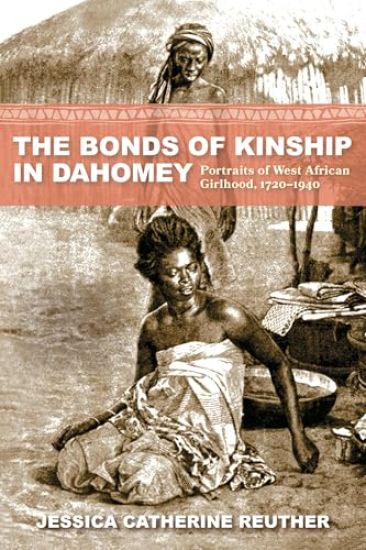
From the 1720s to the 1940s, parents in the kingdom and later colony of Dahomey (now the Republic of Benin) developed and sustained the common practice of girl fostering, or "entrusting." Transferring their daughters at a young age into foster homes, Dahomeans created complex relationships of mutual obligation, kinship, and caregiving that also exploited girls' labor for the economic benefit of the women who acted as their social mothers. Drawing upon oral tradition, historic images, and collective memories, Jessica Reuther pieces together the fragmentary glimpses of girls' lives contained in colonial archives within the framework of traditional understandings about entrustment. Placing these girls and their social mothers at the center of history brings to light their core contributions to local and global political economies, even as the Dahomean monarchy, global trade, and colonial courts reshaped girlhood norms and fostering practices. Reuther reveals that the social, economic, and political changes wrought by the expansion of Dahomey in the eighteenth century; the shift to "legitimate" trade in agricultural products in the nineteenth century; and the imposition of French colonialism in the twentieth all fundamentally altered—and were altered by—the intimate practice of entrusting female children between households. Dahomeans also valorized this process as a crucial component of being "well-raised"—a sentiment that continues into the present, despite widespread Beninese opposition to modern-day forms of child labor.
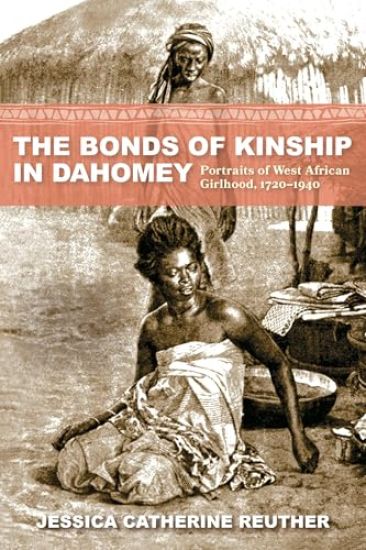
From the 1720s to the 1940s, parents in the kingdom and later colony of Dahomey (now the Republic of Benin) developed and sustained the common practice of girl fostering, or "entrusting." Transferring their daughters at a young age into foster homes, Dahomeans created complex relationships of mutual obligation, kinship, and caregiving that also exploited girls' labor for the economic benefit of the women who acted as their social mothers. Drawing upon oral tradition, historic images, and collective memories, Jessica Reuther pieces together the fragmentary glimpses of girls' lives contained in colonial archives within the framework of traditional understandings about entrustment. Placing these girls and their social mothers at the center of history brings to light their core contributions to local and global political economies, even as the Dahomean monarchy, global trade, and colonial courts reshaped girlhood norms and fostering practices. Reuther reveals that the social, economic, and political changes wrought by the expansion of Dahomey in the eighteenth century; the shift to "legitimate" trade in agricultural products in the nineteenth century; and the imposition of French colonialism in the twentieth all fundamentally altered—and were altered by—the intimate practice of entrusting female children between households. Dahomeans also valorized this process as a crucial component of being "well-raised"—a sentiment that continues into the present, despite widespread Beninese opposition to modern-day forms of child labor.
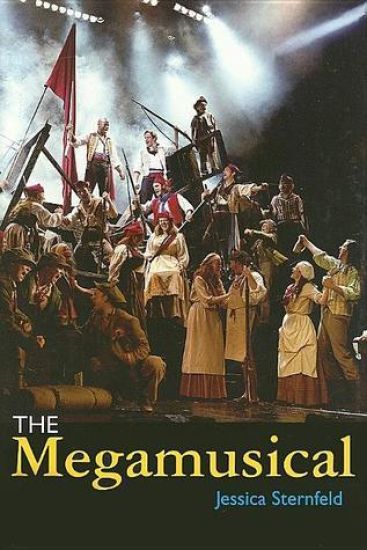
A megamusical is an epic, dramatic show featuring recurring melodies in a sung-through score; huge, impressive sets; and grand ideas. These qualities are accompanied by intensive marketing campaigns, unprecedented international financial success, and a marked disjunction between critical reaction and audience reception. Audiences adore megamusicals; they flock to see them when they open, and return again and again, helping long-lived shows to become semi-permanent tourist attractions. Yet generally speaking, critics either dismiss megamusicals as superficial entertainment, or rail against them as offensively simple-minded money-making scams. This audience/critic division lies at the heart of The Megamusical. Jessica Sternfeld's long-awaited study of some of the most popular megamusicals is an important contribution to knowledge of American musical culture. Sternfeld discusses the history of the megamusical, examining both its internal, performative qualities and its external, market reception to reveal why it is so popular. She concentrates on Lloyd Webber's Cats and The Phantom of the Opera, the two longest-running musicals on Broadway, and Schoenberg and Boublil's Les Misérables, the most popular and internationally successful piece of music theater of all time. Each of these musicals receives in-depth treatment, including an examination of how they were created and received, as well as an analysis of their scores and staging. She also interprets several other megamusicals of the 1980s and 1990s, with an eye toward their competition and influence on other musical theater genres.
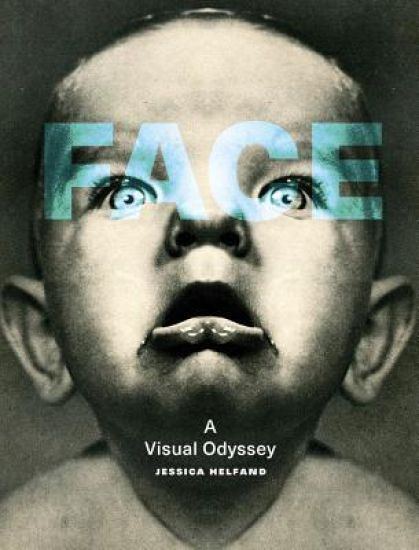
An elaborately illustrated A to Z of the face, from historical mugshots to Instagram posts.By turns alarming and awe-inspiring, Face offers up an elaborately illustrated A to Z-from the didactic anthropometry of the late-nineteenth century to the selfie-obsessed zeitgeist of the twenty-first.Jessica Helfand looks at the cultural significance of the face through a critical lens, both as social currency and as palimpsest of history. Investigating everything from historical mugshots to Instagram posts, she examines how the face has been perceived and represented over time; how it has been instrumentalized by others; and how we have reclaimed it for our own purposes. From vintage advertisements for a "nose adjuster" to contemporary artists who reconsider the visual construction of race, Face delivers an intimate yet kaleidoscopic adventure while posing universal questions about identity.
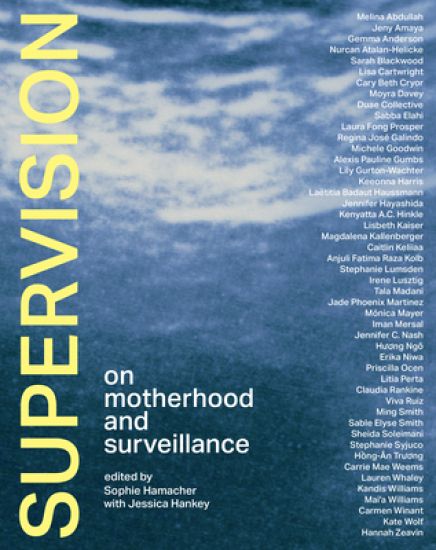
A wide-ranging, first-of-its-kind anthology of art and writing exploring how surveillance impacts contemporary motherhood. The tracking of our personal information, activities, and medical data through our digital devices is an increasingly recognizable field in which the lines between caretaking and control have blurred. In this age of surveillance, mothers' behaviors and bodies are observed, made public, exposed, scrutinized, and policed like never before. Supervision: On Motherhood and Surveillance gathers together the work of fifty contributors from diverse disciplines that include the visual arts, legal scholarship, ethnic studies, sociology, gender studies, poetry, and activism to ask what the relationship is between how we watch and how we are watched, and how the attention that mothers pay to their children might foster a kind of counterattention to the many ways in which mothers are scrutinized. A groundbreaking collection, Supervision is a project about vision (and supervision), and all the ways in which vision intersects with surveillance and politics, through motherhood and personal history as well as through the histories and relations of the societies in which we live. Contributors: Melina Abdullah, Jeny Amaya, Gemma, Anderson, Nurcan Atalan-Helicke, Sarah Blackwood, Lisa Cartwright, Cary Beth Cryor, Moyra Davey, Duae Collective, Sabba Elahi, Laura Fong Prosper, Regina Jos Galindo, Michele Goodwin, Alexis Pauline Gumbs, Lily Gurton-Wachter, Sophie Hamacher, Jessica Hankey, Keeonna Harris, La titia Badaut Haussmann, Jennifer Hayashida, Kenyatta A.C. Hinkle, Lisbeth Kaiser, Magdalena Kallenberger, Caitlin Keliiaa, Anjuli Fatima Raza Kolb, Stephanie Lumsden, Irene Lusztig, Tala Madani, Jade Phoenix Martinez, M nica Mayer, Iman Mersal, Jennifer C. Nash, Hương Ng , Erika Niwa, Priscilla Ocen, Litia Perta, Claudia Rankine, Viva Ruiz, Ming Smith, Sable Elyse Smith, Sheida Soleimani, Stephanie Syjuco, Hồng- n Trương, Carrie Mae Weems, Lauren Whaley, Kandis Williams, Mai'a Williams, Carmen Winant, Kate Wolf, and Hannah Zeavin