Kirjojen hintavertailu. Mukana 12 299 625 kirjaa ja 12 kauppaa.

Kirjahaku

Etsi kirjoja tekijän nimen, kirjan nimen tai ISBN:n perusteella.

1000 tulosta hakusanalla John Carson

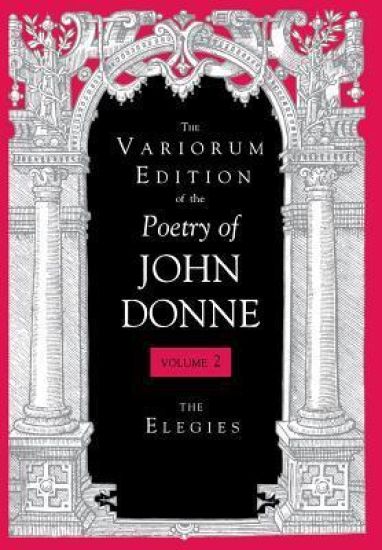
The Variorum Edition of the Poetry of John Donne, Volume 2
From reviews of previous volumes: "This variorum edition will be the basis of all future Donne scholarship." —Chronique "Academic libraries and specialists in Renaissance and 17th-century studies should feel compelled to own each and every volume of this series." —Seventeenth Century News "An occasion for celebration. Among the most ambitious and valuable collaborative scholarly enterprises at the end of the twentieth century. Superb." —Early Modern Literary Studies This latest addition to the Donne variorum, the third to appear in a projected eight-volume series, presents a newly edited critical text of Donne's elegies and a comprehensive variorum commentary. As with previous volumes, Volume 2 is based on a study of all known manuscript sources and significant printed editions of Donne's poetry and on an examination of the criticism and scholarship of the past four centuries.
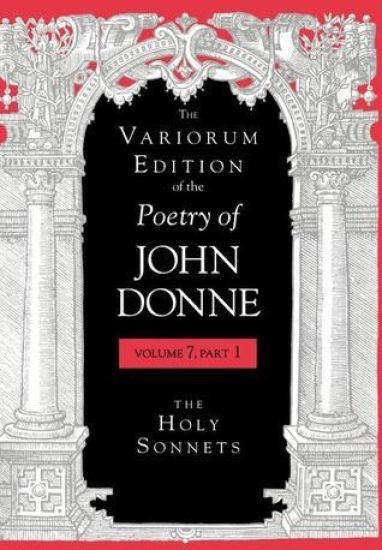
The Variorum Edition of the Poetry of John Donne, Volume 7.1
Praise for previous volumes: "This variorum edition will be the basis of all future Donne scholarship." —Chronique This is the 4th volume of The Variorum Edition of the Poetry of John Donne to appear. This volume presents a newly edited critical text of the Holy Sonnets and a comprehensive digest of the critical-scholarly commentary on them from Donne's time through 1995. The editors identify and print both an earlier and a revised authorial sequence of sonnets, as well as presenting the scribal collection—which contains unique authorial versions of several of the sonnets—inscribed by Donne's friend Rowland Woodward in the Westmoreland manuscript.
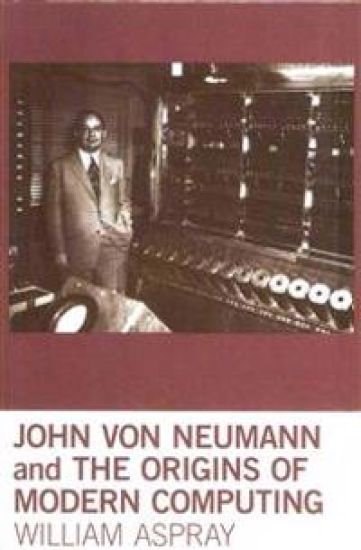
John von Neumann and the Origins of Modern Computing
William Aspray provides the first broad and detailed account of von Neumann's many different contributions to computing.John von Neumann (1903-1957) was unquestionably one of the most brilliant scientists of the twentieth century. He made major contributions to quantum mechanics and mathematical physics and in 1943 began a new and all-too-short career in computer science. William Aspray provides the first broad and detailed account of von Neumann's many different contributions to computing. These, Aspray reveals, extended far beyond his well-known work in the design and construction of computer systems to include important scientific applications, the revival of numerical analysis, and the creation of a theory of computing.Aspray points out that from the beginning von Neumann took a wider and more theoretical view than other computer pioneers. In the now famous EDVAC report of 1945, von Neumann clearly stated the idea of a stored program that resides in the computer's memory along with the data it was to operate on. This stored program computer was described in terms of idealized neurons, highlighting the analogy between the digital computer and the human brain. Aspray describes von Neumann's development during the next decade, and almost entirely alone, of a theory of complicated information processing systems, or automata, and the introduction of themes such as learning, reliability of systems with unreliable components, self-replication, and the importance of memory and storage capacity in biological nervous systems; many of these themes remain at the heart of current investigations in parallel or neurocomputing.Aspray allows the record to speak for itself. He unravels an intricate sequence of stories generated by von Neumann's work and brings into focus the interplay of personalities centered about von Neumann. He documents the complex interactions of science, the military, and business and shows how progress in applied mathematics was intertwined with that in computers.William Aspray is Director of the Center for the History of Electrical Engineering at The Institute of Electrical and Electronics Engineers.
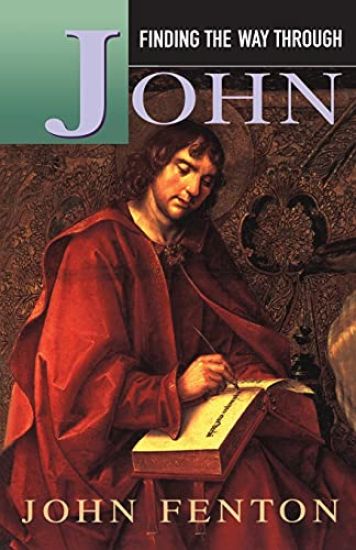
Finding the Way Through John

Finding the Way Through John

John Fenton

Mowbray
1995
nidottu
This edition incorporates the text of the Revised English Bible. A short guide to John's Gospel, the book concentrates on the main themes of the gospel as they are expressed in stories, dialogues and speeches, and attempts to explain how to read the gospel as a book about faith in Jesus.
IISermon Notes of John Henry Cardinal Newman, 1849-1878

IISermon Notes of John Henry Cardinal Newman, 1849-1878

John Henry Cardinal Newman

University of Notre Dame Press
2001
sidottu
Newman was told that Catholic priests do not read sermons, but this does not mean that he made them up as he went along. He planned his Catholic sermons as meticulously as he did his famous Parochial and Plain, but he committed them to memory and then he made notes afterwards. His sermons, delivered over a period of thirty years, provide some fascinating insights into his active mind and the range of subjects he covered within the framework of the Church's liturgical year. James Mozley, writing in 1946, said, "A sermon of Mr. Newman's enters into our feelings, ideas, and modes of viewing things. Persons look into Mr. Newman's sermons and see their own thoughts in them." Unpublished for ninety years, Sermon Notes of John Henry Cardinal Newman shows Newman's brilliant mind at work.
The Remarkable Life of John Murray Spear

The Remarkable Life of John Murray Spear

John Benedict Buescher

University of Notre Dame Press
2006
sidottu
John Murray Spear was one of nineteenth-century America's most interesting characters. A leading social agitator against slavery and capital punishment, Spear also became the nation's most flamboyant spiritualist, inventor of "spirit machines," and advocate of free love. In his captivating biography, John Buescher brings to life Spear's superlatively odd story. While no photograph or engraving of Spear exists, and his letters and personal papers are scarce, Buescher recreates in this book a sympathetic, even heroic, figure who spent the most energetic decades of his career absent, in a sense, from his own life, displaced by other spirits. Born in 1804, John Murray Spear started his career as a Universalist minister. He later was a close colleague of William Lloyd Garrison and Theodore Parker in the abolitionist movement, an operator on the underground railroad in Boston, an influential leader in the effort to end the death penalty and to reform prison conditions, and a public advocate of the causes of pacifism, women's rights, labor reform, and socialism. Buescher chronicles Spear's work as an activist among the New England reformers and Transcendentalists such as Bronson Alcott, Lydia Maria Child, and Dorothea Dix. In mid-life Spear turned to the new revelation of spiritualism and came under the thrall of what he believed were spirit messages. Spear's spirits dictated that he and a small group of associates embark on plans for a perpetual motion machine, an electric ship propelled by psychic batteries, a vehicle that would levitate in the air, and a sewing machine that would work with no hands. As Buescher documents, Spear's spirit-guided efforts to harness technology to human liberation—sexual and otherwise—were far stranger than anyone outside his closest associates imagined, and were aimed at the eventual manufacturing of human beings and the improvement of the race. Buescher also examines the way in which Spear's story was minimized by his embarrassed fellow radicals. In the last years of his life, retired by the spirits and regarded by fellow Gilded Age progressives as a visitor from another age, if not another planet, Spear helped organize support for anarchist, socialist, peace, and labor causes. Buescher portrays Spear's life as an odd mixture of comic absurdity and serious foreshadowing of the future—for both good and ill—that provides us with a unique perspective on nineteenth-century American religious and social life.
John Buridan

John Buridan

Jack Zupko

University of Notre Dame Press
2003
sidottu
John Buridan (ca. 1300–1361) was the most famous philosophy teacher of his time, and probably the most influential. In this important new book, Jack Zupko offers the first systematic exposition of Buridan's thought to appear in any language. Zupko uses Buridan's own conception of the order and practice of philosophy to depict the most salient features of his thought, beginning with his views on the nature of language and logic and then illustrating their application to a series of topics in metaphysics, natural philosophy, and ethics. Part 1 of John Buridan considers the picture of language and logic developed in Buridan's Summulae de dialectica. Buridan systematically overhauled the logic he first learned and later taught at the University of Paris, redeeming the older tradition of Aristotelian logic in terms, propositions, and arguments. This made possible newer and more powerful forms of philosophical discourse. The second part of this volume provides a reading of Buridan's philosophy, showing how this discourse shaped his treatment of speculative questions such as the relation between soul and body, the nature of knowledge, the proper subject of psychology, the function of the virtues, and the freedom of the will. This groundbreaking book is sure to become the standard work on John Buridan.
John Buridan

John Buridan

Jack Zupko

University of Notre Dame Press
2003
nidottu
John Buridan (ca. 1300–1361) was the most famous philosophy teacher of his time, and probably the most influential. In this important new book, Jack Zupko offers the first systematic exposition of Buridan's thought to appear in any language. Zupko uses Buridan's own conception of the order and practice of philosophy to depict the most salient features of his thought, beginning with his views on the nature of language and logic and then illustrating their application to a series of topics in metaphysics, natural philosophy, and ethics. Part 1 of John Buridan considers the picture of language and logic developed in Buridan's Summulae de dialectica. Buridan systematically overhauled the logic he first learned and later taught at the University of Paris, redeeming the older tradition of Aristotelian logic in terms, propositions, and arguments. This made possible newer and more powerful forms of philosophical discourse. The second part of this volume provides a reading of Buridan's philosophy, showing how this discourse shaped his treatment of speculative questions such as the relation between soul and body, the nature of knowledge, the proper subject of psychology, the function of the virtues, and the freedom of the will. This groundbreaking book is sure to become the standard work on John Buridan.
John Witherspoon and the Founding of the American Republic: Catholicism in American Culture
Jeffry H. Morrison offers readers the first comprehensive look at the political thought and career of John Witherspoon--a Scottish Presbyterian minister and one of America's most influential and overlooked founding fathers. Witherspoon was an active member of the Continental Congress and was the only clergyman both to sign the Declaration of Independence and to ratify the federal Constitution. During his tenure as president of the College of New Jersey at Princeton, Witherspoon became a mentor to James Madison and influenced many leaders and thinkers of the founding period. He was uniquely positioned at the crossroads of politics, religion, and education during the crucial first decades of the new republic. Morrison locates Witherspoon in the context of early American political thought and charts the various influences on his thinking. This impressive work of scholarship offers a broad treatment of Witherspoon's constitutionalism, including his contributions to the mediating institutions of religion and education, and to political institutions from the colonial through the early federal periods. This book will be appreciated by anyone with an interest in American political history and thought and in the relation of religion to American politics.
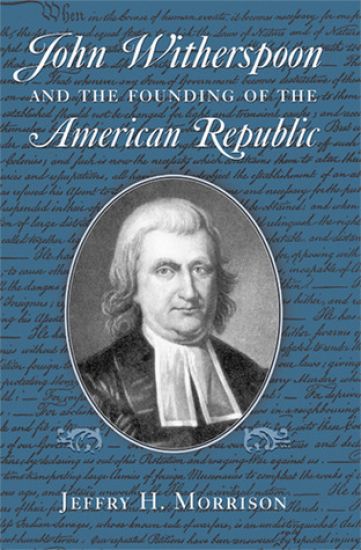
John Witherspoon and the Founding of the American Republic

John Witherspoon and the Founding of the American Republic

Jeffry H. Morrison

University of Notre Dame Press
2003
nidottu
Jeffry H. Morrison offers readers the first comprehensive look at the political thought and career of John Witherspoon—a Scottish Presbyterian minister and one of America's most influential and overlooked founding fathers. Witherspoon was an active member of the Continental Congress and was the only clergyman both to sign the Declaration of Independence and to ratify the federal Constitution. During his tenure as president of the College of New Jersey at Princeton, Witherspoon became a mentor to James Madison and influenced many leaders and thinkers of the founding period. He was uniquely positioned at the crossroads of politics, religion, and education during the crucial first decades of the new republic. Morrison locates Witherspoon in the context of early American political thought and charts the various influences on his thinking. This impressive work of scholarship offers a broad treatment of Witherspoon's constitutionalism, including his contributions to the mediating institutions of religion and education, and to political institutions from the colonial through the early federal periods. This book will be appreciated by anyone with an interest in American political history and thought and in the relation of religion to American politics.
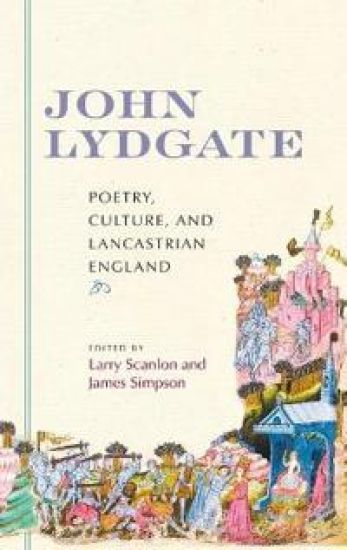
John Lydgate

John Lydgate

James Simpson

University of Notre Dame Press
2006
sidottu
Essays in this volume argue that it is time for a powerful reassessment of John Lydgate's poetic projects. The pre-eminent poet of his own century, Lydgate (c. 1370-1449) addressed the historical challenges of war with France, of looming civil war, and of new theological forces in the vernacular. He wrote for household, parish, city, monastery, Church, and state. Although an official poet of sorts—perhaps the first major official poet in the English poetic tradition—he was not by any means a merely celebratory or sycophantic writer. Instead, he drew on his authority as monk to shape a contestative poetic space, underlining the grief and treacherousness of power. Despite his exceptional cultural significance, Lydgate has, for different reasons, been marginalized by many literary historical movements since the sixteenth century. John Lydgate is energized by the challenge of an oeuvre so large and so ripe for reevaluation. Each essay here makes a decisive contribution to an area of Lydgate's corpus, and opens fresh perspectives for further investigation. Contributors write about Lydgate from a variety of critical perspectives and underscore the poet's diverse writings, which included beast fables, mummings, hagiographical and devotional poetry, and civic pageants. The essays also reassess better-known works and themes in the field of Lydgate studies, including Lydgate's unofficial laureateship, his relations to his patrons, and his relationship to Chaucer. This book makes an important contribution to medieval scholarship and it will be welcomed by scholars and students alike.
John Lydgate

John Lydgate

James Simpson

University of Notre Dame Press
2006
nidottu
Essays in this volume argue that it is time for a powerful reassessment of John Lydgate's poetic projects. The pre-eminent poet of his own century, Lydgate (c. 1370-1449) addressed the historical challenges of war with France, of looming civil war, and of new theological forces in the vernacular. He wrote for household, parish, city, monastery, Church, and state. Although an official poet of sorts—perhaps the first major official poet in the English poetic tradition—he was not by any means a merely celebratory or sycophantic writer. Instead, he drew on his authority as monk to shape a contestative poetic space, underlining the grief and treacherousness of power. Despite his exceptional cultural significance, Lydgate has, for different reasons, been marginalized by many literary historical movements since the sixteenth century. John Lydgate is energized by the challenge of an oeuvre so large and so ripe for reevaluation. Each essay here makes a decisive contribution to an area of Lydgate's corpus, and opens fresh perspectives for further investigation. Contributors write about Lydgate from a variety of critical perspectives and underscore the poet's diverse writings, which included beast fables, mummings, hagiographical and devotional poetry, and civic pageants. The essays also reassess better-known works and themes in the field of Lydgate studies, including Lydgate's unofficial laureateship, his relations to his patrons, and his relationship to Chaucer. This book makes an important contribution to medieval scholarship and it will be welcomed by scholars and students alike.
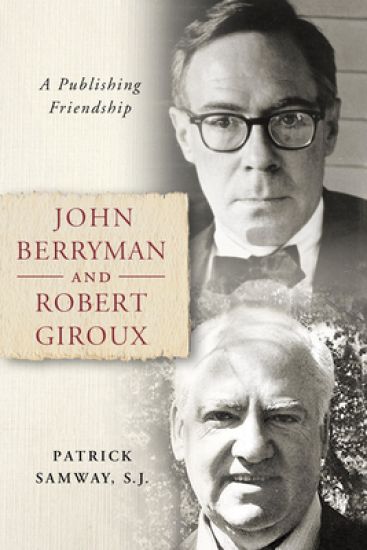
John Berryman and Robert Giroux

John Berryman and Robert Giroux

Patrick Samway

University of Notre Dame Press
2020
sidottu
This engaging study provides new perspectives on the lives and work of two major figures in American poetry and publishing in the second half of the twentieth century: Robert Giroux (1914-2008), editor-in-chief of Harcourt, Brace and Company and later of Farrar, Straus and Giroux, and John Berryman (1914-1972), Pulitzer Prize-winning poet and Shakespearean scholar who also received a National Book Award and a Bollingen Prize for Poetry. From their first meeting as undergraduates at Columbia College in New York City in the early 1930s, Giroux and Berryman became lifelong friends and publishing partners. Patrick Samway received unprecedented access to Giroux's letters and essays. By incorporating either sections or whole letters of the correspondence between Berryman and Giroux into this book, Samway makes available for the first time a historical account of their relationship, including revealing portraits of their personal lives.As Giroux edited over a dozen books by Berryman, his letters to the poet were often filled with editorial details and pertinent observations, emanating from his genuine affection for his friend, whose talent he never doubted, even as Berryman endured prolonged periods of hospitalization due to his alcoholism. Giroux gave Berryman the greatest gift he could: sustained encouragement to continue writing without trying to manipulate or discourage him in any way. But Giroux also had a deep-seated secret desire to surpass the essays written about Shakespeare by Berryman, as well as the book on Shakespeare written by their mutual professor Mark Van Doren. Giroux's volume, The Book Known as Q: A Consideration of Shakespeare's Sonnets, was finally published in 1982. Samway's fascinating account of a gifted but troubled poet and his devoted yet conflicted editor will interest fans of Berryman and all readers and students of American poetry.
John Clarke and His Legacies

John Clarke and His Legacies

Sydney James

Pennsylvania State University Press
1999
sidottu
John Clarke and His Legacies is the first full-length biography of John Clarke (1609–76), a principal founder of colonial Rhode Island. Although Roger Williams usually gets most of the attention, Sydney James shows that Clarke made a lasting contribution to the colony—perhaps more so than Williams. Williams was the first Baptist minister in America, but he left his church after a very short time. And although Williams won the first charter for Rhode Island, the charter soon had to be replaced. Clarke, however, founded the first Baptist church in Newport, where he continued to contribute to the Baptist community. And in 1663 he procured the royal charter that would remain the foundation of government in Rhode Island until 1842.This inquiry into Clarke's life engages a variety of intriguing topics. It surveys a formative stage in American Baptist history, one that spurned dependency upon government more thoroughly than any part of the United States does today. Through the experience of Clark, we see pioneering American religious volunteerism, problems of church-state relations, and the peculiar nature of colonial relations with the parent country.
Letters of General John Forbes

Letters of General John Forbes

John Forbes

Pennsylvania State University Press
2006
pokkari
This volume is made up of the letters of British general John Forbes, who led the campaign against Fort Duquesne, a pivotal episode in the French and Indian War. Primarily from the year 1758, the letters, to William Pitt, Governor Denny of Pennsylvania, General Sharpe of Maryland, and others, offer readers a firsthand glimpse of the campaign, from the preparation through the expedition to Fort Duquesne and the eventual British capture of the fort, where Pittsburgh now stands. The correspondence is accompanied by various related letters between other key players in the expedition.
John Clarke and His Legacies

John Clarke and His Legacies

Sydney James

Pennsylvania State University Press
1999
pokkari
John Clarke and His Legacies is the first full-length biography of John Clarke (1609–76), a principal founder of colonial Rhode Island. Although Roger Williams usually gets most of the attention, Sydney James shows that Clarke made a lasting contribution to the colony—perhaps more so than Williams. Williams was the first Baptist minister in America, but he left his church after a very short time. And although Williams won the first charter for Rhode Island, the charter soon had to be replaced. Clarke, however, founded the first Baptist church in Newport, where he continued to contribute to the Baptist community. And in 1663 he procured the royal charter that would remain the foundation of government in Rhode Island until 1842.This inquiry into Clarke's life engages a variety of intriguing topics. It surveys a formative stage in American Baptist history, one that spurned dependency upon government more thoroughly than any part of the United States does today. Through the experience of Clark, we see pioneering American religious volunteerism, problems of church-state relations, and the peculiar nature of colonial relations with the parent country.
John Dewey and the Artful Life

John Dewey and the Artful Life

Scott R. Stroud

Pennsylvania State University Press
2011
sidottu
Aesthetic experience has had a long and contentious history in the Western intellectual tradition. Following Kant and Hegel, a human’s interaction with nature or art frequently has been conceptualized as separate from issues of practical activity or moral value. This book examines how art can be seen as a way of moral cultivation. Scott Stroud uses the thought of the American pragmatist John Dewey to argue that art and the aesthetic have a close connection to morality. Dewey gives us a way to reconceptualize our ideas of ends, means, and experience so as to locate the moral value of aesthetic experience in the experience of absorption itself, as well as in the experience of reflective attention evoked by an art object.