Containing meticulous, up-to-date scholarship yet written in a flowing, enjoyable style, this comprehensive book takes readers on a journey through a breathtaking array of literary texts, encompassing the literature of Israel, early Judaism, the Greco-Roman world, and the New Testament. John R. Levison's skill with ancient texts -- already demonstrated in his acclaimed The Spirit in First-Century Judaism -- is here extended to a myriad of other expressions of the Spirit in antiquity.
Best known for catching wolves alive with his bare hands, John R. Abernathy (1876–1941) was born to Scottish ancestors in Texas. Raised in the burgeoning railroad town of Sweetwater, Abernathy considered himself a true son of the Wild West. In his amazing life he worked as a U.S. marshal, sheriff, Secret Service agent, and wildcat oil driller. But it was the accidental discovery of a bold means of catching wolves alive that made Abernathy famous and drew the attention of President Theodore Roosevelt. By forcing his hand deep enough into a wolf's mouth, he could stun the creature long enough to capture it, a service for which he was paid fifty dollars by eager ranchers. This Bison Books edition brings Abernathy's vivid account of his life into print for the first time since its original publication in 1936.
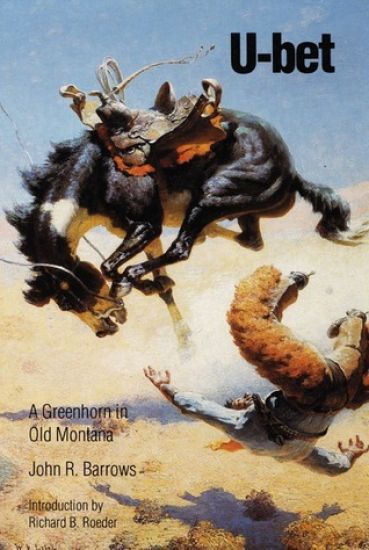
A voracious reader of dime novels, young John Barrows looked forward to blazing action as an Indian fighter or scout in Montana Territory. But when he arrived with his parents in the Musselshell Valley in 1879 he saw more sheepmen and cattlemen than Indians or Buffalo Bills. He worked in his father's trading post and soon found in the range cowboy his model of manhood. John Barrows recalls his early career as a cowboy for the DHS outfit in the 1880s in U-bet, often overlooked since its original publication in 1934 but regarded by the cognoscenti as a classic to rival Andy Adam's Log of a Cowboy. A greenhorn's initiation into trail herding, roping, and branding is described with a mastery of language rarely brought to the subject, for Barrows loved books as well as broncobusting. Winters usually found him back at the settlement of Ubet in Judith Gap, where his parents had come to operate a hotel for travelers on the stage line from Billings to Fort Benton. In a few years John Barrows stored a host of impressions of a raw part of the West rapidly changing. Is the reader of his unvarnished reminiscences in for a rousing experience? You bet.
Cherokee Americans combines . . . high-quality scholarship and eminent readability.-ChoiceMuch has been written about the forced removal of thousands of Cherokee Indians to present-day Oklahoma in the 1830s. Many of them died on the Trail of Tears. But until recently historians have largely ignored the tribal remnant that avoided removal and remained in North Carolina. John R. Finger shifts attention to the Eastern Band of Cherokees, descended from that remnant and now numbering almost ten thousand, most of whom live on a reservation adjacent to Great Smoky Mountains National Park. Cherokee Americans is, ironically, the first comprehensive account of the twentieth-century experience of a band that is known to and photographed by millions of tourists.This book is a sequel to The Eastern Band of Cherokees, 1819–1900 (1984) by John R. Finger, who is a professor of history at the University of Tennessee.
Weaving together a wide array of historical sources with oral accounts gathered from fieldwork, this classic study provides a valuable overview of traditional Creek (Muskogee) religion and medicine. John R. Swanton visited the Creek Nation in the early twentieth century and learned about many important aspects of Creek religious life and medicine. Subjects covered in this book include Creek conceptions of the cosmos; religious stories; death and the afterlife; spiritual forces and beings; various rituals, including the Busk ceremony; prohibitions; the power and skills of different religious practitioners; the cultural force of witchcraft; and herbal and spiritual remedies. Many of these beliefs and practices have been present throughout Creek history and persist today. Creek Religion and Medicine showcases the vibrant culture of an enduring southeastern Native people.
Chickasaw Society and Religion brings back into print one of the most important ethnographic sources on Chickasaw Indian society and culture ever produced, making it available to a new generation of students and scholars. The Smithsonian Institution ethnologist John Swanton published his work on the Chickasaws in 1928 as part of the Forty-fourth Annual Report of the Bureau of American Ethnology, and, like Swanton's many other works on Southeastern Indians, it has remained one of the primary sources for scholars and students of Chickasaw and Southeastern Indian culture. Swanton combed printed and archival documents in constructing a picture of eighteenth- and early nineteenth-century Chickasaw life. Swanton's keen eye for detail and his impressive knowledge of Southeastern Indian cultures make this study the starting point for all Chickasaw scholarship. Swanton broaches topics as diverse as Chickasaw marriage patterns, naming, government, education, gender roles, subsistence, religion, burial customs, and medicine. He also displays an intimate understanding of Chickasaw language throughout the essay that will aid future researchers.
In Effects of Psychotherapy with Children and Adolescents, the authors provide an authoritative overview of the practice and study of child and adolescent psychotherapy. Research findings on the effects of child psychotherapy are pooled through the use of meta-analytic procedures and then analyzed and summarized by the authors. They discuss methods for increasing the effectiveness of everyday therapy and offer suggestions for future research. "This short book should be carefully read and its message thoroughly internalized by every professional who is involved in any way in either deciding about therapy for a child, vending or providing therapy for children, evaluating therapy for children, and imposing therapy on children." --Issues in Child Abuse Accusations "Overall, the book is an excellent orientation to the question of the effectiveness of psychological interventions for children and provides a good set of directions for future research. Although most of the material is available elsewhere in the form of individual articles, this highly accessible comparison and synthesis of outcomes is worthwhile reading for practicing clinicians and researchers alike. . . . The book would be a very suitable introduction to questions concerning the efficacy of therapy for children and adolescents. It should be essential reading for clinicians in training who plan to work with children, and is a useful integration of the research literature for researchers and practitioners as well." --Contemporary Psychology
Established in 1968 to improve conditions in the barrio of East Los Angeles, the East Los Angeles Community Union has had a pronounced impact on the area, providing social services, helping increase political representation, and, most notably, promoting economic development, particularly through extensive real estate dealings. The history of TELACU is especially significant because it has provided a model for community development in other Mexican-American neighborhoods throughout the Southwest (including Oakland, California; San Antonio, Texas; Embudo, New Mexico; and Phoenix, Arizona). TELACU and other ethnic community development corporations also offer a successfully tested general model of cooperative economic development for the nation's cities. Though this model cannot end poverty in America and its attendant problems, it offers a vision of economically self-sufficient communities equitably integrated into larger regional and national bodies for mutual improvement. Moreover, as nonprofit, cooperative institutions that operate between government and business, organizations like TELACU offer a viable alternative in a world where many have rejected the extremes of collectivism, but still suspect capitalism. Such community development corporations can help prepare society for the larger cooperative efforts necessary for the progress of national and global communities.
Flourishing: A Frank Conversation about Sustainability invites you into a conversation between a teacher, John R. Ehrenfeld, and his former student now professor, Andrew J. Hoffman, as they discuss how to create a sustainable world. Unlike virtually all other books about sustainability, this one goes beyond the typical stories that we tell ourselves about repairing the environmental damages of human progress. Through their dialogue and essays that open each section, the authors uncover two core facets of our culture that drive the unsustainable, unsatisfying, and unfair social and economic machines that dominate our lives. First, our collective model of the way the world works cannot cope with the inherent complexity of today's highly connected, high-speed reality. Second, our understanding of human behavior is rooted in this outdated model. Driven by the old guard, sustainability has become little more than a fashionable idea. As a result, both business and government are following the wrong path-at best applying temporary, less unsustainable solutions that will fail to leave future generations in better shape. To shift the pendulum, this book tells a new story, driven by being and caring, as opposed to having and needing, rooted in the beauty of complexity and arguing for the transformative cultural shift that we can make based on our collective wisdom and lived experiences. Then, the authors sketch out the road to a flourishing future, a change in our consumption and a new approach to understanding and acting. There is no middle ground; without a sea change at the most basic level, we will continue to head down a faulty path. Indeed, this book is a clarion call to action. Candid and insightful, it leaves readers with cautious hope.
Flourishing: A Frank Conversation about Sustainability invites you into a conversation between a teacher, John R. Ehrenfeld, and his former student now professor, Andrew J. Hoffman, as they discuss how to create a sustainable world. Unlike virtually all other books about sustainability, this one goes beyond the typical stories that we tell ourselves about repairing the environmental damages of human progress. Through their dialogue and essays that open each section, the authors uncover two core facets of our culture that drive the unsustainable, unsatisfying, and unfair social and economic machines that dominate our lives. First, our collective model of the way the world works cannot cope with the inherent complexity of today's highly connected, high-speed reality. Second, our understanding of human behavior is rooted in this outdated model. Driven by the old guard, sustainability has become little more than a fashionable idea. As a result, both business and government are following the wrong path-at best applying temporary, less unsustainable solutions that will fail to leave future generations in better shape. To shift the pendulum, this book tells a new story, driven by being and caring, as opposed to having and needing, rooted in the beauty of complexity and arguing for the transformative cultural shift that we can make based on our collective wisdom and lived experiences. Then, the authors sketch out the road to a flourishing future, a change in our consumption and a new approach to understanding and acting. There is no middle ground; without a sea change at the most basic level, we will continue to head down a faulty path. Indeed, this book is a clarion call to action. Candid and insightful, it leaves readers with cautious hope.
This unique volume returns in its second edition, revised and updated with the latest advances in problem solving research. It is designed to provide readers with skills that will make them better problem solvers and to give up-to-date information about the psychology of problem solving. Professor Hayes provides students and professionals with practical, tested methods of defining, representing, and solving problems. Each discussion of the important aspects of human problem solving is supported by the most current research on the psychology problem solving. The Complete Problem Solver, Second Edition features:*Valuable learning strategies;*Decision making methods;*Discussions of the nature of creativity and invention, and*A new chapter on writing. The Complete Problem Solver utilizes numerous examples, diagrams, illustrations, and charts to help any reader become better at problem solving. See the order form for the answer to the problem below.
This important volume examines the phenomena of cognition from an adaptive perspective. Rather than adhering to the typical practice in cognitive psychology of trying to predict behavior from a model of cognitive mechanisms, this book develops a number of models that successfully predict behavior from the structure of the environment to which cognition is adapted. The methodology -- called rational analysis -- involves specifying the information-processing goals of the system, the structure of the environment, and the computational constraints on the system, allowing predictions about behavior to be made by determining what behavior would be optimal under these assumptions. The Adaptive Character of Thought applies this methodology in great detail to four cognitive phenomena: memory, categorization, causal inference, and problem solving.
Related to the earlier well-known ACT production system theory, this book's basic goal is to present evidence for the psychological reality of a production system model of mind. Distinguished from the original theory in three ways, this volume uses the rational analyses of Anderson (1990) to improve upon that theory and extend its scope. It also relates the theory to a great deal of new data on the performance and acquisition of cognitive skills. The new theory -- ACT-R -- involves a neurally plausible implementation of a production system architecture. Rational analysis is used to structure and parameterize the system to yield optimal information processing. The theory is applicable to a wide variety of research disciplines, including memory, problem solving, and skill acquisition. Using intelligent tutors, much of the data is concerned with the acquisition of cognitive skills. The book provides analyses of data sets describing the extended course of the acquisition of mathematical and computer programming skills.
Related to the earlier well-known ACT production system theory, this book's basic goal is to present evidence for the psychological reality of a production system model of mind. Distinguished from the original theory in three ways, this volume uses the rational analyses of Anderson (1990) to improve upon that theory and extend its scope. It also relates the theory to a great deal of new data on the performance and acquisition of cognitive skills. The new theory -- ACT-R -- involves a neurally plausible implementation of a production system architecture. Rational analysis is used to structure and parameterize the system to yield optimal information processing. The theory is applicable to a wide variety of research disciplines, including memory, problem solving, and skill acquisition. Using intelligent tutors, much of the data is concerned with the acquisition of cognitive skills. The book provides analyses of data sets describing the extended course of the acquisition of mathematical and computer programming skills.
This book is the first to summarize the voluminous literature on the development of cognitive, codification, language, and expressive/affective (CCCE) skills from a clinical standpoint. Emphasizing the need to ground services in research and theory, the author constructs three basic clinical models--a conceptual model for understanding, a descriptive model for formal assessment, and a facilitative model for intervention. These models have major implications for the work of all those who deal with CCCE problems in a professional capacity.
This book is the first to summarize the voluminous literature on the development of cognitive, codification, language, and expressive/affective (CCCE) skills from a clinical standpoint. Emphasizing the need to ground services in research and theory, the author constructs three basic clinical models--a conceptual model for understanding, a descriptive model for formal assessment, and a facilitative model for intervention. These models have major implications for the work of all those who deal with CCCE problems in a professional capacity.
Now available in paper, The Architecture of Cognition is a classic work that remains relevant to theory and research in cognitive science. The new version of Anderson's theory of cognitive architecture -- Adaptive Control of Thought (ACT*) -- is a theory of the basic principles of operation built into the cognitive system and is the main focus of the book.
This book achieves a goal that was set 25 years ago when the HAM theory of human memory was published. This theory reflected one of a number of then-current efforts to create a theory of human cognition that met the twin goals of precision and complexity. Up until then the standard for precision had been the mathematical theories of the 1950s and 1960s. These theories took the form of precise models of specific experiments along with some informal, verbally-stated understanding of how they could be extended to new experiments. They seemed to fall far short of capturing the breadth and power of human cognition that was being demonstrated by the new experimental work in human cognition. The next 10 years saw two major efforts to address the problems of scope. In 1976, the ACT theory was first described and included a production rule system of procedural memory to complement HAM's declarative memory. This provided a computationally adequate system which was indeed capable of accounting for all sorts of cognition. In 1993, a new version of ACT--ACT-R--was published. This was an effort to summarize the theoretical progress made on skill acquisition in the intervening 10 years and to tune the subsymbolic level of ACT-R with the insights of the rational analysis of cognition. Although the appearance of generally-available, full-function code set off a series of events which was hardly planned, it resulted in this book. The catalyst for this was the emergence of a user community. Lebiere insisted that assembling a critical mass of users was essential to the ultimate success of the theory and that a physical gathering was the only way to achieve that goal. This resulted in the First Annual ACT-R Summer School and Workshop, held in 1994. In writing the book, the authors became seized by an aspiration that went beyond just describing the theory correctly. They decided to try to display what the theory could do by collecting together and describing some of its in-house applications. This book reflects decades of work in ACT-R accumulated by many researchers. The chapters are authored by the people that did that particular work. No doubt the reader will be impressed by the scope of the research and the quality of the individual work. Less apparent, but no less important, was the effort that everyone put into achieving the overall consistency and technical integrity of the book. This is the first work in cognitive science to precisely model such a wide range of phenomena with a single theory.
This book achieves a goal that was set 25 years ago when the HAM theory of human memory was published. This theory reflected one of a number of then-current efforts to create a theory of human cognition that met the twin goals of precision and complexity. Up until then the standard for precision had been the mathematical theories of the 1950s and 1960s. These theories took the form of precise models of specific experiments along with some informal, verbally-stated understanding of how they could be extended to new experiments. They seemed to fall far short of capturing the breadth and power of human cognition that was being demonstrated by the new experimental work in human cognition. The next 10 years saw two major efforts to address the problems of scope. In 1976, the ACT theory was first described and included a production rule system of procedural memory to complement HAM's declarative memory. This provided a computationally adequate system which was indeed capable of accounting for all sorts of cognition. In 1993, a new version of ACT--ACT-R--was published. This was an effort to summarize the theoretical progress made on skill acquisition in the intervening 10 years and to tune the subsymbolic level of ACT-R with the insights of the rational analysis of cognition. Although the appearance of generally-available, full-function code set off a series of events which was hardly planned, it resulted in this book. The catalyst for this was the emergence of a user community. Lebiere insisted that assembling a critical mass of users was essential to the ultimate success of the theory and that a physical gathering was the only way to achieve that goal. This resulted in the First Annual ACT-R Summer School and Workshop, held in 1994. In writing the book, the authors became seized by an aspiration that went beyond just describing the theory correctly. They decided to try to display what the theory could do by collecting together and describing some of its in-house applications. This book reflects decades of work in ACT-R accumulated by many researchers. The chapters are authored by the people that did that particular work. No doubt the reader will be impressed by the scope of the research and the quality of the individual work. Less apparent, but no less important, was the effort that everyone put into achieving the overall consistency and technical integrity of the book. This is the first work in cognitive science to precisely model such a wide range of phenomena with a single theory.
More than 50 years of scholarly attention to the intersection of language and education have resulted in a rich body of literature on the role of vernacular language varieties in the classroom. This field of work can be bewildering in its size and variety, drawing as it does on the diverse methods, theories, and research paradigms of fields such as sociolinguistics, applied linguistics, psychology, and education. Compiling most of the publications from the past half century that deal with this critical topic, this volume includes more than 1600 references (books, articles in journals or books, and web-accessible dissertations and other works) on education in relation to African American Vernacular English [AAVE], English-based pidgins and creoles, Latina/o English, Native American English, and other English vernaculars such as Appalachian English in the United States and Aboriginal English in Australia), with accompanying abstracts for approximately a third of them. This comprehensive bibliography provides a tool useful for those interested in the complex issue of how knowledge about language variation can be used to more effectively teach students who speak a nonstandard or stigmatized language variety.