Kirjojen hintavertailu. Mukana 11 717 486 kirjaa ja 12 kauppaa.

Kirjahaku

Etsi kirjoja tekijän nimen, kirjan nimen tai ISBN:n perusteella.

1000 tulosta hakusanalla John R. Howe

A History of American Higher Education

A History of American Higher Education

John R. Thelin

Johns Hopkins University Press
2004
sidottu
Colleges and universities are among the most cherished institutions in American society-and also among the most controversial. Yet affirmative action and skyrocketing tuition are only the most recent dissonant issues to emerge. Recounting the many crises and triumphs in the long history of American higher education, historian John Thelin provides welcome perspective on this influential aspect of American life. In A History of American Higher Education, Thelin offers a wide-ranging and engaging account of the origins and evolution of America's public and private colleges and universities, emphasizing the notion of saga-the proposition that institutions are heirs to numerous historical strands and numerous attempts to address such volatile topics as institutional cost and effectiveness, admissions and access, and the character of the curriculum. Thelin draws on both official institutional histories and the informal memories that constitute legends and lore to offer a fresh interpretation of an institutional past that reaches back to the colonial era and encompasses both well-known colleges and universities and such understudied institutions as community, women's, and historically black colleges, proprietary schools, and freestanding professional colleges. Thelin's lively history has particular relevance for a society still struggling to determine what constitutes a legitimate field of study, reminding readers that Harvard once used its medical school as a safe place to admit the sons of wealthy alumni who could not pass the undergraduate college admissions examination and that the University of Pennsylvania once considered the study of history, government, and economics unworthy of addition to the liberal arts curriculum. Thelin also addresses the role of local, state, and federal governments in colleges and universities, as well as the influence of private foundations and other organizations. And through imaginative interpretation of films, novels, and popular magazines, he illuminates the convoluted relationship between higher education and American culture. For anyone attempting to understand America's colleges and universities, A History of American Higher Education offers a much-needed challenge to conventional wisdom about how these institutions developed and functioned in the past.
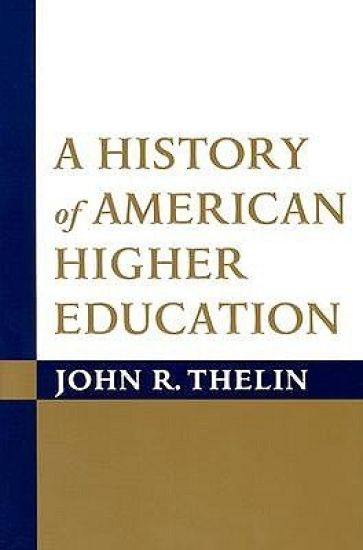
A History of American Higher Education

A History of American Higher Education

John R. Thelin

Johns Hopkins University Press
2004
pokkari
Colleges and universities are among the most cherished institutions in American society-and also among the most controversial. Yet affirmative action and skyrocketing tuition are only the most recent dissonant issues to emerge. Recounting the many crises and triumphs in the long history of American higher education, historian John Thelin provides welcome perspective on this influential aspect of American life. In A History of American Higher Education, Thelin offers a wide-ranging and engaging account of the origins and evolution of America's public and private colleges and universities, emphasizing the notion of saga-the proposition that institutions are heirs to numerous historical strands and numerous attempts to address such volatile topics as institutional cost and effectiveness, admissions and access, and the character of the curriculum. Thelin draws on both official institutional histories and the informal memories that constitute legends and lore to offer a fresh interpretation of an institutional past that reaches back to the colonial era and encompasses both well-known colleges and universities and such understudied institutions as community, women's, and historically black colleges, proprietary schools, and freestanding professional colleges. Thelin's lively history has particular relevance for a society still struggling to determine what constitutes a legitimate field of study, reminding readers that Harvard once used its medical school as a safe place to admit the sons of wealthy alumni who could not pass the undergraduate college admissions examination and that the University of Pennsylvania once considered the study of history, government, and economics unworthy of addition to the liberal arts curriculum. Thelin also addresses the role of local, state, and federal governments in colleges and universities, as well as the influence of private foundations and other organizations. And through imaginative interpretation of films, novels, and popular magazines, he illuminates the convoluted relationship between higher education and American culture. For anyone attempting to understand America's colleges and universities, A History of American Higher Education offers a much-needed challenge to conventional wisdom about how these institutions developed and functioned in the past.
Taking Charge of Your Health

Taking Charge of Your Health

John R. Burton; William J. Hall

Johns Hopkins University Press
2010
sidottu
Frustrated with doctors' visits that last less than fifteen minutes? Unclear about how to best choose a physician? Confused by our complicated health care system? Experienced geriatricians John R. Burton and William J. Hall can help you take charge of your own health and get the best care available. Drs. Burton and Hall have decades of experience helping seniors navigate this country's complex health care system. They distill that knowledge here, providing you with the information you need to skillfully communicate with your health care providers. This book addresses such questions as* Do I need a general physician, or a specialist, or both?* What does a geriatrician do?* How do I prepare for and get the most out of a visit to the doctor?* What screening exams should I undergo?* What is the best way to take my medications? As you grow older, it is more important than ever to maintain good health. To do so, you need to know how to best access the health care system and improve your personal health practices. In Taking Charge of Your Health, you will find practical advice from two senior geriatricians on how to do both. Drs. Burton and Hall emphasize that you are unlikely to receive good health care unless you work for it. They urge older adults to ask questions, become informed, and obtain the care they deserve.
Taking Charge of Your Health

Taking Charge of Your Health

John R. Burton; William J. Hall

Johns Hopkins University Press
2010
pokkari
Frustrated with doctors' visits that last less than fifteen minutes? Unclear about how to best choose a physician? Confused by our complicated health care system? Experienced geriatricians John R. Burton and William J. Hall can help you take charge of your own health and get the best care available. Drs. Burton and Hall have decades of experience helping seniors navigate this country's complex health care system. They distill that knowledge here, providing you with the information you need to skillfully communicate with your health care providers. This book addresses such questions as* Do I need a general physician, or a specialist, or both?* What does a geriatrician do?* How do I prepare for and get the most out of a visit to the doctor?* What screening exams should I undergo?* What is the best way to take my medications? As you grow older, it is more important than ever to maintain good health. To do so, you need to know how to best access the health care system and improve your personal health practices. In Taking Charge of Your Health, you will find practical advice from two senior geriatricians on how to do both. Drs. Burton and Hall emphasize that you are unlikely to receive good health care unless you work for it. They urge older adults to ask questions, become informed, and obtain the care they deserve.
Cross-Cultural Encounters on the Ukrainian Steppe

Cross-Cultural Encounters on the Ukrainian Steppe

John R. Staples

University of Toronto Press
2003
sidottu
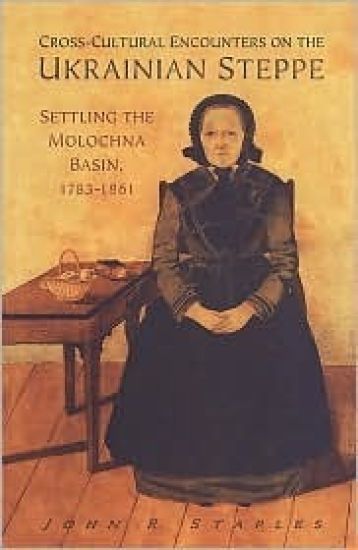
A regional history of colonization and adaptation in southern Ukraine, Cross-Cultural Encounters on the Ukrainian Steppe examines how diverse agrarian groups, faced with common environmental, economic, and administrative conditions, followed sharply divergent paths of development. Using a wide variety of sources, including local Ukrainian and Russian archives never before examined by a western scholar, John Staples compares and contrasts how the Mennonites, Nogais, Russians, Ukrainians, and other groups transformed their environments and adapted to life in the Molochna Valley. Staples contends that the allocation and use of land formed a central hub around which public life in Molochna revolved, and determined the success or failure of each group. Ultimately, he concludes, it was the settlers, not the state, who decided how they would adapt to the arid southern Ukrainian steppe. Perhaps most importantly, Staples makes a major contribution to the investigation of how peasant groups can emerge from their traditionalist mentality and life-style as the Mennonites of Molochna did. His thoughtful analysis will be a welcome addition to the study of both Tsarist peasant history and Russian and Ukrainian agricultural and peasant history.
Assist Me to Proclaim

Assist Me to Proclaim

John R. Tyson

William B Eerdmans Publishing Co
2008
nidottu
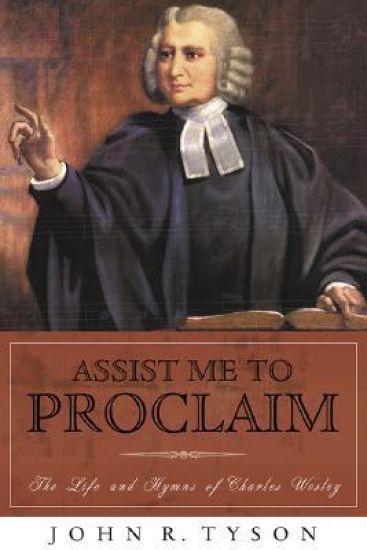
Charles Wesley (1707-1788) was the cofounder of Methodism and the author of more than 9,000 hymns and sacred poems, including such favorites as -Hark! the Herald Angels Sing, - -O for a Thousand Tongues to Sing, - and -Christ the Lord Is Risen Today.- John Tyson here traces the remarkable life of this influential man from cradle to grave, using rare -- including previously unpublished -- hymns, letters, and journal materials. As the younger brother of John Wesley, Charles was a vital partner in the Methodist revival. While often standing in the shadow of his more famous brother, Charles Wesley was arguably the founder of the Oxford Holy Club, and he actually experienced evangelical conversion three days prior to John. In Assist Me to Proclaim Tyson explores, among other things, behind-the-scenes questions about the brothers' sometimes-stormy relationship. Notwithstanding all his accomplishments as an evangelist and itinerant preacher, Charles is chiefly remembered for his startling facility at writing hymns that show God at work in almost every instance of life. His remarkable legacy endures around the world, as hundreds of Charles Wesley hymns are still sung in churches everywhere today.Assist Me to Proclaim draws a picture of a man whose fidelity to both the Church of England and the original vision of Methodism energized his remarkable abilities as a revivalist and hymn writer. Readers also get a glimpse into Wesley's heart and mind through the window of his hymn texts. This is a biography that any student of church history or hymnody will welcome.
Waiting for Home

Waiting for Home

John R. Schneider

William B Eerdmans Publishing Co
1998
pokkari
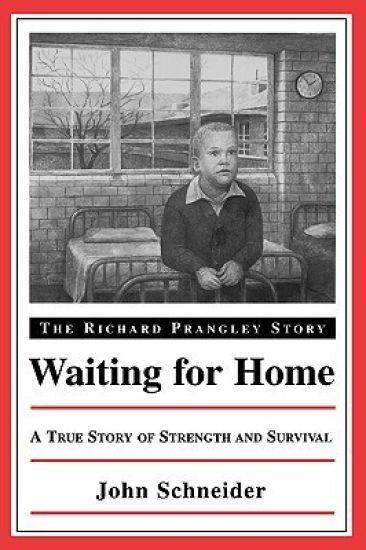
Richard Prangley was unjustly institutionalized for fifteen years. Yet he managed to become not only a productive citizen but also an effective advocate for the developmentally disabled. In Waiting for Home, journalist John Schneider chronicles the compelling true story of Richard Prangley. Born prematurely, Richard exhibited delayed development and hyperactivity as a small child. His parents struggled to raise him along with their other 10 children, and they turned to the medical authorities for help. Based on the diagnoses of two psychiatrists, Richard at age 6 was committed to the Coldwater State Home and Training School, an institution for physically and mentally disabled children. He was labeled retarded and his schooling and work experience were limited to manual labor. When he was finally released at age 21, Prangley struggled with socialization as he learned to live on his own. His life today, however, stands in sharp contrast to his early years. Through faith, hope, determination, and a constant yearning for independence, Prangley is self-supporting and works in the Office Services Division of the Michigan Department of Community Health.He is an effective advocate for the developmentally disabled and has been instrumental in creating a successful stand for the rights of the handicapped as a lobbyist in such places as the Michigan State Capitol and the White House. Richard Prangley, whose story has been the focus of a documentary and wide national media coverage, including CBS's Sunday Morning, is an inspirational figure whose life reflects the human spirit at its resilient, triumphant best.
Way of the Wesleys

Way of the Wesleys

John R. Tyson

William B Eerdmans Publishing Co
2014
nidottu
The Wesley brothers - John (1703-1791) and Charles (1707-1788) - are famous as the cofounders of the Wesleyan tradition and the Methodist family of churches. Their impact and legacy have been huge: what began as the excited outpouring of their conversion experiences grew into a transatlantic revival and became a vibrant and significant theological tradition. But what exactly did they believe and teach?In this book John Tyson, an acknowledged authority on Methodist studies, offers a helpful introduction to the main teachings and practices of both John and Charles Wesley. The first book to show how Charles, the younger and lesser-known brother, contributed in particular to Wesleyan theology, The Way of the Wesleys takes readers through main theological points thematically. Tyson also includes suggestions for further reading and questions for reflection at the end of each chapter.Lavishly documented from the Wesleys' own writings, this engaging, accessible book shows why the Wesleys remain relevant to the faith journey of Christians today.
Filled with the Spirit

Filled with the Spirit

John R Levison

William B Eerdmans Publishing Co
2009
pokkari
Containing meticulous, up-to-date scholarship yet written in a flowing, enjoyable style, this comprehensive book takes readers on a journey through a breathtaking array of literary texts, encompassing the literature of Israel, early Judaism, the Greco-Roman world, and the New Testament. John R. Levison's skill with ancient texts -- already demonstrated in his acclaimed The Spirit in First-Century Judaism -- is here extended to a myriad of other expressions of the Spirit in antiquity.
"Catch 'em Alive Jack"

"Catch 'em Alive Jack"

John R. Abernathy; Jon T. Coleman

Bison Books
2006
pokkari
Best known for catching wolves alive with his bare hands, John R. Abernathy (1876–1941) was born to Scottish ancestors in Texas. Raised in the burgeoning railroad town of Sweetwater, Abernathy considered himself a true son of the Wild West. In his amazing life he worked as a U.S. marshal, sheriff, Secret Service agent, and wildcat oil driller. But it was the accidental discovery of a bold means of catching wolves alive that made Abernathy famous and drew the attention of President Theodore Roosevelt. By forcing his hand deep enough into a wolf's mouth, he could stun the creature long enough to capture it, a service for which he was paid fifty dollars by eager ranchers. This Bison Books edition brings Abernathy's vivid account of his life into print for the first time since its original publication in 1936.
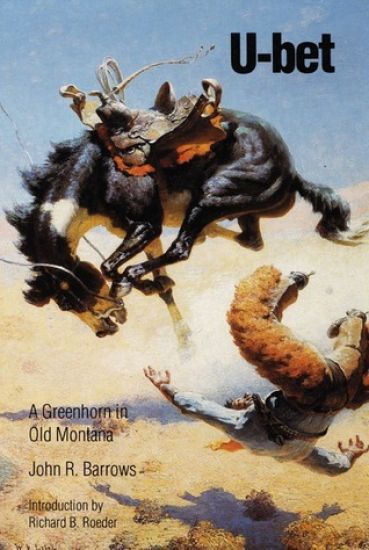
U-bet

U-bet

John R. Barrows

University of Nebraska Press
1990
pokkari
A voracious reader of dime novels, young John Barrows looked forward to blazing action as an Indian fighter or scout in Montana Territory. But when he arrived with his parents in the Musselshell Valley in 1879 he saw more sheepmen and cattlemen than Indians or Buffalo Bills. He worked in his father's trading post and soon found in the range cowboy his model of manhood. John Barrows recalls his early career as a cowboy for the DHS outfit in the 1880s in U-bet, often overlooked since its original publication in 1934 but regarded by the cognoscenti as a classic to rival Andy Adam's Log of a Cowboy. A greenhorn's initiation into trail herding, roping, and branding is described with a mastery of language rarely brought to the subject, for Barrows loved books as well as broncobusting. Winters usually found him back at the settlement of Ubet in Judith Gap, where his parents had come to operate a hotel for travelers on the stage line from Billings to Fort Benton. In a few years John Barrows stored a host of impressions of a raw part of the West rapidly changing. Is the reader of his unvarnished reminiscences in for a rousing experience? You bet.
Cherokee Americans

Cherokee Americans

John R. Finger

Bison Books
1993
pokkari
Cherokee Americans combines . . . high-quality scholarship and eminent readability.-ChoiceMuch has been written about the forced removal of thousands of Cherokee Indians to present-day Oklahoma in the 1830s. Many of them died on the Trail of Tears. But until recently historians have largely ignored the tribal remnant that avoided removal and remained in North Carolina. John R. Finger shifts attention to the Eastern Band of Cherokees, descended from that remnant and now numbering almost ten thousand, most of whom live on a reservation adjacent to Great Smoky Mountains National Park. Cherokee Americans is, ironically, the first comprehensive account of the twentieth-century experience of a band that is known to and photographed by millions of tourists.This book is a sequel to The Eastern Band of Cherokees, 1819–1900 (1984) by John R. Finger, who is a professor of history at the University of Tennessee.
Creek Religion and Medicine

Creek Religion and Medicine

John R. Swanton

Bison Books
2000
pokkari
Weaving together a wide array of historical sources with oral accounts gathered from fieldwork, this classic study provides a valuable overview of traditional Creek (Muskogee) religion and medicine. John R. Swanton visited the Creek Nation in the early twentieth century and learned about many important aspects of Creek religious life and medicine. Subjects covered in this book include Creek conceptions of the cosmos; religious stories; death and the afterlife; spiritual forces and beings; various rituals, including the Busk ceremony; prohibitions; the power and skills of different religious practitioners; the cultural force of witchcraft; and herbal and spiritual remedies. Many of these beliefs and practices have been present throughout Creek history and persist today. Creek Religion and Medicine showcases the vibrant culture of an enduring southeastern Native people.
Chickasaw Society and Religion

Chickasaw Society and Religion

John R. Swanton; Greg O'Brien

University of Nebraska Press
2006
pokkari
Chickasaw Society and Religion brings back into print one of the most important ethnographic sources on Chickasaw Indian society and culture ever produced, making it available to a new generation of students and scholars. The Smithsonian Institution ethnologist John Swanton published his work on the Chickasaws in 1928 as part of the Forty-fourth Annual Report of the Bureau of American Ethnology, and, like Swanton's many other works on Southeastern Indians, it has remained one of the primary sources for scholars and students of Chickasaw and Southeastern Indian culture. Swanton combed printed and archival documents in constructing a picture of eighteenth- and early nineteenth-century Chickasaw life. Swanton's keen eye for detail and his impressive knowledge of Southeastern Indian cultures make this study the starting point for all Chickasaw scholarship. Swanton broaches topics as diverse as Chickasaw marriage patterns, naming, government, education, gender roles, subsistence, religion, burial customs, and medicine. He also displays an intimate understanding of Chickasaw language throughout the essay that will aid future researchers.
Effects of Psychotherapy with Children and Adolescents

Effects of Psychotherapy with Children and Adolescents

John R. Weisz; Bahr Weiss

SAGE Publications Inc
1993
nidottu
In Effects of Psychotherapy with Children and Adolescents, the authors provide an authoritative overview of the practice and study of child and adolescent psychotherapy. Research findings on the effects of child psychotherapy are pooled through the use of meta-analytic procedures and then analyzed and summarized by the authors. They discuss methods for increasing the effectiveness of everyday therapy and offer suggestions for future research. "This short book should be carefully read and its message thoroughly internalized by every professional who is involved in any way in either deciding about therapy for a child, vending or providing therapy for children, evaluating therapy for children, and imposing therapy on children." --Issues in Child Abuse Accusations "Overall, the book is an excellent orientation to the question of the effectiveness of psychological interventions for children and provides a good set of directions for future research. Although most of the material is available elsewhere in the form of individual articles, this highly accessible comparison and synthesis of outcomes is worthwhile reading for practicing clinicians and researchers alike. . . . The book would be a very suitable introduction to questions concerning the efficacy of therapy for children and adolescents. It should be essential reading for clinicians in training who plan to work with children, and is a useful integration of the research literature for researchers and practitioners as well." --Contemporary Psychology
Eastside Landmark

Eastside Landmark

John R. Chávez

Stanford University Press
1998
sidottu
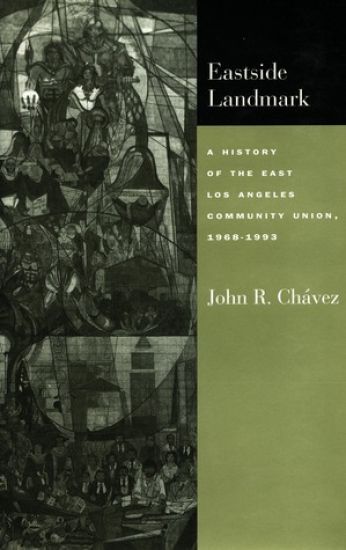
Established in 1968 to improve conditions in the barrio of East Los Angeles, the East Los Angeles Community Union has had a pronounced impact on the area, providing social services, helping increase political representation, and, most notably, promoting economic development, particularly through extensive real estate dealings. The history of TELACU is especially significant because it has provided a model for community development in other Mexican-American neighborhoods throughout the Southwest (including Oakland, California; San Antonio, Texas; Embudo, New Mexico; and Phoenix, Arizona). TELACU and other ethnic community development corporations also offer a successfully tested general model of cooperative economic development for the nation's cities. Though this model cannot end poverty in America and its attendant problems, it offers a vision of economically self-sufficient communities equitably integrated into larger regional and national bodies for mutual improvement. Moreover, as nonprofit, cooperative institutions that operate between government and business, organizations like TELACU offer a viable alternative in a world where many have rejected the extremes of collectivism, but still suspect capitalism. Such community development corporations can help prepare society for the larger cooperative efforts necessary for the progress of national and global communities.
Flourishing

Flourishing

John R. Ehrenfeld; Andrew J. Hoffman

Stanford University Press
2013
sidottu
Flourishing: A Frank Conversation about Sustainability invites you into a conversation between a teacher, John R. Ehrenfeld, and his former student now professor, Andrew J. Hoffman, as they discuss how to create a sustainable world. Unlike virtually all other books about sustainability, this one goes beyond the typical stories that we tell ourselves about repairing the environmental damages of human progress. Through their dialogue and essays that open each section, the authors uncover two core facets of our culture that drive the unsustainable, unsatisfying, and unfair social and economic machines that dominate our lives. First, our collective model of the way the world works cannot cope with the inherent complexity of today's highly connected, high-speed reality. Second, our understanding of human behavior is rooted in this outdated model. Driven by the old guard, sustainability has become little more than a fashionable idea. As a result, both business and government are following the wrong path-at best applying temporary, less unsustainable solutions that will fail to leave future generations in better shape. To shift the pendulum, this book tells a new story, driven by being and caring, as opposed to having and needing, rooted in the beauty of complexity and arguing for the transformative cultural shift that we can make based on our collective wisdom and lived experiences. Then, the authors sketch out the road to a flourishing future, a change in our consumption and a new approach to understanding and acting. There is no middle ground; without a sea change at the most basic level, we will continue to head down a faulty path. Indeed, this book is a clarion call to action. Candid and insightful, it leaves readers with cautious hope.
Flourishing

Flourishing

John R. Ehrenfeld; Andrew J. Hoffman

Stanford University Press
2013
pokkari
Flourishing: A Frank Conversation about Sustainability invites you into a conversation between a teacher, John R. Ehrenfeld, and his former student now professor, Andrew J. Hoffman, as they discuss how to create a sustainable world. Unlike virtually all other books about sustainability, this one goes beyond the typical stories that we tell ourselves about repairing the environmental damages of human progress. Through their dialogue and essays that open each section, the authors uncover two core facets of our culture that drive the unsustainable, unsatisfying, and unfair social and economic machines that dominate our lives. First, our collective model of the way the world works cannot cope with the inherent complexity of today's highly connected, high-speed reality. Second, our understanding of human behavior is rooted in this outdated model. Driven by the old guard, sustainability has become little more than a fashionable idea. As a result, both business and government are following the wrong path-at best applying temporary, less unsustainable solutions that will fail to leave future generations in better shape. To shift the pendulum, this book tells a new story, driven by being and caring, as opposed to having and needing, rooted in the beauty of complexity and arguing for the transformative cultural shift that we can make based on our collective wisdom and lived experiences. Then, the authors sketch out the road to a flourishing future, a change in our consumption and a new approach to understanding and acting. There is no middle ground; without a sea change at the most basic level, we will continue to head down a faulty path. Indeed, this book is a clarion call to action. Candid and insightful, it leaves readers with cautious hope.
The Complete Problem Solver

The Complete Problem Solver

John R. Hayes

Routledge Member of the Taylor and Francis Group
1989
nidottu
This unique volume returns in its second edition, revised and updated with the latest advances in problem solving research. It is designed to provide readers with skills that will make them better problem solvers and to give up-to-date information about the psychology of problem solving. Professor Hayes provides students and professionals with practical, tested methods of defining, representing, and solving problems. Each discussion of the important aspects of human problem solving is supported by the most current research on the psychology problem solving. The Complete Problem Solver, Second Edition features:*Valuable learning strategies;*Decision making methods;*Discussions of the nature of creativity and invention, and*A new chapter on writing. The Complete Problem Solver utilizes numerous examples, diagrams, illustrations, and charts to help any reader become better at problem solving. See the order form for the answer to the problem below.