Kirjojen hintavertailu. Mukana 12 016 292 kirjaa ja 12 kauppaa.

Kirjahaku

Etsi kirjoja tekijän nimen, kirjan nimen tai ISBN:n perusteella.

1000 tulosta hakusanalla Joyce Rodgers

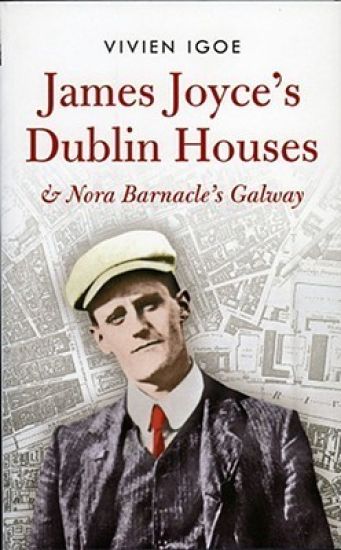
James Joyce's Dublin Houses

James Joyce's Dublin Houses

Vivian Igoe

The Lilliput Press Ltd
2006
nidottu
The new edition of this classic, richly illustrated guidebook, first published in 1990, gives a wonderful contextual depth to the Dublin childhood and formative years of James Joyce, and to the Galway origins of his consort Nora Barnacle. James Joyce’s Dublin Houses & Nora Barnacle’s Galway recreates with fascinating particularity the footfall and house-moves of a young Joyce and his extensive family (his father John changed addresses eighteen times between 1880 and 1904). Vivien Igoe takes the reader on this journey, pinpointing the locale of Joyce’s real and imagined lives, mapping each work – from Stephen Hero to Finnegans Wake, by way of Dubliners, A Portrait of the Artist as a Young Man and Ulysses – onto the town and people its author loved so well. From cityscape to mindscape, we witness the transformation of character and place, as Stephen Dedalus, Leopold and Molly Bloom walk again the streets of Dublin and Galway.
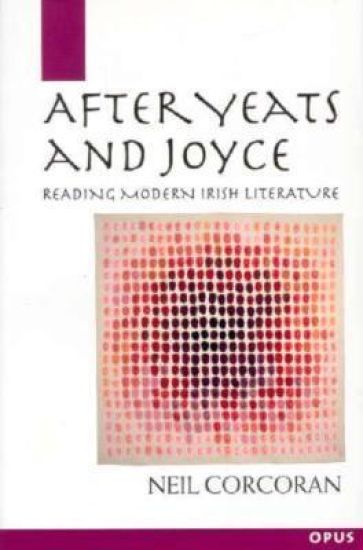
After Yeats and Joyce

After Yeats and Joyce

Neil Corcoran

Oxford University Press
1997
nidottu
Irish literature after Yeats and Joyce, from the 1920s onwards, includes texts which have been the subject of much contention. For a start how should Irish literature be defined: as works which have been written in Irish or as works written in Englsih by the Irish? It is a period in which ideas of Ireland--of people, community, and nation--have been both created and reflected, and in which conceptions of a distinct Irish identity have been articulated, defended, and challenged; a period which has its origins in a time of intense political turmoil. `after Yeats and Joyce' also suggests the immense influence of these two writers on the style, stances, and preoccupations of twentieth-century Irish literature. Neil Corcoran focuses his chapter on various themes such as `the Big House', the rural and provincial, with reference to authors from Kinsella and Beckett to William Trevor, Seamus Heaney, and Mary Lavin, providing a lucid and far-reaching introduction to modern Irish writing.
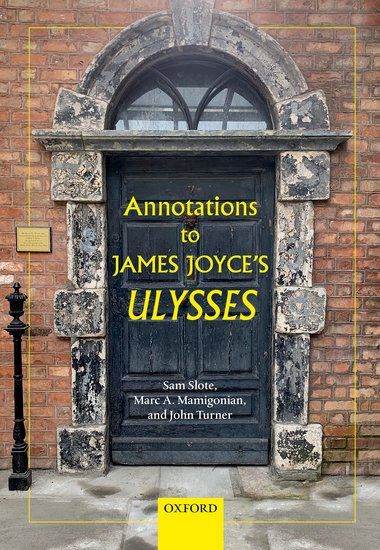
Annotations to James Joyce's Ulysses

Annotations to James Joyce's Ulysses

Sam Slote; Marc A. Mamigonian; John Turner

Oxford University Press
2022
sidottu
James Joyce's Ulysses is filled with all sorts of references that can get in the way of many of its readers. This volume, with over 12,000 individual annotations (and more than double the word count of Ulysses itself), explains these references and allusions in a clear and compact manner and is designed to be accessible to novices and scholars alike. The annotations cover the full range of information referenced in Ulysses: a vast array of literary allusions, such as Shakespeare, Aristotle, Dante, Aquinas, slang from various eras and areas, foreign language words and phrases, Hiberno-English expressions, Catholic ritual and theology, Irish histories, Theosophy, Freemasonry, cricket, astronomy, fashion, boxing, heraldry, the symbolism of tattoos, horse racing, advertising slogans, nursery rhymes, superstitions, music-hall songs, references to Dublin topography precise enough for a city directory, and much more besides. The annotations reflect the latest scholarship and have been thoroughly reviewed by an international team of experts. They are designed to be accessible to first-time readers and college students and will also serve as a resource for Joycean specialists. The volume includes contemporaneous maps of Dublin to illustrate the cityscape's relevance to Joyce's novel. Unlike previous volumes of annotations, almost every note includes documentation about sources.
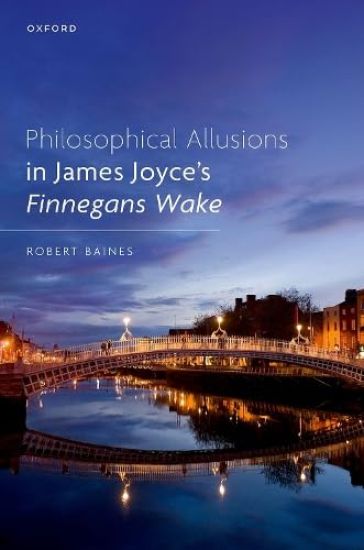
Philosophical Allusions in James Joyce's Finnegans Wake

Philosophical Allusions in James Joyce's Finnegans Wake

Robert Baines

Oxford University Press
2023
sidottu
Philosophical Allusions in James Joyce's Finnegans Wake is the first study to offer complete and comprehensive explanations of the most significant philosophical references in James Joyce's avant-garde masterpiece. Philosophy is important in all of Joyce's works, but it is his final novel which most fully engages with that field. Robert Baines shows the broad range of philosophers Joyce wove into his last work, from Aristotle to Confucius, Bergson to Kant. For each major philosophical allusion in Finnegans Wake, this book explains the original idea and reveals how Joyce first encountered it. Drawing upon extensive research into Joyce's notebooks and drafts, Baines then shows how Joyce developed and adapted that idea through repeated revisions. From here, the final form of the idea as it appears in the Wake is explored. In carefully examining the Wake's key philosophical allusions, essential themes within the novel come into focus, including history, time, language, being, and perception. We see also how those allusions combine to create a network of ideas, thinkers, and texts which has a logic and an integrity. Ultimately, Philosophical Allusions in James Joyce's Finnegans Wake shows that the more one knows of the Wake's philosophical allusions, the more one can find meaning and reason in this famously perplexing book of the night.
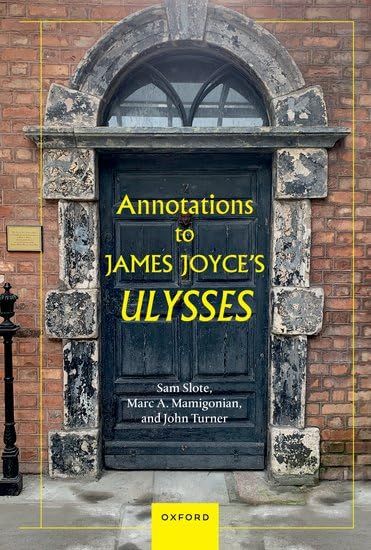
Annotations to James Joyce's Ulysses

Annotations to James Joyce's Ulysses

Sam Slote; Marc A. Mamigonian; John Turner

Oxford University Press
2024
nidottu
James Joyce's Ulysses is filled with all sorts of references that can get in the way of many of its readers. This volume, with over 12,000 individual annotations (and more than double the word count of Ulysses itself), explains these references and allusions in a clear and compact manner and is designed to be accessible to novices and scholars alike. The annotations cover the full range of information referenced in Ulysses: a vast array of literary allusions, such as Shakespeare, Aristotle, Dante, Aquinas, slang from various eras and areas, foreign language words and phrases, Hiberno-English expressions, Catholic ritual and theology, Irish histories, Theosophy, Freemasonry, cricket, astronomy, fashion, boxing, heraldry, the symbolism of tattoos, horse racing, advertising slogans, nursery rhymes, superstitions, music-hall songs, references to Dublin topography precise enough for a city directory, and much more besides. The annotations reflect the latest scholarship and have been thoroughly reviewed by an international team of experts. They are designed to be accessible to first-time readers and college students and will also serve as a resource for Joycean specialists. The volume includes contemporaneous maps of Dublin to illustrate the cityscape's relevance to Joyce's novel. Unlike previous volumes of annotations, almost every note includes documentation about sources.
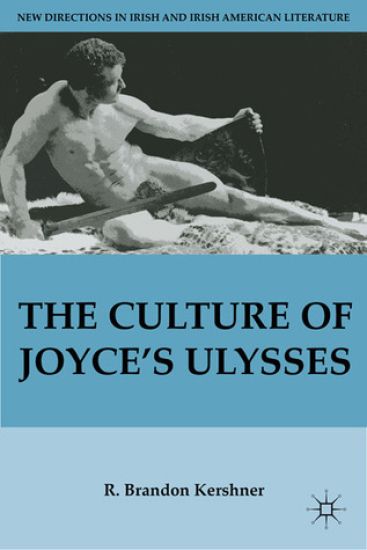
The Culture of Joyce’s Ulysses

The Culture of Joyce’s Ulysses

R. Kershner

Palgrave Macmillan
2011
sidottu
Reading Ulysses with an eye to the cultural references embedded within it, Kershner interrogates modernism's relationship to contemporary popular culture and literature. Examples underscore Kershner's corrective to formal approaches to genre as he broadens the methodologies that are used to study it to include social and political approaches.
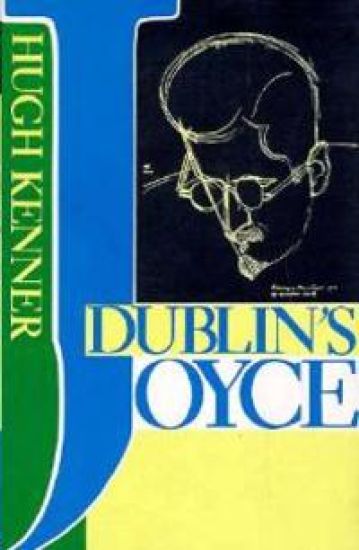
Dublin's Joyce

Dublin's Joyce

Hugh Kenner

Columbia University Press
1987
pokkari
One of the most important books ever written on Uylsses, Dublin's Joyce established Hugh Kenner as a significant modernist critic. This pathbreaking analysis presents Uylsses as a "bit of anti-matter that Joyce sent out to eat the world." The author assumes that Joyce wasn't a man with a box of mysteries, but a writer with a subject: his native European metropolis of Dublin. Dublin's Joyce provides the reader with a perspective of Joyce as a superemely important literary figure without considering him to be the revealer of a secret doctrine.
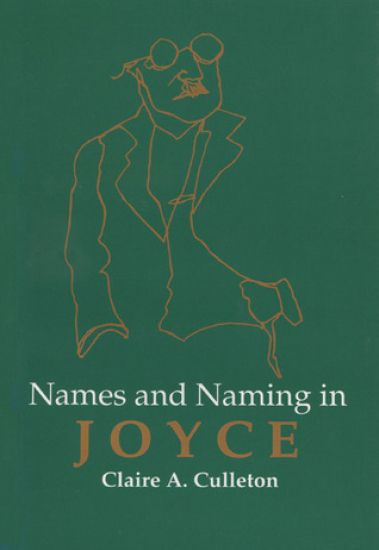
Names and Naming in Joyce

Names and Naming in Joyce

University of Wisconsin Press
1994
nidottu
By examining names and naming patterns from ""Stephen Hero"" and ""Finnegans Wake"", this text discusses what they reveal about Joyce's character and practice as a writer and explores their historical, literary and cultural implications, stressing that naming is not only a creative act. q
Virgil and Joyce

Virgil and Joyce

Randall J. Pogorzelski

University of Wisconsin Press
2016
sidottu
James Joyce’s Ulysses is a modern version of Homer’s Odyssey, but Joyce—who was a better scholar of Latin than of Greek—also was deeply influenced by the Aeneid, Virgil’s epic poem about the journey of Aeneas and the foundation of Rome. Joyce wrote Ulysses during the Irish War of Independence, when militants, politicians, and intellectuals were attempting to create a new Irish nation. Virgil wrote the Aeneid when, in the wake of decades of civil war, Augustus was founding what we now call the Roman Empire. Randall Pogorzelski applies modern theories of nationalism, intertextuality, and reception studies to illuminate how both writers confronted issues of nationalism, colonialism, political violence, and freedom during times of crisis.
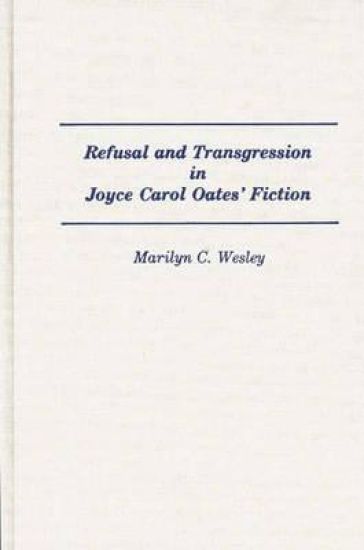
Refusal and Transgression in Joyce Carol Oates' Fiction

Refusal and Transgression in Joyce Carol Oates' Fiction

Marilyn C. Wesley

Praeger Publishers Inc
1993
sidottu
This comprehensive and sophisticated feminist analysis contradicts the negative evaluations of earlier feminist critics to define Oates' feminist accomplishments. Wesley presents Oates' fiction as a dynamic structure that grew out of her obsessive concern with the American family and shows her literary patterns of resistance to the gender ideology that shapes it. She illustrates how Oates' disturbing portrayals of troubled families can and do address complex issues of power in contemporary society--economic dislocation, gender inequity, and violence--as they are experienced in intimate relationships.The author defines and exemplifies the central concepts of family, power, and resistance in Oates' work with reference to her own literary criticism and the theoretical principles of Frederic Jameson. She begins by examining the presentation of the mother and the father in Oates' earliest works and then charts mother and daughter, brother and sister, and other family relationships. Wesley contends that the power dynamics of Oates' families relegate daughters to a position of impotence and sons to one of isolation and shows that the evolution of the children's refusal to identify themselves with their male or female models is a major focus in Oates' fiction.
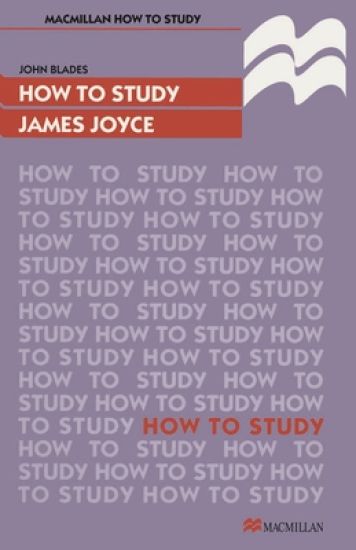
How to Study James Joyce

How to Study James Joyce

John Blades

Red Globe Press
1996
nidottu
This guide to James Joyce's major novels presents a refreshing approach to understanding the work of this challenging and enigmatic giant of twentieth-century literature. Taking the student through a careful, step-by-step analysis of each text, John Blades demonstrates a practical and lively method of critical analysis.
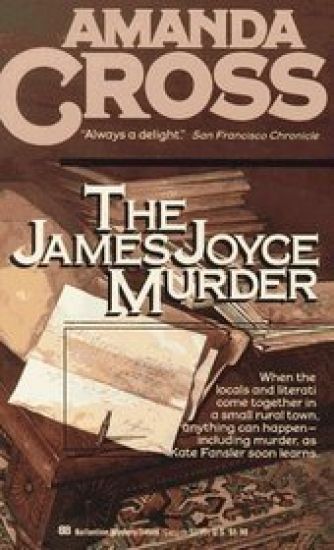
The James Joyce Murder

The James Joyce Murder

Amanda Cross

Random House Publishing Group
1987
pokkari
"If by some cruel oversight you haven't discovered Amanda Cross, you have an uncommon pleasure in store for you." THE NEW YORK TIMES BOOK REVIEWKate Fansler is vacationing in the sweet and harmless Berkshires, sorting through the letters of Henry James. But when her next-door neighbor is murdered, and all her houseguests are prime suspects, her idyll turns prosaic, indeed....
Borges and Joyce

Borges and Joyce

Patricia Novillo-Corvalan

Routledge
2020
nidottu
This book examines the interface between two revolutionary writers of the twentieth century, James Joyce and Jorge Luis Borges. It argues that Borges created himself as a 'precursor' of Joyce and discusses the way in which Borges and Joyce conjured up the ghosts of Homer, Dante, and Shakespeare.
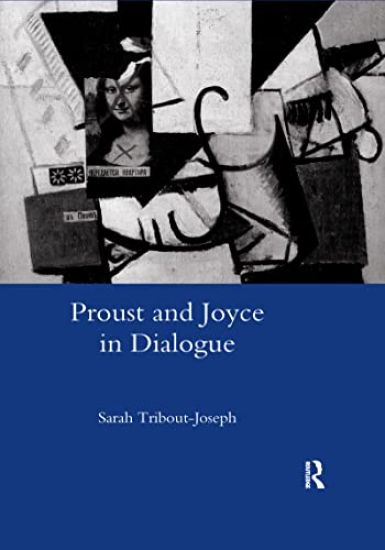
Proust and Joyce in Dialogue

Proust and Joyce in Dialogue

Sarah Tribout-Joseph

Routledge
2020
nidottu
This book discusses the interrelation between Francoise's malapropisms in Proust and the erudite allusions of Stephen's interior monologue in Joyce. It provides interconnected close readings of socio-political debate, listening processes, gossip, internalized debate, and misunderstandings.
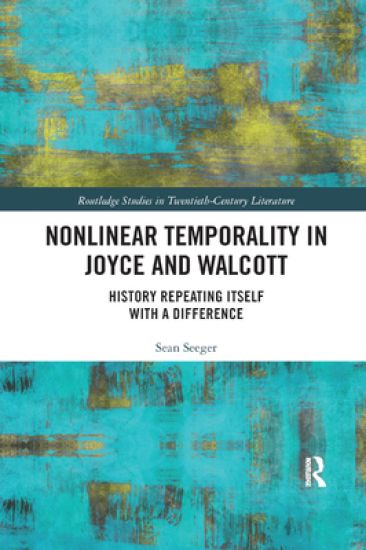
Nonlinear Temporality in Joyce and Walcott
Nonlinear Temporality in Joyce and Walcott is the first dedicated comparative study of James Joyce and Derek Walcott. The book examines the ways in which both Joyce’s fiction and Walcott’s poetry articulate a nonlinear conception of time with radical cultural and political implications. For Joyce and Walcott equally, the book argues, it is only by reconceiving time in this way that it becomes possible to envisage a means of escape from what Joyce calls “force, hatred, history” and what Walcott calls the “madness of history seen as sequential time”. A starting point for the comparisons drawn between Joyce and Walcott is their relationship to Homer. Joyce’s Ulysses is in one respect a rewriting of Homer’s Odyssey; Walcott’s Omeros stands in an analogous relationship to the Iliad. This book argues that these acts of rewriting, far from being instances of influence, intertexuality, or straightforward repetition, exemplify Joyce and Walcott’s complex stance, not just toward literary history, but toward the idea of history as such. The book goes on to demonstrate how an enhanced appreciation of the role of nonlinear temporality in Joyce and Walcott can help to illuminate numerous other aspects of their work.