Ellen Oh; Elsie Chapman; Renée Ahdieh; Sona Charaipotra; Preeti Chhibber; Roshani Chokshi; Aliette De Bodard; Melissa de la Cruz; Julie Kagawa; Rahul Kanakia; Lori M. Lee; E. C. Myers; Cindy Pon; Aisha Saeed; Shveta Thakrar; Alyssa Wong
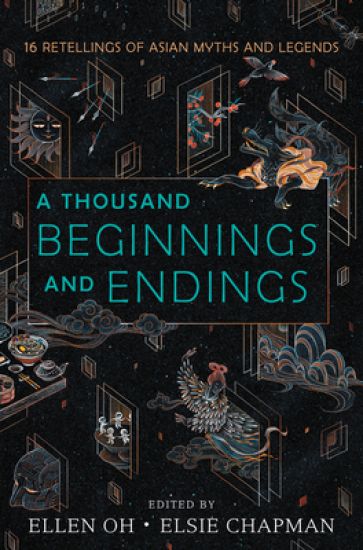
Sixteen extraordinary authors—including New York Times bestsellers Melissa de la Cruz, Renée Ahdieh, and Julie Kagawa—reimagine the folklore and mythology of East and South Asia in short stories that are by turns enchanting, heartbreaking, romantic, and passionate. This exquisite paperback anthology includes an original bonus story from Ellen Oh. In a starred review, Publishers Weekly called A Thousand Beginnings and Endings a “must-read.” A mountain loses her heart. Two sisters transform into birds to escape captivity. A young man learns the true meaning of sacrifice. A young woman takes up her mother’s mantle and leads the dead to their final resting place.Bestselling and award-winning authors explore the timeless themes of East and South Asian lore in sixteen original stories that will appeal to every reader. From fantasy to science fiction to contemporary, from romance to tales of revenge, these stories will beguile readers from start to finish. Edited by We Need Diverse Books co-founder Ellen Oh and Elsie Chapman, this anthology contains stories from sixteen Asian and South Asian authors, including New York Times bestsellers and award-winners. In a starred review, Kirkus called it an “incredible anthology that will keep readers on the edges of their seats, wanting more.”Featuring:Renée Ahdieh, Elsie Chapman, Sona Charaipotra, Preeti Chhibber, Roshani Chokshi, Aliette de Bodard, Melissa de la Cruz, Julie Kagawa, Rahul Kanakia, Lori M. Lee, E. C. Myers, Cindy Pon, Aisha Saeed, Shveta Thakrar, Alyssa Wong, and a new original story by Ellen Oh.
Andrew Agha; Ronald W. Anthony; Jodi A. Barnes; David J. Cranford; Katherine P. Gill; J. W. Joseph; Julia A. King; Jon Bernard Marcoux; Sarah E. Platt; Corey A. H. Sattes; Craig T. Sheldon; Scott M. Strickland; Martha A. Zierden
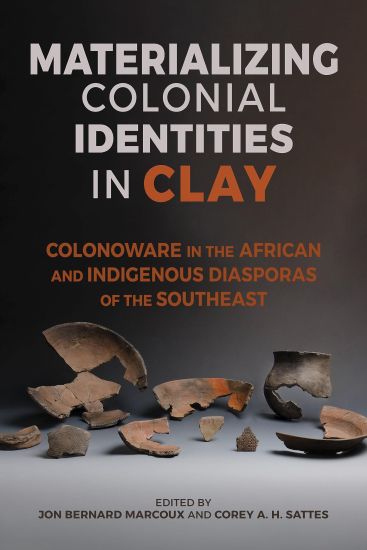
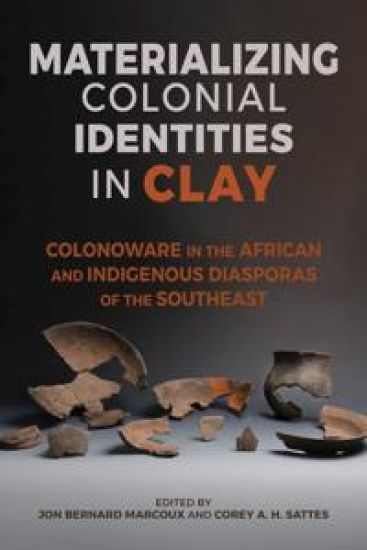
In Materializing Colonial Identities in Clay, Jon Bernard Marcoux, Corey A. H. Sattes, and contributors examine colonoware to explore the active roles that African Americans and Indigenous people played in constructing southern colonial culture and part of their shared history with Europeans. Colonoware was most likely produced by African and Indigenous potters and used by all colonial groups for cooking, serving, and storing food. It formed the foundation of colonial foodways in many settlements across the southeastern United States. Even so, compared with other ceramics from this period, less has been understood about its production and use because of the lack of documentation. This collection of essays fills this gap with valuable, recent archaeological data from which much may be surmised about the interaction among Europeans, Indigenous, and Africans, especially within the contexts of the African and Indigenous slave trade and plantation systems. The chapters represent the full range of colonoware research: from the beginning to the end of its production, from urban to rural contexts, and from its intraregional variation in the Lowcountry to the broad patterns of colonialism across the early American Southeast. The book summarizes current approaches in colonoware research and how these may bridge the gaps between broader colonial American studies, Indigenous studies, and African Diaspora studies. A concluding discussion contextualizes the chapters through the perspectives of intersectionality and Black feminist theory, drawing attention to the gendered and racialized meanings embodied in colonoware, and considering how colonialism and slavery have shaped these cultural dimensions and archaeologists’ study of them.
Andrew Agha; Ronald W. Anthony; Jodi A. Barnes; David J. Cranford; Katherine P. Gill; J. W. Joseph; Julia A. King; Jon Bernard Marcoux; Sarah E. Platt; Corey A. H. Sattes; Craig T. Sheldon; Scott M. Strickland; Martha A. Zierden
In Materializing Colonial Identities in Clay, Jon Bernard Marcoux, Corey A. H. Sattes, and contributors examine colonoware to explore the active roles that African Americans and Indigenous people played in constructing southern colonial culture and part of their shared history with Europeans. Colonoware was most likely produced by African and Indigenous potters and used by all colonial groups for cooking, serving, and storing food. It formed the foundation of colonial foodways in many settlements across the southeastern United States. Even so, compared with other ceramics from this period, less has been understood about its production and use because of the lack of documentation. This collection of essays fills this gap with valuable, recent archaeological data from which much may be surmised about the interaction among Europeans, Indigenous, and Africans, especially within the contexts of the African and Indigenous slave trade and plantation systems. The chapters represent the full range of colonoware research: from the beginning to the end of its production, from urban to rural contexts, and from its intraregional variation in the Lowcountry to the broad patterns of colonialism across the early American Southeast. The book summarizes current approaches in colonoware research and how these may bridge the gaps between broader colonial American studies, Indigenous studies, and African Diaspora studies. A concluding discussion contextualizes the chapters through the perspectives of intersectionality and Black feminist theory, drawing attention to the gendered and racialized meanings embodied in colonoware, and considering how colonialism and slavery have shaped these cultural dimensions and archaeologists’ study of them.
Stephen P. Ahearne-Kroll; Harold W. Attridge; Corrine Carvalho; Adela Yarbro Collins; John J. Collins; John R. Donahue; John Endres; Gina Hens-Piazza; Anathea E. Portier-Young; Julia D. E. Prinz; Gregory E. Sterling
The essays gathered here provide a panoramic view of current thinking on biblical texts that play important roles in contemporary struggles for social justice – either as inspiration or impediment. Here, from the hands of an ecumenical array of leading biblical scholars, are fresh and compelling resources for thinking biblically about what justice is and what it demands. Individual essays treat key debates, themes, and texts, locating each within its historical and cultural settings while also linking them to the most pressing justice concerns of the twenty-first century. The volume aims to challenge academic and ecclesiastical complacency and highlight key avenues for future scholarship and action.
Stephen P. Ahearne-Kroll; Harold W. Attridge; Corrine Carvalho; Adela Yarbro Collins; John J. Collins; John R. Donahue; John Endres; Gina Hens-Piazza; Anathea E. Portier-Young; Julia D. E. Prinz; Gregory E. Sterling
The essays gathered here provide a panoramic view of current thinking on biblical texts that play important roles in contemporary struggles for social justice – either as inspiration or impediment. Here, from the hands of an ecumenical array of leading biblical scholars, are fresh and compelling resources for thinking biblically about what justice is and what it demands. Individual essays treat key debates, themes, and texts, locating each within its historical and cultural settings while also linking them to the most pressing justice concerns of the twenty-first century. The volume aims to challenge academic and ecclesiastical complacency and highlight key avenues for future scholarship and action.
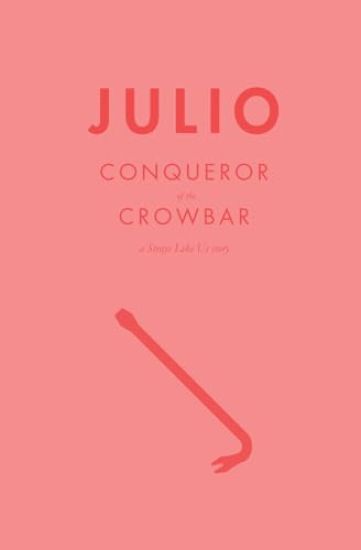
A new short story from the mind of author Garrett Francis.Julio's supposed to be on a field trip with the rest of his sixth grade class. Instead, he's standing at a bus stop with his hood up so that bystanders can't see the damage his mother has done to his cheek with a crowbar.And once he gets on that Richmond city bus, he embarks on a field trip of the self, reflecting upon the journey he, his mother and his brother have on thus far, and weighing what options he as an individual has next."Julio: Conqueror of the Crowbar" is a gritty story that touches upon themes of immigration, poverty and race, but also brings into focus what it is we as a society choose to thrust before our kids and label "greatness."If you enjoy short stories from any of the following authors, "Julio: Conqueror of the Crowbar" might just resonate with you: Caitlin HorrocksAdam JohnsonAlice WalkerRaymond CarverColum MccannF. Scott FitzgeraldJim HarrisonKaren Russell"Julio: Conqueror of the Crowbar" is a story from Strays Like Us, a collection of ten standalone short stories exploring what it means to grow up in America.
This title is part of UC Press's Voices Revived program, which commemorates University of California Press’s mission to seek out and cultivate the brightest minds and give them voice, reach, and impact. Drawing on a backlist dating to 1893, Voices Revived makes high-quality, peer-reviewed scholarship accessible once again using print-on-demand technology. This title was originally published in 1957.
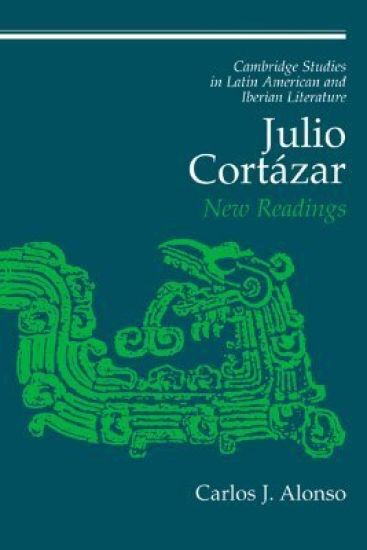
The articles gathered within this 1998 book address the Argentine writer Julio Cortázar's oeuvre from a variety of critical positions and focus on several of his multifarious writings: poems, short stories, novels, and miscellanea. The intention has been to provide the space for a reappraisal of Cortázar that will question received notions and assumptions regarding his works, and hence pave the way for an overarching revision of his production and his place in Latin American literature. Although significantly different in their theoretical approach, style, and their point of insertion in Cortázar's oeuvre, the articles provide a radical reassessment of one of the most significant Latin American writers.
The articles gathered here address the Argentine writer Julio Cortázar’s oeuvre from a variety of critical positions and focus on several of his multifarious writings: poems, short stories, novels, and miscellanea. The intention has been to provide the space for a reappraisal of Cortázar that will question received notions and assumptions regarding his works, and hence pave the way for an overarching revision of his production and his place in Latin American literature. Although significantly different in their theoretical approach, style, and their point of insertion in Cortázar’s oeuvre, the articles provide a radical reassessment of one of the most significant Latin American writers.
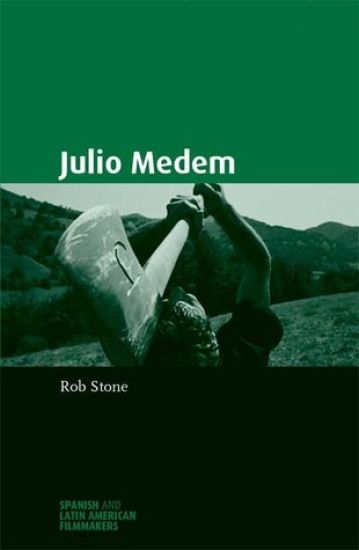
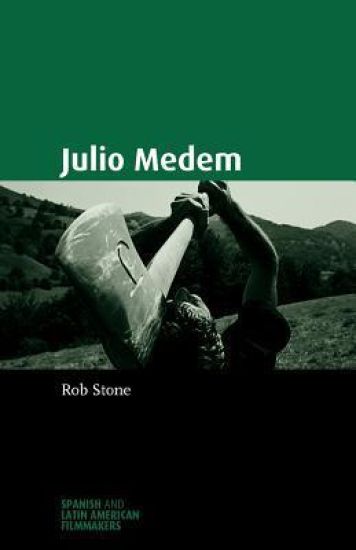
This thorough account of the life and films of the Spanish-Basque filmmaker Julio Medem is the first book in English on the internationally renowned writer-director of Vacas, La ardilla roja (Red Squirrel), Tierra, Los amantes del Círculo Polar (Lovers of the Arctic Circle), Lucía y el sexo (Sex and Lucía), La pelota vasca: la piel contra la piedra (Basque Ball) and Caótica Ana (Chaotic Ana),Initial chapters explore Medem’s childhood, adolescence and education and examine his earliest short films and critical writings against a background of a dramatically changing Spain. Later chapters provide accounts of the genesis, production and release of Medem’s challenging and sensual films, which feed into complex but lucid analyses of their meanings, both political and personal, in which Stone draws on traditions and innovations in Basque art, Spanish cinema and European philosophy to create a complete and provocative portrait of Medem and his work.
From his provincial origins in the small northern Mexico town of Múzquiz, Coahuila, to his meteoric rise in Manhattan's East Village art scene, to having achieved international standing at the time of his early death at forty-seven, Julio Galán was radically transgressive. The artist extended contemporary Mexican painting beyond the cultural criticism of Neo-Mexicanism (neomexicanismo), redefining Mexican identity as gender-expansive in his art. Galán combined gender-fluid imagery, his performative persona, queer self-representation, and cross-cultural visual and textual references to create large-scale, layered, dialogical visual puzzles. An artist ahead of his time, Galán's content and imagery is relevant to contemporary LGBTQ+ social movements.Replete with full-color reproductions of Galán's artwork and photographic material, Teresa Eckmann's book serves as the first English-language monograph on the artist's life and work. Anyone interested in art in Mexico and Latin America will find this book an indispensable addition to their library, and it will be a core book on the study of this artist for decades to come.