Kirjojen hintavertailu. Mukana 11 244 527 kirjaa ja 12 kauppaa.

Kirjahaku

Etsi kirjoja tekijän nimen, kirjan nimen tai ISBN:n perusteella.

1000 tulosta hakusanalla Keith Harding

The Case for Contextualism

The Case for Contextualism

Keith DeRose

Oxford University Press
2009
sidottu
It's an obvious enough observation that the standards that govern whether ordinary speakers will say that someone knows something vary with context: What we are happy to call "knowledge" in some ("low-standards") contexts we'll deny is "knowledge" in other ("high-standards") contexts. But do these varying standards for when ordinary speakers will attribute knowledge, and for when they are in some important sense warranted in attributing knowledge, reflect varying standards for when it is or would be true for them to attribute knowledge? Or are the standards that govern whether such claims are true always the same? And what are the implications for epistemology if these truth-conditions for knowledge claims shift with context? Contextualism, the view that the epistemic standards a subject must meet in order for a claim attributing "knowledge" to her to be true do vary with context, has been hotly debated in epistemology and philosophy of language during the last few decades. In The Case for Contextualism Keith DeRose offers a sustained state-of-the-art exposition and defense of the contextualist position, presenting and advancing the most powerful arguments in favor of the view and against its "invariantist" rivals, and responding to the most pressing objections facing contextualism.
The Appearance of Ignorance

The Appearance of Ignorance

Keith DeRose

Oxford University Press
2018
sidottu
Contextualism, the view that the epistemic standards a subject must meet in order for a claim attributing "knowledge" to her to be true do vary with context, has been hotly debated in epistemology and philosophy of language during the last few decades. This volume presents, develops, and defends contextualist solutions to two of the stickiest problems in epistemology: the puzzles of skeptical hypotheses and of lotteries. It is argued that, at least by ordinary standards for knowledge, we do know that skeptical hypotheses are false, and that we've lost the lottery. Why it seems that we don't know that they're false tells us a lot, both about what knowledge is and how knowledge attributions work. The Appearance of Ignorance is the companion volume to Keith DeRose's 2009 title The Case for Contextualism: Knowledge, Skepticism, and Context, Volume 1.
Leadership

Leadership

Keith Grint

Oxford University Press
2010
nidottu
The subject of leadership raises many questions: What is it? How does it differ from management and command? Are leaders born or bred? Who are the leaders? Do we actually need leaders? Inevitably, the answers are provocative and partial; leadership is a hugely important topic of debate. There are constant calls for 'greater' or 'stronger' leadership, but what this actually means, how we can evaluate it, and why it's important are not very clear. In this Very Short Introduction Keith Grint prompts the reader to rethink their understanding of what leadership is. He examines the way leadership has evolved from its earliest manifestations in ancient societies, highlighting the beginnings of leadership writings through Plato, Sun Tzu, Machiavelli and others, to consider the role of the social, economic, and political context undermining particular modes of leadership. Exploring the idea that leaders cannot exist without followers, and recognising that we all have diverse experiences and assumptions of leadership, Grint looks at the practice of management, its history, future, and influence on all aspects of society. ABOUT THE SERIES: The Very Short Introductions series from Oxford University Press contains hundreds of titles in almost every subject area. These pocket-sized books are the perfect way to get ahead in a new subject quickly. Our expert authors combine facts, analysis, perspective, new ideas, and enthusiasm to make interesting and challenging topics highly readable.
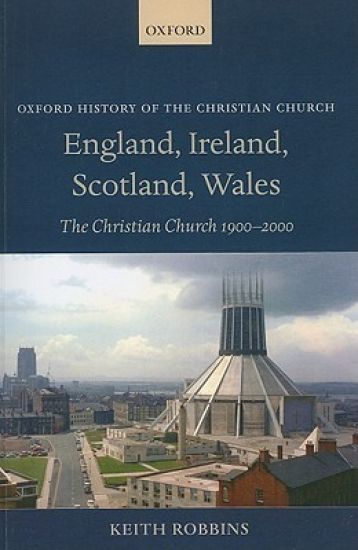
England, Ireland, Scotland, Wales

England, Ireland, Scotland, Wales

Keith Robbins

Oxford University Press
2010
nidottu
Keith Robbins, building on his previous writing on the modern history of the interlocking but distinctive territories of the British Isles, takes a wide-ranging, innovative and challenging look at the twentieth-century history of the main bodies, at once national and universal, which have collectively constituted the Christian Church. The protracted search for elusive unity is emphasized. Particular beliefs, attitudes, policies and structures are located in their social and cultural contexts. Prominent individuals, clerical and lay, are scrutinized. Religion and politics intermingle, highlighting, for churches and states, fundamental questions of identity and allegiance, of public and private values, in a century of ideological conflict, violent confrontation (in Ireland), two world wars and protracted Cold War. The massive change experienced by the countries and people of the Isles since 1900 has encompassed shifting relationships between England, Ireland (and Northern Ireland), Scotland and Wales, the end of the British Empire, the emergence of a new Europe and, latterly, major immigration of adherents of Islam, Hinduism, Sikhism and other faiths from outside Europe: developments scarcely conceivable at the outset. Such a broad contextual perspective provides an essential background to understanding the puzzling ambiguities evident both in secularization and enduring Christian faith. Robbins provides a cogent and compelling overview of this turbulent century for the churches of the Isles.
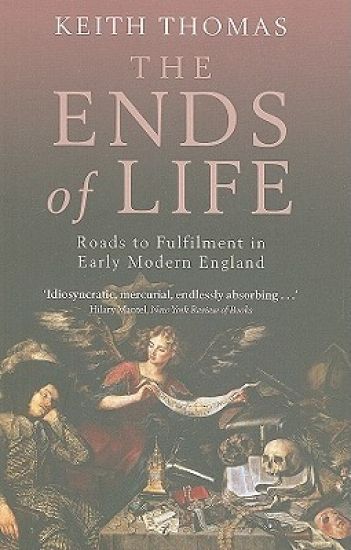
The Ends of Life

The Ends of Life

Keith Thomas

Oxford University Press
2010
nidottu
How should we live? That question was no less urgent for English men and women who lived between the early sixteenth and late eighteenth centuries than for this book's readers. Keith Thomas's masterly exploration of the ways in which people sought to lead fulfilling lives in those centuries between the beginning of the Reformation and the heyday of the Enlightenment illuminates the central values of the period, while casting incidental light on some of the perennial problems of human existence. Consideration of the origins of the modern ideal of human fulfilment and of obstacles to its realization in the early modern period frames an investigation that ranges from work, wealth, and possessions to the pleasures of friendship, family, and sociability. The cult of military prowess, the pursuit of honour and reputation, the nature of religious belief and scepticism, and the desire to be posthumously remembered are all drawn into the discussion, and the views and practices of ordinary people are measured against the opinions of the leading philosophers and theologians of the time. The Ends of Life offers a fresh approach to the history of early modern England, by one of the foremost historians of our time. It also provides modern readers with much food for thought on the problem of how we should live and what goals in life we should pursue.
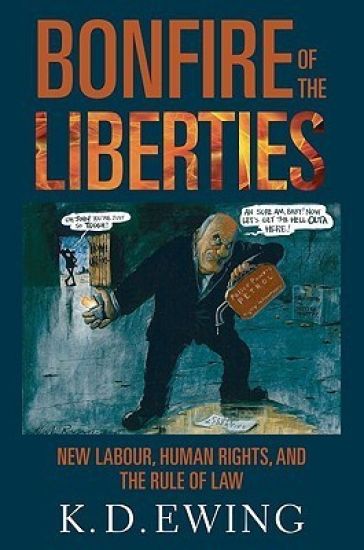
Bonfire of the Liberties

Bonfire of the Liberties

Keith Ewing

Oxford University Press
2010
sidottu
This provocative book confronts the corrosion of civil liberties under successive New Labour governments since 1997. It argues that the last decade has seen a wholesale failure of constitutional principle and exposed the futility of depending on legal rights to restrict the power of executive government. It considers the steps necessary to prevent the continued decline of political standards, arguing that only through rebalancing political power can civil liberties be adequately protected. Relying on extensive new research of inaccessible sources, the book examines the major battlegrounds over civil liberties under New Labour, including the growth and abuse of police power, state surveillance and counter-terrorist measures. It unfolds a compelling narrative of the major battles fought before Parliament and in the courts, and attacks the failure of the political and legal systems to offer protection to those suffering abuses of their civil liberty at the hands of an aggressive Executive. In doing so, it offers a definitive account of the struggle for civil liberty in modern Britain, and a controversial argument for the reforms necessary to contain executive power.
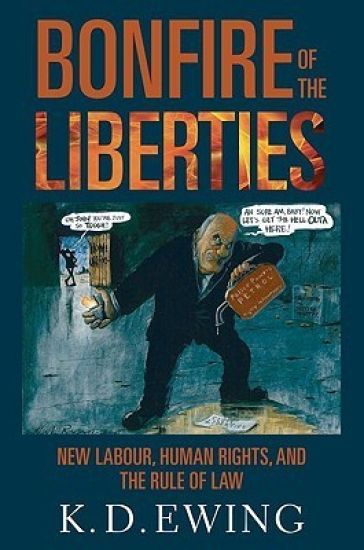
Bonfire of the Liberties

Bonfire of the Liberties

Keith Ewing

Oxford University Press
2010
nidottu
This provocative book confronts the corrosion of civil liberties under successive New Labour governments since 1997. It argues that the last decade has seen a wholesale failure of constitutional principle and exposed the futility of depending on legal rights to restrict the power of executive government. It considers the steps necessary to prevent the continued decline of political standards, arguing that only through rebalancing political power can civil liberties be adequately protected. Relying on extensive new research of inaccessible sources, the book examines the major battlegrounds over civil liberties under New Labour, including the growth and abuse of police power, state surveillance and counter-terrorist measures. It unfolds a compelling narrative of the major battles fought before Parliament and in the courts, and attacks the failure of the political and legal systems to offer protection to those suffering abuses of their civil liberty at the hands of an aggressive Executive. In doing so, it offers a definitive account of the struggle for civil liberty in modern Britain, and a controversial argument for the reforms necessary to contain executive power.
Jeroboam's Royal Drama

Jeroboam's Royal Drama

Keith Bodner

Oxford University Press
2012
sidottu
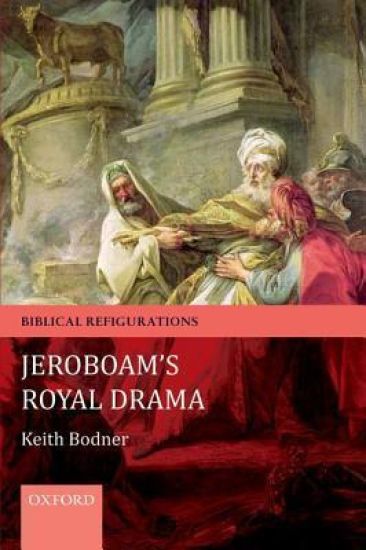
Among the most challenging biblical figures to understand is Jeroboam son of Nebat, the first monarch of northern Israel whose story is told in 1 Kings 11-14. This book explores the characterization of Jeroboam in the Hebrew text, and traces his rags to riches career trajectory. What are the circumstances whereby this widow's son is elevated to the position of king, with a conditional promise for a lasting dynasty? A close reading of the narrative reveals a literary achievement of great subtlety and complexity. Even though he becomes the negative standard for the rest of Israel's royal history, Jeroboam's portrait is far more nuanced than is often realized and yields a host of surprises for the engaged reader. Numerous issues are raised in the 1 Kings 11-14 material, including questions of power, leadership, and the role of the prophetic office in national affairs. Against the grain of conventional interpretation that tends to idealize or vilify biblical characters, Keith Bodner's study locates the arrival of Jeroboam's kingship as a direct response to scandalous activity within the Solomonic empire.
Jeroboam's Royal Drama

Jeroboam's Royal Drama

Keith Bodner

Oxford University Press
2012
nidottu
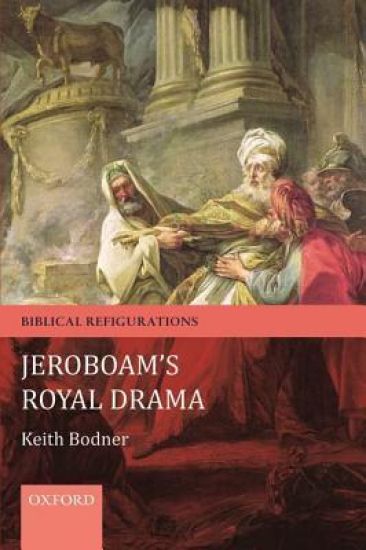
Among the most challenging biblical figures to understand is Jeroboam son of Nebat, the first monarch of northern Israel whose story is told in 1 Kings 11-14. This book explores the characterization of Jeroboam in the Hebrew text, and traces his rags to riches career trajectory. What are the circumstances whereby this widow's son is elevated to the position of king, with a conditional promise for a lasting dynasty? A close reading of the narrative reveals a literary achievement of great subtlety and complexity. Even though he becomes the negative standard for the rest of Israel's royal history, Jeroboam's portrait is far more nuanced than is often realized and yields a host of surprises for the engaged reader. Numerous issues are raised in the 1 Kings 11-14 material, including questions of power, leadership, and the role of the prophetic office in national affairs. Against the grain of conventional interpretation that tends to idealize or vilify biblical characters, Keith Bodner's study locates the arrival of Jeroboam's kingship as a direct response to scandalous activity within the Solomonic empire.
The Metaphysics of Knowledge

The Metaphysics of Knowledge

Keith Hossack

Oxford University Press
2012
nidottu
The Metaphysics of Knowledge presents the thesis that knowledge is an absolutely fundamental relation, with an indispensable role to play in metaphysics, philosophical logic, and philosophy of mind and language. Knowledge has been generally assumed to be a propositional attitude like belief. But Keith Hossack argues that knowledge is not a relation to a content; rather, it a relation to a fact. This point of view allows us to explain many of the concepts of philosophical logic in terms of knowledge. Hossack provides a theory of facts as structured combinations of particulars and universals, and presents a theory of content as the property of a mental act that determines its value for getting knowledge. He also defends a theory of representation in which the conceptual structure of a content is taken to picture the fact it represents. This permits definitions to be given of reference, truth, and necessity in terms of knowledge. Turning to the metaphysics of mind and language, Hossack argues that a conscious state is one that is identical with knowledge of its own occurrence. This allows us to characterise subjectivity, and, by illuminating the 'I'-concept, allows us to gain a better understanding of the concept of a person. Language is then explained in terms of knowledge, as a device used by a community of persons for exchanging knowledge by testimony. The Metaphysics of Knowledge concludes that knowledge is too fundamental to be constituted by something else, such as one's functional or physical state; other things may cause knowledge, but do not constitute it.
Elisha's Profile in the Book of Kings

Elisha's Profile in the Book of Kings

Keith Bodner

Oxford University Press
2013
sidottu
Elisha's Profile in the Book of Kings uses the tools of literary criticism to read the Elisha narrative as an integral component of the Deuteronomistic History compiled in the aftermath of the Babylonian invasion and destruction of Jerusalem in 586 BCE. From his investiture in 1 Kings 19 to his final cameo in 2 Kings 13, Elisha the prophet has one of the most extensively-narrated careers in Israel's royal history. During a particularly dark and contested era where the corrupt northern kings hold sway, Elisha enters the ideological battleground and boldly raises his voice and performs remarkable signs to stem the tide of injustice and religious inconstancy. Empowered by a double portion of his master Elijah's spirit, Elisha is a double agent who continues the task of dismantling the Omride dynasty. Moving between the international stage and more domestic locales, Elisha travels widely and interacts with a host of characters from virtually every socio-economic category, visiting foreign capitals and cities under siege as well as wealthy homes and obscure villages. With actions that range from feeding a multitude to mind-reading and raising the dead, Elisha's performance eclipses that of his master and ensures a lasting place in ancient Israel's prophetic heritage.
The Case for Contextualism

The Case for Contextualism

Keith DeRose

Oxford University Press
2011
nidottu
It's an obvious enough observation that the standards that govern whether ordinary speakers will say that someone knows something vary with context: What we are happy to call "knowledge" in some ("low-standards") contexts we'll deny is "knowledge" in other ("high-standards") contexts. But do these varying standards for when ordinary speakers will attribute knowledge, and for when they are in some important sense warranted in attributing knowledge, reflect varying standards for when it is or would be true for them to attribute knowledge? Or are the standards that govern whether such claims are true always the same? And what are the implications for epistemology if these truth-conditions for knowledge claims shift with context? Contextualism is the view that the epistemic standards a subject must meet, in order for a claim attributing "knowledge" to her to be true, do vary with context. This has been hotly debated in epistemology and philosophy of language during the last few decades. In The Case for Contextualism Keith DeRose offers a sustained state-of-the-art exposition and defense of the contextualist position, presenting and advancing the most powerful arguments in favor of the view and against its "invariantist" rivals, and responding to the most pressing objections facing contextualism.
The Making of Cabaret

The Making of Cabaret

Keith Garebian

Oxford University Press Inc
2011
sidottu
A handy and engaging chronicle, this book is the most detailed production history to date of the original Broadway version of Cabaret, showing how the show evolved from Christopher Isherwood's Berlin stories, into John van Druten's stage play, a British film adaptation, and then the Broadway musical, conceived and directed by Harold Prince as an early concept musical. With nearly 40 illustrations, full cast credits, and a bibliography, The Making of Cabaret will appeal to musical theatre aficionados, theatre specialists, and students and performers of musical theatre.
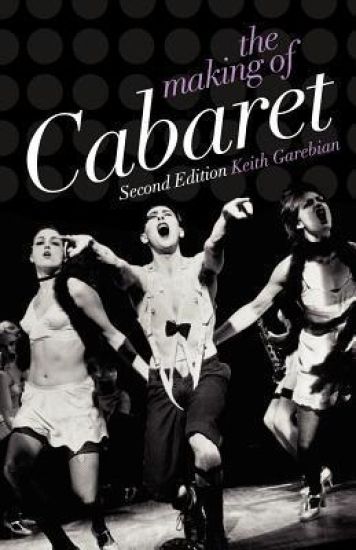
The Making of Cabaret

The Making of Cabaret

Keith Garebian

Oxford University Press Inc
2011
nidottu
A handy and engaging chronicle, this book is the most detailed production history to date of the original Broadway version of Cabaret, showing how the show evolved from Christopher Isherwood's Berlin stories, into John van Druten's stage play, a British film adaptation, and then the Broadway musical, conceived and directed by Harold Prince as an early concept musical. With nearly 40 illustrations, full cast credits, and a bibliography, The Making of Cabaret will appeal to musical theatre aficionados, theatre specialists, and students and performers of musical theatre.
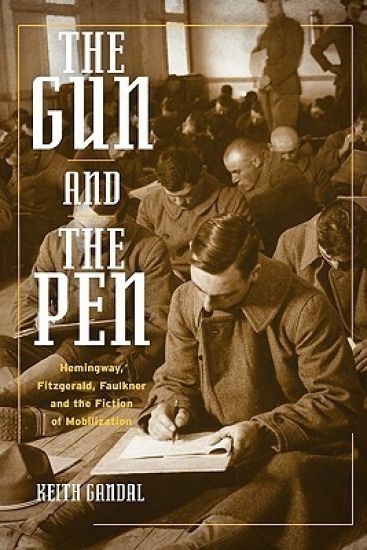
The Gun and the Pen

The Gun and the Pen

Keith Gandal

Oxford University Press Inc
2010
nidottu
Ernest Hemingway, F. Scott Fitzgerald, and William Faulkner stand as the American voice of the Great War. But was it warfare that drove them to write? Not according to Keith Gandal, who argues that the authors' famous postwar novels were motivated not by their experiences of the horrors of war but rather by their failure to have those experiences. These 'quintessential' male American novelists of the 1920s were all, for different reasons, deemed unsuitable as candidates for full military service or command. As a result, Gandal contends, they felt themselves emasculated--not, as the usual story goes, due to their encounters with trench warfare, but because they got nowhere near the real action. Bringing to light previously unexamined Army records, including new information about the intelligence tests, The Gun and the Pen demonstrates that the authors' frustrated military ambitions took place in the forgotten context of the unprecedented U.S. mobilization for the Great War, a radical effort to transform the Army into a meritocratic institution, indifferent to ethnic and class difference (though not to racial difference). For these Lost Generation writers, the humiliating failure vis-à-vis the Army meant an embarrassment before women and an inability to compete successfully in a rising social order, against a new set of people. The Gun and the Pen restores these seminal novels to their proper historical context and offers a major revision of our understanding of America's postwar literature.
Jacob Arminius

Jacob Arminius

Keith D. Stanglin; Thomas H. McCall

Oxford University Press Inc
2012
sidottu
Jacob Arminius (1559-1609) is one of the few theologians in the history of Christianity who has lent his name to a significant theological movement. The dissemination of his thought throughout Europe, Great Britain, and North America, along with the appeal of his ideas in current Protestant evangelical spheres (whether rightly understood or misunderstood), continue to attract both scholarly and popular attention. Keith Stanglin and Thomas McCall's Jacob Arminius offers a constructive synthesis of the current state of Arminius studies. There is a chasm separating technical, scholarly discussions of Arminius and popular-level appeals to his thought. The authors seek to bridge the scholarly and general discussions, providing an account based on interaction with all the primary sources and latest secondary research that will be helpful to the scholar as well as comprehensible and relevant to the undergraduate student. The authors describe key elements of Arminius' theology with careful attention to its proper context; they also explore the broader theological implications of his views.
Jacob Arminius

Jacob Arminius

Keith D. Stanglin; Thomas H. McCall

Oxford University Press Inc
2012
nidottu
Jacob Arminius (1559-1609) is one of the few theologians in the history of Christianity who has lent his name to a significant theological movement. The dissemination of his thought throughout Europe, Great Britain, and North America, along with the appeal of his ideas in current Protestant evangelical spheres (whether rightly understood or misunderstood), continue to attract both scholarly and popular attention. Keith Stanglin and Thomas McCall's Jacob Arminius offers a constructive synthesis of the current state of Arminius studies. There is a chasm separating technical, scholarly discussions of Arminius and popular-level appeals to his thought. The authors seek to bridge the scholarly and general discussions, providing an account based on interaction with all the primary sources and latest secondary research that will be helpful to the scholar as well as comprehensible and relevant to the undergraduate student. The authors describe key elements of Arminius' theology with careful attention to its proper context; they also explore the broader theological implications of his views.
The Passionate Muse

The Passionate Muse

Keith Oatley

Oxford University Press Inc
2012
sidottu
Fiction is based on narratives in which characters act on their intentions and encounter vicissitudes. Readers enjoy entering into the lives of characters, coming to empathize with them as their plans progress or they meet obstacles. Readers enjoy, too, meeting characters with whom they sympathize, and being reminded of emotional episodes in their own lives. Keith Oatley is both a novelist and research psychologist, and so it is not surprising that he has created a hybrid text that alternates between sections of an original short story, One Another, and chapters on the psychology of emotion and fiction. People's enjoyment of stories depends on the emotions they experience as they read, watch, or listen. We human beings are intensely social and it's to imagined social worlds that fiction transports us, enabling us to meet more people and feel for them in many more situations than we could if we lived many lives. In this text, the author explains why people who read a great deal of fiction have better understandings of others than those who tend to read nonfiction. He argues that through fiction, we come to know more about the emotions of others and of ourselves.
Essays on Reference, Language, and Mind

Essays on Reference, Language, and Mind

Keith Donnellan

Oxford University Press Inc
2012
sidottu
Keith Donnellan, Emeritus of UCLA, is one of the major figures in 20th century philosophy of language, a key part of the highly influential generation of scholars that included Hilary Putnam, Saul Kripke, and David Kaplan. Like many of these philosophers, his primary contributions were published in article form rather than books. This volume presents a highly focussed collection of articles by Donnellan. In the late sixties and early seventies, the philosophy of language and mind went through a paradigm shift, with the then-dominant Fregean theory losing ground to the "direct reference" theory sometimes referred to as the direct reference revolution. Donnellan played a key role in this shift, focusing on the relation of semantic reference, a touchstone in the philosophy of language and the relation of "thinking about" - a touchstone in the philosophy of mind. The debates around the direct reference theory ended up forming the agenda of the philosophy of language and related fields for decades to come, and Donnellan's contributions were always considered essential. His ideas spawned a scholarly debate that continues to the present day. This volume collects his key contributions datng from the late 1960's through the early 1980's, along with a substantive introduction by the editor Joseph Almog, which disseminates the work to a new audience and for posterity.