Kirjojen hintavertailu. Mukana 11 717 486 kirjaa ja 12 kauppaa.

Kirjahaku

Etsi kirjoja tekijän nimen, kirjan nimen tai ISBN:n perusteella.

1000 tulosta hakusanalla Kimberly Stuart

Specters of the Marvelous

Specters of the Marvelous

Kimberly J. Lau

WAYNE STATE UNIVERSITY PRESS
2025
sidottu
A transformative lens revealing the historical racial context that profoundly influenced European fairy tales.In stories retold for generations, wondrous worlds and magnificent characters have defined the genre of European fairy tales with little recognition of yet another defining aspect-racism and racialized thinking. Engaging four classic fairy-tale collections, author Kimberly J. Lau connects close readings of the tales to the cultural discourses, scholarly debates, and imperial geopolitics that established and perpetuated ideas about racial difference and white superiority. Within the tales of Giambattista Basile, Marie-Catherine d'Aulnoy, the Grimms, and Andrew and Nora Lang, Lau teases apart and historicizes the racialized themes and ideologies embedded within fairy tales spanning the early seventeenth to early twentieth centuries. She contends that the European fairy tale is definitively marked, whether implicitly or explicitly, by whiteness, and given the genre's documented colonization of diverse narrative traditions over time, this specter of race is all the more haunting. This trailblazing work demonstrates the continuous evolution of racialized thinking that has informed the publication and dissemination of fairy tales. Here, Lau provides a new framework for understanding European fairy tales in the milieux in which they were created, bringing distant and ethereal worlds back to earth.

Scholarships 101

Scholarships 101

Kimberly Ann Stezala

Amacom
2008
nidottu
In the next five years, sixteen million high school students will graduate, making up the largest group of high school graduates in this country's history. Those students who are fortunate enough to be on the honor roll or the star quarterback of the football team will have access to the best scholarships. But what will happen to the rest of them-those students who have the potential for a great college career, but not necessarily the financial backing to attend the school of their dreams? Author Kimberly Stezala passionately believes that every student should have access to a quality education. Now, she shows parents and their kids how to approach the scholarship process like a pro. Filled with inspiring advice from successful students and scholarship providers, Scholarships 101 shows aspiring college students how to: apply for those scholarships that are the best match for their profile and skills * create a scholarship application that will stand apart from the rest and impress the judges * find the buried treasure of scholarships that aren't necessarily available on common websites * build a team of supporters in their scholarship quest Straightforward and savvy, this book provides the extra boost many students need to plan for their futures and receive the education they deserve.
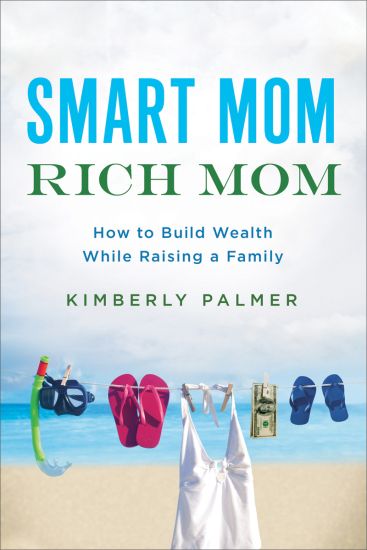
Smart Mom, Rich Mom

Smart Mom, Rich Mom

Kimberly Palmer

Amacom
2016
nidottu
Of all life’s financial shocks, few compare to the $250,000 price tag--not including college!--of raising a child. How will you pay for it? Many mothers have agonized over that question, letting it fuel their decisions concerning careers, budgets, and families. The only thing they can all agree on is: there are no easy answers.But there are plenty of rewarding possibilities! Smart Mom, Rich Mom explores how women today are navigating the financially challenging career/parenting years. Written by a national money columnist and mom of two, this invaluable resource for moms everywhere chronicles women who have stayed in the game as both moms and businesswomen--full-time, freelance, self-employed, and more--and emerged more prosperous and empowered than before having children.Mining these successful moms’ experiences in order to uncover both career advice and strategies for spending and saving anyone can use, Smart Mom, Rich Mom includes stories, checklists, action steps, planning tools, and more to help more moms learn how to:• Prepare financially for parenthood, as well as adding to your litter• Balance thrift with generating income and investing wisely• Find flexibility at work while safeguarding your earning potential• Save for both college and retirement• Plan for unexpected events• And much moreLadies, this collection of stories from moms who have successfully worked full-time, freelance, self-employed, and in other ways, while also raising amazing children and providing financial freedom for their families, has room to add more--your story! Start it today!
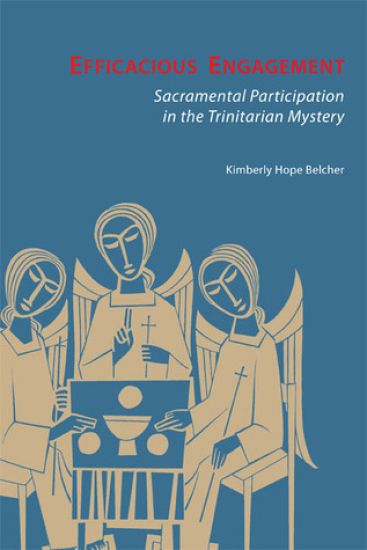
Efficacious Engagement

Efficacious Engagement

Kimberly Hope Belcher; Nathan D. Mitchell

Liturgical Press
2011
pokkari
The long-standing tradition of baptizing infants suggests that the sacraments plunge our bodies into salvation, so the revelation of God's love in the sacraments addresses the whole person, not the mind alone. In this work, the contemporary Roman Catholic rite of baptism for infants becomes a case study, manifesting the connections between the human body, the ecclesial body, and the Body of Christ. The sacramental life, for children as for adults, is an ongoing journey deeper into the life of the Father, the Son, and the Holy Spirit.By examining the church's practice of infant baptism, Kimberly Hope Belcher asks how human beings participate in God's life through the sacraments. Christian sacraments are embodied, cultural rituals performed by and for human beings. At the same time, the sacraments are God's gifts of grace, by which human beings enter into God's own life. In this study, contemporary ritual studies, sacramental theology, and trinitarian theology are used to explore how participation in the sacraments can be an efficacious engagement in God's life of love.Kimberly Hope Belcher is an assistant professor of theology at Saint John's University, where she teaches sacramental theology and ritual studies. She is a member of the North American Academy of Liturgy and writes for the liturgical blog Pray Tell.
One Baptism—One Church?

One Baptism—One Church?

Kimberly Hope Belcher; Nathan P. Chase; Alexander T. Turpin

Liturgical Press
2024
pokkari
Mutual recognition of baptism has grounded ecumenical efforts, but does contemporary Roman Catholic pastoral practice reflect these ecumenical theologies? How do we understand the outer boundaries of the church? On the one hand, over the centuries Christians have recognized the baptism of those outside their own ecclesial body, but on the other hand, the practices of receiving those who are already baptized from other groups proclaim social, theological, and ecclesial distinctions. How do contemporary practices reflect theological principles and historical development? One Baptism—One Church? demonstrates ways that contemporary practice may be an obstacle to the full expression of our ecumenical commitments and how history can reshape that practice. While the mutual recognition of baptism has grounded ecumenical efforts, pastoral practice—especially in local communities far away from the centers of power—does not always reflect ecumenical theologies. Contemporary Roman Catholic practice may seem at odds with the official understanding of baptized Christians as in real though imperfect communion by means of their participation in Christ. Focusing on the Byzantine East and Roman West, this book seeks to remove obstacles to the more complete expression and recognition of Christian unity and outlines concrete ways that our partial communion could be better expressed. It concludes with practical reflections and recommendations for best practices in the reception of baptized Christians in the contemporary Roman Catholic Church and proposes a reformed Rite for the Reception of Baptized Christians that is more faithful to history and ecumenically sensitive.
License to Wed

License to Wed

Kimberly D. Richman

New York University Press
2013
sidottu
A critical reader of the history of marriage understands that it is an institution that has always been in flux. It is also a decidedly complicated one, existing simultaneously in the realms of religion, law, and emotion. And yet recent years have seen dramatic and heavily waged battles over the proposition of including same sex couples in marriage. Just what is at stake in these battles? License to Wed examines the meanings of marriage for couples in the two first states to extend that right to same sex couples: California and Massachusetts. The two states provide a compelling contrast: while in California the rights that go with marriage—inheritance, custody, and so forth—were already granted to couples under the state's domestic partnership law, those in Massachusetts did not have this same set of rights. At the same time, Massachusetts has offered civil marriage consistently since 2004; Californians, on the other hand, have experienced a much more turbulent legal path. And yet, same-sex couples in both states seek to marry for a variety of interacting, overlapping, and evolving reasons that do not vary significantly by location. The evidence shows us that for many of these individuals, access to civil marriage in particular—not domestic partnership alone, no matter how broad—and not a commitment ceremony alone, no matter how emotional—is a home of such personal, civic, political, and instrumental resonance that it is ultimately difficult to disentangle the many meanings of marriage. This book attempts to do so, and in the process reveals just what is at stake for these couples, how access to a legal institution fundamentally alters their consciousness, and what the impact of legal inclusion is for those traditionally excluded.
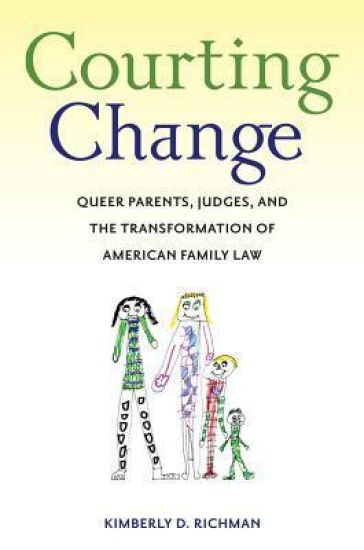
Courting Change

Courting Change

Kimberly D. Richman

New York University Press
2008
sidottu
Winner of the 2010 Pacific Sociological Association Distinguished Contribution to Scholarship Award A lesbian couple rears a child together and, after the biological mother dies, the surviving partner loses custody to the child's estranged biological father. Four days later, in a different court, judges rule on the side of the partner, because they feel the child relied on the woman as a "psychological parent." What accounts for this inconsistency regarding gay and lesbian adoption and custody cases, and why has family law failed to address them in a comprehensive manner? In Courting Change, Kimberly D. Richman zeros in on the nebulous realm of family law, one of the most indeterminate and discretionary areas of American law. She focuses on judicial decisions—both the outcomes and the rationales—and what they say about family, rights, sexual orientation, and who qualifies as a parent. Richman challenges prevailing notions that gay and lesbian parents and families are hurt by laws' indeterminacy, arguing that, because family law is so loosely defined, it allows for the flexibility needed to respond to—and even facilitate — changes in how we conceive of family, parenting, and the role of sexual orientation in family law. Drawing on every recorded judicial decision in gay and lesbian adoption and custody cases over the last fifty years, and on interviews with parents, lawyers, and judges, Richman demonstrates how parental and sexual identities are formed and interpreted in law, and how gay and lesbian parents can harness indeterminacy to transform family law.
Courting Change

Courting Change

Kimberly D. Richman

New York University Press
2010
pokkari
Winner of the 2010 Pacific Sociological Association Distinguished Contribution to Scholarship Award A lesbian couple rears a child together and, after the biological mother dies, the surviving partner loses custody to the child's estranged biological father. Four days later, in a different court, judges rule on the side of the partner, because they feel the child relied on the woman as a "psychological parent." What accounts for this inconsistency regarding gay and lesbian adoption and custody cases, and why has family law failed to address them in a comprehensive manner? In Courting Change, Kimberly D. Richman zeros in on the nebulous realm of family law, one of the most indeterminate and discretionary areas of American law. She focuses on judicial decisions—both the outcomes and the rationales—and what they say about family, rights, sexual orientation, and who qualifies as a parent. Richman challenges prevailing notions that gay and lesbian parents and families are hurt by laws' indeterminacy, arguing that, because family law is so loosely defined, it allows for the flexibility needed to respond to—and even facilitate — changes in how we conceive of family, parenting, and the role of sexual orientation in family law. Drawing on every recorded judicial decision in gay and lesbian adoption and custody cases over the last fifty years, and on interviews with parents, lawyers, and judges, Richman demonstrates how parental and sexual identities are formed and interpreted in law, and how gay and lesbian parents can harness indeterminacy to transform family law.
Managing Our Margins

Managing Our Margins

Kimberly A. Reed

CRC Press Inc
2001
sidottu
Many women seek to achieve greater control over their working lives by making a transition to entrepreneurship and, as a result, must negotiate gender norms and gender-related expectations in both business and personal relationships. Based on interviews with women in the New Jersey suburbs, this book explores the range of uncertainties and practical dilemmas independent businesswomen face today.
Bread Alone

Bread Alone

Kimberly Jensen

Syracuse University Press
2009
sidottu
In this provocative collection, Kim Jensen gives voice to the struggle of those who seek love in a world saturated with brutality and aggression. The concise lyrics in ""Bread Alone"" condemn the violence in Iraq, Palestine, and Lebanon, while exploring the intimate consequences of these and other injustices. Darkly humorous, grotesque, sorrowful, outraged, and sometimes poignantly hopeful, Jensen's poems possess a strange beauty and remind us of the key purposes of poetry - to warn and to revive our sense of conscience and connection.
The Only Thing That Matters

The Only Thing That Matters

Kimberly Jensen

Syracuse University Press
2013
nidottu
A collection of poems that engage with and expound upon the work of poet Fanny Howe. Through a specific process designed by the author, Jensen combines Howe's words and her own to create entirely new poems that challenge our understanding of postmodernist work. Her poems pay homage to a celebrated poet, while simultaneously conveying a belief in open-mindedness and the possibility for love.
Ancient Light

Ancient Light

Kimberly Blaeser

University of Arizona Press
2024
nidottu
Elegiac and powerful, Ancient Light uses lyric, narrative, and concrete poems to give voice to some of the most pressing ecological and social issues of our time. With vision and resilience, Kimberly Blaeser’s poetry layers together past, present, and futures. Against a backdrop of pandemic loss and injustice, MMIW (Missing and Murdered Indigenous Women), hidden graves at Native American boarding schools, and destructive environmental practices, Blaeser’s innovative poems trace pathways of kinship, healing, and renewal. They celebrate the solace of natural spaces through sense-laden geo-poetry and picto-poems. With an Anishinaabe sensibility, her words and images invoke an ancient belonging and voice the deep relatedness she experiences in her familiar watery regions of Minnesota. The collection invites readers to see with a new intimacy the worlds they inhabit. Blaeser brings readers to the brink, immerses them in the darkest regions of the Anthropocene, in the dangerous fallacies of capitalism, and then seeds hope. Ultimately, as the poems enact survivance, they reclaim Indigenous stories and lifeways.
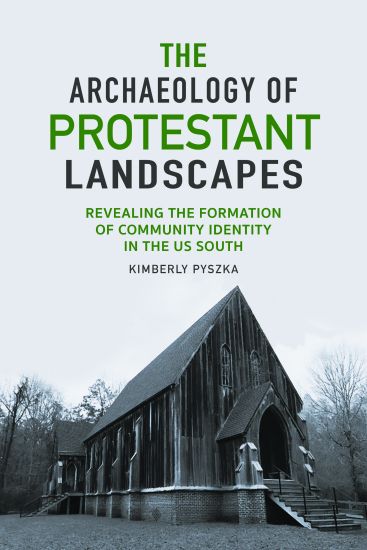
The Archaeology of Protestant Landscapes

The Archaeology of Protestant Landscapes

Kimberly Pyszka

THE UNIVERSITY OF ALABAMA PRESS
2023
sidottu
How religious institutions used landscapes and architecture to express their religious and social ideologiesThe Archaeology of Protestant Landscapes focuses on three religious institutions in the US South in the eighteenth and nineteenth centuries: St. Paul’s Parish Church in coastal South Carolina, St. Luke’s Episcopal Church in central Alabama, and Cane Hill College in Northwest Arkansas. Drawing from archaeological surveys and excavations, artifact analysis, archival research, geophysical testing, and architectural information on religious structures, Kimberly Pyszka offers case studies of these institutions, which were located in developing communities that varied socially, politically, and economically. Pyszka uses these case studies to demonstrate that select religious institutions used and modified natural landscape features to create cultural landscapes to express their ideology, identity, goals, and social, religious, and political power. She notes that where those structures were constructed, how they sat on the landscape, their architectural style, and their overall visual appearance were well-considered decisions made by religious leaders to benefit their organizations, communities, and, sometimes, themselves. Pyszka also uses these case studies to highlight the social roles that religious organizations played in the development of communities. She points to landscape decisions—specifically to how the architectural design of religious structures was used, intentionally or not, to unite people, often those of differing religious backgrounds—as contributing to the creation of a common identity among people living in new and still-growing settlements, aiding in community development. This book contributes to the growing body of work within historical archaeology on churches, churchyards, and cemeteries and to the increasing awareness among archaeologists of how these sites contribute to questions of identity, consumerism, trade, and colonialism.
Black on Earth

Black on Earth

Kimberly N. Ruffin

University of Georgia Press
2010
sidottu
American environmental literature has relied heavily on the perspectives of European Americans, often ignoring other groups. In Black on Earth, Kimberly Ruffin expands the reach of ecocriticism by analyzing the ecological experiences, conceptions, and desires seen in African American writing.Ruffin identifies a theory of “ecological burden and beauty” in which African American authors underscore the ecological burdens of living within human hierarchies in the social order just as they explore the ecological beauty of being a part of the natural order. Blacks were ecological agents before the emergence of American nature writing, argues Ruffin, and their perspectives are critical to understanding the full scope of ecological thought.Ruffin examines African American ecological insights from the antebellum era to the twenty-first century, considering WPA slave narratives, neo–slave poetry, novels, essays, and documentary films, by such artists as Octavia Butler, Alice Walker, Henry Dumas, Percival Everett, Spike Lee, and Jayne Cortez. Identifying themes of work, slavery, religion, mythology, music, and citizenship, Black on Earth highlights the ways in which African American writers are visionary ecological artists.
Black on Earth

Black on Earth

Kimberly N. Ruffin

University of Georgia Press
2010
pokkari
American environmental literature has relied heavily on the perspectives of European Americans, often ignoring other groups. In Black on Earth, Kimberly Ruffin expands the reach of ecocriticism by analyzing the ecological experiences, conceptions, and desires seen in African American writing.Ruffin identifies a theory of “ecological burden and beauty” in which African American authors underscore the ecological burdens of living within human hierarchies in the social order just as they explore the ecological beauty of being a part of the natural order. Blacks were ecological agents before the emergence of American nature writing, argues Ruffin, and their perspectives are critical to understanding the full scope of ecological thought.Ruffin examines African American ecological insights from the antebellum era to the twenty-first century, considering WPA slave narratives, neo–slave poetry, novels, essays, and documentary films, by such artists as Octavia Butler, Alice Walker, Henry Dumas, Percival Everett, Spike Lee, and Jayne Cortez. Identifying themes of work, slavery, religion, mythology, music, and citizenship, Black on Earth highlights the ways in which African American writers are visionary ecological artists.
The Trafficking of Persons

The Trafficking of Persons

Kimberly A. McCabe

Peter Lang Publishing Inc
2008
nidottu
Over 700,000 people are trafficked across international borders every year. Of those, the U.S. Department of State estimates that between 14,500 and 17,500 are trafficked into the United States. Today, the U.S. and other nations are beginning to recognize the magnitude of the problem and attempt to address the victimization caused by human trafficking. This book investigates the types of human trafficking, and discusses U.S. and international responses to combat and end all forms of this criminal activity. With discussion-provoking questions at the end of each chapter and specific examples of trafficking activity, this book is appropriate for criminology courses, classes dedicated to victims and/or child abuse, and classes focused around the themes of international crime and international law.
School Violence, the Media, and Criminal Justice Responses

School Violence, the Media, and Criminal Justice Responses

Kimberly Ann McCabe; Gregory M. Martin

Peter Lang Publishing Inc
2004
nidottu
The problem remains: students in schools across the United States are not only bullying each other but are killing each other. This book provides a foundation for the study of school violence, beginning with an analysis of the shootings at Columbine and going on to discuss all forms of aggression in schools. The authors provide a history of school violence in America, theories to explain bullying, and teachers' perceptions of this violence - and suggest ways that teachers and other school personnel can predict, control, and prevent outbursts of violence. Also included are discussions on the effects of the media on school violence, as well as the criminal justice system's responses. This book is an excellent resource for courses in criminal justice, teacher education, and all youth workers and counselors in schools and the community.