Kirjojen hintavertailu. Mukana 12 025 829 kirjaa ja 12 kauppaa.

Kirjahaku

Etsi kirjoja tekijän nimen, kirjan nimen tai ISBN:n perusteella.

1000 tulosta hakusanalla Linus Giese

Links

Links

Nuruddin Farah

Riverhead Books
2005
nidottu
Returning to Mogadishu, Somalia, from New York after a twenty-year exile, Jeebleh finds a troubled and devastated city ruled by clan warlords and patrolled by violent gangs of thugs, as he works to settle his late mother's outstanding accounts and aids an old friend whose youngest child has been abducted. Reprint.
Lines of Thought

Lines of Thought

Lance Rips

Oxford University Press Inc
2011
sidottu
Lines of Thought addresses how we are able to think about abstract possibilities: How can we think about math, despite the immateriality of numbers, sets, and other mathematical entities? How are we able to think about what might have happened if history had taken a different turn? Questions like these turn up in nearly every part of cognitive science, and they are central to our human position of having only limited knowledge concerning what is or might be true. Because we cannot experience hypothetical or future events or abstract concepts, we cannot use our ordinary sense of perception or memory to think about these subjects, so what underlies our ability to make these assumptions? Lance Rips explores people's beliefs about possibilities as they arise in the context of basic concepts, including numbers, causality, and reasons. He argues that beliefs about these concepts cannot be meaningfully reduced to perceptual information, remembered instances, or probabilities. He also claims that analogies to cognitive perception models are equally unhelpful in understanding what makes thinking of possibilities possible. Instead, he makes the case that our abilities here depend on the intrinsic hardwiring of the human mind. Lines of Thought provides an overview and a point of view on research in higher-level cognitive science, integrating theories from psychology, philosophy, and linguistics. The book is written in an accessible style that will provide students with essential background for their own thoughts about this domain.
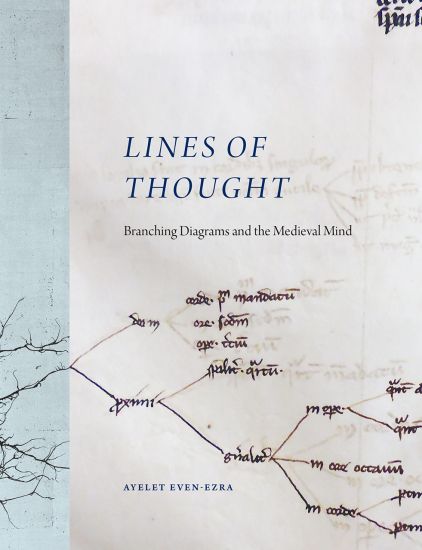
Lines of Thought

Lines of Thought

Ayelet Even-Ezra

University of Chicago Press
2021
sidottu
We think with objects—we conduct our lives surrounded by external devices that help us recall information, calculate, plan, design, make decisions, articulate ideas, and organize the chaos that fills our heads. Medieval scholars learned to think with their pages in a peculiar way: drawing hundreds of tree diagrams. Lines of Thought is the first book to investigate this prevalent but poorly studied notational habit, analyzing the practice from linguistic and cognitive perspectives and studying its application across theology, philosophy, law, and medicine. These diagrams not only allow a glimpse into the thinking practices of the past but also constitute a chapter in the history of how people learned to rely on external devices—from stone to parchment to slide rules to smartphones—for recording, storing, and processing information. Beautifully illustrated throughout with previously unstudied and unedited diagrams, Lines of Thought is a historical overview of an important cognitive habit, providing a new window into the world of medieval scholars and their patterns of thinking.
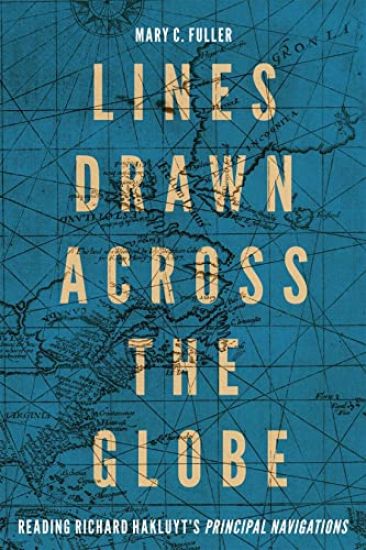
Lines Drawn across the Globe

Lines Drawn across the Globe

Mary C. Fuller

MCGILL-QUEEN'S UNIVERSITY PRESS
2023
sidottu
Around 1600, the English geographer and cleric Richard Hakluyt sought to honour his nation by publishing a compilation of every document he could find relating to its voyages and trade beyond the boundaries of Europe. The resulting collection of travel narratives, royal letters, ships’ logs, maps, lists, and commentaries was published as Principal Navigations, Voyages, Traffiques and Discoveries of the English Nation. Spanning two thousand pages and documenting more than two hundred voyages, Principal Navigations is a window onto how the world appeared to England in 1600. Lines Drawn across the Globe unlocks Richard Hakluyt’s work for modern readers. Mary Fuller traces the history of the book’s compilation and gives order and meaning to its famously diverse contents. From Sierra Leone to Iceland, from Spanish narratives of New Mexico to French accounts of the Saint Lawrence and Portuguese accounts of China, Hakluyt’s shaping of this many-authored book provides a conceptual map of the world’s regions and of England’s real and imagined relations to them: exchange, alliance, aggression, extraction, translation, imitation – always depending on the needs of the moment. At the height of the British imperial project, Principal Navigations came to be seen and valued as a founding document of English national identity. It remains a crucial piece of evidence on the history of empire, the nation, and the world. Yet after a century and a half of modern scholarship, Hakluyt’s book needs to be disentangled from the perspectives of the nineteenth century and read anew. Lines Drawn across the Globe works across the scales of Hakluyt’s collection to deliver a dazzling account of an editorial project that was fundamental to England’s encounter with the world – and the nation’s idea of itself.
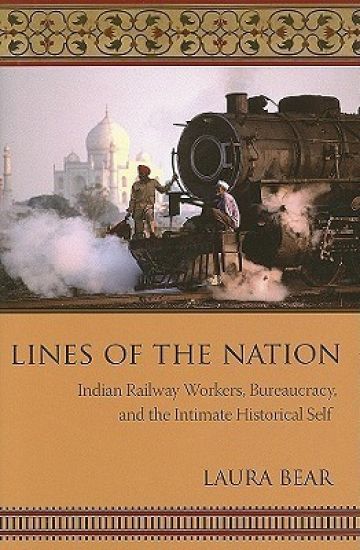
Lines of the Nation

Lines of the Nation

Laura Bear

Columbia University Press
2007
sidottu
Lines of the Nation radically recasts the history of the Indian railways, which have long been regarded as vectors of modernity and economic prosperity. From the design of carriages to the architecture of stations, employment hierarchies, and the construction of employee housing, Laura Bear explores the new public spaces and social relationships created by the railway bureaucracy. She then traces their influence on the formation of contemporary Indian nationalism, personal sentiments, and popular memory. Her probing study challenges entrenched beliefs concerning the institutions of modernity and capitalism by showing that these rework older idioms of social distinction and are legitimized by forms of intimate, affective politics. Drawing on historical and ethnographic research in the company town at Kharagpur and at the Eastern Railway headquarters in Kolkata (Calcutta), Bear focuses on how political and domestic practices among workers became entangled with the moralities and archival technologies of the railway bureaucracy and illuminates the impact of this history today. The bureaucracy has played a pivotal role in the creation of idioms of family history, kinship, and ethics, and its special categorization of Anglo-Indian workers still resonates. Anglo-Indians were formed as a separate railway caste by Raj-era racial employment and housing policies, and other railway workers continue to see them as remnants of the colonial past and as a polluting influence. The experiences of Anglo-Indians, who are at the core of the ethnography, reveal the consequences of attempts to make political communities legitimate in family lines and sentiments. Their situation also compels us to rethink the importance of documentary practices and nationalism to all family histories and senses of relatedness. This interdisciplinary anthropological history throws new light not only on the imperial and national past of South Asia but also on the moral life of present technologies and economic institutions.
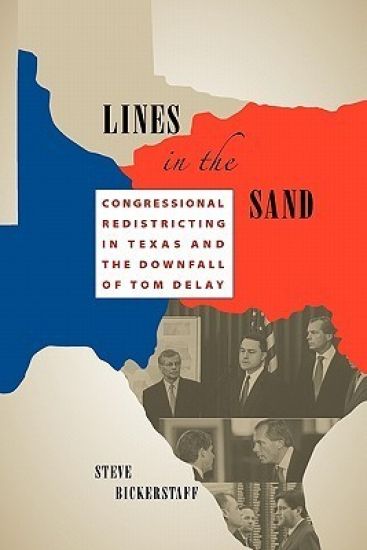
Lines in the Sand

Lines in the Sand

Steve Bickerstaff

University of Texas Press
2007
pokkari
The events of 2003 in Texas were important to the political history of this country. Congressman Tom DeLay led a Republican effort to gerrymander the state's thirty-two congressional districts to defeat all ten of the Anglo Democratic incumbents and to elect more Republicans; Democratic state lawmakers fled the state in an effort to defeat the plan. The Lone Star State uproar attracted attention worldwide. The Republicans won this showdown, gaining six additional seats from Texas and protecting the one endangered Republican incumbent. Some of the methods used by DeLay to achieve this result, however, led to his criminal indictment and ultimately to his downfall. With its eye-opening research, readable style, and insightful commentary, Lines in the Sand provides a front-line account of what happened in 2003, often through the personal stories of members of both parties and of the minority activist groups caught in a political vortex. Law professor Steve Bickerstaff provides much-needed historical perspective and also probes the aftermath of the 2003 redistricting, including the criminal prosecutions of DeLay and his associates and the events that led to DeLay's eventual resignation from the U.S. House of Representatives. As a result, Bickerstaff graphically shows a dark underside of American politics-the ruthless use of public institutional power for partisan gain.
Links

Links

Vicki Halper; Margot Osborne; Grace Cochrane; Lani McGregor

University of Washington Press
2013
sidottu
Links documents the first presentation of a broad spectrum of contemporary Australian studio glass to an American audience. The book explores an international network of craft influences and exchanges that started in the mid-1970s, clarifies techniques of glass production from manufacture to finished product, and illustrates significant contemporary glasswork that is not blown.Links begins in 1974, when American Richard Marquis traveled to Australia at the request of its government to promote studio glass and establish hot shops in educational institutions. His relationship with Australian Nick Mount initiated a lineage of blown-glass artists that is represented in the book. A second lineage of artists working in kiln-formed glass was initiated in 1979 when Klaus Moje, soon to be head of the Canberra School of Art Glass Workshop at ANU, met the founder of Oregon's Bullseye Glass Company at the Pilchuck Glass School north of Seattle. At Moje's instigation, the Bullseye factory began to research and manufacture fusible, compatible glass-a complicated technical feat. Their product has fueled an explosion of kiln-worked glass internationally, most prominently in Australia.The book features the work of 25 Australian artists linked to each other and to the Northwest through workshops and classes, use of a common material, training and education, shared space, and/or production assistance.Exhibition curator Vicki Halper , Seattle, specializes in art of the Pacific Northwest and American craft. She is the co-editor of Choosing Craft: The Artist's Viewpoint and Morris Graves: Selected Letters. Margot Osborne and Grace Cochrane are esteemed Australian art historians and curators. Lani McGregor is co-owner of Bullseye Glass and director of Bullseye Gallery.
Lines and Lyrics

Lines and Lyrics

Matt BaileyShea

Yale University Press
2022
sidottu
An introduction to poetry geared toward the study of song “Fusing an approach that engages both lyrics and musical content of English-language songs in a wide swath of genres, Lines and Lyrics gives readers the tools and concepts to help them better interpret songs, in an accessible and enjoyable format.”—Victoria Malawey, author of A Blaze of Light In Every Word: Analyzing the Popular Singing Voice “I can think of no other book that juxtaposes art song and pop song so effectively, in a way that doesn’t privilege one over the other. This is a real achievement, and a must-have for anyone who loves words and songs.”—Stephen Rodgers, University of Oregon Bruce Springsteen, Benjamin Britten, Kendrick Lamar, Sylvia Plath, Outkast, and Anne Sexton collide in this inventive study of poetry and song. Drawing on literary poetry, rock, rap, musical theater, and art songs from the Elizabethan period to the present, Matt BaileyShea reveals how every issue in poetry has an important corresponding status in song, but one that is always transformed. Beginning with a discussion of essential features such as diction, meter, and rhyme, the book progresses into the realms of lineation, syntax, form, and address, and culminates in an analysis of two complete songs. Throughout, BaileyShea places classical composers and poets in conversations with contemporary songwriters and musicians (T. S. Eliot and Johnny Cash, Aaron Copland and Pink Floyd) so that readers can make close connections across time, genres, and fields, but also recognize inherent differences. To aid the reader, the author has created a Spotify playlist of all the music discussed in this book and provides time cues throughout, enabling readers to listen to the music as they read.
Lines of Resolution

Lines of Resolution

Anna Lovatt; Kelly Montana

YALE UNIVERSITY PRESS
2025
pokkari
Television and video’s influence on drawing practices and the ways they inspired new modes of graphic expression in the twentieth century From the late 1950s to the 1980s, a period known as the network era, television reached its apex as a cultural force in the home, and portable video cameras became widely available. Examining how this new technology spurred artistic experimentation, this study considers the relationship between drawing and art made for the small screen of the domestic television set and early video cameras. These electronic screens entered artists’ studios for the first time and became a new source of imagery and a device that could be manipulated to generate entirely new kinds of drawing. An essay by Anna Lovatt looks at the ways in which early television and video images—captured, transmitted, and displayed through raster lines—inspired new possibilities for abstraction and expressing concepts of self-reflection and surveillance, while Kelly Montana explores artworks made by women who used the immediacy and familiarity of drawing to disrupt objectifying media representations of their gender by recording themselves drawing, often on their own bodies. This copiously illustrated volume features drawings, film stills, videos, and multimedia installations by more than twenty artists both well-known and heretofore obscure, and includes discussions of the televisual imagery that permeates works on paper by Walter de Maria, the ways artists such as Anna Bella Geiger and Dennis Oppenheim used video to capture performative acts of drawing, and how Nam June Paik and Howardena Pindell treated the screen as a site of inscription. Distributed for the Menil Collection Exhibition Schedule: The Menil Collection, Houston, TX (October 4, 2025–February 8, 2026)
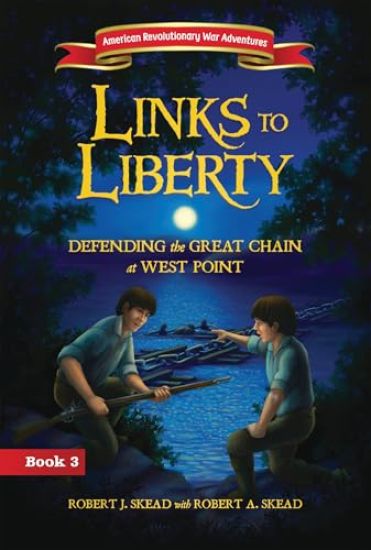
Links to Liberty

Links to Liberty

Robert J. Skead

ZONDERVAN
2024
nidottu
In book three of the American Revolutionary War Adventures historical fiction series, readers ages 8-12 can experience the Revolutionary War firsthand in this novel based on actual events. Sixteen-year-old twins Ambrose and John Clark, who have helped the fight for freedom by assisting their father and independence, but their most difficult task remains ahead— to decide what their future holds. Based on the real events, book three of the American Revolutionary War Adventures historical fiction series is a fun way for children to experience American history.In this third adventure, the brothers search to find the traitor who has put their father and brother as well as the cause of independence in jeopardy. As they bravely, and sometimes impetuously search for the culprit, hoping to make him pay, they must also make a life-changing decision—to follow Major Tallmadge's lead and train as Dragoon's in the Continental Army or accept scholarships to Yale, leaving behind the danger of war and spy intrigue.In addition to bringing alive to life America's war for independence, Links to Liberty:Teaches kids about the Revolutionary War from a kid's perspectiveIs packed with historical information that is entertaining and educationalContains discussion questions, backgrounds on the real-life historical persons featured in the book, and historical lettersCan be used alongside school curriculum and as a homeschool resourceAmerican Revolutionary War Adventures:Are great for young readers ages 8-12 who like historyAre a fictionalized stories from history inspired by real events and peopleAre perfect for back to school or summer reading challengesMake a great gift for Christmas, holidays, birthdays, or other gift-giving occasions
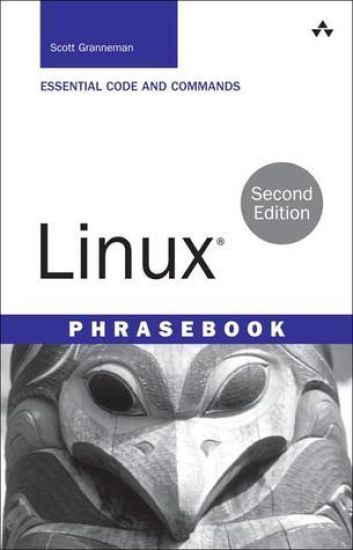
Linux Phrasebook

Linux Phrasebook

Scott Granneman

Addison-Wesley Educational Publishers Inc
2016
nidottu
Get more done faster at the Linux command line! This best-selling Linux Phrasebook has been thoroughly updated in the second edition to reflect the newest distributions, incorporate feedback from hundreds of active Linux users, and cover today's newest tools and techniques -- including an entirely new chapter on text file manipulation. Linux Phrasebook, Second Edition offers a concise, handy reference to the Linux commands that, like a language phrasebook, can be used on the spot on moment's notice. Don't waste a minute on non-essentials: this straight-to-the-point reference delivers specific information and tested commands designed to work with any modern Linux distribution. Portable enough to take anywhere, it starts with a quick introduction to essential command line concepts, and then delivers all the modern Linux command examples, variations, and parameters you need to: View, manipulate, archive, and compress filesControl file ownership and permissionsFind anything on your systemsEfficiently use the Linux shellMonitor system resourcesInstall softwareTest, fix, and work with networks Linux Phrasebook, Second Edition is the perfect quick command line reference for millions of Linux users and administrators at all levels of experience: people who want to get reliable information they can use right now -- with no distractions and no diversions! Contents at a Glance Part I: Getting Started Chapter 1 Things to Know About Your Command Line Everything Is a File Maximum Filename Lengths Names Are Case-Sensitive Special Characters to Avoid in Names Wildcards and What They Mean Special Files That Affect Your Command Line If There’s Too Much Stuff on Screen, Reset Chapter 2 Navigating Your File System List Files and Folders List the Contents of Other Folders List Folder Contents Using Wildcards View a List of Files in Subfolders View a List of Contents in a Single Column View Contents As a Comma-Separated List View Hidden Files and Folders Visually Display a File’s Type Display Contents in Color List Permissions, Ownership, and More Reverse the Order Contents Are Listed Sort Contents by Date and Time Sort Contents by Size Express File Sizes in Terms of K, M, and G Display the Path of Your Current Directory Change to a Different Directory Change to Your Home Directory Change to Your Previous Directory Chapter 3 Creation and Destruction Change a File to the Current Time Change a File to Any Desired Time Create a New, Empty File Create a New Directory Create a New Directory and Any Necessary Subdirectories Copy Files Copy Files Using Wildcards Copy Files Verbosely Stop Yourself from Copying over Important Files Copy Directories Copy Files As Perfect Backups in Another Directory Move Files and Folders Rename Files and Folders Understand How Linux Stores Files Create a Link Pointing to Another File or Directory Delete Files Remove Several Files at Once with Wildcards Prevent Yourself from Deleting Key Files Delete an Empty Directory Remove Files and Directories That Aren’t Empty Deleting Troublesome Files Chapter 4 Learning About Commands Find Out About Commands with man Quickly Find Out What a Command Does Based on Its Name Search for a Command Based on What It Does Read a Command’s Specific Man Page Learn About Commands with info Navigate Within info Locate the Paths for a Command’s Executable, Source Files, and Man Pages Find Out Which Version of a Command Will Run Discover How a Command Will Be Interpreted Chapter 5 Building Blocks Run Several Commands Sequentially Run Commands Only If the Previous Ones Succeed Run a Command Only If the Previous One Fails Plug the Output of a Command into Another Command Understand Input/Output Streams Use the Output of One Command As Input for Another Redirect a Command’s Output to a File Prevent Overwriting Files When Using Redirection Append a Command’s Output to a File Use a File As Input for a Command Combine Input and Output Redirection Send Output to a File and to stdout at the Same Time Part II: Working with Files Chapter 6 Viewing (Mostly Text) Files Figure Out a File’s Type View Files on stdout Concatenate Files to stdout Concatenate Files to Another File Concatenate Files and Number the Lines View Text Files a Screen at a Time Search Within Your Pager Edit Files Viewed with a Pager View the First 10 Lines of a File View the First 10 Lines of Several Files View the First Several Lines of a File or Files View the First Several Bytes, Kilobytes, or Megabytes of a File View the Last 10 Lines of a File View the Last 10 Lines of Several Files View the Last Several Lines of a File or Files View the Constantly Updated Last Lines of a File or Files Chapter 7 Manipulating Text Files with Filters Count the Number of Words, Lines, and Characters in a File Number Lines in a File Select an Entire Column of Data in a Delimited File Sort the Contents of a File Sort the Contents of a File Numerically Remove Duplicate Lines in a File Substitute Selected Characters with Others Replace Repeated Characters with a Single Instance Delete Matching Characters Transform Text in a File Print Specific Fields in a File Chapter 8 Ownerships and Permissions Become Another User Become Another User, with His Environment Variables Become root Become root, with Its Environment Variables Change the Group Owning Files and Directories Recursively Change the Group Owning a Directory Change the Owner of Files and Directories Change the Owner and Group of Files and Directories Understand the Basics of Permissions Change Permissions on Files and Directories Using Alphabetic Notation Change Permissions on Files and Directories Using Numeric Permissions Change Permissions Recursively Set and Then Clear suid Set and Then Clear sgid Set and Then Clear the Sticky Bit Chapter 9 Archiving and Compression Archive and Compress Files Using zip Get the Best Compression Possible with zip Archive and Compress Files of a Specified Type in Directories and Subdirectories Password-Protect Compressed Zip Archives Unzip Files Test Files That Will Be Unzipped Archive and Compress Files Using gzip Archive and Compress Files Recursively Using gzip Uncompress Files Compressed with gzip Test Files That Will Be Unzipped with gunzip Archive and Compress Files Using bzip2 Uncompress Files Compressed with bzip2 Test Files That Will Be Unzipped with bunzip2 Archive Files with tar Archive and Compress Files with tar and gzip Test Files That Will Be Untarred and Uncompressed Untar and Uncompress Files Part III: Finding Files, Words, and More Chapter 10 Finding Files, Directories, Words, and Phrases Search a Database of Filenames Search a Database of Filenames Without Worrying About Case Update the Database Used by locate Searching Inside Text Files for Patterns The Basics of Searching Inside Text Files for Patterns Search Recursively for Text in Files Search for Words and Highlight the Results Search for Text in Files, Ignoring Case Search for Whole Words in Files Show Line Numbers Where Words Appear in Files Search the Output of Other Commands for Specific Words See Context for Words Appearing in Files Show Lines Where Words Do Not Appear in Files List Files Containing Searched-for Words List the Number of Occurrences of Words in Files Search for Words Inside Search Results Chapter 11 The find Command Find Files by Name Find Files by Ownership Find Files by File Size Find Files by File Type Find Files by Time Show Results If the Expressions Are True (AND) Show Results If Either Expression Is True (OR) Show Results If the Expression Is Not True (NOT) Execute a Command on Found Files Execute a Command on Found Files More Efficiently Execute a Command on Found Files Containing Spaces Part IV: Your Environment Chapter 12 Your Shell View Your Command-Line History Run the Last Command Again Run a Previous Command Using Numbers Run a Previous Command Using a String Search for a Previous Command and Run It Display All Command Aliases View a Specific Command Alias Create a New Temporary Alias Create a New Permanent Alias Remove an Alias Create a New Temporary Function Create a New Permanent Function Display All Functions Remove a Function When to Use an Alias and When to Use a Function Chapter 13 Monitoring System Resources Discover How Long Your Computer Has Been Running View All Currently Running Processes View a Process Tree View Processes Owned by a Particular User End a Running Process View a Dynamically Updated List of Running Processes List Open Files List a User’s Open Files List Users for a Particular File List Processes for a Particular Program Display Information About System RAM Show File System Disk Usage Report File Space Used by a Directory Report Just the Total Space Used for a Directory Chapter 14 Installing Software Install Software Packages (RPM) Remove Software Packages (RPM) Install Software Packages and Dependencies (RPM) Remove Software Packages and Dependencies (RPM) Upgrade Software Packages and Dependencies (RPM) Find Packages Available for Download (RPM) Install Software Packages (DEB) Remove Software Packages (DEB) Install Software Packages and Dependencies (DEB) Remove Software Packages and Dependencies (DEB) Upgrade Software Packages and Dependencies (DEB) Find Packages Available for Download (DEB) Clean Up Unneeded Installation Packages (DEB) Troubleshoot Problems with APT (DEB) Part V: Networking Chapter 15 Connectivity View the Status of Your Network Interfaces Verify That a Computer Is Running and Accepting Requests Trace the Route Packets Take Between Two Hosts Query DNS Records Configure a Network Interface View the Status of Your Wireless Network Interfaces Configure a Wireless Network Interface Grab a New Address Using DHCP Make a Network Connection Active Bring a Network Connection Down Display Your IP Routing Table Change Your IP Routing Table Troubleshooting Network Problems Chapter 16 Working on the Network Securely Log In to Another Compute Securely Log In to Another Machine Without a Password Securely Transfer Files Between Machines Securely Copy Files Between Hosts Securely Transfer and Back Up Files Download Files Non-interactively Download Websites Non-interactively Download Sequential Files and Internet Resources
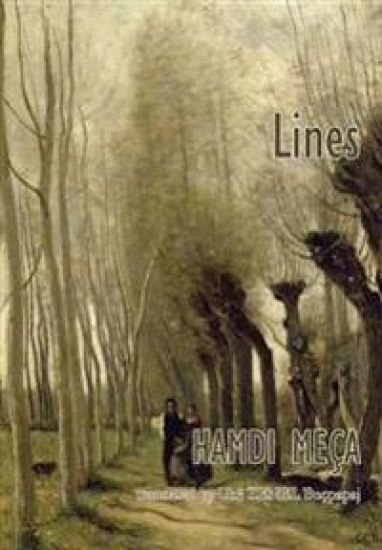
Lines

Lines

Hamdi Meça

Lulu.com
2019
sidottu
Hamdi Meca is an Albanian poet, prose writer, and essayist of academic nature in creativity. His poems continue to be translated and published in various countries of the world.In June of 2018, the International Publishing House "Aquillrelle", Croatia, launched the publication of his complete literary work in English and Albanian with the first volume A Poetic Mountain Range (Vargmal Poetik), and the second volume 303 Mad Battles (303 Beteja te Cmendura). Meanwhile, this third volume is entitled Lines (Viza), translated to English by Prof. Dr. Uke ZENEL Bucpapaj.
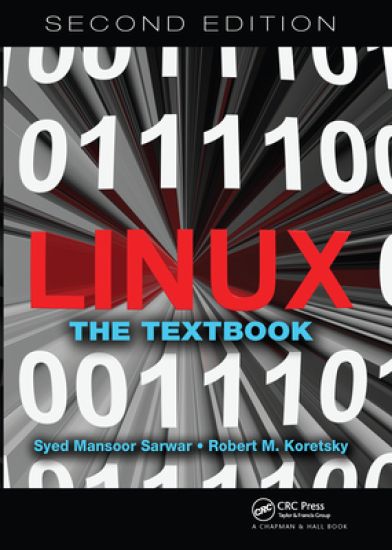
Linux

Linux

Syed Mansoor Sarwar; Robert M Koretsky

CRC Press
2020
nidottu
Choosen by BookAuthority as one of BookAuthority's Best Linux Mint Books of All TimeLinux: The Textbook, Second Edition provides comprehensive coverage of the contemporary use of the Linux operating system for every level of student or practitioner, from beginners to advanced users. The text clearly illustrates system-specific commands and features using Debian-family Debian, Ubuntu, and Linux Mint, and RHEL-family CentOS, and stresses universal commands and features that are critical to all Linux distributions.The second edition of the book includes extensive updates and new chapters on system administration for desktop, stand-alone PCs, and server-class computers; API for system programming, including thread programming with pthreads; virtualization methodologies; and an extensive tutorial on systemd service management.Brand new online content on the CRC Press website includes an instructor’s workbook, test bank, and In-Chapter exercise solutions, as well as full downloadable chapters on Python Version 3.5 programming, ZFS, TC shell programming, advanced system programming, and more. An author-hosted GitHub website also features updates, further references, and errata.FeaturesNew or updated coverage of file system, sorting, regular expressions, directory and file searching, file compression and encryption, shell scripting, system programming, client-server–based network programming, thread programming with pthreads, and system administrationExtensive in-text pedagogy, including chapter objectives, student projects, and basic and advanced student exercises for every chapterExpansive electronic downloads offer advanced content on Python, ZFS, TC shell scripting, advanced system programming, internetworking with Linux TCP/IP, and many more topics, all featured on the CRC Press websiteDownloadable test bank, work book, and solutions available for instructors on the CRC Press websiteAuthor-maintained GitHub repository provides other resources, such as live links to further references, updates, and errata
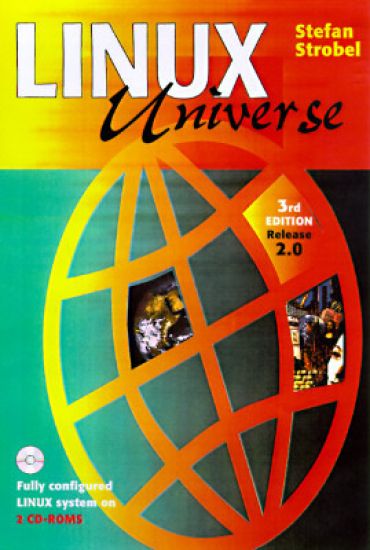
Linux Universe

Linux Universe

Stefan Strobel; Rainer Maurer; Stefan Middendorf

Springer-Verlag New York Inc.
1997
nidottu
I ntrod uction or some time 32-bit machines have been a hot topic in the world F ofPCs. It seems that more powerful operating systems will soon be displacing DOS. Meanwhile, at least in the professional literature, lively discussion has been raging about what the future standard will be. Two alternatives seem to be emerging for the domain of server operating systems: Windows NT, and UNIX variants such as UNIX VS. Windows NT Solaris 2, UnixWare, and NextStep 486. In this context OS/2 plays no significant role since it is seen more as a competitor to Windows in its current version and future 32-bit versions. We cannot yet predict which system will finally predominate. However, the significant rise in the power of hardware in recent years has unleashed the demand for a modern operating system that makes use of these developments. Under a modern server operating system, the borderline between classical UNIX workstations and high-end workstations PCs will tend to become more fluid. 1.1 Historical perspectives on Linux An extremely powerful alternative to the above proprietary systems has evolved far from all the big debates on strategy. The system is Linux, a UNIX system for Intel processors that is available for free.
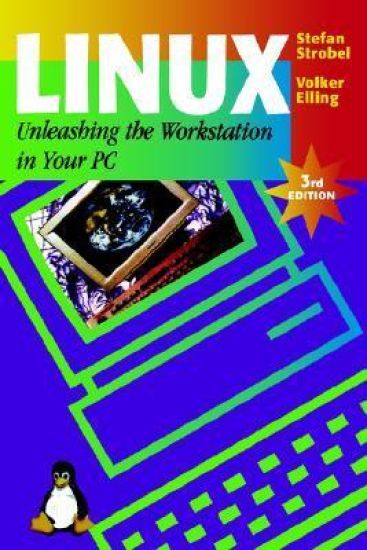
Linux - Unleashing the Workstation in Your PC

Linux - Unleashing the Workstation in Your PC

Stefan Strobel; Volker Elling

Springer-Verlag New York Inc.
1997
nidottu
NIX achieved its widespread propagation, its penetration of UNIX history U the university domain, and its reach into research and industry due to its early dissemination by AT&T to all interested parties at almost no cost and as source code. UNIX's present functionality emanated not just from AT&T developers but also from many external developers who used the product and contributed their own further developments, which they then put at AT&T's disposal. (Consider the contributions of the University of California at Berkeley, for example.) With the rising commercialization of UNIX by AT&T (and the current owner, Novell) since 1983, and with the philosophical wars between the large UNIX vendors such as Sun, HP, Digital, IBM, SCQ, and the UNIX laboratory, as well the more rhetorical than factual discussions between QSF and UNIX International, such creative and cooperative continuing development became increasingly restricted, and UNIX source code today has become unaffordably expensive and de facto inaccessible. Linux has changed the situation. Linux provides interested computer scientists and users with a system that revives the old UNIX tradition: Linux is available for free, and everyone is heartily free & participatory invited (but not obliged) to contribute to its continuing development. When I wrote the foreword to the first edition of this book in 1994, Linux, because it ran on PC systems, had begun to penetrate the workrooms of many computer science students and computer freaks.
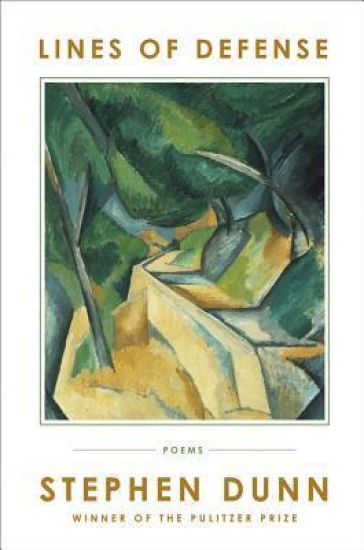
Lines of Defense

Lines of Defense

Stephen Dunn

WW Norton Co
2014
sidottu
In his seventeenth collection of poetry, Pulitzer Prize winner Stephen Dunn confronts the lines we fight against and the ones we draw for ourselves. Lines of Defense poignantly captures the absurdities of modern life, expectations derailed, the lived life juxtaposed to the imagined life, and the defenses we don to make do. The poems in Lines of Defense are wry and elegiac, precisely observed and wide-reaching. As with the best of Dunn’s work, they take stock of the quotidian aspects of life, of the essential comedy of getting through the day: finding a lost cat; not being invited to a party; taking a granddaughter to a carnival. The lines of defense are the lines of the verse itself, as poetry forms a stronghold against mortality. This essential volume showcases a poet writing at the height of his powers. From “Before We Leave”: Where are we going? It’s not an issue of here or there. And if you ever feel you can’t take another step, imagine how you might feel to arrive, if not wiser, a little more aware how to inhabit the middle ground between misery and joy.
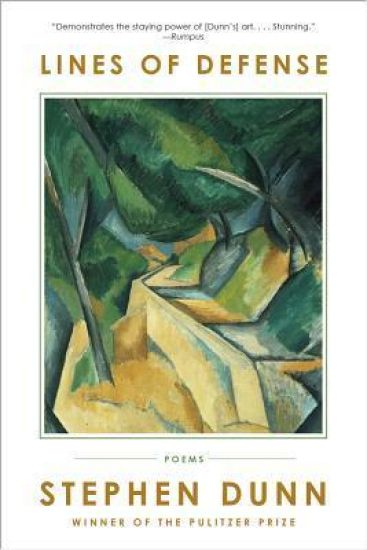
Lines of Defense

Lines of Defense

Stephen Dunn

WW Norton Co
2015
nidottu
In his seventeenth collection of poetry, Pulitzer Prize winner Stephen Dunn confronts the lines we fight against and the ones we draw for ourselves. Lines of Defense poignantly captures the absurdities of modern life, expectations derailed, the lived life juxtaposed to the imagined life, and the defences we don to make do. The poems in Lines of Defense are wry and elegiac, precisely observed and wide-reaching. As with the best of Dunn’s work, they take stock of the quotidian aspects of life, of the essential comedy of getting through the day: finding a lost cat; not being invited to a party; taking a granddaughter to a carnival. The lines of defense are the lines of the verse itself, as poetry forms a stronghold against mortality. This essential volume showcases a poet writing at the height of his powers.
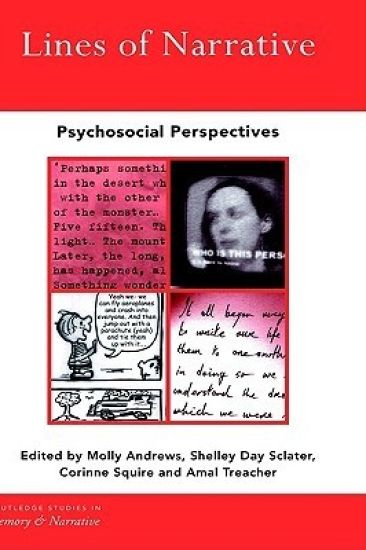
Lines of Narrative

Lines of Narrative

Molly Andrews; Shelley Day Sclater; Corinne Squire; Amal Treacher

Routledge
2000
sidottu
This volume brilliantly advances our understanding of the use of narrative in the social sciences. It brings together contemporary work on narrative theory and methods and presents a fascinating range of case-studies, from Princess Diana's Panorama interview to the memoirs of the wives of US nuclear scientists.
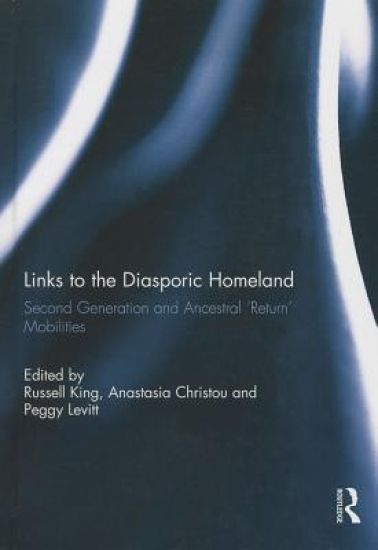
Links to the Diasporic Homeland
This book examines return mobilities to and from ancestral homelands of the second generation and beyond. It presents cutting-edge empirical research framed within the mobilities, transnational and return migration/diaspora paradigms on a trans/local and global scale. The book is unique in presenting not only a variety of return movements, including short-term visits and longer-term return migrations, but also circulatory movements within transnational social fields while engaging with notions of ‘home’, belonging, identity and generation. The individual contributions range widely over different ethnic, national, regional and global settings, including Europe, North America, the Caribbean, the Gulf and Africa. The result is a remapping of the conceptualisation of ‘diaspora’ and of the role of successive generations in the diasporic experience, as well as a nuancing of the concepts of return migration and transnationalism by their extension to the second and subsequent generations of ‘immigrants’. This book was originally published as a special issue of Mobilities.