Kirjojen hintavertailu. Mukana 12 290 406 kirjaa ja 12 kauppaa.

Kirjahaku

Etsi kirjoja tekijän nimen, kirjan nimen tai ISBN:n perusteella.

1000 tulosta hakusanalla Malcolm Croft

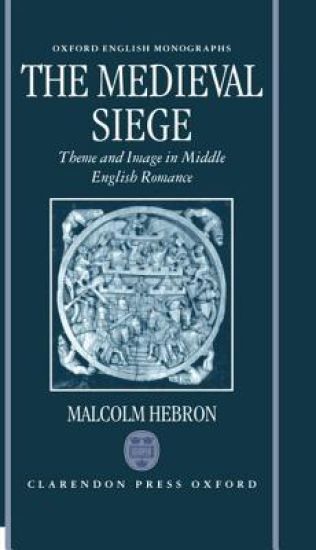
The Medieval Siege

The Medieval Siege

Malcolm Hebron

Clarendon Press
1997
sidottu
Sieges were a popular subject in medieval romances. Tales of the Crusades featured champions of Christianity capturing towns in the Holy Land or mounting heroic defences. The fall of a great city such as Troy, Thebes, or Jerusalem provided opportunities for the recreation of ancient chivalry and for reflections on historical change. Images of the siege in romances also point to other forms, such as drama and love allegory, where it represents the trial of the soul or the pursuit of the beloved. This book is the first full-length study of an important theme in medieval literature. Close reading of selected Middle English shows how writers used descriptions of sieges to explore such subjects as military strategy, heroism, chivalry, and attitudes to the past. This study also draws on a wide range of writings in several languages, to set the romances in a broad context. When they are seen against a background of military manuals, patristic commentary, pageantry, and love poetry, the sieges of romance take on deeper resonances of meaning and reflect the vitality of the theme in medieval culture as a whole.
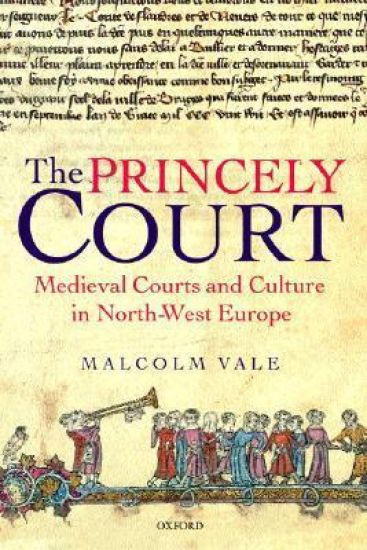
The Princely Court

The Princely Court

Malcolm Vale

Oxford University Press
2001
sidottu
In this text, the author sets out to recapture the court culture of western Europe in the 13th and 14th centuries. He shows how, despite the pressures of political fragmentation and a nascent awareness of national identity, a common culture emerged in court societies at the time.
The Origins of the Hundred Years War

The Origins of the Hundred Years War

Malcolm Vale

Clarendon Press
1996
nidottu
In this important study of Anglo-French relations in the century before the Hundred Years War, Malcolm Vale examines the legacy of continental rule bequeathed by the Angevin kings of England to their Plantagenet successors. He explores the sources of Anglo-French tension which ultimately led to the breakdown of feudal and diplomatic relations between the two greatest powers in western Europe.
Title to Territory in Africa

Title to Territory in Africa

Malcolm Shaw

Oxford University Press
1986
sidottu
Territorial issues have historically assumed a central role in international relations. Despite considerations relating to, for example, human rights and economic and social cooperation, the territorially-based view of international law remains the fundamental model and is subscribed to by third world states. The acquisition of territory in Africa by the European powers in the nineteenth century involved the characterization of the status of the various African communities. They were accepted as holding title to their territory, but not apparently regarded as full subjects of international law. Cession was the primary technique used in the colonization of Africa. The present study analyses the colonial acquisition of African territory with particular reference to the evolution of the principles of self-determination and its impact upon the law relating to territory. The first full-length treatment of its subject, this book makes an important contribution to the understanding of one of the crucial areas of international law.
Policing the European Union

Policing the European Union

Malcolm Anderson; Monica den Boer; Peter Cullen; William C. Gilmore; Charles D. Raab; Neil Walker

Clarendon Press
1996
sidottu
International co-operation in criminal law enforcement has become a centrally important policy issue for Europe in the 1990s. In criminal matters, when a decision is taken to go beyond the discretionary exchange of information towards institutionalized police co-operation, a whole Pandora's box of issues and problems is opened. This book, based on interviews in a wide variety of documentary sources, examines the progress of this co-operation. The authors cover all the major and theoretical issues associated with the emerging pattern of co-operation, including the harmonization of criminal law and criminal procedure, law enforcement strategies, police organization and discipline, and the politics of immigration and civil liberties. In a European Union without internal border controls there is widespread agreement on the objective of closer police co-operation. But prospects in some areas are not good and there are potential pitfalls, even dangers, along the road to more integrated arrangements. The authors conclude by making recommendations that proper accountability arrangements are a prerequisite of a balanced and efficient system of European police co-operation.
Preventing Torture

Preventing Torture

Malcolm D. Evans; Rod Morgan

Clarendon Press
1998
sidottu
In the 19th century the prohibition of judicial torture was celebrated as a triumph of civilisation. But in the aftermath of the 2nd World War it was necessary for the International community to re-emphasise, in the Universal Declaration of Human Rights, its abhorrence of torture: the proscription of torture became part of international customary law. But torture by agents of contemporary states persists, not least in the heart of Europe where reliance on the use of custody is growing once again. This pathbreaking documentary and empirical study - of a kind rarely undertaken in the field of international human rights law - considers in detail the work of the latest actor on the international stage attempting to prevent torture. The European Committee for the Prevention of Torture and Inhuman and Degrading Treatment or Punishment (the CPT), established in 1989, represents a new phase in international human rights intervention. The Council of Europe member states have given a Strasbourg-based Committee of experts an almost unfettered hand to examine their places of custody and report on what they find. The authors, an international lawyer and a criminologist, bring their different analytical perspectives to bear on this innovative human rights mechanism. The authors consider the nature of torture in the late 20th century and, given the pervasive culture of denial, the difficulties in combating it. They argue that utilitarian justifications for torture lurk just beneath the surface of modern liberal democratic state practice. They describe the background to the European Convention for the Prevention of Torture, examine the text and the modus operandi of the Committee, set the CPT's standards against those of other international bodies and discuss how the work of the Committee should best be carried forward in an enlarged and increasingly diverse European community of nations.
The Application of EC Law by National Courts

The Application of EC Law by National Courts

Malcolm Jarvis

Clarendon Press
1998
sidottu
The decentralized system for the enforcement of European Community law, and the early development by the European Court of Justice (ECJ) of the dual doctrines of supremacy and direct effect, requires national courts of Member States to play a crucial role in the European legal order. Jarvis's book examines the application of European Community law by the national courts and assesses their increasingly important role in the judicial architecture of the Community. The author focuses on the application of the rules of the EC Treaty concerning the free movement of goods (Articles 30-36), one of the largest and most mature areas of substantive EC law. He has undertaken an exhaustive examination of relevant case law from the national courts of the United Kingdom, France and the Netherlands, while also covering the most significant developments in the courts of other Member States. Jarvis also examines the links between the huge corpus of case law and the implementation of EC law through Directives and national legislation. This ambitious book will be welcomed as a significant advance in our growing understanding of the importance of national courts in the EC legal order. From the authors Preface Selecting the appropriate balance in the title for this book was a difficult task. The dilemma was essentially whether the title should most reflect the emphasis in this work on the more general application of European Community law by national courts, or rather accent the specific area of the free movement of goods provisions within the EC Treaty. Since the issues arising from the application of the free movement of goods provisions by the national courts have such wide implications (being representative of the application of any of the other four freedoms and indeed the application of EC law by the national courts in general) it was felt that this should be reflected in the title. It is hoped that this work will add to the growing awareness of the pivotal role played by the national courts as the Community courts, whilst also providing a thought provoking analysis of the free movement of goods provisions in the EC Treaty
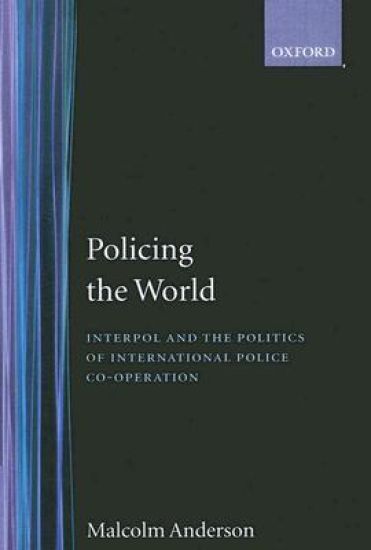
Policing the World

Policing the World

Malcolm Anderson

Clarendon Press
1989
sidottu
The need for co-operation between the police forces of the world has never been greater: there is a huge growth in international drug-trafficking and terrorism, and many social and economic activities are becoming increasingly internationalized. Interpol is the oldest and best-known institution for tackling these problems - but is it right for today's conditions, or should it be supplanted by new arrangements? In this, the first scholarly study of Interpol, and of other contemporary forms of police co-operation across national boundaries, Malcolm Anderson discusses the proliferation of different forms of co-operation. He recognizes that contact between police forces of sovereign independent states has always been a sensitive matter and analyses uncertainty about how far police co-operation can go. He also examines the shadowy role of the security services and the influence of different forms of training on police attitudes. His book will be the indispensable starting-point for any future serious attempt to address these crucial issues of international policing.
X-Ray Compton Scattering

X-Ray Compton Scattering

Malcolm Cooper; Peter Mijnarends; Nobuhiro Shiotani; Nobuhiko Sakai; Arun Bansil

Oxford University Press
2004
sidottu
With the development of potent x-ray sources at many synchrotron laboratories worldwide, Compton scattering has become a standard tool for studying electron densities in materials. This book provides condensed matter and materials physicists with an authoritative, up-to-date, and very accessible account of the Compton scattering method, leading to a fundamental understanding of the electrical and magnetic properties of solid materials. The spectrum of Compton scattered x-rays is particularly sensitive to this behaviour and thus can be used as a direct probe and to test the predictions of theory. The current generation of synchrotron facilities allows this method to be readily exploited to study the ground state electron density in both elements and in complex compounds. It is important that those working in related fields, as well as the increasing number directly using the Compton method, have a comprehensive assessment of what is now possible and how to achieve it, in addition to a full understanding of its theoretical basis. This monograph is unique and timely, since little of what is described, was practicable a decade ago. The development of synchrotron radiation facilities has ensured that the technique described here will remain a powerful probe of electron charge and spin density for many years to come.
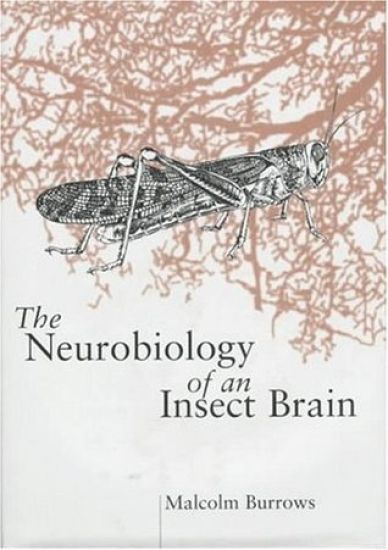
The Neurobiology of an Insect Brain

The Neurobiology of an Insect Brain

Malcolm Burrows

Oxford University Press
1996
sidottu
Studies of insect nervous systems have made an immense contribution to our understanding of how a brain works and the way that the connections between constituent neurons are formed during development, For the first time these studies are brought together in The neurobiology of an insect brain, a personal account by a leading experimental neurobiologist and zoologist. By concentrating largely on one insect, the locust, this book unravels the mechanisms by which a brain integrates the vast array of sensory information to generate appropriate movements and behaviour. It first describes the basic structure of an insect brain and how this complex structure is formed during embryonic development. The cellular properties of the different types of neurons, and the way they are altered by neurosecretions are then analysed with respect to the integrative actions of these neurons during behaviour. Finally, the various movements that an insect performs are investigated at the cellular level to illustrate particular features of the integrative processing. Throughout, the book emphasises how knowledge of these simpler nervous systems contributes to our understanding of more complex brains, and at the same time provides the functional synthesis into which future molecular and computational studies can be woven. The neurobiology of an insect brain is an important milestone in our search for unifying principles of brain organisation and will be essential reading for students and research workers in neurobiology, behaviour, and entomology. our understanding
Aromatic Chemistry

Aromatic Chemistry

Malcolm Sainsbury

Oxford University Press
1992
nidottu
All the basic principles of this important topic are clearly presented here in an account which takes as examples many compounds of industrial and biological significance. Consideration is given to the structure, reactions, and properties of benzene and classes of aromatic compounds derived from it, and topics such as thermodynamic versus kinetic control and pericyclic reactions are introduced. The text also covers polycyclic arenes and the small and large ring systems which are embraced by the wider definition of aromaticity.
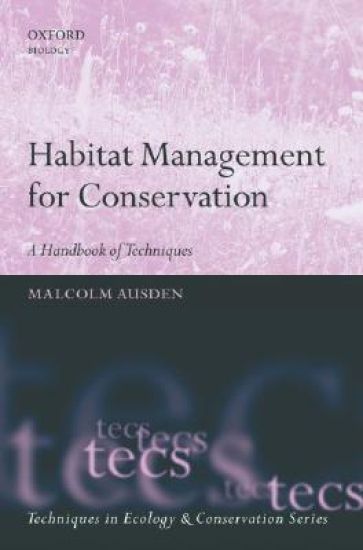
Habitat Management for Conservation

Habitat Management for Conservation

Malcolm Ausden

Oxford University Press
2007
sidottu
Habitat management is commonly used to maintain and enhance the biological interest of many areas of semi-natural habitat where natural processes no longer create suitable conditions for desired species. Habitat restoration and creation is increasingly being used to increase the extent of ecologically important habitats in order to mitigate the impacts of human development. The modification of past management techniques and the introduction of new ones can provide additional benefits. Habitat Management for Conservation is a practical handbook which describes the range of techniques used to manage land for biodiversity conservation. The opening sections discuss the general principles of habitat management, including decision-making, mitigating damaging effects of climate change, and monitoring the success of management. These are followed by a series of chapters which describe how to manage specific habitats: grasslands, dwarf-shrub vegetation and shrublands, forests, woodlands and scrub, freshwater wetlands, coastal habitats, arable land, and gardens, backyards and urban areas. For each of these habitats the book discusses the main factors influencing their value for wildlife, highlights the key decisions that need to be made, and describes and compares the effects of individual management techniques. This comprehensive guide will be essential reading for graduate students and an invaluable resource for land managers, land-use advisors and others involved in conservation land management worldwide
Habitat Management for Conservation

Habitat Management for Conservation

Malcolm Ausden

Oxford University Press
2007
nidottu
Habitat Management for Conservation is a practical handbook which describes the range of techniques used to manage land for biodiversity conservation. The opening sections discuss the general principles of habitat management, including decision-making, mitigating damaging effects of climate change, and monitoring the success of management. These are followed by a series of chapters which describe how to and shrublands, forests, woodlands and scrub, freshwater wetlands, coastal habitats, arable land, and gardens, backyards and urban areas. For each of these habitats the book discusses the main factors influencing their value for wildlife, highlights the key decisions that need to be made, and describes and compares the effects of individual management techniques. This comprehensive guide will be essential reading for graduate students and an invaluable resource for land managers, land-use advisors and others involved in conservation land management worldwide.
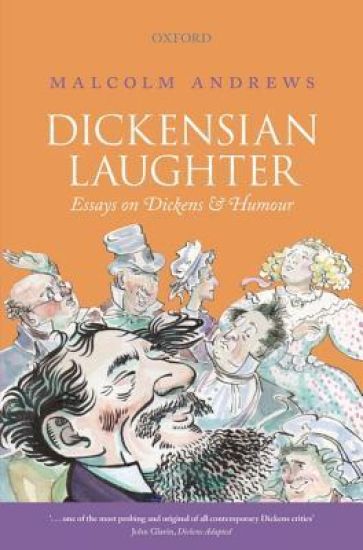
Dickensian Laughter

Dickensian Laughter

Malcolm Andrews

Oxford University Press
2016
nidottu
How does Dickens make his readers laugh? What is the distinctive character of Dickensian humour? These are the questions explored in this book on a topic that has been strangely neglected in critical studies over the last half century. Dickens's friend and biographer John Forster declared that: 'His leading quality was Humour.' At the end of Dickens's career he was acclaimed as 'the greatest English Humourist since Shakespeare's time.' In 1971 the critic Philip Collins surveyed recent decades of Dickens criticism and asked 'from how many discussions of Dickens in the learned journals would one ever guess that (as Dickens himself thought) humour was his leading quality, his highest faculty?' Forty years later, that rhetorical question has lost none of its force. Why? Perhaps Dickens's genius as a humourist is simply taken for granted, and critics prefer to turn to his other achievements; or perhaps humour is too hard to analyse without spoiling the fun? Whatever the reason, there has been very little by way of sustained critical investigation into what for most people has constituted Dickens's special claim to greatness. This book is framed as a series of essays examining and reflecting on Dickens's techniques for making us laugh. How is it that some written incident, or speech, or narrative 'aside' can fire off the page into the reader's conciousness and jolt him or her into a smile, a giggle, or a hearty laugh? That is the core question here. His first novel, Pickwick Papers, was acclaimed at the time as having 'opened a fresh vein of humour' in English literature: what was the social nature of the humour that established this trademark 'Dickensian' method of making people laugh? And how many kinds of laughter are there in Dickens? What made Dickens himself laugh? Victorian and contemporary theories of laughter can provide useful insights into these processes - incongruity theory or the 'relief' theory of laughter, laughter's contagiousness (laughter as a 'social glue'), the art of comic timing, the neuroscience of laughter. These and other ideas are brought into play in this short book, which considers not only Dickens's novels but also his letters and journalism. And to that end there are copious quotations. The aim of the book is to make readers laugh and also to prompt them to reflect their laughter. It should have an interest not only for Dickensians but for anyone curious about the nature of laughter and how it is triggered.
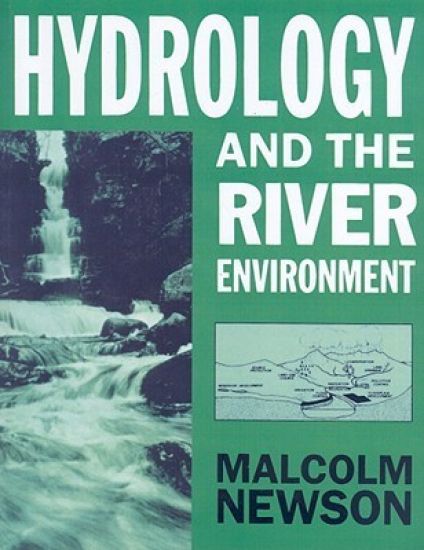
Hydrology and the River Environment

Hydrology and the River Environment

Malcolm Newson

Clarendon Press
1994
nidottu
This undergraduate textbook is a guide to the scope and content of environmental hydrology. It places hydrology in its modern environmental context in which the measurements made and the conclusions drawn by hydrology are the focus for management by conservationists and the water industry.
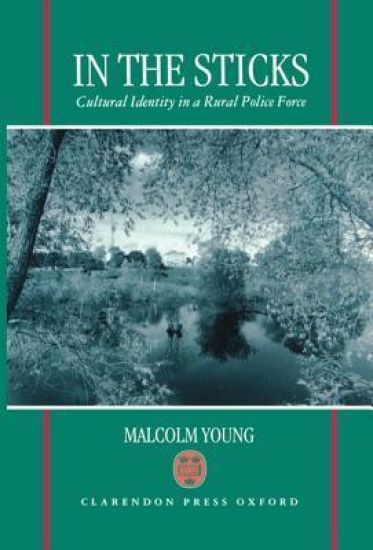
In the Sticks

In the Sticks

Malcolm Young

Clarendon Press
1993
sidottu
After twenty-five years police service on urban Tyneside, the author–a social anthropologist–transferred, on promotion as Superintendent, to West Mercia Constabulary. The arrival of this 'import' coincided with monetarist demands for efficiency and effectiveness, a political thrust which came hard up against rural ideas of hierarchy, paternalism, and a cultural belief that denied validity to outsiders - such as those in the adjacent West Midlands Police. Detailing the way West Mercia operated and justified some bizarre practices, the ethnography shows how cultural identity was defined and deployed on a daily basis and explores the diverse and rich cultural baggage the rural world sustained even in the face of intense calls for the management of change. Reflecting on the lack of financial control he found, the author links all this to the racism he observed–to a xenophobic means of maintaining social boundaries, defending edgy environments and preserving a semi-closed culture from the intrusions of outsiders.
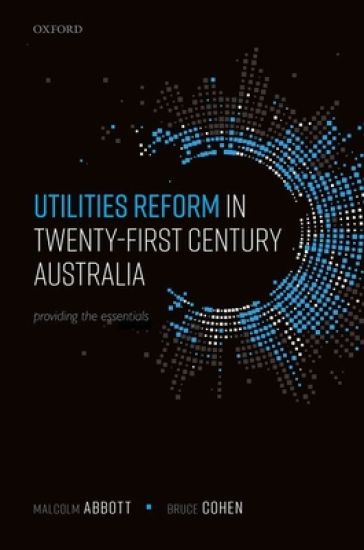
Utilities Reform in Twenty-First Century Australia

Utilities Reform in Twenty-First Century Australia

Malcolm Abbott; Bruce Cohen

Oxford University Press
2021
sidottu
Utilities Reform in 21st Century Australia: Providing the Essentials traces the development and consequences of the economic reform measures undertaken in the utilities sector in Australia (communications, energy, water/wastewater services, and transport) in the last years of the 20th century, and early decades of the 21st century. In doing so, it looks at the process of reform across industries, and across the state and federal jurisdictions, to identify what motivations the various governments had for pursing reform, how change varied across jurisdictions, and what issues arose in the process. Although by the mid-1990s all states and territories and the Australian Government were committed to reforming utilities as part of the National Competition Policy, not all pursued this reform with the same degree of speed and breadth of action. The broad trends of economic reform in Australia, and abroad, are also touched upon, to provide an outline of the wider context in which the reform of the utilities occurred. This book, therefore, explores the relationship between politics and society on the one hand and economic reform on the other; as well on as the efforts of governments in Australia to promote economic growth and the wealth of Australians in an increasingly complex and challenging global economic climate.
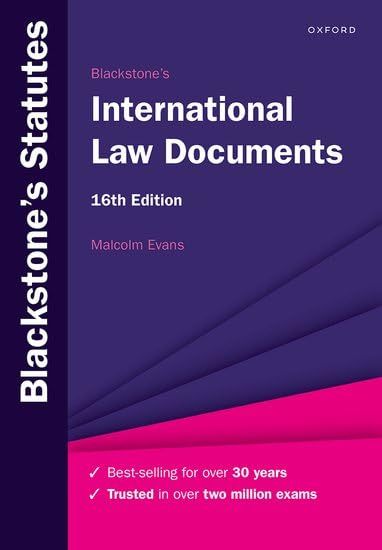
Blackstone's International Law Documents

Blackstone's International Law Documents

Malcolm Evans

Oxford University Press
2024
nidottu
Unsurpassed in authority, reliability and accuracy; Blackstone's Statutes, trusted by students for over 30 years. Celebrating over 30 years as the market-leading series, Blackstone's Statutes have an unrivalled tradition of trust and quality. With a rock-solid reputation for accuracy, reliability, and authority, they remain first-choice for students and lecturers, providing a careful selection of up-to-date legislation for exams and course use. - Clear and easy-to-use, helping you find what you need instantly -Edited by experts and covering all the key legislation needed for criminal law courses, so you can use alongside your textbook to ensure you approach your assessments with confidence - Unannotated legislation - perfect for exam use - Also available as an e-book with functionality and navigation features
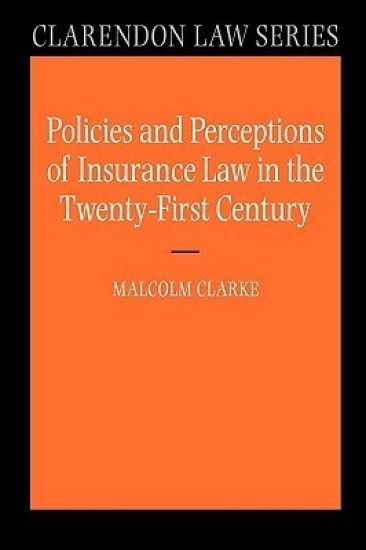
Policies and Perceptions of Insurance Law in the Twenty First Century
In this book, Professor Malcolm Clarke provides a stimulating, critical introduction to the English law of insurance contracts, presenting the rules in both their legal and socio-economic contexts. He sets out the principles behind the law in a clear manner, moving on to explore the implications of certain rules in order to examine the importance of effective insurance and effective insurance law in modern society. Comparative reference is made to the corresponding rules in common law countries and also in major jurisdictions in western Europe, providing a thought-provoking wider view of the relevant law. The book illustrates the different perceptions of insurance and of insurance law that are to be found amongst lawyers, insurers, and policy-holders. In particular, it argues that the perception of many people, and also not least of many judges, is that if any dispute arises with insurers, insurers have an unfair advantage under the law. Moreover, this is in fact usually the case, if insurers choose to use their advantage. By presenting the rules of insurance contract law in the wider context of contract law at large, the book seeks to demystify them and to challenge the assumption that insurance law is or ought to be greatly different from other parts of the law. In particular, he argues that insurance contract law should be available and intelligible to serious enquirers, lawyers, and non-lawyers alike.
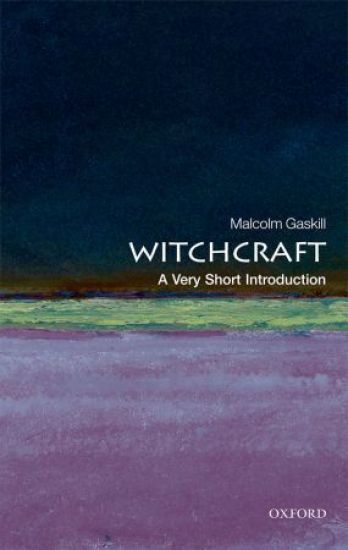
Witchcraft

Witchcraft

Malcolm Gaskill

Oxford University Press
2010
nidottu
Witchcraft is a subject that fascinates us all, and everyone knows what a witch is - or do they? From childhood most of us develop a sense of the mysterious, malign person, usually an old woman. Historically, too, we recognize witch-hunting as a feature of pre-modern societies. But why do witches still feature so heavily in our cultures and consciousness? From Halloween to superstitions, and literary references such as Faust and even Harry Potter, witches still feature heavily in our society. In this Very Short Introduction Malcolm Gaskill challenges all of this, and argues that what we think we know is, in fact, wrong. Taking a historical perspective from the ancient world to contemporary paganism, Gaskill reveals how witchcraft has meant different things to different people and that in every age it has raised questions about the distinction between fantasy and reality, faith and proof. Telling stories, delving into court records, and challenging myths, Gaskill examines the witch-hunts of the sixteenth and seventeenth centuries, and explores the reinvention of witchcraft - as history, religion, fiction, and metaphor. ABOUT THE SERIES: The Very Short Introductions series from Oxford University Press contains hundreds of titles in almost every subject area. These pocket-sized books are the perfect way to get ahead in a new subject quickly. Our expert authors combine facts, analysis, perspective, new ideas, and enthusiasm to make interesting and challenging topics highly readable.