
Kirjahaku
Etsi kirjoja tekijän nimen, kirjan nimen tai ISBN:n perusteella.
1000 tulosta hakusanalla Maral Atmaca

The Work of Mara Selvini Palazzoli
Mara Selvini palazzoli; Matteo Selvini
Jason Aronson Inc. Publishers
1988
sidottu
Moral Freedom reconciles three apparently inconsistent truisms about morality: first, moral rules are societyâs rules; second, morality is a matter of individual choice: and third, some things are wrong regardless of what any society or individual has to say. In developing a moral theory that accommodates all three truisms, Jeffrey Olen offers a view of morality that allows individuals a generous degree of moral freedom. The author explores various answers to the question, "Does anybody or anything have any moral authority over how I live my life?" His answer is "No." In a lively, conversational style, Olen leads the reader through the arguments, examples, and exceptions that contribute to this conclusion. Along the way, he contends that what most philosophers call the moral point of view, but what he refers to as the impersonal moral point of view, is but one of two moral points of view. The other is the personal moral point of view, which Olen defends against the allegedly overriding demands of impersonal morality. Moral Freedom considers the work of philosophers as diverse as Kant, Nietzsche, Kurt Baier, Bernard Williams, and Daniel Dennett. Admitting that this is a personal discussion of the nature of morality, Olen claims the "freedom" to engage these intellectual issues in a personal style to illustrate the personal moral point of view that he champions. Author note: Jeffrey Olen is Professor of Philosophy at the University of Wisconsin, Stevens Point.
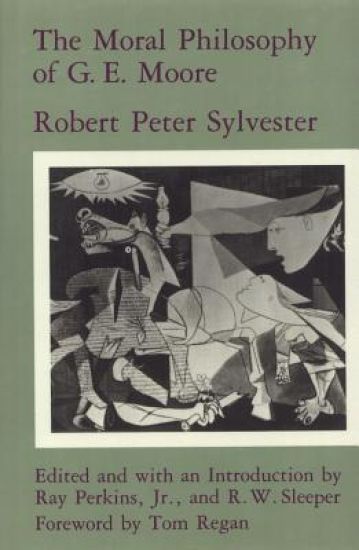
This study of G.E. Moore's work in moral philosophy draws upon a close examination of the early essays that preceded the writing of "Principia Ethica" in order to ground the author's view that Moore's famous 'naturalistic fallacy argument' of "Principia" has been widely misunderstood. At the time of his death in 1986, Robert Peter Sylvester was in the process of preparing this book for publication. That process has been brought to completion by Ray Perkins, Jr., and R. W. Sleeper. Sylvester's reappraisal of the moral philosophy of G. E. Moore argues that criticism of the work of this major twentieth-century British philosopher has been based on misinterpretation of his unified position. He treats Moore's ideas about 'What is Good?', 'What things are Good?' and 'What ought we to do?' as forming a coherent system. To bring this work up to date since the author's death, the editors have provided a bibliographic essay following each chapter in which recent scholarship is discussed.Author note: Robert Peter Sylvester was New England Professor of Philosophy at New England College and previously Chair of the Department of Philosophy at the University of New Hampshire. Ray Perkins, Jr., presently associated with the University System of New Hampshire, is a former colleague of Professor Sylvester at New England College. R. W. Sleeper is Professor Emeritus of Philosophy, Queens College of the City University of New York.
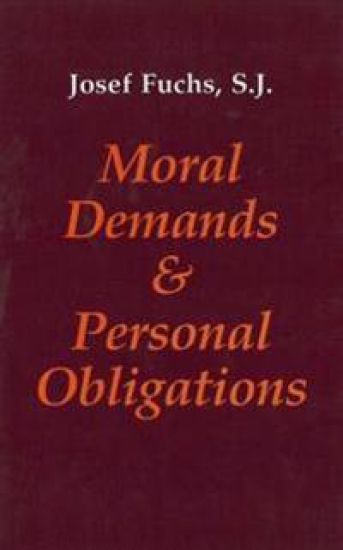
In this collection of recent essays (1988-92), all but one previously unavailable in English, noted theologian Josef Fuchs, SJ, examines key issues in normative morality. Identifying two strains, one based on natural law and a more situational one based on the Golden Rule, he explores the need for plurality in both individual and societal ethics, and the problem of universal versus only general validity. Central ideas that Fuchs develops are the concept of innovative morality as the individual's responsible search for God's will in personal situations; and, the significance of the conscience in the face of official statements by the church's magisterium. Among the topics he considers are marriage and sexuality; the beginning and end of life; and, international solidarity and social justice.
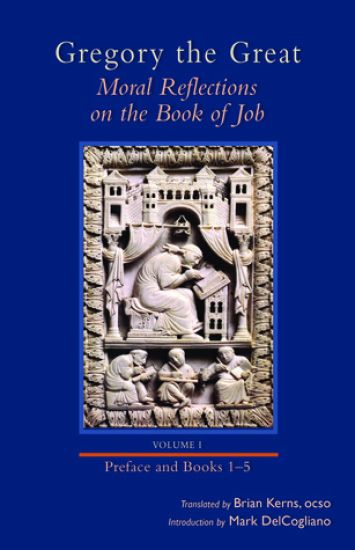
Gregory the Great was pope from 590 to 604, a time of great turmoil in Italy and in the western Roman Empire generally because of the barbarian invasions. Gregory’s experience as prefect of the city of Rome and as apocrisarius of Pope Pelagius fitted him admirably for the new challenges of the papacy. The Moral Reflections on the Book of Job were first given to the monks who accompanied Gregory to the embassy in Constantinople. This first volume of the work contains books 1–5, accompanied by an introduction by Mark DelCogliano.

Gregory the Great was pope from 590 to 604, a time of great turmoil in Italy and in the western Roman Empire generally because of the barbarian invasions. Gregory’s experience as prefect of the city of Rome and as apocrisarius of Pope Pelagius fitted him admirably for the new challenges of the papacy. The Moral Reflections on the Book of Job were first given to the monks who accompanied Gregory to the embassy in Constantinople.This fourth volume, containing books 17 through 22, provides commentary on twelve chapters of Job, from 24:21 through 31:40.
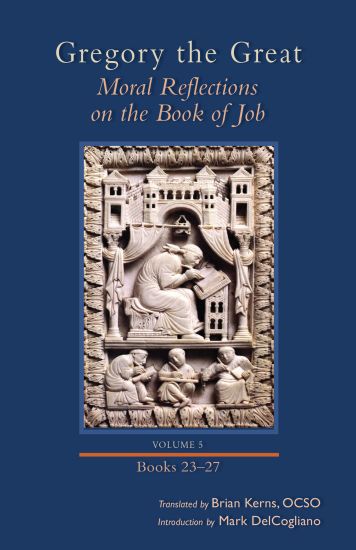
Gregory the Great was pope from 590 to 604, a time of great turmoil in Italy and in the western Roman Empire generally because of the barbarian invasions. Gregory’s experience as prefect of the city of Rome and as apocrisarius of Pope Pelagius fitted him admirably for the new challenges of the papacy. The Moral Reflections on the Book of Job were first given to the monks who accompanied Gregory to the embassy in Constantinople. This fifth volume, containing books 23 through 27, provides commentary on six chapters of Job, from 32:1 through 37:24. The present volume covers the chapters of Job devoted to Elihu, the young man who derides the three friends who couldn’t find an answer to Job. For the most part Gregory confines himself, with a few exceptions, to the allegorical moral exegesis, making Elihu a symbol of the arrogant person (sometimes the heretic, and sometimes the unworthy member of the church), and Job a type either of the church herself or of the holy preachers of sound doctrine.
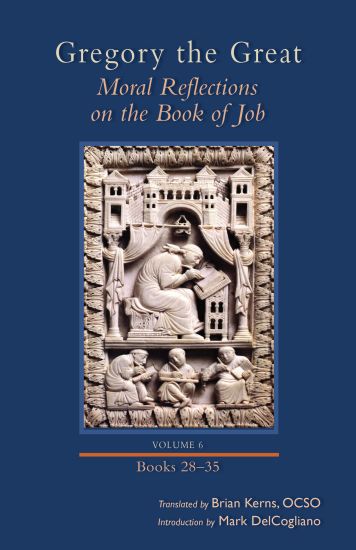
Gregory the Great was pope from 590 to 604, a time of great turmoil in Italy and in the western Roman Empire generally because of the barbarian invasions. Gregory’s experience as prefect of the city of Rome and as apocrisarius of Pope Pelagius fitted him admirably for the new challenges of the papacy. The Moral Reflections on the Book of Job were first given to the monks who accompanied Gregory to the embassy in Constantinople. This sixth volume, containing books 28 through 35, provides commentary on five chapters of Job, from 38:1 through 42:17. The present volume contains the Lord’s appearing to Job out of the whirlwind, the Lord’s two lengthy speeches to Job and Job’s responses, and, finally, the Lord’s rebuke to Job’s friends and restoration of Job’s fortunes. Finally, Gregory speaks of his intention in writing this long work and requests that his readers grant him their prayers and tears. Includes comprehensive indexes for volumes 1-6.
Gregory the Great was pope from 590 to 604, a time of great turmoil in Italy and in the western Roman Empire generally because of the barbarian invasions. Gregory’s experience as prefect of the city of Rome and as apocrisarius of Pope Pelagius fitted him admirably for the new challenges of the papacy. The Moral Reflections on the Book of Job were first given to the monks who accompanied Gregory to the embassy in Constantinople. This second volume, containing books 6–10, provides commentary on Job 5:3–12:5. Here, Gregory sets forth “a mystical interpretation” of these chapters, showing the way that Scripture foretells Christ’s incarnation and that Job himself manifests Jesus’ passion.

Gregory the Great was pope from 590 to 604, a time of great turmoil in Italy and in the western Roman Empire generally because of the barbarian invasions. Gregory’s experience as prefect of the city of Rome and as apocrisarius of Pope Pelagius fitted him admirably for the new challenges of the papacy. The Moral Reflections on the Book of Job were first given to the monks who accompanied Gregory to the embassy in Constantinople. This third volume, containing books 11 through 16, provides commentary on six chapters of Job, from 12:6 through 24:20. Whereas volume 1 concentrated largely on the moral reading of the first four chapters of Job and volume 2 on the mystical interpretation of the next seven, volume 3 offers a rapid overview of nearly thirteen chapters in their original oral format, including a brief comment at the beginning of each of the six books to explain its contents.
Moral Resistance and Spiritual Authority: Our Jewish Obligation to Social Justice
Central Conference of American Rabbis
2018
nidottu
This foundational new book reminds us of our ancient obligation to bring justice to the world. The essays in this collection explore the spiritual underpinnings of our Jewish commitment to justice, using Jewish text and tradition, as well as contemporary sources and models. Among the topics covered are women's health, LGBTQ rights, healthcare, racial justice, speaking truth to power, and community organizing.
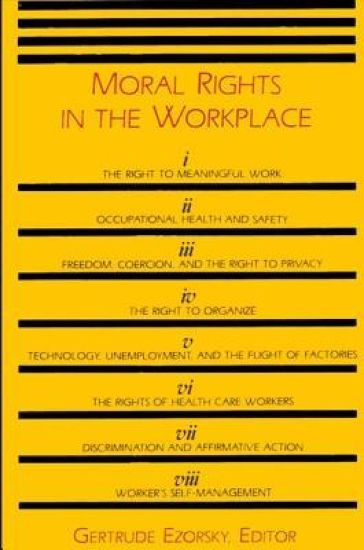
Moral Rights in the Workplace
State University of New York Press
1972
pokkari
This book focuses on the moral problems that arise for people who labor in ordinary places — factories, schools, mines, stores, and farms. Moral Rights in the Workplace examines problems of freedom and coercion that develop on the job, issues of the right to meaningful work, occupational health and safety, whistleblowing, the right to union organization, unemployment, and the flight of factories, the rights of health care workers, and workers' self-management. Issues of employment discrimination such as comparable worth, seniority, affirmative action, and worksharing that have been given scant attention in other books are also discussed.
This is an introductory text for an ethics course that provides the theoretical background for discussion of ethical problems. It could be supplemented with essays or anthologies on a range of particular problems, or an instructor could focus on the problems that occupy the concluding chapters: abortion, whistle-blowing, and the relation between ethics and the law. The first few chapters present ethical theory in straightforward fashion discussing alternatives and providing historical orientation. The middle chapters develop what the author calls "action guides" with principles for applying them. The last few chapters demonstrate the theory and action guides at work.
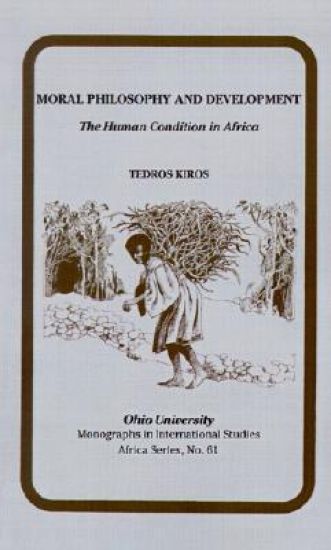
Although development issues generally have been considered in a framework of economic theory and politics, in this volume Tedros Kiros looks to European ideas of moral philosophy to explain the underdevelopment of Africa and the persistent African food crisis. He draws upon the works of Adam Smith, David Ricardo, Karl Marx and the concepts of hegemony and counter-hegemony. Kiros points out that Africans and Europeans held opposing worldviews upon their initial contact and agrees with those who explain the present condition in Africa partly as the result of European colonialism. In his concluding chapter he develops principles of moral philosophy to guide Africans and others in the future economic development of the African continent.
Moral Development
Lawrence Erlbaum Associates Inc
1975
sidottu
First published in 1975. The purpose of this volume is to present a collection of contemporary theory and research in moral development. The coverage, as further discussed in the Introduction, is selective rather than comprehensive with the emphasis on current contributions that focus on various provocative issues pertinent to both moral judgment and moral behavior. The fact that there is no existing collection of papers and critical evaluation of this type makes this book a unique resource for workers and students in the area of moral development.
Moral Education
Lawrence Erlbaum Associates Inc
1985
sidottu
First published in 1985. Kohlberg and his colleagues claimed that all one need do in moral education is change the stage or structure of an individual's moral reasoning, and changes in moral behavior, ego and personality style would occur. As moral education entered the 1980s, many important problems remained. The question of the legitimacy of the highest stage is still being considered. The problem of the relationship between judgment and action is receiving much attention and reformulation as well. The role of affect in moral functioning has been sorely overlooked until very recently. A further issue is the implication of the particular realm of one's life (family, school, peer group, workplace, church) for the form and effectiveness of moral education. Finally, how can self-acknowledged moral transgressions in typical individuals be incorporated into the theory? This volume reflects these problems.
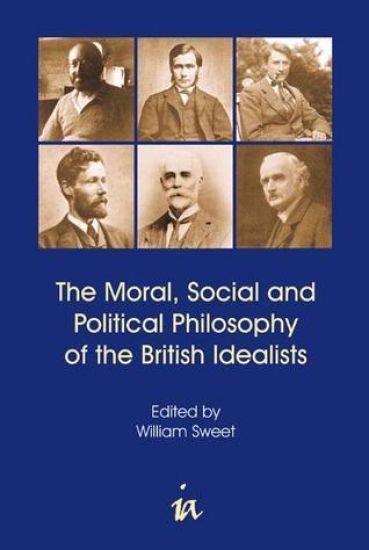
Moral, Social and Political Philosophy of the British Idealists
Imprint Academic
2009
sidottu
The British idealists of the late 19th and early 20th century are best known for their contributions to metaphysics, logic, and political philosophy. Yet they also made important contributions to social and public policy, social and moral philosophy and moral education, as shown by this volume. Their views are not only important in their own right, but also bear on contemporary discussion in public policy and applied ethics. Among the authors discussed are Green, Caird, Ritchie, Bradley, Bosanquet, Jones, McTaggart, Pringle-Pattison, Webb, Ward, Mackenzie, Hetherington, Muirhead, Collingwood and Oakeshott. The writings of idealist philosophers from Canada, South Africa, and India are also examined. Contributors include Avital Simhony, Darin Nesbitt, Carol A. Keene, Stamatoula Panagakou, David Boucher, Leslie Armour, Jan Olof Bengtsson, Thom Brooks, James Connelly, Philip MacEwen, Efraim Podoksik, Elizabeth Trott and William Sweet.
The chapters in this volume are about moral dilemmas in two senses. First the authors focus on dilemmas, both real and hypothetical, which require moral judgements. The 'Heinz-Dilemma' part of Kohlberg's scoring systems is used as a point for level of moral development. There is also a Second sense, as those who study moral reasoning being in a dilemma as they attempt to integrate information from the domains of philosophy and psychology.