Kirjojen hintavertailu. Mukana 11 342 296 kirjaa ja 12 kauppaa.

Kirjahaku

Etsi kirjoja tekijän nimen, kirjan nimen tai ISBN:n perusteella.

1000 tulosta hakusanalla Maria Hanstein

Maria Edgeworth's Letters from Ireland

Maria Edgeworth's Letters from Ireland

Maria Edgeworth

The Lilliput Press Ltd
2017
nidottu
1 January 2018 will be the 250th anniversary of Maria Edgeworth's birth. Valerie Pakenham's sparkling new selection of over four hundred letters, many hitherto unpublished, will help to celebrate her memory. Born in England, she was brought to live in Ireland at the age of fourteen and spent most of the rest of her life at the family home at Edgeworthstown, Co. Longford. Encouraged by her remarkable father, Richard Lovell Edgeworth, whose memoirs she edited, she became, in turn, famous for her children's stories, her practical guides to education and her novels - or, as she preferred to call them, `Moral Tales'. By 1813, when visiting London, she was, as Byron testified, as great a literary lion as he had been the season before, and she was hugely admired by fellow novelists Sir Walter Scott and Jane Austen. Maria Edgeworth's posthumous fame has dwindled and only her first novel, Castle Rackrent (1800), a brilliant burlesque account of the Irish squirearchy, is still widely read. She was, however, a prolific and fascinating letter writer. She insisted that her letters were for private consumption only, but after her death, her stepmother and half-sisters produced a private memoir for friends using carefully selected extracts. Their literary quality was spotted by Augustus Hare, whose shortened version, The Life and Letters of Maria Edgeworth, appeared in 1894. In the 1970s Maria's great great niece, Christina Colvin edited Maria Edgeworth's Letters from England and Maria Edgeworth in France & Switzerland. No one, however, has revisited fully Maria's original letters from the place she loved and knew best: Ireland. From 1825, Maria's letters reflect sixty years of Irish history, from the heady days of Grattan's Parliament, through the perils of the 1798 Rebellion to the rise of O'Connell and the struggle for Catholic Emancipation. In old age, she worked actively to alleviate the Great Famine and wrote her last story to raise money aged 82. A treasure trove of stories, humour, local and high-level gossip, her letters show the extraordinary range of her interests: history, politics, literature and science. Maria almost single-handedly took over the management of her family estate and restored it to solvency. Her later letters brim with delight at these practical undertakings and her affection for the local people she worked with. Two of her half-sisters and her stepmother were gifted artists, and Valerie Pakenham has been able to use many of their unpublished drawings and sketches to illustrate this book.
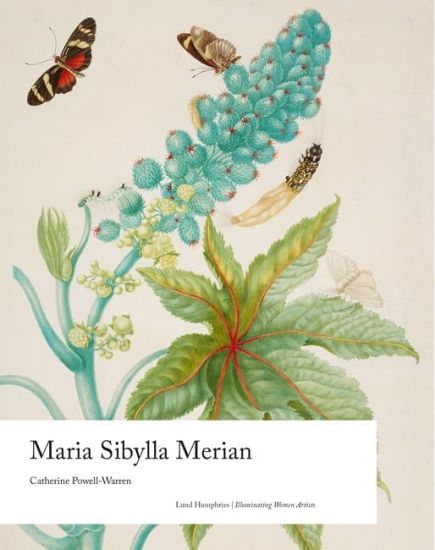
Maria Sibylla Merian

Maria Sibylla Merian

Catherine Powell-Warren

LUND HUMPHRIES PUBLISHERS LTD
2025
sidottu
In 1679, the commentator Joachim von Sandrart described Maria Sibylla Merian (1647-1717) as a painter who had perfected the art of the miniature and of flower painting, a high and deserved honour. Posthumously, however, it is Merian’s status as an entomologist or naturalist that has garnered the most attention; she has not received her due as an artist. This book remedies this situation and assists the reader in understanding Merian’s life as a woman and as an artist in the early modern Dutch Republic. Using Merian’s hundreds of extant watercolours and book illustrations as sources, in combination with her surviving correspondence and with contemporary art treatises, Catherine Powell-Warren recognizes the artistic contributions of Maria Sibylla Merian, and situates them in their socio-cultural and creative context. This book is the first to consider Merian's art and art-historical significance: her artistic range; her techniques; the rich visual rhetoric she deployed in her works; and her innovations. Merian may not have been a guild member, but she was for all intents and purposes the head of a for-profit business (a 'master'), seeing to the training of her daughters and managing a successful workshop, publishing her works, and networking to secure patrons and resources. Considering the impediments she faced as a woman, her achievements as an artist, as well as in other realms, can be considered noteworthy and perhaps even extraordinary.
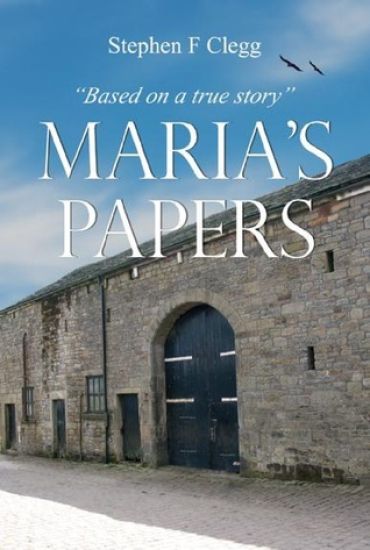
Maria's Papers

Maria's Papers

Stephen F. Clegg

Austin Macauley Publishers
2012
nidottu
Based on a true story, the once-wealthy Chance family are swindled out of their Whitewall Estate in the mid-1700s and the truth isn't discovered for nearly ninety years. In 1850 Maria Chance promises her dying father to put this injustice to rights, and is thereafter plunged into some extraordinarily dangerous and terrifying situations in mid-Victorian Britain that threaten not only her life, but her sanity too. One hundred and fifty years later, Naomi Draper, the Head of the local Council's Historic Research Department, causes a long forgotten document case to be opened, and she too is immediately plunged into a web of intrigue surrounding ownership of the now named Whitewall Farm. As she and her diverse range of friends and allies begin to unravel the mystery, it soon becomes apparent that some very powerful people don't want the truth disclosed, and that they are prepared to do anything to suppress it.
Maria Bartuszová

Maria Bartuszová

Tate Publishing
2022
sidottu
This beautiful book on Slovak artist, Maria Bartuszová (1936–1996) will introduce readers to the ethereal and other-worldly forms that dominate her oeuvre as well as exploring her influence in a broader global and political context. Discovering her talent in Prague in the ceramic studios at the Academy of Arts, Architecture and Design, Bartuszová went on to pioneer the techniques used in experimental and abstract plaster casting. Creating unique methods such as ‘gravistimulated’ and ‘pneumatic’ casting, Bartuszová defined the world of sculpture on her own terms. From rain drops and eggs, to parts of the human body, Bartuszová was interested biomorphology and how she could use the organic nature of casting in plaster to create simultaneously solid and delicate works. With around 100 works, many rarely exhibited before in the UK, this major retrospective will highlight the abstract sculptures and experimental methods of Bartuszová’s beautifully contorted and organic shapes and forms, with this exquistite and accessible catalogue bringing her work to a wider audience. Celebrating the fragile and corporeal, the soft and the solid; this book will provide the perfect introduction to the artist followed by seminal texts to recognise the artist’s legacy of experimental and abstract sculptural works produced predominantly in the context of socialist Czechoslovakia.
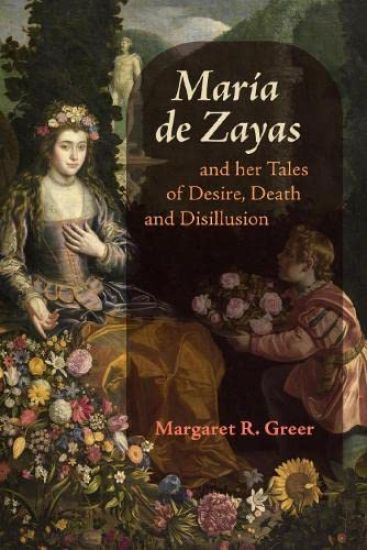
María de Zayas and her Tales of Desire, Death and Disillusion
Who doubts, my reader, that you will be amazed that a woman has the audacity not only to write a book, but to send it for printing, which is the crucible in which the purity of genius is tested'? A pioneer of early modern feminism, María de Zayas y Sotomayor wrote poetry, drama and prose but is best known for two page-turning collections of short stories: Exemplary Tales of Love (1637) and Tales of Disillusion (1647). This book provides an engaging introduction to Zayas and her work. It begins by relating what we know of her life, placing her in her socio-political and economic context and addressing the issue of women's literacy. Following chapters examine her use of sexual desire, violence and humour in her tales; her narrative structures; and her oral style. The book then turns to identity construction in her tales and in society, analysing questions of gender, class, family and 'race', and to her treatment of religion, magic and the supernatural. The final chapters explore Zayas's status as a proto-feminist; her early modern reception in Spain and elsewhere; and various critical readings of her work.
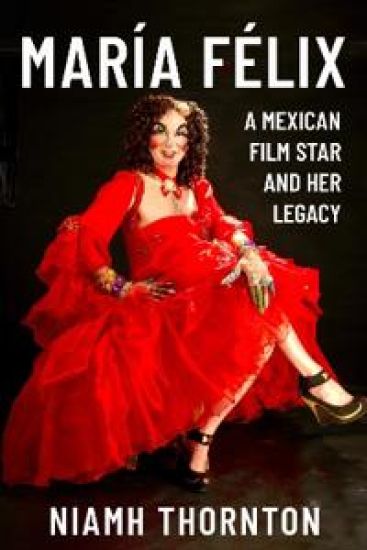
María Félix

María Félix

Niamh Thornton

BOYDELL BREWER LTD
2023
sidottu
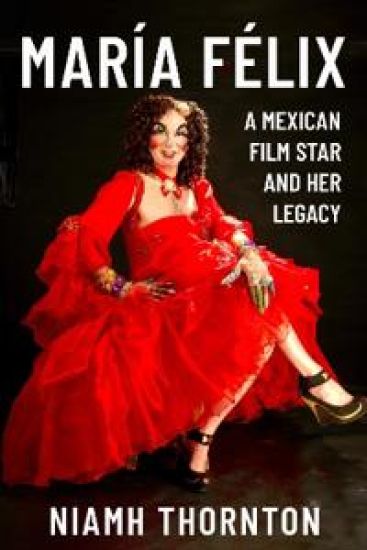
María Félix (1914-2002) left her mark on Mexican and European film as well as fashion, art and jewellery design. Cartier created one-of-a-kind pieces; Leonora Carrington and Diego Rivera painted portraits; Carlos Fuentes wrote a play; Agustín Lara, a bestselling song. But she was nobody's muse. Did Félix really bring baby crocodiles to the Cartier boutique to request lifelike copies in a necklace? The story may be apocryphal, but it perfectly encapsulates her powerful, independent and unconventional persona. This book first examines Félix's life and work, reviewing her films and acting style and considering what they say about gender norms and a woman's place on screen. It then turns to her role as curator and benefactor, exploring how art, literature and song sustained her image. It concludes by exploring the persistent interest in her life story and evaluating her significance for contemporary audiences.
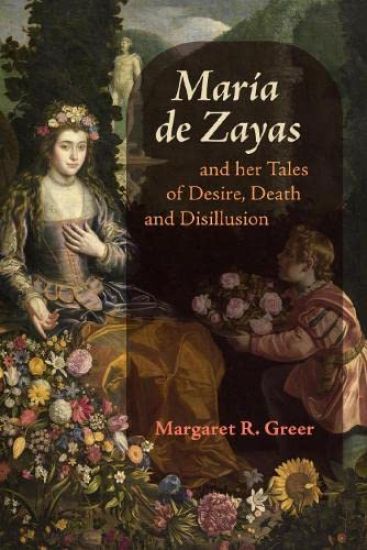
María de Zayas and her Tales of Desire, Death and Disillusion
Who doubts, my reader, that you will be amazed that a woman has the audacity not only to write a book, but to send it for printing, which is the crucible in which the purity of genius is tested'? A pioneer of early modern feminism, María de Zayas y Sotomayor wrote poetry, drama and prose but is best known for two page-turning collections of short stories: Exemplary Tales of Love (1637) and Tales of Disillusion (1647). This book provides an engaging introduction to Zayas and her work. It begins by relating what we know of her life, placing her in her socio-political and economic context and addressing the issue of women's literacy. Following chapters examine her use of sexual desire, violence and humour in her tales; her narrative structures; and her oral style. The book then turns to identity construction in her tales and in society, analysing questions of gender, class, family and 'race', and to her treatment of religion, magic and the supernatural. The final chapters explore Zayas's status as a proto-feminist; her early modern reception in Spain and elsewhere; and various critical readings of her work.
María Félix

María Félix

Niamh Thornton

BOYDELL BREWER LTD
2026
pokkari
María Félix (1914-2002) left her mark on Mexican and European film as well as fashion, art and jewellery design. Cartier created one-of-a-kind pieces; Leonora Carrington and Diego Rivera painted portraits; Carlos Fuentes wrote a play; Agustín Lara, a bestselling song. But she was nobody's muse. Did Félix really bring baby crocodiles to the Cartier boutique to request lifelike copies in a necklace? The story may be apocryphal, but it perfectly encapsulates her powerful, independent and unconventional persona. This book first examines Félix's life and work, reviewing her films and acting style and considering what they say about gender norms and a woman's place on screen. It then turns to her role as curator and benefactor, exploring how art, literature and song sustained her image. It concludes by exploring the persistent interest in her life story and evaluating her significance for contemporary audiences.
Maria Chapdelaine

Maria Chapdelaine

Louis Hemon

Golden Dog Press
2005
pokkari
Maria Chapdelaine, the quintessential novel of the rugged life of early French-Canadian colonists, is based on the author's experiences as a hired hand in the Saguenay-Lac-Saint-Jean area. A young woman living with her family on the frontier in Quebec, Maria endures the hardships of isolation and climate, and chooses between three suitors: a trapper, a farmer, and a Parisian immigrant. Powerful in its simplicity, this novel captures the essence of the virtues of faith and tenacity that are the key ingredients of survivance. Translated into many languages and with some two hundred editions, it is enshrined as a classic of Canadian letters. A new introduction provides insights into Hmon's life.
Maria Edgeworth

Maria Edgeworth

Cliona O Gallchoir

University College Dublin Press
2005
nidottu
This innovative book reassess the place of Maria Edgeworth within the Irish literary canon by illuminating the connections between her views on gender and her construction of Ireland, beginning in the revolutionary decade of the 1790s and ending in the aftermath of Catholic emancipation and parliamentary reform. O Gallchoir addresses the full scope of Edgeworth's writing, creating a context within which Edgeworth's Irish novels can be read alongside tales and novels set in England and France: undervalued texts are recovered and better-known ones are shown in a new light. Edgeworth's commitment to the values of the Enlightenment is explored in the context of her indebtedness to the work of French women writers and her sophisticated awareness of the precarious position of the woman writer in society.
Maria Edgeworth

Maria Edgeworth

Cliona O Gallchoir

University College Dublin Press
2005
sidottu
This innovative book reassess the place of Maria Edgeworth within the Irish literary canon by illuminating the connections between her views on gender and her construction of Ireland, beginning in the revolutionary decade of the 1790s and ending in the aftermath of Catholic emancipation and parliamentary reform. O Gallchoir addresses the full scope of Edgeworth's writing, creating a context within which Edgeworth's Irish novels can be read alongside tales and novels set in England and France: undervalued texts are recovered and better-known ones are shown in a new light. Edgeworth's commitment to the values of the Enlightenment is explored in the context of her indebtedness to the work of French women writers and her sophisticated awareness of the precarious position of the woman writer in society.
Maria Victoria Atencia

Maria Victoria Atencia

Atencia Maria Victoria

Aris Phillips Ltd
2014
sidottu
In this collection of 65 short poems, Roberta Quance exemplifies the range, vitality and mysticism of work by one of Spain's foremost, if controversial, contemporary female poets, drawing on the contents of a number of Spanish collections. In Atencia's poetry the poetic subject is often seen as someone who occupies an interior space, either crossing over the threshold from the outside world to an inner one (a garden, a house, a castle), or moving from the inner, home space to one even more interior: the world of dreams and imagination and hope, which can project outward into liminal spaces of the sky or the sea. A very basic paradox of Christian mystical experience- of abasement and magnification - haunts Atencia's work. She has made her own one of its fundamental tenets: the purging of self, the shedding of all trace of worldly attachment in order to ‘make room' for experience of a different reality: the self's sense of ‘nothingness' in the face of beauty is a prized moment in and of itself; it is sublime. Atencia's definitive manner: classically shaped verse in the tradition of the‘pure poetry' of the Generation of 1927, which makes myth of a womanly self, is amply explored in this first major English edition of her work to appear since 1987. Maria Victoria Atencia was born in Malaga (Andalusia) in 1931 and has lived there or in the country thereabouts all of her life Although trained originally as a pianist she chose a vocation for poetry, instead, publishing her first work in 1953 and continuing to publish to the present day. In 2010 she was given the Federico Garcia Lorca prize for poetry, in recognition of a lifetime of achievement. Roberta Quance is Senior Lecturer in Spanish and Portuguese Studies at Queen's University Belfast. She is author of books on mythology and modernity in modern literature and desire in the poetry of Lorca as well as articles on women writers and artists associated with the Generation of 1927 and translations of work by Carlos Piera.
Maria Victoria Atencia

Maria Victoria Atencia

Maria Victoria Atencia

Aris Phillips Ltd
2014
nidottu
In this collection of 65 short poems, Roberta Quance exemplifies the range, vitality and mysticism of work by one of Spain's foremost, if controversial, contemporary female poets, drawing on the contents of a number of Spanish collections. In Atencia's poetry the poetic subject is often seen as someone who occupies an interior space, either crossing over the threshold from the outside world to an inner one (a garden, a house, a castle), or moving from the inner, home space to one even more interior: the world of dreams and imagination and hope, which can project outward into liminal spaces of the sky or the sea. A very basic paradox of Christian mystical experience- of abasement and magnification - haunts Atencia's work. She has made her own one of its fundamental tenets: the purging of self, the shedding of all trace of worldly attachment in order to ‘make room' for experience of a different reality: the self's sense of ‘nothingness' in the face of beauty is a prized moment in and of itself; it is sublime. Atencia's definitive manner: classically shaped verse in the tradition of the‘pure poetry' of the Generation of 1927, which makes myth of a womanly self, is amply explored in this first major English edition of her work to appear since 1987. Maria Victoria Atencia was born in Malaga (Andalusia) in 1931 and has lived there or in the country thereabouts all of her life Although trained originally as a pianist she chose a vocation for poetry, instead, publishing her first work in 1953 and continuing to publish to the present day. In 2010 she was given the Federico Garcia Lorca prize for poetry, in recognition of a lifetime of achievement. Roberta Quance is Senior Lecturer in Spanish and Portuguese Studies at Queen's University Belfast. She is author of books on mythology and modernity in modern literature and desire in the poetry of Lorca as well as articles on women writers and artists associated with the Generation of 1927 and translations of work by Carlos Piera.
A Problem Like Maria

A Problem Like Maria

Maria Fyfe

Luath Press Ltd
2014
pokkari
A Labour Whip once revealed that in their office they sang songs about certain backbenchers. In the case of the Member for Maryhill, their choice was ‘How Do You Solve A Problem Like Maria?’A frank account of fourteen years in Westminister from the rebellious Maria Fyfe – the only female Labour MP in Scotland when she was first elected. Fyfe recounts some of the most significant moments of her political career, from the frustrating and infuriating, to the rewarding and worthwhile.A significant aim of writing this book was to set the record straight on that period in our UK Parliament. Another aim was to encourage interest in a political life when widespread cynicism discourages good people from thinking about it. MARIA FYFECovering some of the most turbulent years of British and Scottish political history, A Problem Like Maria takes the female’s perspective of life as an MP in the male-dominated Westminister. This book reaches the parts of politics some people hope you never reach. The intimidating Maria Fyfe sounds like strong Scottish domestic drama. Edward Pearce, LONDON EVENING STANDARDThe terrifying Maria Fyfe stamped in … her of the sharpened claws. Matthew Parris, THE TIMESAn incorrigible Bevanite. THE OBSERVER