
Kirjahaku
Etsi kirjoja tekijän nimen, kirjan nimen tai ISBN:n perusteella.
1000 tulosta hakusanalla Martin Meisel
COMMENTARY ON THE EPISTLE TO THE GALATIANS. (1535) By Martin Luther. A 21st Century Version in Contemporary English. By Jeremy R McCandless

By almost any reckoning, the Ninety-Five Theses ranks as the most important text of the Reformation, if not in substance at least in impact. As the anniversary of their posting on the church door in Wittenberg approaches, what better way to remember and recognize the occasion than to make this important text more easily understood by twenty-first-century readers? Timothy J. Wengert, one of the best-know interpreters of Luther and Lutheranism active today, sets his newly translated Ninety-Five Theses in its historical context with a detailed introduction and illuminating study notes. To help the reader understand the context and the import of the Ninety-Five Theses more deeply, Wengert provides two more related and essential documents: Luther's Letter to Archbishop Albrecht of Mainz (to which he appended a copy of the Theses) and Luther's 1518 Sermon on Indulgences and Grace (written to inform the German-speaking public of his view of indulgences). The book is simply constructed with introductions and notes for each of the writings, as well as a study guide with questions for individual or group reflection and conversation.

One of the hallmarks of Luther's theology was its concern for daily life. In the midst of debates about justification and salvation, church authority, and the Lord's Supper, he bore a deep concern for daily Christian life. In this refreshing book, Mark D. Tranvik looks at the importance of vocation in Luther's own life and in doing so discovers renewed insights into this important doctrine. Vocation, the called life, is a way of understanding that all of life is under the-care and interest of God. All of our activities as a spouse, parent, child, worker, citizen, and church member are a part of 3 called life. Tranvik begins the book with a clear exposition of Luther's context, with a focus on how the reformer actually lived out his own calling. He rapidly moves into the contemporary sphere, drawing on twenty years of teaching and interaction with undergraduate students to outline how a renewed understanding of vocation is a powerful and liberating tool for life in the twenty-first century.
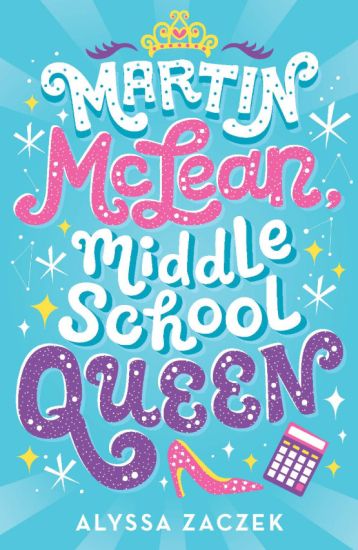
Martin McLean has always been surrounded by people who can express themselves. His mother is an artist, his colourful uncle Billy works in theatre and his best friends Carmen and Pickle are outgoing and don’t care what other people think. But Martin can only find the right words when he’s answering a problem at a Mathletes competition — until his uncle introduces him to the world of drag. In a swirl of sequins and stilettos, Martin creates his fabulous drag queen alter ego, Lottie León. As Lottie, he is braver than he’s ever been; but as Martin, he doesn’t have the guts to tell anyone outside his family about her — not Carmen and Pickle, not his Mathletes teammates and definitely not Chris, an older boy who gives Martin butterflies. When Martin discovers that his first-ever drag show is the same night as the most important Mathletes tournament, he realises that he can only pull off both appearances by revealing his true self to his friends — and channelling his inner drag superstar.

In this bighearted middle-grade debut, Martin McLean has to figure out how to find his voice as he navigates friendship, family, first crushes—and an unexpected amount of glitter. Martin McLean has always been surrounded by people who can express themselves, but he’s not great at speaking up unless he’s at a Mathletes competition. Then his Tío Billy introduces him to the world of drag, inspiring Martin to create a fabulous drag queen alter ego. When Martin discovers that his first-ever drag show is the same night as an important Mathletes tournament, he realizes that he can only pull off both appearances by revealing his true self to his friends—and channeling his inner drag superstar.
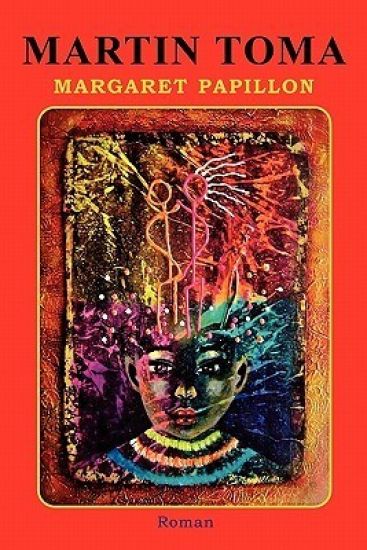
Martin Toma un adolescent illettr de famille pauvre, se laisse convaincre par Aristote, un vendeur de r ves, de se rendre la capitale que ce dernier lui d crit comme une Terre promise . Arriv dans la Grande Ville, affaibli et affam , il d couvre dans l'environnement des bas quartiers un approfondissement de sa mis re.Il trouvera tout de m me un ami parmi les jeunes voyous de la ville et affrontera en sa compagnie ce que les grandes agglom rations r servent aux gens de sa condition, la faim qui n'en finit pas, les nuits froides sous les porches, la compagnie des mendiants, les pers cutions par les agents de l'ordre... Puis, un beau jour, il rencontrera Bertrand Delbeau, un vieillard qui voulut bien l'aider. Qu'adviendra-t-il de Martin ? Saura-t-il un jour lire et crire ? S'en sortira-t-il ? Roger Dorsainvil, 1988Martin Toma est le premier roman de notre litt rature qui se propose d' tre une le on d' ducation civique et patriotique. Ce livre, tr s beau, constitue un levain d'esp rance pour une jeunesse d sempar e. Jean Fouchard, 1988


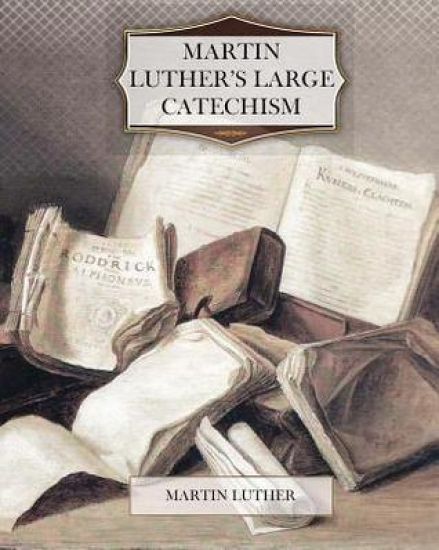
Martin Luther's Large Catechism
Martin Luther
Createspace Independent Publishing Platform
2011
nidottu
Martin Dressler tells the story of a young entrepreneur in late-nineteenth-century New York City whose ambition to make concrete an elusive dream leads to a fabulous creation that houses the imagination itself. Winner of the 1997 Pulitzer Prize for Fiction.
'A compelling biography of one of the greatest men of the modern age. Stanford is particularly brilliant on the tensions inside Luther's private and spiritual life. This is a very fine book, written with a flourish.' Melvyn BraggThe 31st of October 2017 marks the 500th anniversary of Martin Luther pinning his 95 'Theses' - or reform proposals - to the door of his local university church in Wittenberg. Most scholars now agree that the details of this eye-catching gesture are more legend than hammer and nails, but what is certainly true is that on this day (probably in a letter to his local Archbishop in Mainz), the Augustinian Friar and theologian issued an outspokenly blunt challenge to his own Catholic Church to reform itself from within - especially over the sale of 'indulgences' - which ultimately precipitated a huge religious and political upheaval right across Europe and divided mainstream Christianity ever after.A new, popular biography from journalist Peter Stanford, looking at Martin Luther from within his Catholic context, examining his actual aims for Catholicism as well as his enduring legacy - and where he might fit within the church today. 'Peter Stanford makes the life of Luther into a thrilling narrative, told from a modern Catholic perspective' Antonia Fraser

Born on 17 June 1900, Martin Ludwig Bormann became one of the most powerful and most feared men in the Third Reich. An obsessive bureaucrat, it was Bormann who helped steer Hitler's apparatus of terror so effectively that he became the clandestine ruler of Nazi Germany. After joining the Nazi Party in 1927 Bormann rose through its ranks. Indeed, by July 1933 Bormann had manoeuvered himself into the position where he became the Chief of Cabinet in the Office of the Deputy F hrer, Rudolf Hess. In this role Bormann gradually consolidated his power base, so that when Hess carried out his infamous flight to the United Kingdom in 1941, Bormann stepped into his shoes. As the head of the Party Chancellery, Bormann duly took control of the Nazi Party. By the end of 1942, he was in effect Hitler's deputy and his closest collaborator. With the F hrer increasingly preoccupied with military matters, Hitler came to rely more and more on Bormann to handle Germany's domestic affairs. On 12 April 1943, Bormann was appointed Personal Secretary to the F hrer. Feared by ministers, Gauleiters, civil servants, judges and generals alike, Bormann identified strongly with Hitler's ideas on racial politics, destruction of the Jews and forced labour and made himself indispensable as the F hrer's executioner. Cold as ice, he decided the fate of millions of people. In January 1945, with the Third Reich collapsing, Bormann returned to the F hrerbunker with Hitler. Following Hitler's suicide on 30 April, Bormann was named as Party Minister, thus officially confirming his rise to the top of the Party. Late the following day he fled from the bunker in an attempt to escape the encircling Red Army; his fate remaining a mystery for many years. In October 1946 he was found guilty in absentia by the International Military Tribunal at Nuremberg and sentenced to death. Drawing heavily on recently declassified documents and files, the historian and journalist Volker Koop reveals the full story of the most faithful member of Hitler's inner circle, an individual who, whilst little known to the German people, became the second most powerful man in the Third Reich.
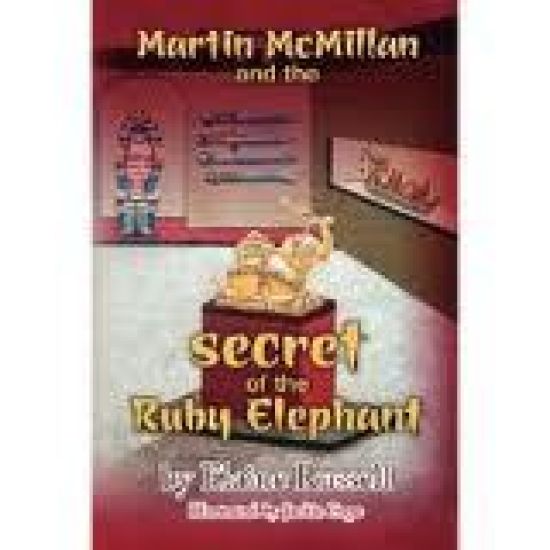
Martin McMillan and the Secret of the Ruby Elephant
Elaine Russell
Createspace Independent Publishing Platform
2012
nidottu
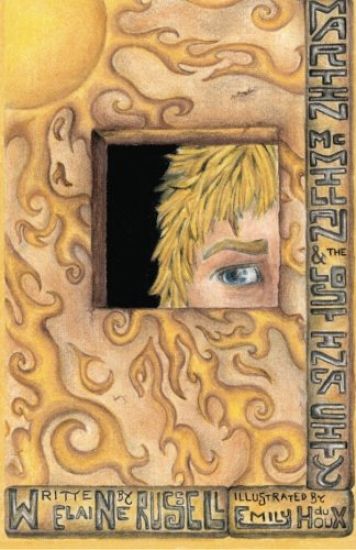
Martin McMillan and the Lost Inca City
Elaine Russell
Createspace Independent Publishing Platform
2012
nidottu
Martin is dragged to Peru on an archaeological dig. With skateboard in hand he unexpectedly falls into an adventure with his new friend Isabel. They gain insights into the modern adult world, the Incan world, and their own world, while becoming immersed in a culture where meetings and clashes between richly diverse civilizations lead to a web of secret activity. JUV000000