Kirjojen hintavertailu. Mukana 12 016 292 kirjaa ja 12 kauppaa.

Kirjahaku

Etsi kirjoja tekijän nimen, kirjan nimen tai ISBN:n perusteella.

1000 tulosta hakusanalla Meta Lander

A Field Guide to a New Meta-field

A Field Guide to a New Meta-field

University of Chicago Press
2011
sidottu
Barbara Maria Stafford is a pioneering art historian whose research has long helped to bridge the divide between the humanities and cognitive sciences. In "A Field Guide to a New Meta-Field", she marshals a distinguished group of thinkers to forge a groundbreaking dialogue among the emerging brain sciences, the liberal arts, and social sciences. Stafford's book examines meaning and mental function from this dual experimental perspective. The wide-ranging essays included here - from Frank Echenhofer's foray into shamanist hallucinogenic visions to David Bashwiner's analysis of emotion and danceability - develop a common language for implementing programmatic and institutional change. Demonstrating how formerly divided fields are converging around shared issues, "A Field Guide to a New Meta-Field" maps a high-level, cross-disciplinary adventure from one of our leading figures in visual studies.
A Field Guide to a New Meta-field

A Field Guide to a New Meta-field

University of Chicago Press
2011
nidottu
Barbara Maria Stafford is a pioneering art historian whose research has long helped to bridge the divide between the humanities and cognitive sciences. In "A Field Guide to a New Meta-Field", she marshals a distinguished group of thinkers to forge a groundbreaking dialogue among the emerging brain sciences, the liberal arts, and social sciences. Stafford's book examines meaning and mental function from this dual experimental perspective. The wide-ranging essays included here - from Frank Echenhofer's foray into shamanist hallucinogenic visions to David Bashwiner's analysis of emotion and danceability - develop a common language for implementing programmatic and institutional change. Demonstrating how formerly divided fields are converging around shared issues, "A Field Guide to a New Meta-Field" maps a high-level, cross-disciplinary adventure from one of our leading figures in visual studies.
Forces in Motion: Anthony Braxton and the Meta-Reality of Creative Music
A #1 New Release in Jazz Music on Amazon "Absolutely essential reading." -- The Wire One of modern music's towering figures, composer and multi-instrumentalist Anthony Braxton has redefined critical concepts of jazz and the wider world of creative music. The Chicago native's works range from an early piece for 100 tubas to proposed compositions for orchestras on different planets. A modern classic, Forces in Motion follows Braxton's lauded quartet on a 1985 tour of England, noting his opinions of his musical predecessors -- including Charlie Parker, John Coltrane, and Karlheinz Stockhausen -- as well as his thoughts on racism and poverty. For this new 30th anniversary edition, Graham Lock provides a new chapter, detailing later encounters with Braxton and the quartet; Anthony Braxton has penned a new Afterword as well. In addition to inside views of the mind of a musical visionary, this book offers an entertaining chronicle of a touring band. Braxton's subjects run the gamut from chess and hamburgers to astrology, feminism, and ancient Egypt. Above all, it offers a captivating view of the frustrations and rewards that result from an artist's dedication of his life to creative music. "This book should be required reading for anyone interested in my music," Anthony Braxton has observed. "Graham Lock writes from the perceptual plane of insight and dedication -- coupled with a keen wit and a dynamic intellect. This is serious writing and thinking. I could not have been more fortunate." "Remarkable. One of the most thorough and honest accounts you'll find of what it means to make truly uncompromising art in America. It's also, thanks to Lock's conversational, unpretentious style and Braxton's penchant for witty self-deprecation, a thoroughly approachable and at times even laugh-out-loud funny invitation into the aesthetic world of a man whose work can be as exhilarating as it is rigorous." -- Rolling Stone
Handbook of Research Synthesis and Meta-Analysis
Research synthesis is the practice of systematically distilling and integrating data from many studies in order to draw more reliable conclusions about a given research issue. When the first edition of The Handbook of Research Synthesis and Meta-Analysis was published in 1994, it quickly became the definitive reference for conducting meta-analyses in both the social and behavioral sciences. In the third edition, editors Harris Cooper, Larry Hedges, and Jeff Valentine present updated versions of classic chapters and add new sections that evaluate cutting-edge developments in the field. The Handbook of Research Synthesis and Meta-Analysis draws upon groundbreaking advances that have transformed research synthesis from a narrative craft into an important scientific process in its own right. The editors and leading scholars guide the reader through every stage of the research synthesis process--problem formulation, literature search and evaluation, statistical integration, and report preparation. The Handbook incorporates state-of-the-art techniques from all quantitative synthesis traditions and distills a vast literature to explain the most effective solutions to the problems of quantitative data integration. Among the statistical issues addressed are the synthesis of non-independent data sets, fixed and random effects methods, the performance of sensitivity analyses and model assessments, the development of machine-based abstract screening, the increased use of meta-regression and the problems of missing data. The Handbook also addresses the non-statistical aspects of research synthesis, including searching the literature and developing schemes for gathering information from study reports. Those engaged in research synthesis will find useful advice on how tables, graphs, and narration can foster communication of the results of research syntheses. The third edition of the Handbook provides comprehensive instruction in the skills necessary to conduct research syntheses and represents the premier text on research synthesis. Praise for the first edition: "The Handbook is a comprehensive treatment of literature synthesis and provides practical advice for anyone deep in the throes of, just teetering on the brink of, or attempting to decipher a meta-analysis. Given the expanding application and importance of literature synthesis, understanding both its strengths and weaknesses is essential for its practitioners and consumers. This volume is a good beginning for those who wish to gain that understanding." --Chance "Meta-analysis, as the statistical analysis of a large collection of results from individual studies is called, has now achieved a status of respectability in medicine. This respectability, when combined with the slight hint of mystique that sometimes surrounds meta-analysis, ensures that results of studies that use it are treated with the respect they deserve....The Handbook of Research Synthesis is one of the most important publications in this subject both as a definitive reference book and a practical manual."--British Medical Journal When the first edition of The Handbook of Research Synthesis was published in 1994, it quickly became the definitive reference for researchers conducting meta-analyses of existing research in both the social and biological sciences. In this fully revised second edition, editors Harris Cooper, Larry Hedges, and Jeff Valentine present updated versions of the Handbook's classic chapters, as well as entirely new sections reporting on the most recent, cutting-edge developments in the field. Research synthesis is the practice of systematically distilling and integrating data from a variety of sources in order to draw more reliable conclusions about a given question or topic. The Handbook of Research Synthesis and Meta-Analysis draws upon years of groundbreaking advances that have transformed research synthesis from a narrative craft into an important scientific process in its own right. Cooper, Hedges, and Valentine have assembled leading authorities in the field to guide the reader through every stage of the research synthesis process--problem formulation, literature search and evaluation, statistical integration, and report preparation. The Handbook of Research Synthesis and Meta-Analysis incorporates state-of-the-art techniques from all quantitative synthesis traditions. Distilling a vast technical literature and many informal sources, the Handbook provides a portfolio of the most effective solutions to the problems of quantitative data integration. Among the statistical issues addressed by the authors are the synthesis of non-independent data sets, fixed and random effects methods, the performance of sensitivity analyses and model assessments, and the problem of missing data. The Handbook of Research Synthesis and Meta-Analysis also provides a rich treatment of the non-statistical aspects of research synthesis. Topics include searching the literature, and developing schemes for gathering information from study reports. Those engaged in research synthesis will also find useful advice on how tables, graphs, and narration can be used to provide the most meaningful communication of the results of research synthesis. In addition, the editors address the potentials and limitations of research synthesis, and its future directions. The past decade has been a period of enormous growth in the field of research synthesis. The second edition Handbook thoroughly revises original chapters to assure that the volume remains the most authoritative source of information for researchers undertaking meta-analysis today. In response to the increasing use of research synthesis in the formation of public policy, the second edition includes a new chapter on both the strengths and limitations of research synthesis in policy debates
Model-Driven Software Systems Development Using the Meta-Artifact Process
The importance of architecture for software systems is widely accepted, but the role of architecture in the overall development process is not so clear. Presenting an architecture-centric process, Model-Driven Software Systems Development Using the Meta-Artifact Process makes the role of architecture clear. At its core, this book is about developing software systems and, more specifically, software code. It describes three major innovations for making software, which are combined with five widely used enabling technologies, to provide a complete, hypothesis-driven software development process known as Meta-Artifact Process (MAP). Having complete requirements is essential for making good software and supports the hypothesis-driven MAP.MAP offers properties, qualities, and capabilities that help stakeholders and developers understand and reason about a domain and target systems of interest. MAP, through the central role of the Meta-Artifact and incorporating the view that a computer program is a hypothesis about the requirements, offers new ways to look at systems and their development, even changing the roles of developers and stakeholders.Recommending agile methods wherever appropriate while supporting the OMG Essence standard and working within an overarching architecture, MAP presents ways to ensure that the requirements are complete and correct. It helps to identify likely points during development to form alternative hypotheses about them. Because MAP requires an underlying software development process, it can provide that clarity to existing processes in which the organization’s developers are already proficient.This book provides concrete examples from two broad but diverse areas—Accounting Information Systems in the commercial area and a military command and control system—to show the wide applicability of MAP in both commercial and defense domains.
Model-Driven Software Systems Development Using the Meta-Artifact Process
The importance of architecture for software systems is widely accepted, but the role of architecture in the overall development process is not so clear. Presenting an architecture-centric process, Model-Driven Software Systems Development Using the Meta-Artifact Process makes the role of architecture clear. At its core, this book is about developing software systems and, more specifically, software code. It describes three major innovations for making software, which are combined with five widely used enabling technologies, to provide a complete, hypothesis-driven software development process known as Meta-Artifact Process (MAP). Having complete requirements is essential for making good software and supports the hypothesis-driven MAP.MAP offers properties, qualities, and capabilities that help stakeholders and developers understand and reason about a domain and target systems of interest. MAP, through the central role of the Meta-Artifact and incorporating the view that a computer program is a hypothesis about the requirements, offers new ways to look at systems and their development, even changing the roles of developers and stakeholders.Recommending agile methods wherever appropriate while supporting the OMG Essence standard and working within an overarching architecture, MAP presents ways to ensure that the requirements are complete and correct. It helps to identify likely points during development to form alternative hypotheses about them. Because MAP requires an underlying software development process, it can provide that clarity to existing processes in which the organization’s developers are already proficient.This book provides concrete examples from two broad but diverse areas—Accounting Information Systems in the commercial area and a military command and control system—to show the wide applicability of MAP in both commercial and defense domains.
Sustainable Logistics Systems Using AI-based Meta-Heuristics Approaches
This book introduces and analyses recent trends and studies of sustainable logistics systems using AI-based meta-heuristics approaches, including AI-based meta-heuristics applied to supply chain network models, integrated multi-criteria decision-making approaches for green supply chain management, uncertain supply chain models etc. It emphasizes both theory and practice, providing methodological and theoretical basis as well as case references for sustainable logistics systems using AI based meta-heuristics.Most of multi-national enterprises today face the challenge of sustainable development for their logistics systems trying to meet or exceed customer expectations. Sustainable development attracts both researchers and industrial practitioners who are focused on the design and implementation of logistics system. AI-based meta-heuristics approaches has emerged as a capable method for quickly providing optimal or near-optimal solutions for the problems that exact optimization cannot solve. Recent advances in various AI-based meta-heuristics approaches can resolve various and complex logistics and supply chain problem types. This book mainly encompasses the most popular and frequently employed AI-based meta-heuristics approaches such as genetic algorithm, variable neighborhood search, multi-objective heuristic search and the hybrid of these approaches.The chapters in this book were originally published in the International Journal of Management Science and Engineering Management.
Sustainable Logistics Systems Using AI-based Meta-Heuristics Approaches
This book introduces and analyses recent trends and studies of sustainable logistics systems using AI-based meta-heuristics approaches, including AI-based meta-heuristics applied to supply chain network models, integrated multi-criteria decision-making approaches for green supply chain management, uncertain supply chain models etc. It emphasizes both theory and practice, providing methodological and theoretical basis as well as case references for sustainable logistics systems using AI based meta-heuristics.Most of multi-national enterprises today face the challenge of sustainable development for their logistics systems trying to meet or exceed customer expectations. Sustainable development attracts both researchers and industrial practitioners who are focused on the design and implementation of logistics system. AI-based meta-heuristics approaches has emerged as a capable method for quickly providing optimal or near-optimal solutions for the problems that exact optimization cannot solve. Recent advances in various AI-based meta-heuristics approaches can resolve various and complex logistics and supply chain problem types. This book mainly encompasses the most popular and frequently employed AI-based meta-heuristics approaches such as genetic algorithm, variable neighborhood search, multi-objective heuristic search and the hybrid of these approaches.The chapters in this book were originally published in the International Journal of Management Science and Engineering Management.
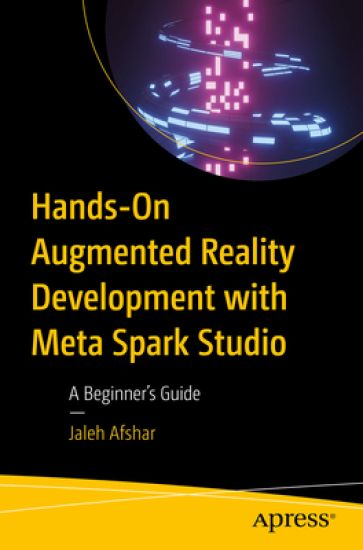
Hands-On Augmented Reality Development with Meta Spark Studio
Explore Meta Spark Studio, a program used for augmented reality (AR) effect creation and deployment across multiple social media channels. This beginner’s guide to AR development focuses on practical, project-based learning — no prior coding or design experience is required.You will start by learning the fundamentals of AR as a whole and become familiar with key terminology and core concepts, building a baseline understanding of the technology overall.Using that foundational knowledge, you’ll embark on step-by-step tutorials and get hands-on with building AR effects. Projects include selfie effects that react to facial expressions and target tracking effects that respond to images detected in the real-world environment. You’ll also learn how to create an entire AR game, including animations and scoring.Along the way, you’ll learn techniques for how to customize each one of these projects to fit your own unique vision. Additionally, you’ll become familiar with the ways to publish and share these creations with others.With access to this technology being available in nearly every smartphone, the world of AR is expanding every day. Now is a great time to tell your creative story through this new medium.You will:• Create a face tracking project that reacts to facial expressions• Build a target tracking project that responds to images in the real world• Develop a complete AR game with animations and scoring• Customize project templates with alternative assets and parameters• Understand how to package these effects for official publishing through social media platformsWho is this book for:This book is ideal for students, educators, creatives, small-business owners, or anyone else interested in creating immersive AR experiences for social networking platforms such as Instagram and Facebook. No coding or design experience is required.