
Kirjahaku
Etsi kirjoja tekijän nimen, kirjan nimen tai ISBN:n perusteella.
1000 tulosta hakusanalla Michael J. Perry
Virtually all serious scientists accept the truth of Darwin's theory of evolution. While the fight for its acceptance has been a long and difficult one, after a century of struggle among the cognoscenti the battle is over. Biologists are now confident that their remaining questions, such as how life on Earth began, or how the Cambrian explosion could have produced so many new species in such a short time, will be found to have Darwinian answers. They, like most of the rest of us, accept Darwin's theory to be true. But should we? What would happen if we found something that radically challenged the now-accepted wisdom? In "Darwin's Black Box," Michael Behe argues that evidence of evolution's limits has been right under our noses -- but it is so small that we have only recently been able to see it. The field of biochemistry, begun when Watson and Crick discovered the double-helical shape of DNA, has unlocked the secrets of the cell. There, biochemists have unexpectedly discovered a world of Lilliputian complexity. As Belie engagingly demonstrates, using the examples of vision, bloodclotting, cellular transport, and more, the biochemical world comprises an arsenal of chemical machines, made up of finely calibrated, interdependent parts. For Darwinian evolution to be true, there must have been a series of mutations, each of which produced its own working machine, that led to the complexity we can now see. The more complex and interdependent each machine's parts are shown to be, the harder it is to envision Darwin's gradualistic paths, Behe surveys the professional science literature and shows that it is completely silent on the subject, stymied by the elegance of the foundation of life. Could it be that there is some greater force at work? Michael Behe is not a creationist. He believes in the scientific method, and he does not look toreligious dogma for answers to these questions. But he argues persuasivelythat biochemical machines must have been designed -- either by God, or by some other higher intelligence. For decades science has been frustrated, trying to reconcile the astonishing discoveries of modern biochemistry to a nineteenth-century theory that cannot accommodate them. With the publication of "Darwin's Black Box," it is time for scientists to allow themselves to consider exciting new possibilities, and for the rest of us to watch closely.
When Michael J. Behe's first book, Darwin's Black Box, was published in 1996, it launched the intelligent design movement. Critics howled, yet hundreds of thousands of readers -- and a growing number of scientists -- were intrigued by Behe's claim that Darwinism could not explain the complex machinery of the cell. Now, in his long-awaited follow-up, Behe presents far more than a challenge to Darwinism: He presents the evidence of the genetics revolution -- the first direct evidence of nature's mutational pathways -- to radically redefine the debate about Darwinism. How much of life does Darwin's theory explain? Most scientists believe it accounts for everything from the machinery of the cell to the history of life on earth. Darwin's ideas have been applied to law, culture, and politics. But Darwin's theory has been proven only in one sense: There is little question that all species on earth descended from a common ancestor. Overwhelming anatomical, genetic, and fossil evidence exists for that claim. But the crucial question remains: How did it happen? Darwin's proposed mechanism -- random mutation and natural selection -- has been accepted largely as a matter of faith and deduction or, at best, circumstantial evidence. Only now, thanks to genetics, does science allow us to seek direct evidence. The genomes of many organisms have been sequenced, and the machinery of the cell has been analyzed in great detail. The evolutionary responses of microorganisms to antibiotics and humans to parasitic infections have been traced over tens of thousands of generations. As a result, for the first time in history Darwin's theory can be rigorously evaluated. The results are shocking. Although it can explain marginal changes in evolutionary history, random mutation and natural selection explain very little of the basic machinery of life. The edge of evolution, a line that defines the border between random and nonrandom mutation, lies very far from where Darwin pointed. Behe argues convincingly that most of the mutations that have defined the history of life on earth have been nonrandom. Although it will be controversial and stunning, this finding actually fits a general pattern discovered by other branches of science in recent decades: The universe as a whole was fine-tuned for life. From physics to cosmology to chemistry to biology, life on earth stands revealed as depending upon an endless series of unlikely events. The clear conclusion: The universe was designed for life.
Fatal Forecast: An Incredible True Tale of Disaster and Survival at Sea
Michael J. Tougias
Scribner Book Company
2009
nidottu
Now in paperback, a true story as spellbinding and harrowing as The Perfect Storm, "marvel- ous and terrifying" (Los Angeles Times)--published to herald the arrival of Tougias's new hardcover, The Finest Hours. On the morning of November 21, 1980, two small boats set out for Georges Bank, a lucrative but perilous lobster fishing ground off the coast of Cape Cod. The National Weather Service had forecast typical fall weather, and the young, rugged crewmen aboard the Sea Fever and the Fair Wind had no reason to expect that this trip would be any different from the dozens they'd made earlier in the season. But the only weather buoy in the area was malfunctioning, and the National Weather Service had failed to reveal this critical detail. And as the two small boats headed out to sea, a colossal storm was brewing to the southeast, a furious maelstrom that would batter the boats with sixty-foot waves and hurricane-force winds. A true story of catastrophe and survival at sea, this is a vivid moment-by-moment account of seventy-two hours in the lives of eight young fishermen. Most amazing is the story of Ernie Hazzard, who spent more than fifty terrifying hours adrift on the stormy open sea. Gripping and heart-pounding, Fatal Forecast is an unfor- gettable true story about the collision of two spectacular forces: the brutality of nature and the human will to survive.
Is natural gas the ‘bridge’ to our low-carbon future? In power generation, industrial processes, parts of the transportation sector, and for domestic use, natural gas still has the potential to play a greater role in various energy transition pathways around the world. But such a future is by no means certain. In this book, Michael Bradshaw and Tim Boersma offer a sober and balanced assessment of the place of natural gas in the global energy mix today, and the uncertainties that cloud our understanding of what that role may look like in the future. They argue that natural gas has become prominent in recent decades, spurred by two revolutions: the first has been the rise of unconventional natural gas production, and the second the coming of age of the market for liquefied natural gas (LNG). However, a third revolution is required to secure natural gas’ long-term role in various energy transition pathways, as countries are increasingly pushing to address air quality concerns and curtail greenhouse gas emissions. This revolution has to take place as politicians, citizens, investors and shareholders are becoming increasingly vocal about the need to improve the environmental footprint of the fuel, while simultaneously, and perhaps paradoxically, demand for it continues to grow, in a world where geopolitical challenges seem to be mounting.
Is natural gas the ‘bridge’ to our low-carbon future? In power generation, industrial processes, parts of the transportation sector, and for domestic use, natural gas still has the potential to play a greater role in various energy transition pathways around the world. But such a future is by no means certain. In this book, Michael Bradshaw and Tim Boersma offer a sober and balanced assessment of the place of natural gas in the global energy mix today, and the uncertainties that cloud our understanding of what that role may look like in the future. They argue that natural gas has become prominent in recent decades, spurred by two revolutions: the first has been the rise of unconventional natural gas production, and the second the coming of age of the market for liquefied natural gas (LNG). However, a third revolution is required to secure natural gas’ long-term role in various energy transition pathways, as countries are increasingly pushing to address air quality concerns and curtail greenhouse gas emissions. This revolution has to take place as politicians, citizens, investors and shareholders are becoming increasingly vocal about the need to improve the environmental footprint of the fuel, while simultaneously, and perhaps paradoxically, demand for it continues to grow, in a world where geopolitical challenges seem to be mounting.

What do we know about war crimes and justice? What are the discursive practices through which the dominant images of war crimes, atrocity and justice are understood? In this wide ranging text, Michael J. Shapiro contrasts the justice-related imagery of the war crimes trial (for example the solitary, headphone-wearing defendant at the Hague listening with intent to a catalogue of charges) with ?literary justice?: representations in literature, film, and biographical testimony, raising questions about atrocities and justice that juridical proceedings exclude. By engaging with the ambiguities exposed by the artistic and experiential genres, reading them alongside policy and archival documentation and critical theoretical discourses, Shapiro?s War Crimes, Atrocity, and Justice challenges traditional notions of ?responsibility? in juridical settings. His comparative readings instead encourage a focus on the conditions of possibility for war crimes as they arise from the actions of states, non-state agencies and individuals involved in arms trading, peace keeping, sex trafficking, and law enforcement and adjudication. Theory springs to life as Shapiro draws on examples from legal discourse, literature, media, film, and television, to build a nuanced picture of politics and the problem of justice. It will be of great interest to students of film and media, literature, cultural studies, contemporary philosophy and political science

What do we know about war crimes and justice? What are the discursive practices through which the dominant images of war crimes, atrocity and justice are understood? In this wide ranging text, Michael J. Shapiro contrasts the justice-related imagery of the war crimes trial (for example the solitary, headphone-wearing defendant at the Hague listening with intent to a catalogue of charges) with ?literary justice?: representations in literature, film, and biographical testimony, raising questions about atrocities and justice that juridical proceedings exclude. By engaging with the ambiguities exposed by the artistic and experiential genres, reading them alongside policy and archival documentation and critical theoretical discourses, Shapiro?s War Crimes, Atrocity, and Justice challenges traditional notions of ?responsibility? in juridical settings. His comparative readings instead encourage a focus on the conditions of possibility for war crimes as they arise from the actions of states, non-state agencies and individuals involved in arms trading, peace keeping, sex trafficking, and law enforcement and adjudication. Theory springs to life as Shapiro draws on examples from legal discourse, literature, media, film, and television, to build a nuanced picture of politics and the problem of justice. It will be of great interest to students of film and media, literature, cultural studies, contemporary philosophy and political science

This book has two aims: to offer a series of investigations into aspects of contemporary politics such as race, nation and gender; and to articulate a critical philosophical perspective with politically disposed treatments of contemporary cinema. What the author offers is a politics of critique, inspired by Kant, in which he attempts to show what it can mean to think the political. The interventions into aspects of contemporary political issues, as reflected in films including Hoop Dreams, Lonestar, Father of the Bride II , The Adventures of Priscilla, Queen of the Desert, and To Live and Die in LA, are also influenced by Deleuze, Derrida, Foucault and Lyotard: theorists loosely regarded by the author as post-Kantian. This is a polemical work, aimed at encouraging critical, ethico-political thinking. Its breadth of theoretical scope and empirical reference, and the innovative style of presentation will make it vital reading for all those with an interest in the linking of culture and politics.
The first 18 months of your business is crucial. This is when the majority of new businesses fail and where a lack of proper preparation and forward planning can be your downfall. This eighth edition of Starting a Successful Business is your definitive guide to setting up a business that will thrive. Starting a Successful Business contains the crucial, practical information needed to turn your exciting new idea into a stable and profitable business. It covers each important step in the start-up process in a clear and accessible way. The major problems facing any new business are discussed, potential pitfalls are highlighted and practical advice is offered on key topics such as: ideas for new start-ups, business planning, marketing, franchising, selling and advertising, finances and financial control, taxation, business law and employing staff. Case studies from around the world provide inspiration and real-world guidance to support you as an entrepreneur. Brand new content on cloud computing, digital developments and making your business environmentally sustainable makes this Starting a Successful Business a cutting-edge and modern resource to show you how to make your business a success.

The renowned reference work is a practical guide to the selection and design of the components of machines and to their lubrication. It has been completely revised for this second edition by leading experts in the area.
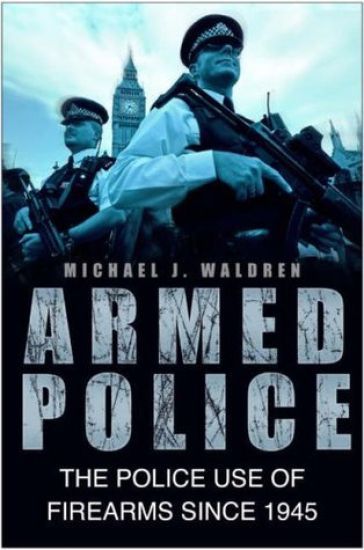
On 7 July 2005, just before 9 am, explosive devices detonated on London Underground trains at Liverpool Street, Edgware Road and Kings Cross stations and on a double-decker bus in Tavistock Square. Fifty-six people were killed and over 700 injured. Suicide bombing had come to Britain. Two weeks later, the capital's commuters narrowly missed disaster when four more devices failed to explode. Security in London was increased to unprecedented levels as Metropolitan Police Commissioner, Sir Ian Blair said his force faced 'its largest operational challenge since the war'. Heavily armed police officers patrolling the streets became a regular feature of television news programmes, leaving an enduring impression that unarmed policing in Britain had gone forever and with it the kindly image of the archetypal British bobby. Controversy rages over the increased use of firearms because in the public mind, the hallmark of British security has always been unarmed policing. Now, for the first time, former Head of the Metropolitan Police Firearms Unit, Mike Waldren, gives his insider account of the changes in Britain's policing, spanning over half a century and including many examples of extraordinary heroism, tragedy, controversy, comedy, intrigue and occasional farce.

This is the first full-length treatment of Roman Lincoln, more than 1500 years after its demise. By AD 450 it had ceased to exist as an urban centre; its physical remains, however, survived well for several centuries, and some elements - notably the city wall - influences the city's topography until the nineteenth century; parts are still visible today. This work, by Lincoln's City Archaeologist, builds on the achievements of many in the past: the early antiquarians, the first systematic excavations carried out in the 1940s by a series of distinguished museum curators and local volunteers, and the thousands who have taken part in th many excavations since the 1970s. The resulting study represents a combination of local, national and international history. For, so fragmentary is out knowledge that each city has its own particular contribution to make to the whole - 'all history is local history'. We learn of the initial conquest and establishment of the fortress, in the territory of the Iron Age Corieltauvi, soon after the Claudian invasion of AD 43. After the departure of Legio II Adiutrix for Chester in the late 70s, Lincoln was established, by imperial decree, as a Colony - Colonia Domintiana Lindensium - primarily for former soldiersin the Ninth Legion. Over the centuries the administrative apparatus and the full panoply of public works (forum, baths etc.) developed, and the city expanded enormously and developed links with the hinterland. Later on still, there was new building in the fourth century when the late Roman capital became a Christian centre, before its final decline and almost complete abandonment. In a book that explains the early story of Lincoln to the local community and to its visitors, Michael Jones shows what the archaeological remains tell us of the daily life of the Roman community.
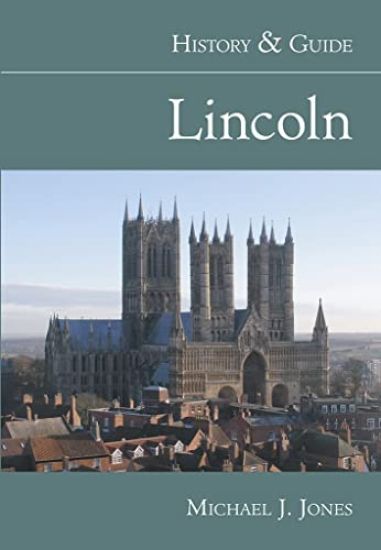
Lincoln was a major centre under Roman, Viking and medieval rule and each of these eras has left its mark on the city. The surviving Roman and Norman monuments are of particular note. The cathedral and the castle, which dominate the city, were built in the years following the Norman Conquest. Both were further developed and rebuilt over the next two centuries, the cathedral becoming one of Britain’s finest examples of Early English gothic.The city’s political and commercial importance was in decline by the end of the Middle Ages and it did not see significant revival before the eighteenth century. Improving communications, first by water and later by rail, led to new phases of development and growth. The most recent decades have brought major changes and the growth of newer industries. The book is a well illustrated and readable introduction to the city’s past that will appeal to residents and visitors alike.An important feature of the book is a series of walking tours, linked to the text but designed to be used independently of it. These tours show the reader how the history of the city can be read in its existing streets and buildings.
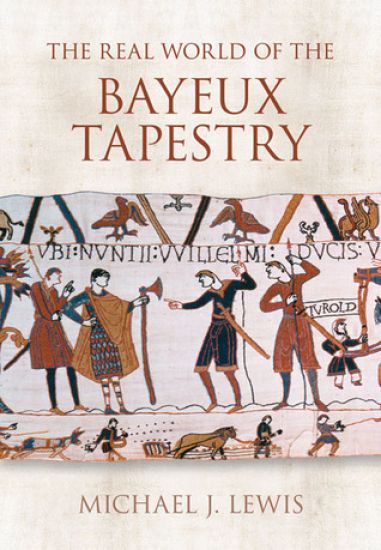
The Bayeux Tapestry is one of the most celebrated surviving works of art, as well as recounting the story of one of the most famous episodes of British history. Yet much about the object itself remains a mystery; who commissioned it, and where, when and why was it made? In this introduction to the Tapestry, Michael Lewis looks not only at the story of the Tapestry itself, but also explores the design and production of this great artefact, and looks at how reliable the evidence it presents for 1066 actually is. In a fresh and dynamic approach to one of the 11th century's most famous survivors, this book attempts to dispel some of the myths attached to a traditional interpretation of the tapestry and its message.
The Haunting of Willington Mill
Michael J Hallowell; Darren W. Ritson
The History Press Ltd
2011
nidottu
During the nineteenth century Willington Mill, near Wallsend gained an infamous reputation for being haunted. Bizarre noises, apparitions and poltergeist activity dogged the premises and were experienced by dozens of credible witnesses. The case attracted the interest of the country's leading psychical researchers of the time, but the mystery was never solved - until now. Using a wide variety of contemporary sources along with cutting-edge investigative techniques, Michael J. Hallowell and Darren W. Ritson have pieced together the true story of Willington Mill. As well as detailing the fascinating phenomena that occurred in the building, The Haunting of Willington Mill is at last able to offer an explanation for one of England's most enigmatic and puzzling hauntings.
A Liberal Theology for the Twenty-First Century
Michael J. Langford
Ashgate Publishing Limited
2001
sidottu
Liberal theology, in its typical form, represents the attempt to approach religion from a rational perspective without denying or belittling the importance of religious experience and religious commitment. Versions of liberal theology can be found in all the great religions. This book is primarily concerned with a Christian tradition that goes back to the second century and reached a high point in the seventeenth. This tradition includes a method of inquiry which, when re-evaluated in the light of recent discussions on the nature of rationality and applied to contemporary issues, reveals that there are versions of materialism, monism and theism that can accord with rationality. While liberal theology cannot demonstrate the truth of theism, it can present it not only as one of the rational options, but as an option that has uniquely attractive characteristics, and when the liberal tradition is taken at its best, it can support a version of Christianity which continues to refer to God as a transcendent 'reality', and which can continue to support recognizable doctrines of incarnation, redemption and Trinity. The liberal theology introduced and advanced in this book can be contrasted with many recent 'radical theologies', and could be called 'liberal orthodoxy'. Students of philosophy, theology and religious studies, as well as clergy and interested lay readers, will find this an accessible insight into liberal theology and to current debates on materialism, atheism and inter-faith dialogue.