Kirjojen hintavertailu. Mukana 12 277 570 kirjaa ja 12 kauppaa.

Kirjahaku

Etsi kirjoja tekijän nimen, kirjan nimen tai ISBN:n perusteella.

1000 tulosta hakusanalla Michael T. Isenberg

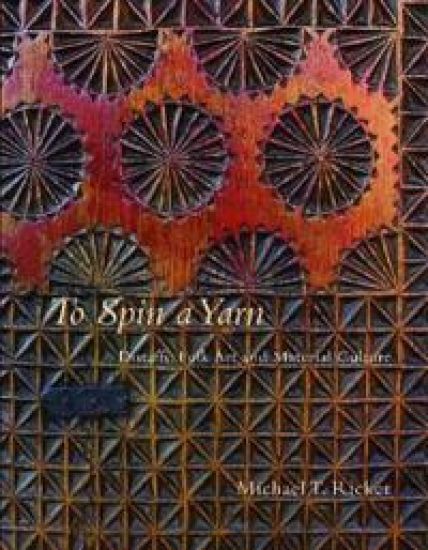
To Spin a Yarn

To Spin a Yarn

Michael T. Ricker

Stephen F. Austin State University Press
2013
sidottu
Distaffs are simple tools for spinning fiber, forming part of world cultures for millennia. In certain cultures, distaffs evolved over centuries from plain sticks to surprisingly ornate sculptures. They eventually became important cultural objects, with almost ritualistic significance. During a heyday lasting from the mid 18th century to the early 20th century, distaff production soared. This production was ultimately quashed by the progress of the Industrial Revolution and subsequent availability of ready-made fabric. Distaff use continued, but primarily to honor tradition and create special textiles of cultural and familial importance, rather than make clothes for daily wear.
William Wilberforce’s Clerical Networks

William Wilberforce’s Clerical Networks

Michael T. Morgan

TAYLOR FRANCIS LTD
2026
sidottu
This book offers the first major analysis of William Wilberforce’s clerical networks, demonstrating that while a devoted Anglican, he was deeply intertwined with evangelicals of various ecclesiastical traditions. The chapters draw on Wilberforce’s extensive corpus of diaries, supplemented by a wide selection of correspondence and contemporary publications. Utilising a series of case studies the author situates Wilberforce and his clerical associates within the wider religious landscape of the late Georgian period. Wilberforce was one of the great networkers and coalition builders of his generation. His diaries illumine both the scale of his network, and the frequency with which he crossed party lines. While Wilberforce has been the subject of much study, very little has been dedicated to exploring his religious identity, which is crucial to understanding Wilberforce personally, the Clapham Sect generally, and even evangelicalism broadly. Presenting a more nuanced interpretation of Wilberforce’s churchmanship than has been articulated to date, the book will be of particular interest to scholars of religious, ecclesiastical and evangelical history.
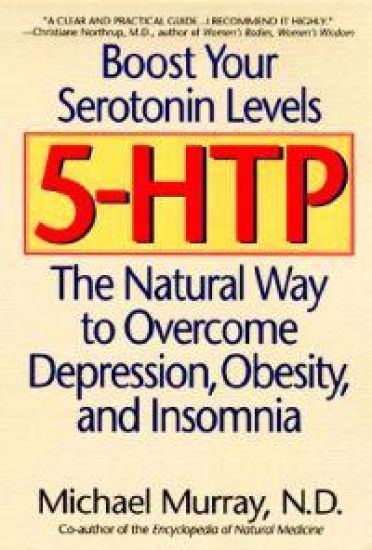
5-HTP

5-HTP

Michael T. Murray

Bantam USA
1999
nidottu
The most authoritative and comprehensive guide to realizing the amazing health benefits of 5-HTP Written by one of America's leading naturopathic doctors, 5-HTP explains how this natural amino acid can safely and effectively regulate low serotonin levels, which have been linked to depression, obesity, insomnia, migraines, and anxiety. 5-HTP is also a powerful antioxidant that can protect the body from free-radical damage, reducing the risk of serious illnesses such as cancer. 5-HTP has already helped thousands, and Dr. Murray, citing extensive scientific studies and case histories, shows how this groundbreaking supplement can help you. "A clear and practical guide...I recommend it highly." --Christiane Northrup, M.D., author of Women's Bodies, Women's Wisdom "Dr. Murray is...a champion of natural medicine who has much to teach psychiatry about relieving mental suffering." --Harold H. Bloomfield, M.D., bestselling author of Healing Anxiety with Herbs and Hypericum (St. John's Wort) and Depression "Explains why 5-HTP, a natural substance, is as powerful a treatment as the latest wonder drugs--and yet is so much safer it doesn't need a prescription! This is an important book that will bring blessed relief to many people." --Melvyn R. Werbach, M.D., author of Nutritional Influences on Mental Illness; Assistant Clinical Professor, Department of Psychiatry, University of California, Los Angeles "Again Dr. Murray is on target, this time teaching us the pertinent facts and the importance of serotonin and its precursor, 5-HTP.... An important book for all who desire a healthier, longer, and more fruitful life." --James F. Balch, Jr., M.D., author of The Super Antioxidants
The Vaccine Bible

The Vaccine Bible

Michael T. Myers; LLC Relations

ULYSSES PRESS
2026
nidottu
Take control of your and your family's health with The Vaccine Bible, a common-sense, medically sound resource for everyone searching for the straightforward facts about vaccines. For those looking for clear and reliable information on vaccines for themselves and their families, it can feel like an overwhelming amount of confusing information. Sorting through it all takes time. And for most people, it's nearly impossible to fully understand how vaccines work and, more importantly, how to make the best choices that will allow them to feel safe and protected. Written by Havard-educated Dr. Michael T. Myers Jr., The Vaccine Bible is designed to help people of all ages, offering the most up-to-date, practical guidance on vaccines and their protocols, from anthrax and polio to the Flu and chickenpox. Inside you'll find the book divided into three main, easy-to-read sections, including: Preliminaries, where common questions about vaccines, how they are developed and work, and the basic science behind them are asked and answered VaxFacts, where you'll get a quick overview of more than 30 vaccines, the diseases they prevent, how they work in the body, potential side effects, and any relevant cultural context Essentials, where you'll get a breakdown of the recommended CDC schedule of vaccines for children, adolescents, and adults, as well as information on international travel vaccines, vaccines currently under development, and more This resource will empower readers to make well-informed decisions about their health, ultimately making the world a safer place for generations to come.
Deadliest Enemy

Deadliest Enemy

Osterholm Michael T.; Olshaker Mark

Little, Brown Company
2017
sidottu
Every new development--from exploding human and animal populations to trade and travel--intensifies our susceptibility to a devastating epidemic. Ironically, a pandemic on the scale of the 1918 flu that killed perhaps a hundred million people would be deadlier today, despite a century of medical advances. As the current Zika epidemic proves, we are wholly unprepared for these diseases. So what can-and must--we do to protect ourselves against mankind's Deadliest Enemy? Separating experience-borne fact from mindless fear, Michael Osterholm and Mark Olshaker detail the plans and resources that must be in place when the unthinkable becomes the inevitable. DEADLIEST ENEMY is high scientific drama, a chronicle of mystery and discovery, a reality check, and a plan of action.
Living Terrors

Living Terrors

Osterholm Michael T.; John Schwartz

BANTAM DOUBLEDAY DELL PUBLISHING GROUP INC
2001
pokkari
America is one killer organism away from a living nightmare that threatens all we hold dear....A deadly cloud of powdered anthrax spores settles unnoticed over a crowded football stadium.... A school cafeteria lunch is infected with a drug-resistant strain of E. coli.... Thousands in a bustling shopping mall inhale a lethal mist of smallpox, turning each individual into a highly infectious agent of suffering and death.... Dr. Michael Osterholm knows all too well the horrifying scenarios he describes. In this eye-opening account, the nation's leading expert on bioterrorism sounds a wake-up call to the terrifying threat of biological attack -- and America's startling lack of preparedness. He demonstrates the havoc these silent killers can wreak, exposes the startling ease with which they can be deployed, and asks probing questions about America's ability to respond to such attacks. Are most doctors and emergency rooms able to diagnose correctly and treat anthrax, smallpox, and other potential tools in the bioterrorist's arsenal? Is the government developing the appropriate vaccines and treatments? The answers are here in riveting detail -- what America has and hasn't done to prevent the coming bioterrorist catastrophe. Impeccably researched, grippingly told, Living Terrors presents the unsettling truth about the magnitude of the threat. And more important, it presents the ultimate insider's prescription for change: what we must do as a nation to secure our freedom, our future, our lives.
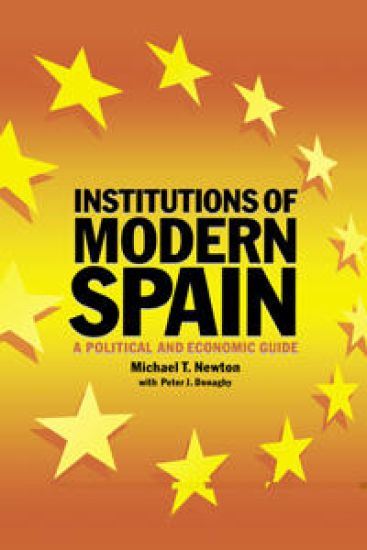
Institutions of Modern Spain

Institutions of Modern Spain

Newton Michael T.

Cambridge University Press
1997
pokkari
This book provides a comprehensive guide to Spain’s major political and economic institutions, analysing their role, structure and functions, as well as their relationship to each other. Set against the background of Spain’s consolidation as a young democratic nation and increasingly important contribution to EU affairs, the book examines the 1978 Constitution; the monarchy of Juan Carlos I; the Parliament; central, regional and local government; political parties; trade unions; public sector enterprises; business and professional organisations; financial institutions; and the judiciary. While most chapters reflect Spain’s now well-advanced adaptation to life within the European Union, Chapter 15 also looks in detail at the country’s representation in EU institutions, as well as the activities of EU-oriented institutions within Spain itself. This is a new expanded, revised and updated edition of the authors’ Spain: a Guide to Political and Economic Institutions, first published in 1987.
Natural Alternatives to Prozac

Natural Alternatives to Prozac

Murray Michael T.

HARPERCOLLINS PUBLISHERS INC
1999
nidottu
Though millions of depressed Americans take Prozac safely and successully, many others suffer uncomfortable or even dangerous side effects. But they needn't despair: In this comprehensive guide to relieving depression without pharmaceuticals, Michael Murray, N.D., explains the disorder itself and various exacerbating factors, including tobacco, alcohol, and caffeine; lists a range of new treatments known to produce the theraputic effects of Prozac, from St. John's Wort and Ginkgo Biloba extract to exercise programs and guided imagery, as well as the pros and cons of the much-touted miracle drug melatonin. Filled with detailed, practical information, this is a useful resource for anyone seeking an alternative to Prozac.
Encyclopedia of Nutritional Supplements

Encyclopedia of Nutritional Supplements

Murray Michael T.

PRIMA PUBLISHING,U.S.
1996
pokkari
Naturopathic physician Michael T. Murray guides readers through the often complex, conflicting information regarding nutritional supplements. Each chapter profiles major vitamins, minerals, essential fatty acids, nutrients, and glandular extracts, including information on the following: - deficiency signs / symptoms - recommended dietary allowance - beneficial effects - available forms - principal uses - dosage ranges - safety issues - interactions Based on extensive scientific research, Encyclopedia of Nutritional Supplements empowers readers to make educated decisions about which supplements to take for health conditions including cancer, arthritis, depression, high cholesterol, allergies, heart disease and more.
Chronic Candidiasis

Chronic Candidiasis

Murray Michael T.

Prima Publishing,U.S.
1997
pokkari
Are you one of the millions of people affected by chronic candidiasis—the yeast syndrome? Often mistaken for other maladies, the yeast syndrome can lead to headaches, sore muscles, general fatigue, low resistance to colds and viruses, and other problems in both men and women. Of the two most common prescription treatments, one can inflict severe liver damage and the other is safe but of only limited effectiveness. Fortunately, there are potent natural alternatives. They’re clearly explained here by Dr. Michael T. Murray, co-author of the bestselling Encyclopedia of Natural Medicine. You will learn how to: Determine if you suffer from candida yeast syndrome Follow Dr. Murray’s seven step program for combating candidiasis Adjust you daily diet to control candida growth Supplement your meals with nourishing vitamins, minerals, and antioxidants Strengthen your immune system to help resist candidiasis and many other invasive disorders And much more! Discover how to overcome yeast syndrome and keep it from coming back—naturally!
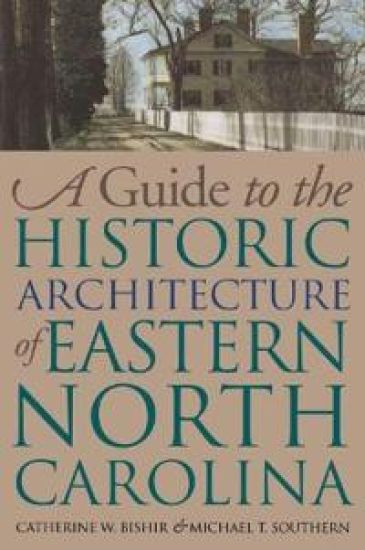
A Guide to the Historic Architecture of Eastern North Carolina

A Guide to the Historic Architecture of Eastern North Carolina

Southern Michael T.

The University of North Carolina Press
1996
nidottu
Eastern North Carolina boasts some of the oldest and most distinctive architecture in the state, from colonial churches and antebellum plantation houses to the imperiled lighthouses of the late nineteenth century. The more recent history of this predominantly agricultural region includes landscapes of small farmsteads, country churches, factories, tobacco barns, quiet maritime villages, and market towns. In their guide to this rich and diverse architectural heritage, Catherine Bishir and Michael Southern introduce readers to more than 1,700 buildings in forty-one counties from the coast to Interstate 95. Written for travelers and residents alike, the book emphasizes buildings visible from the road and indicates which sites are open to the public. Featuring more than 400 photographs and 30 maps, the guide is organized by counties, which are grouped geographically. Sections typically begin with the county seat and work outward with concise entries that treat notable buildings, neighborhoods, and communities. The text highlights key architectural features and trends and relates buildings to the local and regional histories they represent. A project of the North Carolina State Historic Preservation Office of the Division of Archives and History, the book reflects more than twenty-five years of fieldwork and research in the agency's statewide architectural survey and National Register of Historic Places programs. Two future volumes will cover western and piedmont North Carolina.
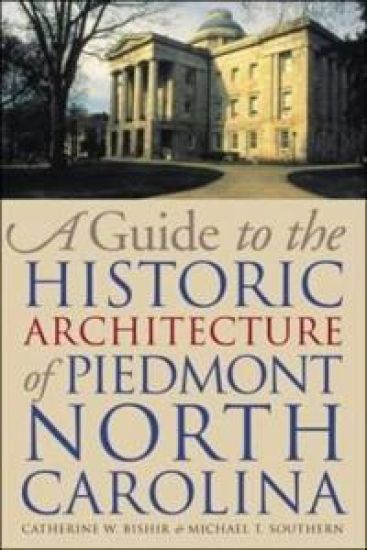
A Guide to the Historic Architecture of Piedmont North Carolina

A Guide to the Historic Architecture of Piedmont North Carolina

Southern Michael T.

The University of North Carolina Press
2003
nidottu
Central North Carolina boasts a rich and varied architectural landscape - from the early plantation houses and farms of its northeastern reaches, to the red brick textile mills and tobacco factories that line railroads across the region, to the glamorous New South skyscrapers of downtown Charlotte. This richly illustrated guide offers a fascinating look at the Piedmont's historic architecture, covering more than 2,000 sites in 34 counties. Highlights include cabins and stone houses dating to the region's early settlement; mill villages and main streets that depict its subsequent industrial and agricultural growth; and twentieth-century landmarks such as Durham's Duke University and Winston-Salem's Wachovia Building. As North Carolina faces massive changes in its economy and landscape, residents and travelers alike will value this unparalleled portrait of an American region, which traces its history and culture through its buildings and communities. A project of the North Carolina State Historic Preservation Office of the Division of Archives and History, this book completes a three-volume series. The project reflects more than twenty-five years of fieldwork and research in the agency's statewide architectural survey and National Register of Historic Places programs.
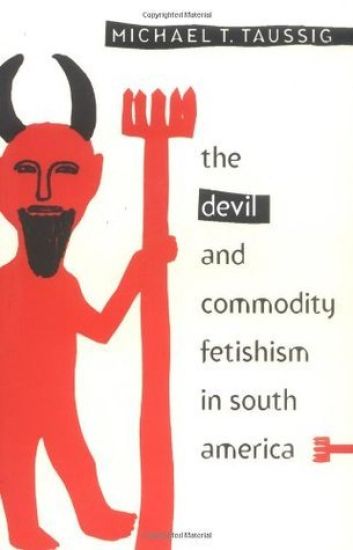
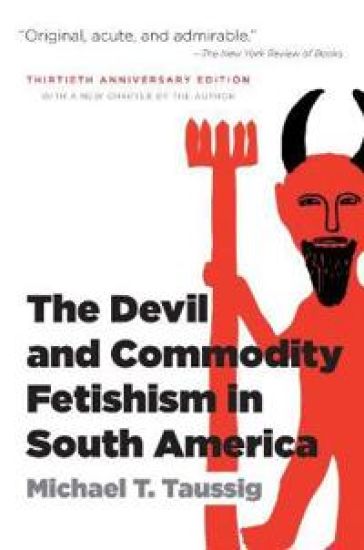
The Devil and Commodity Fetishism in South America

The Devil and Commodity Fetishism in South America

Taussig Michael T.

The University of North Carolina Press
2010
nidottu
In this classic book, Michael Taussig explores the social significance of the devil in the folklore of contemporary plantation workers and miners in South America. Grounding his analysis in Marxist theory, Taussig finds that the fetishization of evil, in the image of the devil, mediates the conflict between precapitalist and capitalist modes of objectifying the human condition. He links traditional narratives of the devil-pact, in which the soul is bartered for illusory or transitory power, with the way in which production in capitalist economies causes workers to become alienated from the commodities they produce. A new chapter for this anniversary edition features a discussion of Walter Benjamin and Georges Bataille that extends Taussig's ideas about the devil-pact metaphor.
New Latin American Cinema Vol one; Theory, Practices, and Transcontinental Articulations
Mapping the historical and cultural contexts of film practices in Latin America, this two-volume collection of programmatic statements, essays and interviews is devoted to the study of a theorized, dynamic and unfinished cinematic movement. Forged by Latin America's post-colonial environment of underdevelopment and dependency, the New Latin American Cinema movement has sought to inscribe itself in Latin America's struggles for cultural and economic autonomy. ""Volume One"" - this work - explores the formation of the New Latin American Cinema movement, its national and continental implications (including the diasporic/exilic experience) and transcontinental articulations through the writings of pioneer film-makers and scholars. Glauber Rocha, Julio Garcia Espinosa, Jorge Sanjines, Fernando Solanas and Octavio Getino address the central question of the Latin American aesthetic - a particular style and production method connected with the political and social conditions and circumstances of Latin America. Ana Lopez, Julianne Burton and Michael Chanan examine the movement's formation in the 1950s and its development through the 1980s in a socio-historical context, paying special attention to modes of production and consumption. Paul Willemen assesses the movement's relevance to radical film practice and theory in the First and Third Worlds, and Antonio Skarmeta calls for a distribution network of Third World Cinema on a pan-European level. The volume concludes with essays by Ruby Rich and Zuzana M. Pick who address, from widely different approaches, the issues of the movement's adaptability, renovation and identity, in consideration of its evolution since the 1950s. ""Volume Two"" comprises essays on the development of the New Latin American Cinema as a comparative national project. Essays are grouped by nation into two regions - Middle and Central America and Caribbean and South America - for comparitive study, particularly between capitalist and post-revolutionary socialist formations. The selected essays examine the relationship between cinema and nationhood and the ambiguous categories of culture, identity and nation within the socio-historical specificities of the movement's development, especially in Cuba, Brazil, Mexico, Chile and Argentina. This collection should serve as an essential reference and research tool for the study of world cinema. The collection, while celebrating the diversity and innovation of the New Latin American Cinema, explicates the historical importance of filmmaking as a cultural form and political practice in Latin America.
New Latin American Cinema Vol two; Studies of National Cinemas

New Latin American Cinema Vol two; Studies of National Cinemas

Martin Michael T.

Wayne State University Press
1997
sidottu
Mapping the historical and cultural contexts of film practices in Latin America, this two-volume collection of programmatic statements, esays and interviews is devoted to the study of a theorized, dynamic and unfinished cinematic movement. Forged by Latin America's post-colonial environment of underdevelopment and dependency, the New Latin American Cinema movement has sought to inscribe itself in Latin America's struggles for cultural and economic autonomy. ""Volume One"" explores the formation of the New Latin American Cinema movement, its national and continental implications (including the diasporic/exilic experience) and transcontinental articulations through the writings of pioneer filmmakers and scholars. Glauber Rocha, Julio Garcia Espinosa, Jorge Sanjines, Fernando Solanas and Octavio Getino address the central question of the Latin American aesthetic - a particular style and production method connected with the political and social conditions and circumstances of Latin America. Ana Lopez, Julianne Burton and Michael Chanan examine the movement's formation in the 1950s and its development through the 1980s in a socio-historical context, paying special attention to modes of production and consumption. Paul Willemen assesses the movement's relevance to radical film practice and theory in the First and Third Worlds, and Antonio Skarmeta calls for a distribution network of Third World Cinema on a pan-European level. The volume concludes with essays by Ruby Rich and Zuzana M. Pick who address, from widely different approaches, the issues of the movement's adaptability, renovation and identity, in consideration of its evolution since the 1950s. ""Volume Two"" - this one - comprises essays on the development of the New Latin American Cinema as a comparative national project. Essays are grouped by nation into two regions - Middle and Central America and Caribbean and South America - for comparitive study, particularly between capitalist and post-revolutionary socialist formations. The selected essays examine the relationship between cinema and nationhood and the ambiguous categories of culture, identity and nation within the socio-historical specificities of the movement's development, especially in Cuba, Brazil, Mexico, Chile and Argentina. This collection will serve as an essential reference and research tool for the study of world cinema. The collection, while celebrating the diversity and innovation of the New Latin American Cinema, explicates the historical importance of filmmaking as a cultural form and political practice in Latin America.