

Kirjahaku
Etsi kirjoja tekijän nimen, kirjan nimen tai ISBN:n perusteella.
793 tulosta hakusanalla Mor Efim


In The Second Jewish Revolt: The Bar Kokhba War, 132-136 C.E., Menahem Mor offers a detailed account on the Bar Kokhba Revolt in an attempt to understand the second revolt against the Romans. Since the Bar Kokhba Revolt did not have a historian who devoted a comprehensive book to the event, Mor used a variety of historical materials including literary sources (Jewish, Christian, Greek and Latin) and archaeological sources (inscriptions, coins, military diplomas, hideouts, and refuge complexes). The book reviews the causes for the outbreak while explaining the complexity of the territorial expansion of the Revolt. Mor portrays the participants and opponents as well as the attitudes of the non-Jewish population in Palestine. He exposes the Roman Army’s part in Judaea, the Jewish leadership and the implications of the Revolt.

The third in a brand-new trilogy from the bestselling author of THE CIRCLE AND THE CROSS.

The second in a brand-new trilogy from the bestselling author of THE CIRCLE AND THE CROSS.

The first in a new trilogy from the bestselling author of THE CIRCLE AND THE CROSS

Dalya Cohen-Mor examines the evolution of the concept of fate in the Arab world through readings of religious texts, poetry, fiction, and folklore. She contends that belief in fate has retained its vitality and continues to play a pivotal role in the Arabs' outlook on life and their social psychology. Interwoven with the chapters are 16 modern short stories that further illuminate this fascinating topic.
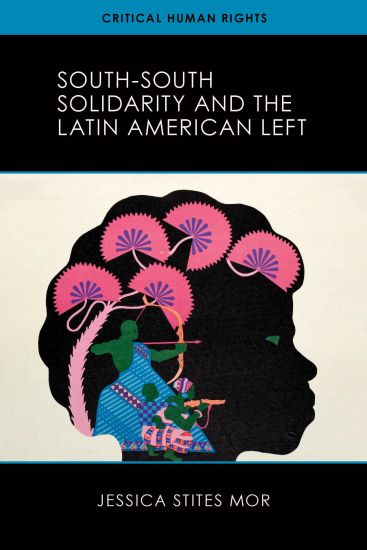
South-South Solidarity and the Latin American Left
Jessica Stites Mor
UNIVERSITY OF WISCONSIN PRESS
2022
sidottu
Transnational solidarity movements often play an important role in reshaping structures of global power. However, there remains a significant gap in the historical literature on collaboration between parties located in the Global South. Facing increasing repression, the Latin American left in the 1960s and 1970s found connection in transnational exchange, organizing with distant activists in Africa, the Middle East, and the Caribbean. By exploring the particularities of South-South solidarity, this volume begins new conversations about what makes these movements unique, how they shaped political identities, and their lasting influence.Jessica Stites Mor looks at four in-depth case studies: the use of legal reform to accomplish the goals of solidarity embedded in Mexico's revolutionary constitution, visual and print media circulated by Cuba and its influence on the agenda of the Afro-Asian block at the United Nations, organizing on behalf of Palestinian nationalism in reshaping Argentina's socialist left, and the role of Latin American Catholic activists in challenging the South African apartheid state. These examples serve as a much-needed road map to navigate our current political climate and show us how solidarity movements might approach future struggles.
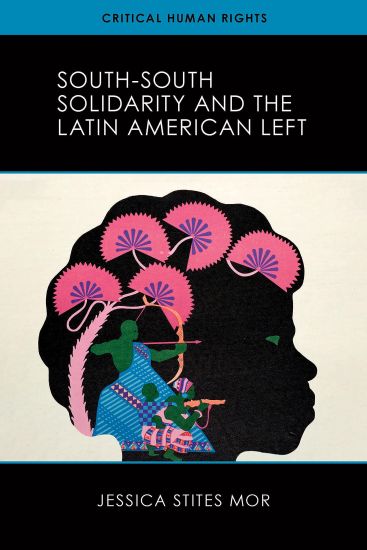
South-South Solidarity and the Latin American Left
Jessica Stites Mor
UNIVERSITY OF WISCONSIN PRESS
2024
nidottu
Transnational solidarity movements often play an important role in reshaping structures of global power. However, there remains a significant gap in the historical literature on collaboration between parties located in the Global South. Facing increasing repression, the Latin American left in the 1960s and 1970s found connection in transnational exchange, organizing with distant activists in Africa, the Middle East, and the Caribbean. By exploring the particularities of South-South solidarity, this volume begins new conversations about what makes these movements unique, how they shaped political identities, and their lasting influence. Jessica Stites Mor looks at four in-depth case studies: the use of legal reform to accomplish the goals of solidarity embedded in Mexico's revolutionary constitution, visual and print media circulated by Cuba and its influence on the agenda of the Afro-Asian block at the United Nations, organizing on behalf of Palestinian nationalism in reshaping Argentina's socialist left, and the role of Latin American Catholic activists in challenging the South African apartheid state. These examples serve as a much-needed road map to navigate our current political climate and show us how solidarity movements might approach future struggles.

In May of 1976, documentary filmmaker and proclaimed socialist Raymundo Gleyzer mysteriously disappeared in Buenos Aires. Like many political activists, Gleyzer was the target of a brutalizing military junta that had recently assumed power. Amazingly, within a few decades, leftist filmmakers would be celebrated as intellectual vanguards in this same city.In Transition Cinema, Jessica Stites Mor documents the critical role filmmakers, the film industry, and state regulators played in ArgentinaÆs volatile transition to democracy. She shows how, during different regimes, the state moved to either inhibit or facilitate film production and its content, distribution, and exhibition. She also reveals the strategies the film industry employed to comply with, or circumvent these regulations.Stites Mor divides the transition period into three distinct generations, each defined by a major political event and the reactions to these events in film. The first generation began with the failed civil uprising in C\u00f3rdoba in 1969, and ended with the 1976 military takeover. During military rule, repressive censorship spurred underground exhibitions, and allied filmmakers with the Peronist left and radical activists. The second generation arose after the return of civilian rule in 1983. Buenos Aires became the center for state-level cultural programs that included filmmakers in debates over human rights and collective memory campaigns. In 1989, a third generation of filmmaking emerged, with new genres such as cine piquetero (picketer cinema) that portrayed a variety of social movements and brought them into the public eye. By the new millennium, Argentine filmmakers had gained the attention and financial support of international humanitarian and film industry organizations.In this captivating study, Stites Mor examines how populist movements, political actors, filmmakers, government, and industry institutions all became deeply enmeshed in the project of ArgentinaÆs transition cinema. She demonstrates how film emerged as the chronicler of political struggles in a dialogue with the past, present, and future, whose message transcended both cultural and national borders.


A Magyar Nemzet Jelene S Jovoje (1869)
Kiadja Rath Mor Publisher
KESSINGER PUBLISHING, LLC
2010
pokkari

Adalekok A Kenyuralom Ellenes Mozgalmak Tortenetehez, 1849-1866
Kiadja Rath Mor Publisher
KESSINGER PUBLISHING, LLC
2010
pokkari
![Utaza S Egy Sirdomb Ko Ru L. [Travels in Italy.] (12 Fametszettel E S 4 E Nynyomattal Va Go Pa L Rajzai Uta N.).](/covers/9781249003618.jpg)
Utaza S Egy Sirdomb Ko Ru L. [Travels in Italy.] (12 Fametszettel E S 4 E Nynyomattal Va Go Pa L Rajzai Uta N.).
J Kai Mor; Pa L Va Go; Jokai Mor
British Library, Historical Print Editions
2012
pokkari


El colectivo femenino est considerado como uno de los m's vulnerables, junto con los ni os y ancianos, debido a su condici n f sica, factores sociales, etc., por lo tanto son v ctimas potenciales de agresiones y de todo tipo de abusos. La violencia contra las mujeres es una clara expresi n de la desigualdad entre hombres y mujeres, siendo sta, un grave problema para la sociedad. Los compromisos diarios de las mujeres en la actualidad hacen que frecuentemente se vean solas ante situaciones de peligro potencial, y tambi n son numerosas las ocasiones en las que una mujer puede ser molestada o agredida: al regresar tarde a casa, en un aparcamiento subterr neo, caminando por una calle desierta, en la parada del autob s, en el ascensor, al sacar dinero del cajero, etc. Es importante, que las mujeres conozcan las circunstancias en que se producen estas agresiones, que estrategias pueden emplear para evitarlas y que deben hacer cuando estas ya se han producido. Este libro trata de suponer un instrumento de trabajo y un medio con el que tratar de adquirir nuevos conocimientos, t cticas y tecnicas tiles para salvaguardar su libertad cuando sta se ve amenazad por situaciones, eventos o personas imprevisibles. Dentro de este libro los objetivos: Aprender una serie de tecnicas de defensa personal sencillas y s per contundentes encaminadas a preservar la integridad f sica, ante agresiones violentas e il citas contra una persona. Formaci n para la mujer en materia de autoprotecci n Aumentar la autoestima y confianza de la mujer eliminando esos miedos Asesorar a la mujer en temas como la leg tima defensa, la violencia de g nero, agresiones sexuales, como son y c mo las prefieren los violadores, etc. Todo ello elaborando un protocolo de prevenci n dirigido a la mujer. Existen una serie de reglas de prevenci n que hay que tener en cuenta para evitar cualquier tipo de peligro, acompa adas de unas medidas de seguridad. Conocer estas t cnicas no quiere decir que se vuelvan mujeres violentas o agresivas, sino que adquieren los conocimientos y t cticas necesarias para afrontar y reaccionar ante cualquier agresi n, pero ante todo, ser capaces de prevenir cualquier agresi n, y de prevenir una situaci n de peligro, ya que el estudio de la defensa personal comienza con la prevenci n. La prevenci n es el mejor medio para garantizarnos una seguridad integral. El agresor es un depredador que elige su presa, la prevenci n permite que no seamos una presa f cil.

On the trail of dragons forgotten, an intrepid illustrator and reporter journeys from Europe through the Middle East and finally to Saigon in search of the dark caverns and mountaintop perches where the elusive winged serpents dwell. With the gift of seeing the invisible, our explorer friend records each encounter in a journal of gorgeous, fully painted artwork, capturing every majestic and fearsome visual detail of the scaly behemoths, and accompanies his findings with snippets of local lore as evidence that these hidden beasts continue to shape the world in ways we may never expect!

Mahmoud Darwish: Palestine’s Poet and the Other as the Beloved focuses on Palestinian national poet Mahmoud Darwish (1941–2008), whose poetry has helped to shape Palestinian identity and foster Palestinian culture through many decades of the Israeli-Palestinian conflict. Dalya Cohen-Mor explores the poet’s romantic relationship with “Rita,” an Israeli Jewish woman whom he had met in Haifa in his early twenties and to whom he had dedicated a series of love poems and prose passages, among them the iconic poem “Rita and the Gun.” Interwoven with biographical details and diverse documentary materials, this exploration reveals a fascinating facet in the poet’s personality, his self-definition, and his attitude toward the Israeli other. Comprising a close reading of Darwish’s love poems, coupled with many examples of novels and short stories from both Arabic and Hebrew fiction that deal with Arab-Jewish love stories, this book delves into the complexity of Arab-Jewish relations and shows how romance can blossom across ethno-religious lines and how politics all too often destroys it.

Mahmoud Darwish: Palestine’s Poet and the Other as the Beloved focuses on Palestinian national poet Mahmoud Darwish (1941–2008), whose poetry has helped to shape Palestinian identity and foster Palestinian culture through many decades of the Israeli-Palestinian conflict. Dalya Cohen-Mor explores the poet’s romantic relationship with “Rita,” an Israeli Jewish woman whom he had met in Haifa in his early twenties and to whom he had dedicated a series of love poems and prose passages, among them the iconic poem “Rita and the Gun.” Interwoven with biographical details and diverse documentary materials, this exploration reveals a fascinating facet in the poet’s personality, his self-definition, and his attitude toward the Israeli other. Comprising a close reading of Darwish’s love poems, coupled with many examples of novels and short stories from both Arabic and Hebrew fiction that deal with Arab-Jewish love stories, this book delves into the complexity of Arab-Jewish relations and shows how romance can blossom across ethno-religious lines and how politics all too often destroys it.

Reimpresi n del original, primera publicaci n en 1796.