Kirjojen hintavertailu. Mukana 11 342 296 kirjaa ja 12 kauppaa.

Kirjahaku

Etsi kirjoja tekijän nimen, kirjan nimen tai ISBN:n perusteella.

1000 tulosta hakusanalla Moses Stuart

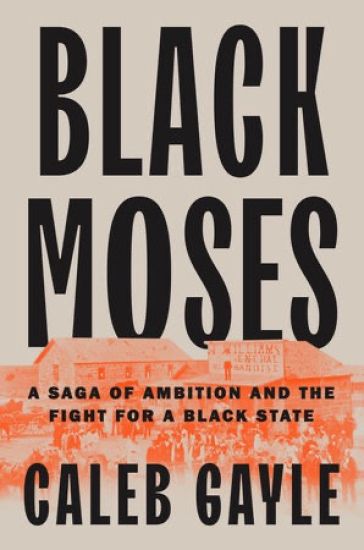
Black Moses: A Saga of Ambition and the Fight for a Black State
The remarkable story of Edward McCabe, a Black man who tried to establish a Black state within the United States. In this paradigm-shattering work of American history, Caleb Gayle recounts the extraordinary tale of Edward McCabe, a Black man who championed the audacious idea to create a state within the Union governed by and for Black people -- and the racism, politics, and greed that thwarted him. As the sweeping changes and brief glimpses of hope brought by the Civil War and Reconstruction began to wither, anger at the opportunities available to newly freed Black people were on the rise. As a result, both Blacks and whites searched for new places to settle. That was when Edward McCabe, a Black businessman and a rising political star in the American West, set in motion his plans to found a state within the Union for Black people to live in and govern. His chosen site: Oklahoma, a place that the U.S. government had deeded to Indigenous people in the 1830s when it forced thousands of them to leave their homes under Indian Removal, which became known as the Trail of Tears. McCabe lobbied politicians in Washington, D.C., Kansas, and elsewhere as he exhorted Black people to move to Oklahoma to achieve their dreams of self-determination and land ownership. His rising profile as a leader and spokesman for Black people as well as his willingness to confront white politicians led him to become known as Black Moses. And like his biblical counterpart, McCabe nearly made it to the promised land but was ultimately foiled by politics, business interests, and the growing ambitions of white settlers who also wanted the land. In Black Moses, Gayle brings to vivid life the world of Edward McCabe: the Black people who believed in his dream of a Black state, the white politicians who didn't, and the larger challenges of confronting the racism and exclusion that bedeviled Black people's attempts to carve a place in America for themselves. Gayle draws from extraordinary research and reporting to reveal an America that almost was.
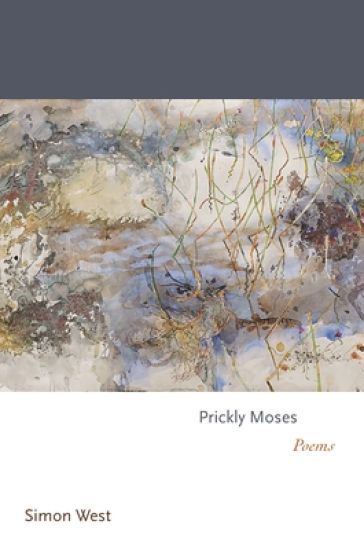
Prickly Moses

Prickly Moses

Simon West

PRINCETON UNIVERSITY PRESS
2023
pokkari
Compelling poems that celebrate language as it encounters the nameless variety of the natural world, from Australia to ItalyAn uncanny blend of the external and the intimate has been a hallmark of Simon West’s poetry for nearly twenty years. In this new collection, the Australian poet and Italianist delights in the transforming and endlessly varied powers of naming and speaking. West’s intensely regional focus stands in dialogue with Europe and antiquity. Landscapes reveal the tangle of their historical dimensions, as the rivers of both the Goulburn Valley in southeastern Australia and the Po Valley in northern Italy merge and flow into the wider currents of the Southern Ocean. Again and again, language and the senses throw themselves into the nameless riot of the world, from eucalypts and clouds to a medieval bell tower and the sounds a pencil makes as it crosses a page.
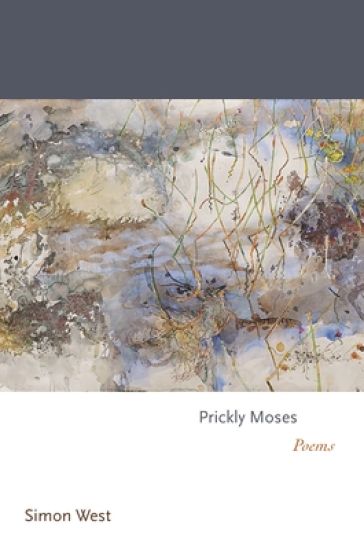
Prickly Moses

Prickly Moses

Simon West

PRINCETON UNIVERSITY PRESS
2023
sidottu
Compelling poems that celebrate language as it encounters the nameless variety of the natural world, from Australia to ItalyAn uncanny blend of the external and the intimate has been a hallmark of Simon West’s poetry for nearly twenty years. In this new collection, the Australian poet and Italianist delights in the transforming and endlessly varied powers of naming and speaking. West’s intensely regional focus stands in dialogue with Europe and antiquity. Landscapes reveal the tangle of their historical dimensions, as the rivers of both the Goulburn Valley in southeastern Australia and the Po Valley in northern Italy merge and flow into the wider currents of the Southern Ocean. Again and again, language and the senses throw themselves into the nameless riot of the world, from eucalypts and clouds to a medieval bell tower and the sounds a pencil makes as it crosses a page.
Grandma Moses

Grandma Moses

PRINCETON UNIVERSITY PRESS
2025
sidottu
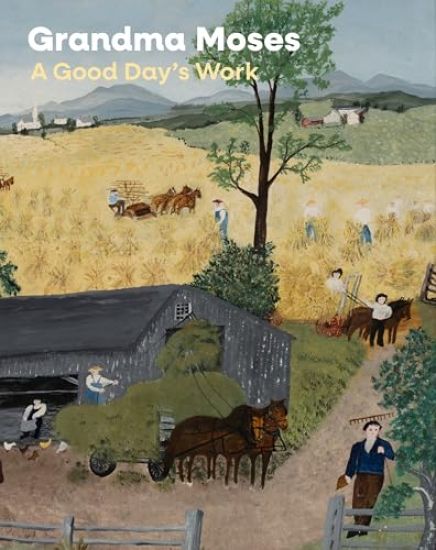
A major reexamination of the life, art, and legacy of a self-taught American masterGrandma Moses: A Good Day’s Work explores how an unlikely artist—marginalized in her time for being elderly, female, and untrained—catapulted into the American imagination in the 1940s and 1950s. Anna Mary Robertson Moses (1860–1961) was eighty years old when Otto Kallir, a New York art dealer and recent émigré from Nazi-held Austria, introduced her to the world. “Grandma Moses,” as the press dubbed her, quickly became a polarizing figure, beloved by the public but belittled by an art world that objected to her story-time scenes and lack of formal training.Drawing on Moses’s own metaphor of her life as “a good day’s work,” the book charts Moses’s creative development from her earliest artistic efforts to the emergence of her signature style, revealing a multidimensional artist who melded direct observation of nature with personal memories to tell idiosyncratic yet compelling stories. It positions Moses as a central figure in the history of twentieth-century American art, a painter whose life and work bore witness to the Civil War, two world wars, and the civil rights era.Beautifully illustrated, Grandma Moses: A Good Day’s Work captures the indomitable spirit Moses brought to her artmaking, conveying a candor and authority that still resonate today with the quest for a homespun American visual tradition.Published in association with the Smithsonian American Art Museum, Washington, DCExhibition ScheduleSmithsonian American Art Museum, Washington, DCOctober 24, 2025–July 12, 2026
Rabbi Moses

Rabbi Moses

Jacob Neusner

University Press of America
2013
nidottu
This book is an exercise in the systematic recourse to anachronism as a theological-exegetical mode of apologetics. Specifically, Neusner demonstrates the capacity of the Rabbinic sages to read ideas attested in their own day as authoritative testaments to — to them — ancient times. Thus, Scripture was read as integral testimony to the contemporary scene. About a millennium — 750 B.C. E. to 350 C. E. — separates Scripture’s prophets from the later sages of the Mishnah and the Talmud. It is quite natural to recognize evidence for differences over a long period of time. Yet Judaism sees itself as a continuum and overcomes difference. The latecomers portray the ancients like themselves. “In our image, after our likeness” captures the current aspiration. The sages accommodated the later documents in their canon by finding the traits of their own time in the record of the remote past. They met the challenges to perfection that the sages brought about. Of what does the process of harmonization consist? To answer that question the author surveys the presentation of the prophets by the rabbis, beginning with Moses. To overcome the gap, Rabbinic sages turn Moses into a sage like themselves. The prophet performs wonders. The sage sets forth reasonable rulings. The conclusion expands on this account of matters to show the categorical solution that the sages adopted for themselves, and that is the happy outcome of the study.
Holy Moses

Holy Moses

Arley K Fadness

CSS Publishing Company
2007
pokkari
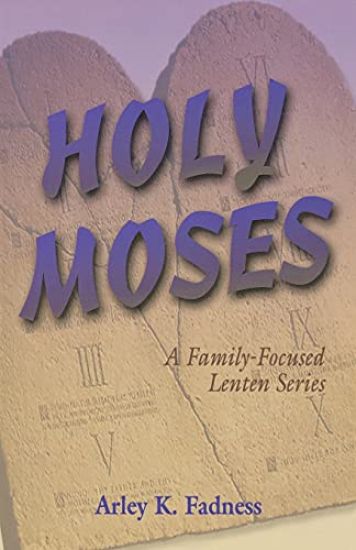
In Holy Moses, Arley Fadness takes the reader on a trip with Moses and the Hebrew people. This collection of six family-oriented Lenten services creates excitement and anticipation in children and adults alike as they retell and relive the greatest salvation event in the Old Testament. The Exodus experience is relived and remembered while being applied to the lives of modern Christians. We are so pleased that we did Holy Moses for our Lenten services -- it was an excellent experience People said it was fun, meaningful, and great to see so many people involved -- we had participants from sixth grade to age 75 Holy Moses has enough humor to add some relief, but it isn't the main point. Moses keeps the story going; the humor adds a special touch but it doesn't detract from the message. Six weeks later, when I asked the confirmation students what songs they would like to sing on Confirmation Sunday, one boy asked, "Why don't we sing 'Holy Moses'?" Evelyn Johnson Pastor, Community Lutheran Church Hill City, South Dakota We love Holy Moses The series went wonderfully well and was a big draw for children and families. It was truly a gift to us Jeff Tengesdal Senior Pastor, Good Shepherd Lutheran Church Bismarck, North Dakota Holy Moses was great fun The theme song had a catchy tune and worked well. Overall, Holy Moses was a fabulous part of our Lenten worship. Craig Schweitzer Worship and Music Minister, Good Shepherd Lutheran Church Bismarck, North Dakota Arley K. Fadness is a retired ELCA pastor who has served numerous Lutheran parishes in South Dakota and Minnesota. He is currently an associate pastor at Custer Lutheran Fellowship in the beautiful Black Hills of South Dakota and is also a congregational consultant coaching churches in visioning processes. A graduate of Augustana College, Luther Theological Seminary, and McCormick Theological Seminary, Fadness is the author of several CSS titles, including Hey Joseph , Where's Noah?, Blueprints for Lent, and Six Spiritual Needs in America Today.
Narrative of the Life of Moses Grandy, Late a Slave in the United States of America
Born into slavery in North Carolina around 1786, Moses Grandy was bequeathed to his young playmate, his original owner's son, when they were both eight years old. Hired out until he was twenty-one, Grandy describes each of his temporary masters--some cruel and some kind. His first wife is sold shortly after they marry, and he never sees her again. After saving his money whenever possible and buying his freedom for $600, Grandy is betrayed by his childhood friend, who sells him. Grandy marries again and purchases his freedom a second time, only to be once again betrayed. With the assistance of white friends, Grandy buys his freedom a third time and moves north. He is also able to purchase the freedom of his second wife, but their children remain in slavery. Grandy wrote this Narrative to raise funds for the freedom of his children. A DOCSOUTH BOOK. This collaboration between UNC Press and the University of North Carolina at Chapel Hill Library brings selected classic works from the digital library of Documenting the American South back into print. DocSouth Books uses the latest digital technologies to make these works available as downloadable e-books or print-on-demand publications. DocSouth Books are unaltered from the original publication, providing affordable and easily accessible editions to a new generation of scholars, students, and general readers.
A Narrative of the Adventures and Escape of Moses Roper, from American Slavery
The Narrative of the Adventures and Escape of Moses Roper can be read as an extended autobiographical meditation on the meaning of race in antebellum America. First published in England, the text documents the life of Moses Roper, beginning with his birth in North Carolina and chronicling his travels through South Carolina, Georgia, and Florida. Roper was able to obtain employment on a schooner named The Fox, and in 1834 he made his way to freedom aboard the vessel. Once in Boston, he was quickly recruited as a signatory to the constitution of the American Anti-Slavery Society (AASS), but he sailed to England the next year. Roper's narrative is especially interesting because although it was published after Frederick Douglass's much-heralded 1845 Narrative, Roper actually preceded Douglass in his involvement in AASS as well as in his travel to the United Kingdom. This text is often cited by literary scholars because of its length, its extensive detail, and its unforgiving portrayal of enslaved life in the ""land of the free."" A DOCSOUTH BOOK. This collaboration between UNC Press and the University of North Carolina at Chapel Hill Library brings selected classic works from the digital library of Documenting the American South back into print. DocSouth Books uses the latest digital technologies to make these works available as downloadable e-books or print-on-demand publications. DocSouth Books are unaltered from the original publication, providing affordable and easily accessible editions to a new generation of scholars, students, and general readers.
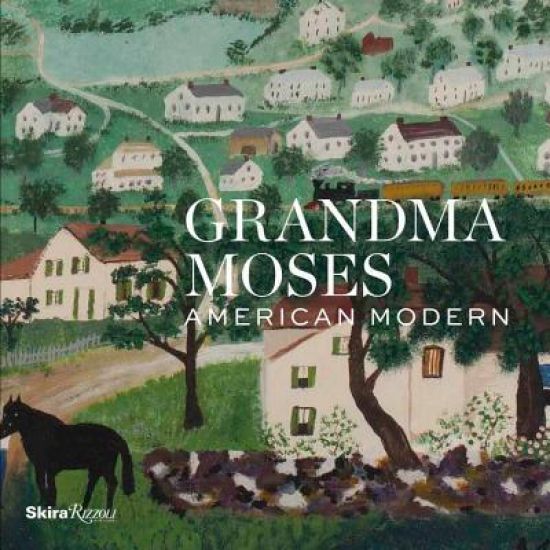
Grandma Moses

Grandma Moses

Robert Wolterstorff

Skira Rizzoli
2016
sidottu
One of the best-known artists of her time, and a true American legend, Anna Mary Robertson Grandma Moses (1860-1961) was often marginalized as a latter-day folk painter or a phenomenon of popular media. Accompanying a traveling exhibition, this new book looks closely at the paintings themselves and the artist's compelling biography to reassert her role in the development of a culture of modernist art at mid-century. Presenting fresh research, several scholars examine Moses's name, public persona, painted world, and wildly popular place in American pop culture; address the myth of the self-taught artist; and contextualize her work alongside such contemporaries as Horace Pippin, Elie Nadelman, Yasuo Kuniyoshi, and Morris Hirshfield.
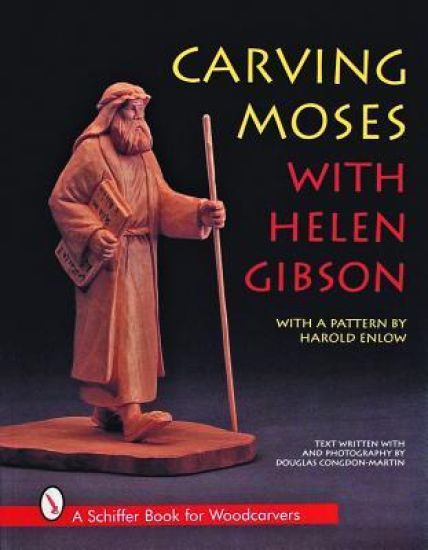
Carving Moses with Helen Gibson

Carving Moses with Helen Gibson

Helen Gibson

Schiffer Publishing Ltd
1997
nidottu
A step-by-step guide through the carving process for Moses of the nativity, with each step illustrated by a color photograph. The carving of religious figures is a tradition that is thousands of years old. In earlier books, Helen Gibson shared her techniques for carving the nativity and the figure of St. Francis of Asissi. Now, she turns her attention to one of the most dramatic figures in religious history: Moses. This strong, authoritative figure lends itself wonderfully to carving. Helen's friend, Harold Enlow, drew the pattern and Helen leads the reader step-by-step through the carving process. Each step is illustrated with a color photograph. The result is a rewarding carving experience and a great deal of enjoyment.
The Moses of Rovno

The Moses of Rovno

Douglas K. Huneke

Random House
1990
pokkari
"Fritz Graebe's courage justifies our faith in humankind."--Elie Wiesel, author of Night"This book combines a story of high moral passion with all the excitement of a spy thriller. Fritz Graebe, who as a non-Jew risked his life repeatedly during World War II to save Jews from Hitler's firing squads and death camps, was also an exceedingly astute and clever man who time and again outwitted the Nazis at their own game. Tragically there were too few Fritz Graebes to avert catastrophe for the great majority of European Jews, but his story is a reminder that during even the darkest moments of human history there are individuals who, at great personal cost, say 'no' to the darkness and provide beacons of light for the rest of us. As we face our own moral dilemmas, we can only hope that some of Fritz Graebe's courage rubs off on us."--Dr. Robert McAfee Brown, professor of theology and ethics, Pacific School of Religion, Berkeley, California
Of Moses and Marx

Of Moses and Marx

David P. Shuldiner

Praeger Publishers Inc
1999
sidottu
The Jewish Labor Movement was a radical subculture that flourished within the trade union and political movements in the United States in the early part of the twentieth century. Jewish immigrant activists—socialists, communists, anarchists, and labor Zionists—adapted aspects of the traditions with which they were raised in order to express the politics of social transformation. In doing so, they created a folk ideology which reflected their dual ethnic/class identity. This book explores that folk ideology, through an analysis of interviews with participants in the Jewish Labor Movement as well as through a survey of the voluminous literature written about that movement.A synthesis of political ideology and ethnic tradition was carefully crafted by secular working-class Jewish immigrant radicals who rediscovered and reformulated elements of Jewish traditions as vehicles for political organizing. Commonly held symbols of their cultural identity—the Yiddish language, rituals such as the Passover seder, remembered narratives of the Eastern European shtetl, and biblical imagery—served as powerful tools in forging political solidarity among fellow Jewish workers and activists within the Jewish Labor Movement.