1. The Christmas Banquet by Nathaniel Hawthorne is a tantalising read. This book will keep you hooked till the very end. Every year the ten most miserable people in town are invited to a Christmas banquet. Their misery is shared alongside the holiday feast, and every year, an increasingly wretched Gervayse Hastings makes his appearance. Over time, all the other guests seem to have grown in character and risen above their sad condition, except of course, Mr. Hastings. Much of Hawthorne's writing centers on New England, many works featuring moral allegories with a Puritan inspiration. His fiction works are considered part of the Romantic movement and, more specifically, Dark romanticism. His themes often centre on the inherent evil and sin of humanity, and his works often have moral messages and deep psychological complexity. His published works include novels, short stories, and a biography of his college friend Franklin Pierce. 2. Love Letters of Nathaniel Hawthorne Experience the romantic side of Nathaniel Hawthorne with this collection of his love letters. Full of passionate expressions of love and devotion, this book is a great gift for anyone who appreciates the beauty of the written word.
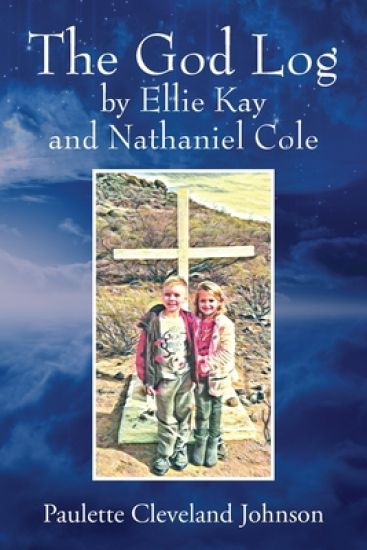
The God Log by Ellie Kay and Nathaniel Cole. Cousins Sarah and Thomas discover Ellie Kay's, personal diary called The God Log while in the attic going through boxes to decorate for Christmas. The book was given to her by her Grandmother, Grandma Paulette. Thomas finds out that his father Nathaniel Cole also has a God Log Book. Both Sarah and Thomas are fascinated in learning what their parents were like as children. Discovering how they dealt with problems and then solving the issues like bullying, lying, and stealing. As Ellie and Nate write to God, they examine the problem and determine what the correct solution should be based on Sunday School teachings, the insightful talks from their Grandmother and how God would want you to solve the issue. Ellie and Nate also write to God to elaborate the great adventures they experienced with their grandmother and reflect on the wonderful opportunities and thank God for life's blessings. Now you can begin writing your thoughts and experiences to God with your very own God Log at the end of this book. Enjoy
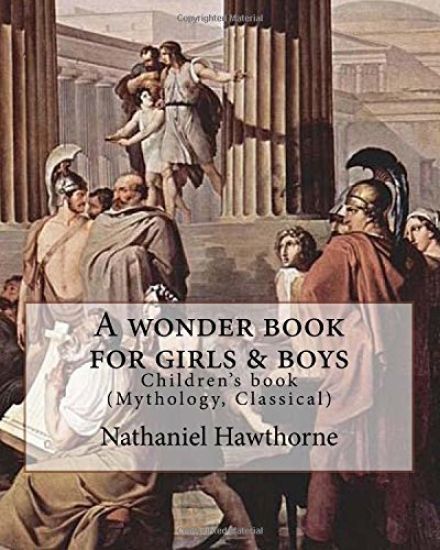
A Wonder-Book for Girls and Boys (1851) is a children's book by American author Nathaniel Hawthorne in which he retells several Greek myths. It was followed by a sequel, Tanglewood Tales. Overview edit] The stories in A Wonder-Book for Girls and Boys are all stories within a story, the frame story being that a Williams College student, Eustace Bright, is telling these tales to a group of children at Tanglewood, an area in Lenox, Massachusetts, where Hawthorne lived for a time. All the tales are modified from the original myths. A Wonder-Book for Girls and Boys covers the myths of The Gorgon's Head - recounts the story of Perseus killing Medusa at the request of the king of the island, Polydectes. The Golden Touch - recounts the story of King Midas and his "Golden Touch". The Paradise of Children - recounts the story of Pandora opening the box filled with all of mankind's Troubles. The Three Golden Apples - recounts the story of Heracles procuring the Three Golden Apples from the Hesperides' orchard, with the help of Atlas. The Miraculous Pitcher - recounts the story of Baucis and Philemon providing food and shelter to two strangers who were Zeus and "Quicksilver" (Hermes) in disguise. Baucis and Philemon were rewarded by the gods for their kindness; they were promised never to live apart from one another. The Chim ra - recounts the story of Bellerophon taming Pegasus and killing the Chim ra....... Nathaniel Hawthorne ( born Nathaniel Hathorne; July 4, 1804 - May 19, 1864) was an American novelist, dark romantic, and short story writer. He was born in 1804 in Salem, Massachusetts to Nathaniel Hathorne and the former Elizabeth Clarke Manning. His ancestors include John Hathorne, the only judge involved in the Salem witch trials who never repented of his actions. He entered Bowdoin College in 1821, was elected to Phi Beta Kappa in 1824, and graduated in 1825. He published his first work in 1828, the novel Fanshawe; he later tried to suppress it, feeling that it was not equal to the standard of his later work. He published several short stories in periodicals, which he collected in 1837 as Twice-Told Tales. The next year, he became engaged to Sophia Peabody. He worked at the Boston Custom House and joined Brook Farm, a transcendentalist community, before marrying Peabody in 1842. The couple moved to The Old Manse in Concord, Massachusetts, later moving to Salem, the Berkshires, then to The Wayside in Concord. The Scarlet Letter was published in 1850, followed by a succession of other novels. A political appointment as consul took Hawthorne and family to Europe before their return to Concord in 1860. Hawthorne died on May 19, 1864, and was survived by his wife and their three children. Much of Hawthorne's writing centers on New England, many works featuring moral metaphors with an anti-Puritan inspiration. His fiction works are considered part of the Romantic movement and, more specifically, dark romanticism. His themes often center on the inherent evil and sin of humanity, and his works often have moral messages and deep psychological complexity. His published works include novels, short stories, and a biography of his college friend Franklin Pierce, the 14th President of the United States..........
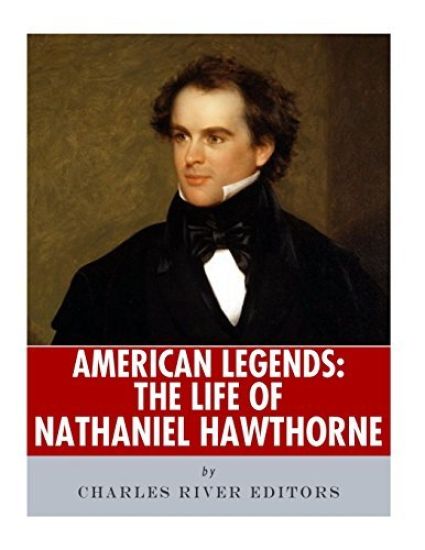
*Includes pictures of Hawthorne and other important people and places in his life. *Explains how Hawthorne's friends and family influenced his classic works. *Includes a Bibliography for further reading. "The bubble reputation is as much a bubble in literature as in war, and I should not be one whit the happier if mine were world-wide and time-long than I was when nobody but yourself had faith in me. The only sensible ends of literature are, first, the pleasurable toil of writing; second, the gratification of one's family and friends; and, lastly, the solid cash." - Nathaniel Hawthorne, 1851. A lot of ink has been spilled covering the lives of history's most influential figures, but how much of the forest is lost for the trees? In Charles River Editors' American Legends series, readers can get caught up to speed on the lives of America's most important men and women in the time it takes to finish a commute, while learning interesting facts long forgotten or never known. Nathaniel Hawthorne needs no formal introduction for any American who took a literature course in high school. It's impossible to avoid reading one of Hawthorne's classics, particularly The Scarlet Letter and The House of the Seven Gables. Hawthorne could trace his family roots back to the Puritans of the 17th century colonies, and he was clearly qualified to produce some of America's greatest historical fiction. In fact, people have long believed he changed the spelling of his last name to avoid association with an ancestor who had been involved in the Salem Witch trials, and his inclinations were on display with the way he portrayed Puritan Massachusetts in The Scarlet Letter. Given the fact that his home was Salem and he was a Transcendentalist, it's no surprise that much of Hawthorne's writing centers on New England, and his works were imbued with moral allegories that often featured the Puritans. With themes like evil, sin, and humanity, Hawthorne created unusually deep and complex characters in an era where it was rare to flesh out characters' psyches. Most Americans are roughly familiar with some of Hawthorne's life and work, but few are truly aware of just how prodigious Hawthorne was. In addition to his classic novels, Hawthorne wrote nearly 100 short stories, including classics like The Birthmark, and he rubbed elbows with men like Ralph Waldo Emerson, President Franklin Pierce, and other writers like Herman Melville. American Legends: The Life of Nathaniel Hawthorne profiles the life and career of one of America's greatest writers. Along with pictures of important people, places, and events, you will learn about Hawthorne like you never have before, in no time at all.
Reprint of the original, first published in 1871. The publishing house Anatiposi publishes historical books as reprints. Due to their age, these books may have missing pages or inferior quality. Our aim is to preserve these books and make them available to the public so that they do not get lost.
Reprint of the original, first published in 1871. The publishing house Anatiposi publishes historical books as reprints. Due to their age, these books may have missing pages or inferior quality. Our aim is to preserve these books and make them available to the public so that they do not get lost.
Reprint of the original, first published in 1873. The publishing house Anatiposi publishes historical books as reprints. Due to their age, these books may have missing pages or inferior quality. Our aim is to preserve these books and make them available to the public so that they do not get lost.
Reprint of the original, first published in 1873. The publishing house Anatiposi publishes historical books as reprints. Due to their age, these books may have missing pages or inferior quality. Our aim is to preserve these books and make them available to the public so that they do not get lost.