Kirjojen hintavertailu. Mukana 12 016 292 kirjaa ja 12 kauppaa.

Kirjahaku

Etsi kirjoja tekijän nimen, kirjan nimen tai ISBN:n perusteella.

1000 tulosta hakusanalla Pamela Cook

The Thinking Child

The Thinking Child

Pamela May

Routledge
2013
nidottu
What characteristics do children need to become motivated to learn? How do children’s experiences and relationships affect their cognitive development? How do you provide learning experiences that meet the developmental needs of every child in your care?The Thinking Child thoughtfully discusses the key principles of children’s cognitive and intellectual development alongside descriptions of everyday practice. It clearly explains the cognitive strategies that children use to learn new knowledge, the development of cognitive milestones such as symbolism, memories and the imagination, metacognition and creativity along with research into how the brain processes information. Throughout the book, the author considers the key characteristics of effective learning and shows how play is one of the primary mechanisms that children use to access new knowledge and to consolidate their emerging ideas and concepts. These characteristics are then applied to integral aspects of early years practice to show how pracitioners can: motivate children to learn new knowledge about themselves and the world around them; help children to develop their own ideas creatively and use this knowledge as a base to learn new things; reflect on their own teaching methods to encourage children’s engagement, motivation and creativity through effective observation and planning; engage with parents and carers to help support children’s learning at home whilst maintaining the values of the family; celebrate the uniqueness of each child and provide learning experiences that are appropriate for individuals with particular learning needs, be they physical, emotional or cognitive to ensure that every child has an equal opportunity to succeed.Emphasising the importance of understanding the theory that underpins children’s cognitive development, this accessible text shows practitioners how they can use this knowledge to provide learning opportunities that nourish children’s thinking and creative skills.

American Judicial Process

American Judicial Process

Pamela C. Corley; Artemus Ward; Wendy L. Martinek

Routledge
2015
nidottu
This text is a general introduction to American judicial process. The authors cover the major institutions, actors, and processes that comprise the U.S. legal system, viewed from a political science perspective. Grounding their presentation in empirical social science terms, the authors identify popular myths about the structure and processes of American law and courts and then contrast those myths with what really takes place. Three unique elements of this "myth versus reality" framework are incorporated into each of the topical chapters:1) "Myth versus Reality" boxes that lay out the topics each chapter covers, using the myths about each topic contrasted with the corresponding realities.2) "Pop Culture" boxes that provide students with popular examples from film, television, and music that tie-in to chapter topics and engage student interest.3) "How Do We Know?" boxes that discuss the methods of social scientific inquiry and debunk common myths about the judiciary and legal system.Unlike other textbooks, American Judicial Process emphasizes how pop culture portrays—and often distorts—the judicial process and how social science research is brought to bear to provide an accurate picture of law and courts. In addition, a rich companion website will include PowerPoint lectures, suggested topics for papers and projects, a test bank of objective questions for use by instructors, and downloadable artwork from the book. Students will have access to annotated web links and videos, flash cards of key terms, and a glossary.
Teaching Children with High-Level Autism

Teaching Children with High-Level Autism

Pamela LePage; Susan Courey

Routledge
2013
sidottu
Teaching Children with High-Level Autism combines the perspectives of families and children with disabilities and frames these personal experiences in the context of evidence-based practice, providing pre- and in-service teachers and professionals with vital information on how they can help children with high-level autism reach their full potential. Many children with high-level autism are capable of regulating their behaviors given the right interventions, and this cutting edge text explores multiple methods for helping such children succeed academically, socially, and behaviorally. The book:draws from interviews with twenty families who have middle- and high-school-aged children with high functioning autism or Aspergers syndromepresents a synthesis of the most cutting-edge research in the fieldprovides practical advice for educating children with high-level autismauthored by two special education professors who are also both the parents of children with disabilitiesTeaching Children with High-Level Autism is essential reading for anyone who works or plans to work with children on the upper range of the autism spectrum.
Teaching Children with High-Level Autism

Teaching Children with High-Level Autism

Pamela LePage; Susan Courey

Routledge
2013
nidottu
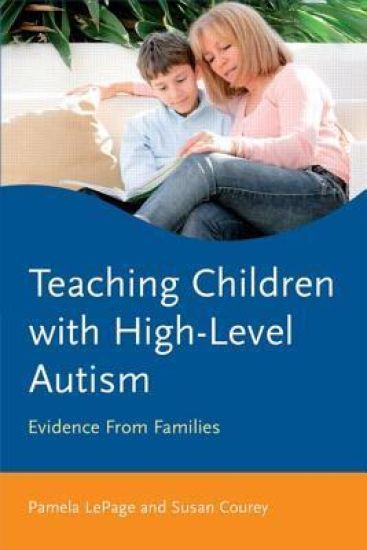
Teaching Children with High-Level Autism combines the perspectives of families and children with disabilities and frames these personal experiences in the context of evidence-based practice, providing pre- and in-service teachers and professionals with vital information on how they can help children with high-level autism reach their full potential. Many children with high-level autism are capable of regulating their behaviors given the right interventions, and this cutting edge text explores multiple methods for helping such children succeed academically, socially, and behaviorally. The book:draws from interviews with twenty families who have middle- and high-school-aged children with high functioning autism or Aspergers syndromepresents a synthesis of the most cutting-edge research in the fieldprovides practical advice for educating children with high-level autismauthored by two special education professors who are also both the parents of children with disabilitiesTeaching Children with High-Level Autism is essential reading for anyone who works or plans to work with children on the upper range of the autism spectrum.
The Classroom Teacher's Guide to Supporting English Language Learners
This book answers your key questions about educating English Language Learners (ELLs) and offers detailed guidance and concrete applications for your classroom. Designed as a one-stop-shop for classroom teachers of all grade levels and content areas, this book is chock full of essential information, delivered in a practical, concise format. In each chapter, you will find checklists, instructional strategies, tables, tools and ideas for next steps. The resources and examples provided are easy to implement and can be used the next day in your teaching. Topics addressed include: Getting to know your ELLs Considering how culture, language and academic background impact learning Bridging the home/school connection Pairing content and language objectives Gauging learner progress Collaborating with ELL staff Much more!
The Revolting French, 1787–1889

The Revolting French, 1787–1889

Pamela Pilbeam

TAYLOR FRANCIS LTD
2023
sidottu
This book investigates the impact of revolution on the French from the Revolution of 1789 to its centenary in 1889. It explores specific and linking factors in the main revolts and how historians have differed in their explanations.Revolution has been explained in a multitude of ways from economic, social and philosophic, to a range of identities including religion, race and gender, contingency, emotions, and most recently global factors. The nineteenth-century French state was threatened by an unprecedented number of revolts. What impact did the 1789 Revolution have on nineteenth-century events? Why were there so many revolutions at the time? Were there common factors? Were non-revolutionary issues as significant or more significant in provoking change? Why was it that insurrection was rarer in the second half of the century when revolutionary rhetoric was more prolific? The book weighs political and philosophical differences, lack of trust and willingness to compromise, economic, social and cultural issues, urban geography, archaeology and contingency. The final section presents some contemporary explanations, written and visual.This book will be essential reading for A-level and undergraduate historians of France and Europe and will be of interest to general readers keen to understand the impact of revolutions in the modern world.
The Classroom Teacher's Guide to Supporting English Language Learners
This book answers your key questions about educating English Language Learners (ELLs) and offers detailed guidance and concrete applications for your classroom. Designed as a one-stop-shop for classroom teachers of all grade levels and content areas, this book is chock full of essential information, delivered in a practical, concise format. In each chapter, you will find checklists, instructional strategies, tables, tools and ideas for next steps. The resources and examples provided are easy to implement and can be used the next day in your teaching. Topics addressed include: Getting to know your ELLs Considering how culture, language and academic background impact learning Bridging the home/school connection Pairing content and language objectives Gauging learner progress Collaborating with ELL staff Much more!
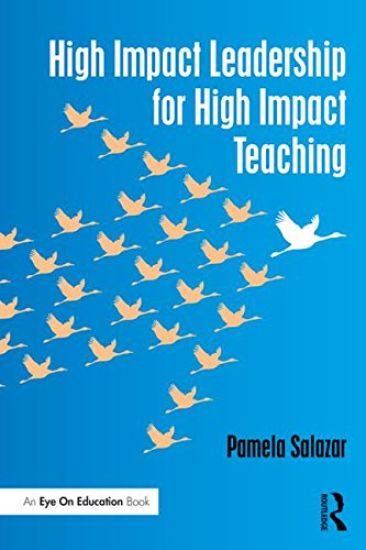
High Impact Leadership for High Impact Teaching
What is a high-impact teacher? One who achieves higher than expected results. And how do those teachers achieve those results? The principal is a critical element in determining the kind of impact the teacher will have on its students. This book presents specific knowledge and practical strategies for school leaders to help teachers reach high standards of excellence.
High Impact Leadership for High Impact Teaching
What is a high-impact teacher? One who achieves higher than expected results. And how do those teachers achieve those results? The principal is a critical element in determining the kind of impact the teacher will have on its students. This book presents specific knowledge and practical strategies for school leaders to help teachers reach high standards of excellence.
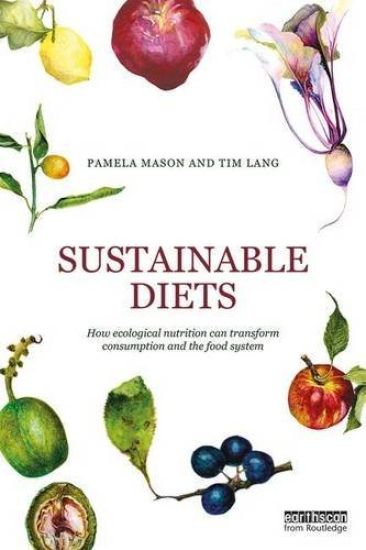
Sustainable Diets

Sustainable Diets

Pamela Mason; Tim Lang

Routledge
2017
sidottu
How can huge populations be fed healthily, equitably and affordably while maintaining the ecosystems on which life depends? The evidence of diet’s impact on public health and the environment has grown in recent decades, yet changing food supply, consumer habits and economic aspirations proves hard. This book explores what is meant by sustainable diets and why this has to be the goal for the Anthropocene, the current era in which human activities are driving the mismatch of humans and the planet. Food production and consumption are key drivers of transitions already underway, yet policy makers hesitate to reshape public eating habits and tackle the unsustainability of the global food system. The authors propose a multi-criteria approach to sustainable diets, giving equal weight to nutrition and public health, the environment, socio-cultural issues, food quality, economics and governance. This six-pronged approach to sustainable diets brings order and rationality to what either is seen as too complex to handle or is addressed simplistically and ineffectually. The book provides a major overview of this vibrant issue of interdisciplinary and public interest. It outlines the reasons for concern and how actors throughout the food system (governments, producers, civil society and consumers) must engage with (un)sustainable diets.
Sustainable Diets

Sustainable Diets

Pamela Mason; Tim Lang

Routledge
2017
nidottu
How can huge populations be fed healthily, equitably and affordably while maintaining the ecosystems on which life depends? The evidence of diet’s impact on public health and the environment has grown in recent decades, yet changing food supply, consumer habits and economic aspirations proves hard. This book explores what is meant by sustainable diets and why this has to be the goal for the Anthropocene, the current era in which human activities are driving the mismatch of humans and the planet. Food production and consumption are key drivers of transitions already underway, yet policy makers hesitate to reshape public eating habits and tackle the unsustainability of the global food system. The authors propose a multi-criteria approach to sustainable diets, giving equal weight to nutrition and public health, the environment, socio-cultural issues, food quality, economics and governance. This six-pronged approach to sustainable diets brings order and rationality to what either is seen as too complex to handle or is addressed simplistically and ineffectually. The book provides a major overview of this vibrant issue of interdisciplinary and public interest. It outlines the reasons for concern and how actors throughout the food system (governments, producers, civil society and consumers) must engage with (un)sustainable diets.
Domesticity and Consumer Culture in Iran
Examining Iran’s recent history through the double lens of domesticity and consumer culture, Domesticity and Consumer Culture in Iran demonstrates that a significant component of the modernization process in Iran advanced beyond political and public spheres.On the cusp of Iran’s entry into modernity, the rules and tenets that had traditionally defined the Iranian home began to vanish and the influx of new household goods gradually led to the substantial physical expansion of the domestic milieu. Subsequently, architects, designers, and commercial advertisers shifted their attention from commercial and public architecture to the new home and its contents. Domesticity and consumer culture also became topics of interest among politicians, Shiite religious scholars, and the Left, who communicated their respective views via the popular media and numerous other means. In the interim, ordinary Iranian families, who were capable of selectively appropriating aspects of their immediate surroundings, demonstrated their resistance toward the officially sanctioned transformations. Through analyzing a series of case studies that elucidate such phenomena and appraising a wide range of objects and archival documents—from furnishings, appliances, architectural blueprints, and maps to photographs, films, TV series, novels, artworks, scrapbooks, work-logs, personal letters and reports—this book highlights the significance of private life in social, economic, and political contexts of modern Iran.Tackling the subject of home from a variety of perspectives, Domesticity and Consumer Culture in Iran thus shows the interplay between local aspirations, foreign influences, gender roles, consumer culture and women’s education as they intersect with taste, fashion, domestic architecture and interior design.
Old and Dirty Gods

Old and Dirty Gods

Pamela Cooper-White

Routledge
2017
sidottu
Freud’s collection of antiquities—his "old and dirty gods"—stood as silent witnesses to the early analysts’ paradoxical fascination and hostility toward religion. Pamela Cooper-White argues that antisemitism, reaching back centuries before the Holocaust, and the acute perspective from the margins that it engendered among the first analysts, stands at the very origins of psychoanalytic theory and practice. The core insight of psychoanalytic thought— that there is always more beneath the surface appearances of reality, and that this "more" is among other things affective, memory-laden and psychological—cannot fail to have had something to do with the experiences of the first Jewish analysts in their position of marginality and oppression in Habsburg-Catholic Vienna of the 20th century. The book concludes with some parallels between the decades leading to the Holocaust and the current political situation in the U.S. and Europe, and their implications for psychoanalytic practice today. Covering Pfister, Reik, Rank, and Spielrein as well as Freud, Cooper-White sets out how the first analysts’ position as Europe’s religious and racial "Other" shaped the development of psychoanalysis, and how these tensions continue to affect psychoanalysis today. Old and Dirty Gods will be of great interest to psychoanalysts as well as religious studies scholars.
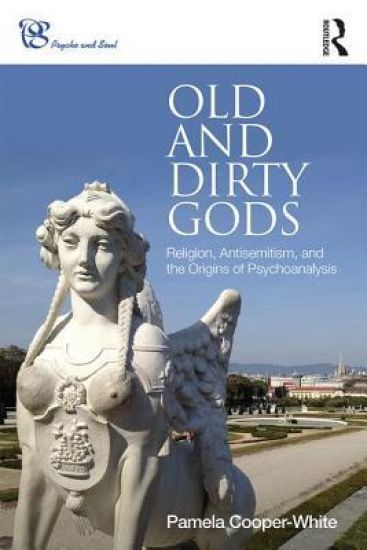
Old and Dirty Gods

Old and Dirty Gods

Pamela Cooper-White

Routledge
2017
nidottu
Freud’s collection of antiquities—his "old and dirty gods"—stood as silent witnesses to the early analysts’ paradoxical fascination and hostility toward religion. Pamela Cooper-White argues that antisemitism, reaching back centuries before the Holocaust, and the acute perspective from the margins that it engendered among the first analysts, stands at the very origins of psychoanalytic theory and practice. The core insight of psychoanalytic thought— that there is always more beneath the surface appearances of reality, and that this "more" is among other things affective, memory-laden and psychological—cannot fail to have had something to do with the experiences of the first Jewish analysts in their position of marginality and oppression in Habsburg-Catholic Vienna of the 20th century. The book concludes with some parallels between the decades leading to the Holocaust and the current political situation in the U.S. and Europe, and their implications for psychoanalytic practice today. Covering Pfister, Reik, Rank, and Spielrein as well as Freud, Cooper-White sets out how the first analysts’ position as Europe’s religious and racial "Other" shaped the development of psychoanalysis, and how these tensions continue to affect psychoanalysis today. Old and Dirty Gods will be of great interest to psychoanalysts as well as religious studies scholars.
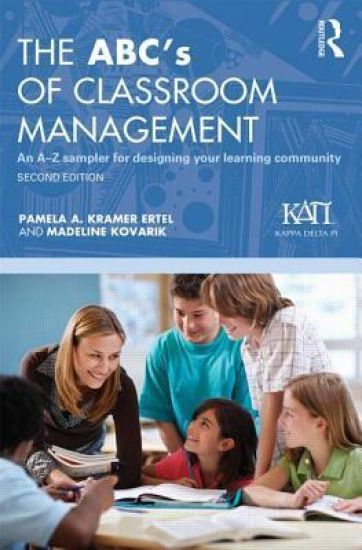
The ABC's of Classroom Management

The ABC's of Classroom Management

Pamela A. Kramer Ertel; Madeline Kovarik

Routledge
2013
nidottu
Co-published with Kappa Delta PiThe ABCs of Classroom Management equips teachers with a repertoire of expert strategies to develop classroom expectations and manage student behaviors. The second edition of this practical, alphabetical guide includes expansions on time-honored topics such as relationship building, communication, discipline, and behavior management, with the addition of new topics such as cyberbullying, violence prevention, social media, and substitute teachers. The newest quick reference to managing a classroom offers tried-and-true tips and specific examples of practical applications in the classroom. Educators who purchase the second edition also can access ABC’s Online to find downloadable forms, samples and checklists, and links to related resources.This edition of The ABC’s of Classroom Management gives future and new educators practical and informative tips and tools for managing their classrooms to apply right away so they can focus on student learning. Underlying the nuts-and-bolts entries of the book are the themes of teacher professionalism, leadership, and empowerment. Armed with a proactive attitude and the right tools that are applied purposefully and consistently, novice teachers develop their craft to become masterful educators.
Counseling Adolescents Through Loss, Grief, and Trauma
Loss, grief, and trauma come into the lives of adolescents in many forms and with more frequency than the adults in their lives may realize. Assessing the depth and nature of their emotions can be difficult; adolescents are typically reluctant to show strong emotions and can be difficult to reach, particularly when they experience the untimely death of a loved one. How best to work with a young person who may have trouble communicating their emotions even under the best of circumstances? And what if he or she has learned about the death of a loved one or classmate from another peer rather than a family member? What about gender differences and the influence of culture and family? What role do cell phones, text messaging, and technologies such as Facebook play in the adolescent grief experience? Adolescents’ use of technology creates unlimited access to friends, support systems, and information, but news that spreads quickly without buffering effects can intensify the strength of the adolescent grief responses. Counseling Adolescents Through Loss, Grief, and Trauma not only examines these issues; it also provides clinicians with a wealth of resources and time-tested therapeutic activities that are sure to become an indispensable part of any clinician’s practice.
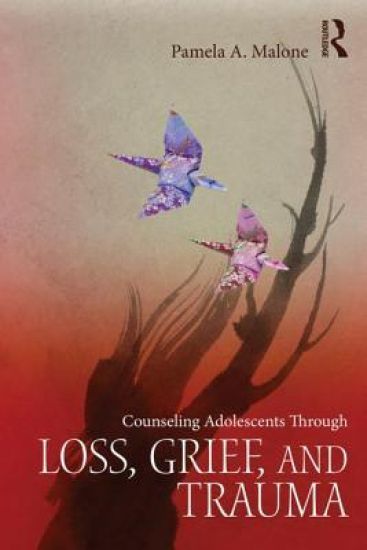
Counseling Adolescents Through Loss, Grief, and Trauma
Loss, grief, and trauma come into the lives of adolescents in many forms and with more frequency than the adults in their lives may realize. Assessing the depth and nature of their emotions can be difficult; adolescents are typically reluctant to show strong emotions and can be difficult to reach, particularly when they experience the untimely death of a loved one. How best to work with a young person who may have trouble communicating their emotions even under the best of circumstances? And what if he or she has learned about the death of a loved one or classmate from another peer rather than a family member? What about gender differences and the influence of culture and family? What role do cell phones, text messaging, and technologies such as Facebook play in the adolescent grief experience? Adolescents’ use of technology creates unlimited access to friends, support systems, and information, but news that spreads quickly without buffering effects can intensify the strength of the adolescent grief responses. Counseling Adolescents Through Loss, Grief, and Trauma not only examines these issues; it also provides clinicians with a wealth of resources and time-tested therapeutic activities that are sure to become an indispensable part of any clinician’s practice.
The Education of the Poor

The Education of the Poor

Pamela Silver; Harold Silver

Routledge
2013
nidottu
Originally published 1974. Thousands of elementary schools for the children of the poor were founded during the nineteenth century, yet there is scarcely a published history of a single one of them. This volume is precisely such a history and the authors trace its story against the background of local and national change in education and society. On the basis of a unique collection of records the authors have pieced together a picture of the social composition of the school, its curriculum and teaching methods, and its administration and finance. They relate the history of the school to that of London and the church, to that of educational authorities and educational policy.
Close Relationships

Close Relationships

Pamela Regan

Routledge
2011
sidottu
This multidisciplinary text introduces the concepts, methodologies, theories, and empirical findings of the field of interpersonal relationships. Information is drawn from psychology, communication, family studies, marriage and family therapy, social work, sociology, anthropology, the health sciences, and other disciplines. Numerous examples capture readers’ attention by demonstrating how the material is relevant to their lives.Active learning is encouraged throughout. Each chapter includes an outline to guide students, key terms and definitions to help identify critical concepts, and exploration exercises to promote active thinking. Many chapters include measurement instruments that students can take and score themselves. A website for instructors features a test bank with multiple-choice and essay questions and Power Points for each chapter.This text distinguishes itself with:Its focus on family and friend relationships as well as romantic relationships.Its multidisciplinary perspective highlighting the contributions to the field from a wide array of disciplines.Its review of the relationship experiences of a variety of people (of different age groups and cultures; heterosexual and homosexual) and relationship types (dating, cohabiting, marriage, friendships, family relationships).Its focus on methodology and research design with an emphasis on how to interpret empirical findings and engage in the research process.Cutting-edge research on "cyber-flirting" and online relationship formation; the biochemical basis of love; communication and social support; bullying and peer aggression; obsession and relational stalking; sexual violence (and marital rape); and grief and bereavement.The book opens by examining the fundamental principles of relationship science along with the research methods commonly used. The uniquely social nature of humans is then explored including the impact relationships have on health and well-being. Part 2 focuses on relationship development—from attraction to initiation to development and maintenance as well as the factors that guide mate choice and marriage. The development of relationships in both friendships and romantic partnerships is explored. Part 3 examines the processes that shape our interpersonal experiences, including cognitive (thinking) and affective (feeling) processes, communicative and supportive processes, and the dynamics of love and sex. The book concludes with relationship challenges—rejection and betrayal; aggression and violence; conflict and loss; and therapeutic interventions.Intended as a text for courses in interpersonal/close relationships taught in psychology, communication, sociology, anthropology, human development, family studies, marriage and family therapy, and social work, practitioners interested in the latest research on personal relationships will also appreciate this engaging overview of the field.
Close Relationships

Close Relationships

Pamela Regan

Routledge
2011
nidottu
This multidisciplinary text introduces the concepts, methodologies, theories, and empirical findings of the field of interpersonal relationships. Information is drawn from psychology, communication, family studies, marriage and family therapy, social work, sociology, anthropology, the health sciences, and other disciplines. Numerous examples capture readers’ attention by demonstrating how the material is relevant to their lives.Active learning is encouraged throughout. Each chapter includes an outline to guide students, key terms and definitions to help identify critical concepts, and exploration exercises to promote active thinking. Many chapters include measurement instruments that students can take and score themselves. A website for instructors features a test bank with multiple-choice and essay questions and Power Points for each chapter.This text distinguishes itself with:Its focus on family and friend relationships as well as romantic relationships.Its multidisciplinary perspective highlighting the contributions to the field from a wide array of disciplines.Its review of the relationship experiences of a variety of people (of different age groups and cultures; heterosexual and homosexual) and relationship types (dating, cohabiting, marriage, friendships, family relationships).Its focus on methodology and research design with an emphasis on how to interpret empirical findings and engage in the research process.Cutting-edge research on "cyber-flirting" and online relationship formation; the biochemical basis of love; communication and social support; bullying and peer aggression; obsession and relational stalking; sexual violence (and marital rape); and grief and bereavement.The book opens by examining the fundamental principles of relationship science along with the research methods commonly used. The uniquely social nature of humans is then explored including the impact relationships have on health and well-being. Part 2 focuses on relationship development—from attraction to initiation to development and maintenance as well as the factors that guide mate choice and marriage. The development of relationships in both friendships and romantic partnerships is explored. Part 3 examines the processes that shape our interpersonal experiences, including cognitive (thinking) and affective (feeling) processes, communicative and supportive processes, and the dynamics of love and sex. The book concludes with relationship challenges—rejection and betrayal; aggression and violence; conflict and loss; and therapeutic interventions.Intended as a text for courses in interpersonal/close relationships taught in psychology, communication, sociology, anthropology, human development, family studies, marriage and family therapy, and social work, practitioners interested in the latest research on personal relationships will also appreciate this engaging overview of the field.