Kirjojen hintavertailu. Mukana 12 016 292 kirjaa ja 12 kauppaa.

Kirjahaku

Etsi kirjoja tekijän nimen, kirjan nimen tai ISBN:n perusteella.

1000 tulosta hakusanalla Paul Tengesdal

Paul Tillich On Creativity

Paul Tillich On Creativity

Jacquelyn Ann K. Kegley

University Press of America
1989
sidottu
This text offers a thorough examination of Paul Tillich's concept of creativity as well as an interpretation of his thoughts by his critics from the past and the present. The volume makes available for the first time, Tillich's powerful, newly translated essay 'The Demonic,' and his essay 'Class Struggle and Religious Socialism,' never before published in English. New areas of concern are explored such as the concept of 'the Feminine' in Tillich's thought as well as his relationship to Alfred North Whitehead. Comment is offered by Manfred O. Meitzen, James Luther Adams, Lewis S. Ford, Ann Belford Ulanov, John E. Smith, and others. Co-published with the Foundation for the Philosophy of Creativity.
Paul H. Nitze on Foreign Policy

Paul H. Nitze on Foreign Policy

Steven Reardon; Kenneth W. Thompson

University Press of America
1989
nidottu
The distinguished New York Times columnist James Reston has observed that few if any Americans have served their government with greater distinction over a longer period of time than President Reagan's Secretary of State on arms control matters, Paul H. Nitze. This volume brings together some of his most important essays, articles, speeches, correspondence, and public papers on foreign policy and national security and arms control.
Paul H. Nitze on National Security and Arms Control

Paul H. Nitze on National Security and Arms Control

Kenneth W. Thompson; Steven L. Rearden

University Press of America
1990
nidottu
This volume makes available to the general public some of Paul H. Nitze's most important papers on foreign policy and national security and arms control. Divided into three chapters, 'Strategy and Security,' 'The Military Component of National Security,' and 'The Arms Control Component of National Security,' this volume contains letters, reports, transcripts of speeches, and Nitze's comments on speeches made by other policy makers and officials involved with national security.
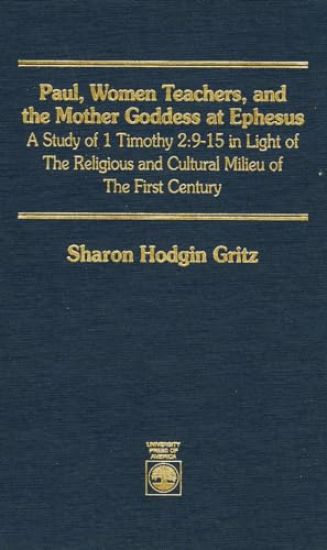
Paul, Women Teachers, and the Mother Goddess at Ephesus

Paul, Women Teachers, and the Mother Goddess at Ephesus

Sharon Hodgin Gritz

University Press of America
1991
sidottu
The book examines in detail 1 Timothy 2:9-15 by analyzing its various contexts from the broader historical context including culture and religion to the narrower biblical context including the Old and New Testaments, Pastoral Epistles, and the passage itself. In this approach, the book becomes a model for proper hermeneutics.
Paul, Women Teachers, and the Mother Goddess at Ephesus

Paul, Women Teachers, and the Mother Goddess at Ephesus

Sharon Hodgin Gritz

University Press of America
1991
nidottu
The book examines in detail 1 Timothy 2:9-15 by analyzing its various contexts from the broader historical context including culture and religion to the narrower biblical context including the Old and New Testaments, Pastoral Epistles, and the passage itself. In this approach, the book becomes a model for proper hermeneutics.
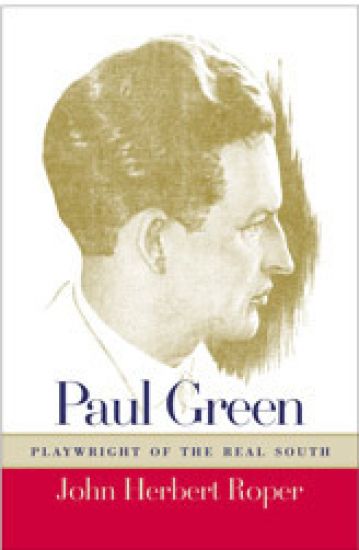
Paul Green, Playwright of the Real South

Paul Green, Playwright of the Real South

John Herbert Roper

University of Georgia Press
2003
sidottu
This is the most thorough and comprehensive biography to date of writer and activist Paul Green (1894-1981). Winner of the Pulitzer Prize for his play In Abraham's Bosom and author of the pioneering symphonic drama The Lost Colony, Green was a literary figure of national prominence during the 1920s and 1930s. During this time of experimentation and boldness in American theater, Green was praised by directors and critics, had a play chosen three times for the collection Year's Best Plays, and gained the respect of African American actors longing for meaningful roles.Green's personal and political convictions fully complemented the social-realist leanings of his art, a literary output comprising plays in many forms, essays, folklore collections, novels, and film scripts. In places like his native North Carolina, Green stood apart even from other proponents of integration by claiming that sexual as well as social intermingling of the races was a natural occurrence in human society.Drawing on his complete access to Green's papers and on interviews with surviving family members, John Herbert Roper covers all the important aspects of Green's life and career—his childhood, military service, education, travels, and marriage, as well as his many literary undertakings and friendships.By word and deed, Paul Green spread the faith of liberalism across the New South, which he insistently called the "Real South." Long after literary fashion had left him behind, he wrote daily and remained at the forefront of causes concerning race relations, militarism, women's and workers' rights, and capital punishment. As an artist and an individual, Green set an early and enduring standard of courage and forthrightness.
Paul Valery

Paul Valery

William Kluback

Peter Lang Publishing Inc
1999
nidottu
This is William Kluback's sixth volume on Paul Valery. As Kluback moved from one volume to another, he realized how Valery mastered the human mind; how he saw in it man's most distinguished power. In face of the Gulags and the Holocaust, of mass murder, and universal deception, Valery maintained his faith in rationality. In this faith of reason, he found the strength to continue his work. We study him because we believe that rationality is our guide and protector."
Paul Valery

Paul Valery

William Kluback

Peter Lang Publishing Inc
2000
nidottu
who is absorbed by science and medicine. This is William Kluback's seventh volume in a series of studies on Paul Val ry. This book shows how Val ry went beyond philosophy to wisdom. His achievement was so rare that we remain fascinated by his writings. We see in him a man whose constructions build bridges from one human endeavor. He is a poet who is absorbed by science and medicine.
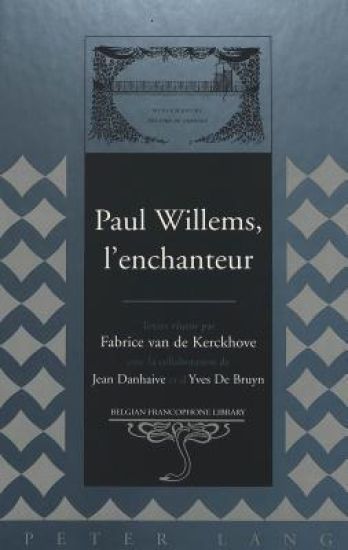
Paul Willems, L'enchanteur

Paul Willems, L'enchanteur

Peter Lang Publishing Inc
2003
sidottu
Romancier, nouvelliste, essayiste et dramaturge, Paul Willems (1912-1997) est l'une des figures majeures de la litterature belge de langue francaise. Des inedits de l'ecrivain - correspondences et carnets - ouvrent ce volume d'hommage, qui joint a des temoignages sur l'homme et l'ecrivain un ensemble d'etudes originales, dues a quelques-uns des meilleurs connaisseurs de l'oeuvre. Celle-ci est abordee sous un angle tour a tour comparatiste, thematique et formel: affinites avec le theatre italien du grotesque, verite des mannequins et autres faux-semblants, traitement singulier de la voix dans le dernier theatre de l'auteur, infiltration du dramatique par le narratif et composition poetique des recits, nostalgies fusionnelles et aquatiques traduites dans une prose fluide qui suggere, par bribes et reflets, la promesse d'un paradis entrevu dans l'instant.
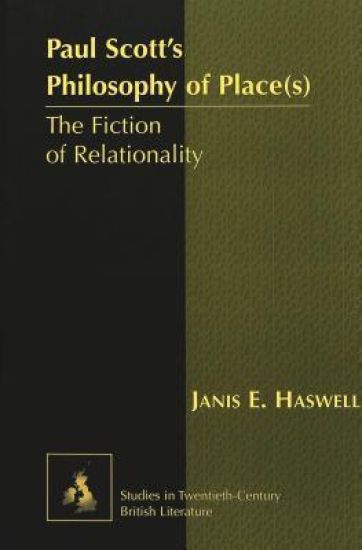
Paul Scott's Philosophy of Place(s)

Paul Scott's Philosophy of Place(s)

Janis E. Haswell

Peter Lang Publishing Inc
2002
sidottu
This revisionist study of the novels of Paul Scott breaks new ground in literary and postcolonial discourse. Using previously unpublished archival materials and contemporary place theory as fulcrums to examine Scott's narrative method, Janis E. Haswell examines what she calls Scott's narrative of relationality - his mastery of multiple perspective and juxtaposition of images, characters, sites, and events. This book shows how the theme of connection valorizes the singular self and the cohesive power of life-narratives in the Raj Quartet and earlier works. Scott's philosophy of place(s) relates both to England's imperial past and, more broadly, to contemporary views of self and identity.
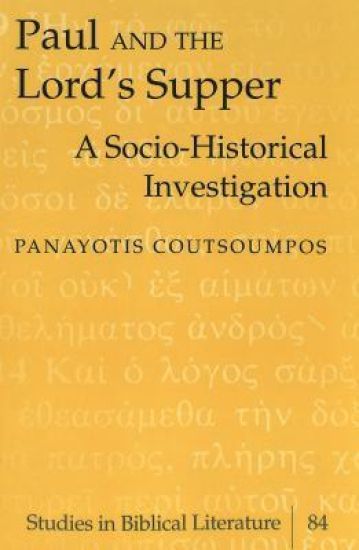
Paul and the Lord's Supper

Paul and the Lord's Supper

Panayotis Coutsoumpos

Peter Lang Publishing Inc
2005
nidottu
Most of Paul's letters, especially First Corinthians, were written in the context of conflict with troublemaking opponents and the social dilemma at the Lord's Supper in Corinth. First Corinthians provides a unique glimpse into the social custom of the Christian congregation in a Greaco-Roman environment during the early years of the Christian Church. Much effort has gone into reconstructing what happened at the Lord's Supper and the social issues that were involved. More recently, attention has focused on the Corinthian congregation itself and how Paul solved the issue of idol food and dining in a pagan temple.
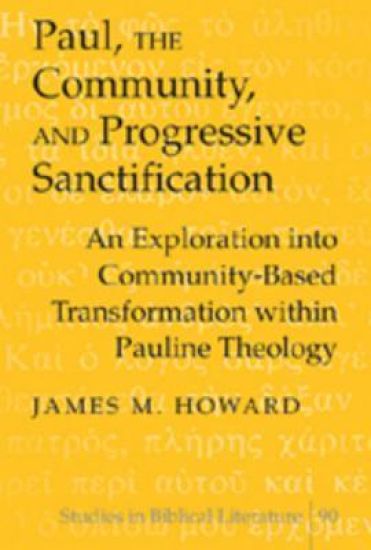
Paul, the Community, and Progressive Sanctification

Paul, the Community, and Progressive Sanctification

James M. Howard

Peter Lang Publishing Inc
2006
sidottu
What role does the Christian community play in the process of growing in Christian maturity? This book argues that in Pauline theology the redeemed community is a necessary means for the progressive sanctification of the individual believer, an idea that is largely misunderstood in parts of the Western church. It evaluates foundational theological considerations traditionally omitted from sanctification studies and places them within the context of Pauline theology. Included are the missiological nature of holiness, the initiatory character of God, the creation of the new humanity as reflecting the image of God, and the impact upon the church resulting from the radical redefinition by Christ of the cultural symbols surrounding the Jewish temple system. This book offers a corrective to the individualized approach to Christian growth: For Paul, the focus of God's transformative activity culminates with the community rather than the individual, the goal of which is to reveal God's glory to the broader creation.
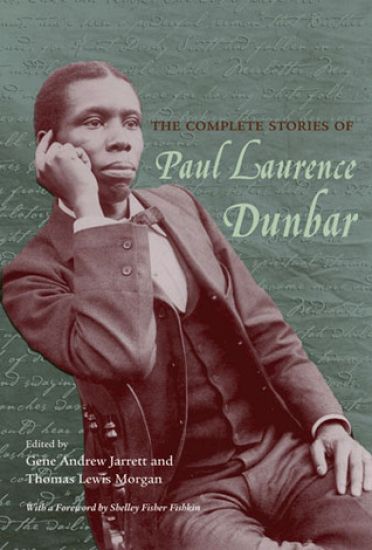
The Complete Stories of Paul Laurence Dunbar

The Complete Stories of Paul Laurence Dunbar

Paul Laurence Dunbar

Ohio University Press
2005
sidottu
The son of former slaves, Paul Laurence Dunbar was one of the most prominent figures in American literature at the turn of the twentieth century. Thirty-three years old at the time of his death in 1906, he had published four novels, four collections of short stories, and fourteen books of poetry, as well as numerous songs, plays, and essays in newspapers and magazines around the world. In the century following his death, Dunbar slipped into relative obscurity, remembered mainly for his dialect poetry or as a footnote to other more canonical figures of the period. The Complete Stories of Paul Laurence Dunbar showcases his gifts as a writer of short fiction and provides key insights into the tensions and themes of Dunbar's literary achievement. The 104 stories written by Dunbar between 1890 and 1905 reveal Dunbar's attempts to maintain his artistic integrity while struggling with America's racist stereotypes. Making them available for the first time in one convenient, comprehensive, and definitive volume, The Complete Stories of Paul Laurence Dunbar illustrates the complexity of his literary life and legacy.
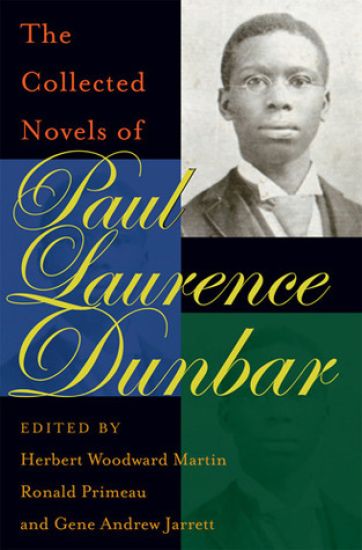
The Collected Novels of Paul Laurence Dunbar

The Collected Novels of Paul Laurence Dunbar

Paul Laurence Dunbar

Ohio University Press
2009
sidottu
At long last, critics, scholars, and lovers of fiction can experience the full range and imaginative powers of the collected novels of Paul Laurence Dunbar (1872–1906). In these four novels, readers can explore the characters, landscape, atmosphere, and visionary sensibilities of this preeminent African American writer. In the prime of his literary career, between 1898 and 1902, Dunbar published The Uncalled, The Love of Landry, The Fanatics, and The Sport of the Gods. Despite widespread critical interest, the novels have been largely subordinated to his short stories and poetry. The Collected Novels of Paul Laurence Dunbar redresses this imbalance by showing that the novels are also reflections of his exceptional literary talent. While correcting and standardizing the texts, the editors describe the major forms and themes of the novels, putting them in the proper contexts of Dunbar's creativity, his professional career, and his place in American literary history. Each novel explores, in varying degrees, the issues of race, class, politics, region, morality, and spirituality and challenges the assumption that black novelists should cast only blacks as main characters and as messengers of racial-political unity. The Collected Novels of Paul Laurence Dunbar presents all four novels under one cover for the first time, allowing readers to assess why he was such a seminal influence on the twentieth century African American writers who followed him into the American canon. The Collected Novels of Paul Laurence Dunbar will interest students, teachers, scholars, and general readers for generations to come.
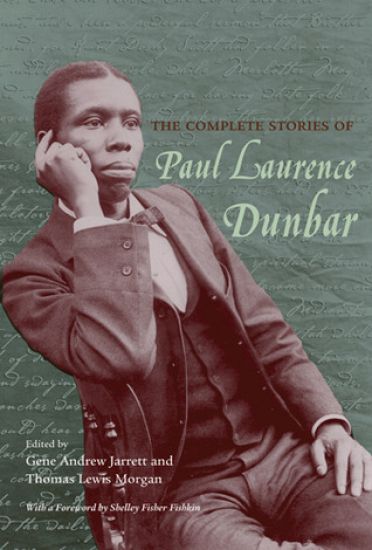
The Complete Stories of Paul Laurence Dunbar

The Complete Stories of Paul Laurence Dunbar

Paul Laurence Dunbar

Ohio University Press
2009
pokkari
The son of former slaves, Paul Laurence Dunbar was one of the most prominent figures in American literature at the turn of the twentieth century. Thirty-three years old at the time of his death in 1906, he had published four novels, four collections of short stories, and fourteen books of poetry, as well as numerous songs, plays, and essays in newspapers and magazines around the world. In the century following his death, Dunbar slipped into relative obscurity, remembered mainly for his dialect poetry or as a footnote to other more canonical figures of the period. The Complete Stories of Paul Laurence Dunbar showcases his gifts as a writer of short fiction and provides key insights into the tensions and themes of Dunbar's literary achievement. The 104 stories written by Dunbar between 1890 and 1905 reveal Dunbar's attempts to maintain his artistic integrity while struggling with America's racist stereotypes. Making them available for the first time in one convenient, comprehensive, and definitive volume, The Complete Stories of Paul Laurence Dunbar illustrates the complexity of his literary life and legacy.
The Collected Novels of Paul Laurence Dunbar

The Collected Novels of Paul Laurence Dunbar

Paul Laurence Dunbar

Ohio University Press
2009
pokkari
At long last, critics, scholars, and lovers of fiction can experience the full range and imaginative powers of the collected novels of Paul Laurence Dunbar (1872–1906). In these four novels, readers can explore the characters, landscape, atmosphere, and visionary sensibilities of this preeminent African American writer. In the prime of his literary career, between 1898 and 1902, Dunbar published The Uncalled, The Love of Landry, The Fanatics, and The Sport of the Gods. Despite widespread critical interest, the novels have been largely subordinated to his short stories and poetry. The Collected Novels of Paul Laurence Dunbar redresses this imbalance by showing that the novels are also reflections of his exceptional literary talent. While correcting and standardizing the texts, the editors describe the major forms and themes of the novels, putting them in the proper contexts of Dunbar's creativity, his professional career, and his place in American literary history. Each novel explores, in varying degrees, the issues of race, class, politics, region, morality, and spirituality and challenges the assumption that black novelists should cast only blacks as main characters and as messengers of racial-political unity. The Collected Novels of Paul Laurence Dunbar presents all four novels under one cover for the first time, allowing readers to assess why he was such a seminal influence on the twentieth century African American writers who followed him into the American canon. The Collected Novels of Paul Laurence Dunbar will interest students, teachers, scholars, and general readers for generations to come.
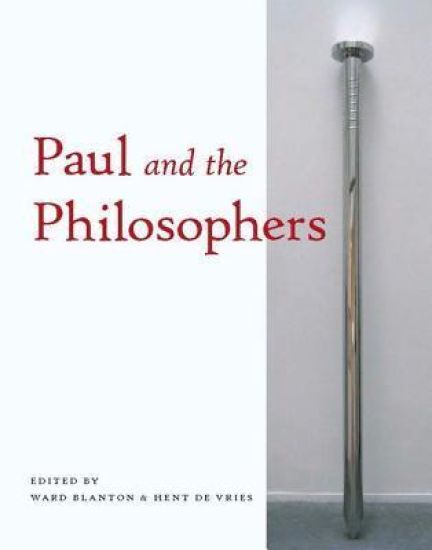
Paul and the Philosophers

Paul and the Philosophers

Fordham University Press
2013
sidottu
The apostle Paul has reemerged as a force on the contemporary philosophical scene. Some of the most powerful recent affirmations of nonrepresentational, materialist, and event-oriented philosophies repeat topics and tropes of the ancient apostle. Paul is appropriated both for and against Kantian cosmopolitanism, psychoanalytic models of subjectivity and power, Schmittian political theologies, Derridean messianism, political universalism, and an ongoing refashioning of identity politics within postsecular contexts. This book provides the most comprehensive constellation to date of current thinking about Paul and his cultural or philosophical "afterlives" in ancient, modern, and contemporary contexts.
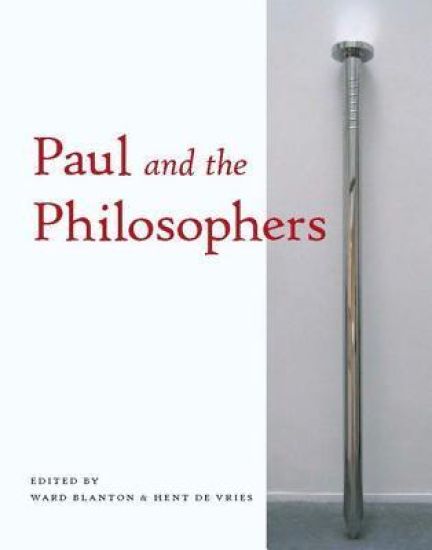
Paul and the Philosophers

Paul and the Philosophers

Fordham University Press
2013
pokkari
The apostle Paul has reemerged as a force on the contemporary philosophical scene. Some of the most powerful recent affirmations of nonrepresentational, materialist, and event-oriented philosophies repeat topics and tropes of the ancient apostle. Paul is appropriated both for and against Kantian cosmopolitanism, psychoanalytic models of subjectivity and power, Schmittian political theologies, Derridean messianism, political universalism, and an ongoing refashioning of identity politics within postsecular contexts. This book provides the most comprehensive constellation to date of current thinking about Paul and his cultural or philosophical "afterlives" in ancient, modern, and contemporary contexts.
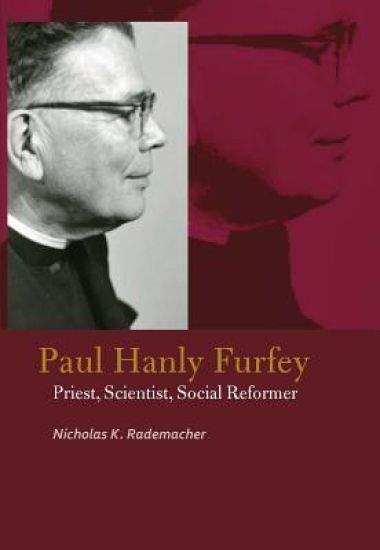
Paul Hanly Furfey

Paul Hanly Furfey

Nicholas K. Rademacher

Fordham University Press
2017
sidottu
Nicholas Rademacher's book is meticulously researched and clearly written, shedding new light on Monsignor Paul Hanly Furfey's life by drawing on Furfey's copious published material and substantial archival deposit. Paul Hanly Furfey (1896–1992) is one of U.S. Catholicism's greatest champions of peace and social justice. He and his colleagues at The Catholic University of America offered a revolutionary view of the university as a center for social transformation, not only in training students to be agents for social change but also in establishing structures which would empower and transform the communities that surrounded the university. In part a response to the Great Depression, their social settlement model drew on the latest social scientific research and technique while at the same time incorporating principles they learned from radical Catholics like Dorothy Day and Catherine de Hueck Doherty. Likewise, through his academic scholarship and popular writings, Furfey offered an alternative vision of the social order and identified concrete steps to achieve that vision. Indeed, Furfey remains a compelling exemplar for anyone who pursues truth, beauty, and justice, especially within the context of higher education and the academy. Leaving behind an important legacy for Catholic sociology, Furfey demonstrated how to balance liberal, radical, and revolutionary social thought and practice to elicit new approaches to social reform.
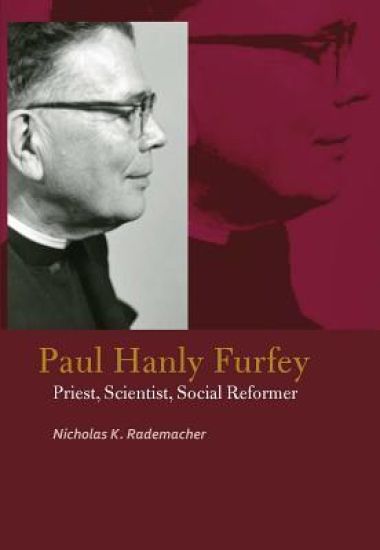
Paul Hanly Furfey

Paul Hanly Furfey

Nicholas K. Rademacher

Fordham University Press
2017
pokkari
Nicholas Rademacher's book is meticulously researched and clearly written, shedding new light on Monsignor Paul Hanly Furfey's life by drawing on Furfey's copious published material and substantial archival deposit. Paul Hanly Furfey (1896–1992) is one of U.S. Catholicism's greatest champions of peace and social justice. He and his colleagues at The Catholic University of America offered a revolutionary view of the university as a center for social transformation, not only in training students to be agents for social change but also in establishing structures which would empower and transform the communities that surrounded the university. In part a response to the Great Depression, their social settlement model drew on the latest social scientific research and technique while at the same time incorporating principles they learned from radical Catholics like Dorothy Day and Catherine de Hueck Doherty. Likewise, through his academic scholarship and popular writings, Furfey offered an alternative vision of the social order and identified concrete steps to achieve that vision. Indeed, Furfey remains a compelling exemplar for anyone who pursues truth, beauty, and justice, especially within the context of higher education and the academy. Leaving behind an important legacy for Catholic sociology, Furfey demonstrated how to balance liberal, radical, and revolutionary social thought and practice to elicit new approaches to social reform.