How the discovery of a harmless leak of radiation sparked a media firestorm, political grandstanding, and fearmongering that closed a vital scientific facility. In 1997, scientists at Brookhaven National Laboratory found a small leak of radioactive water near their research reactor. Brookhaven was--and is--a world-class, Nobel Prize-winning lab, and its reactor was the cornerstone of US materials science and one of the world's finest research facilities. The leak, harmless to health, came from a storage pool rather than the reactor. But its discovery triggered a media and political firestorm that resulted in the reactor's shutdown, and even attempts to close the entire laboratory. A quarter century later, the episode reveals the dynamics of today's controversies in which fears and the dismissal of science disrupt serious discussion and research of vital issues such as vaccines, climate change, and toxic chemicals. This story has all the elements of a thriller, with vivid characters and dramatic twists and turns. Key players include congressmen and scientists; journalists and university presidents; actors, supermodels, and anti-nuclear activists, all interacting and teaming up in surprising ways. The authors, each with insider knowledge of and access to confidential documents and the key players, reveal how a fact of no health significance could be portrayed as a Chernobyl-like disaster. This compelling expos reveals the gaps between scientists, politicians, media, and the public that have only gotten more dangerous since 1997. Peter Bond is a retired physicist who worked at Brookhaven National Laboratory for 43 years in a wide variety of roles, including interim laboratory director during much of the period covered by this book.
An exploration of the neurological and behavioral mechanisms and processes involved in intrusive thinking.On any given day, unintended, recurrent thoughts intrude on our thinking and affect our behavior in ways that can be adaptive. Such thoughts, however, become intrusive and problematic when they are unwanted, become compulsive, or lead to socially or medically unacceptable behavior. This volume explores what goes on in our brains to create thought intrusions, and how these instrusions lead to maladaptive behavior.
Introduction: Dedication to Herb Hultgren. Preface. Acknowledgements. Contributors. Table of Contents. Mountain Medicine: 1. Herb Hultgren in Peru: What Causes High Altitude Pulmonary Edema? D. Rennie. 2. High Altitude Cerebral Edema and Acute Mountain Sickness: A Pathophysiology Update; P.H. Hackett. 3. Lung Disease at High Altitude; R.B. Schoene. 4. Commuting to High Altitude; J.B. West. 5. The Pregnant Altitude Visitor; S. Niermeyer. High Altitude Pulmonary Edema: 6. High Altitude Edema: Introduction; P. B rtsch. 7. Pulmonary Hemodynamics: Implications for High Altitude Pulmonary Edema (HAPE); J. Simon, R. Gibbs. 8. High-Altitude Pulmonary Edema: From Exaggerated Pulmonary Hypertension to a Defect in Transepithelial Sodium Transport; U. Scherrer, et al. Frontiers in Neuroscience: The Blood-Brain Barrier: 9. Frontiers in Neuroscience: Introduction; J.A. Krasney. 10. What is the Blood-Brain Barrier? A Molecular Perspective; L.R. Drewes. 11. Mediators of Cerebral Edema; L. Schilling; M. Wahl. Frontiers in Neuroscience: The Hypoxic Brain: 12. The Hypoxic Brain: Introduction; T.F. Hornbein. 13. High Altitude Headache; M. Sanchez del Rio, M.A. Moskowitz. 14. The Hypoxic Brain: Insights from Ischemia; K.-A. Hossmann. 15. Food for Thought: Altitude versus Normal Brain Function; M.E. Raichle. Hypoxia and Lactate: New Insights: 16. Are Arterial, Muscle and Working Limb Lactate Exchange Data Obtained on Men at Altitude Consistent with the Hypothesis of anIntracellular Lactate Shuttle? G.A. Brooks. 17. Role of Pyruvate Dehydrogenase in Lactate Production in Exercising Human Skeletal Muscle; G.J.F. Heigenhauser, M.L. Parolin. 18. Cross-Species Studies of Glycolytic Function; P.W. Hochachka. Hypoxia and Regulation of Vascular Growth: 19. Hypoxia Induces Cell-Specific Changes in Gene Expression in Vascular Wall Cells: Implications for Pulmonary Hypertension; K.R. Stenmark, et al. 20. Oxygen and Placental Vascular Development; J.C.P. Kingdom, P. Kaufmann. 21. Vascular Growth in Hypoxic Skeletal Muscle; H. Hoppeler. Human Physiology in Extreme Hypoxia: 22. Recent Advances in Human Physiology at Extreme Altitude; J.B. West. 23. Operation Everest III (COMEX '97); J.-P. Richalet, et al. 24. Dynamic Cerebral Autoregulation at High Altitude; B.D. Levine, et al. 25. Kangchenjunga 1998; A. Nickol, D. Collier. 26. Why Does the Exercise Cardiac Output Fall During Altitude Residence and Is It Important? J.T. Reeves. Chronic Mountain Sickness Consensus Group: 27. International Consensus Group on Chronic Mountain Sickness; F. Leon-Velarde, J.T. Reeves. Tribute to Niels Lassen: 28. Niels Lassen; J.W. Severinghaus. Abstracts: 29. Abstracts from the 11th International Hypoxia Symposium. Subject Index. Author Index.
Economists, geographers and surveyors are beginning to recognise the powerful tool which a Geographical Information System (GIS) offers in effective property management. It provides a means of managing land and property information digitally and in a geographical context, and allows for rapid access to information and a means of analyzing that information in a geographical context.GIS in Land and Property Management shows how to use GIS, both in principle and in practice. It introduces digital mapping and GIS, along with a brief history of the development of GIS and LIS, all with an emphasis on property. In presenting the spectrum of GIS applications in property management it gives a number of case studies from a variety of market sectors, and it analyzes the issues to provide guidance and a number of recommendations for the implementation of GIS. At the same time common themes and issues are drawn out to present a coherent message for students and practitioners.The book is useful for undergraduate and postgraduate students on land management, built environment, economics and geography courses, and for property professionals, in both public and private sectors, looking to GIS as a property management decision aid.
Economists, geographers and surveyors are beginning to recognise the powerful tool which a Geographical Information System (GIS) offers in effective property management. It provides a means of managing land and property information digitally and in a geographical context, and allows for rapid access to information and a means of analyzing that information in a geographical context.GIS in Land and Property Management shows how to use GIS, both in principle and in practice. It introduces digital mapping and GIS, along with a brief history of the development of GIS and LIS, all with an emphasis on property. In presenting the spectrum of GIS applications in property management it gives a number of case studies from a variety of market sectors, and it analyzes the issues to provide guidance and a number of recommendations for the implementation of GIS. At the same time common themes and issues are drawn out to present a coherent message for students and practitioners.The book is useful for undergraduate and postgraduate students on land management, built environment, economics and geography courses, and for property professionals, in both public and private sectors, looking to GIS as a property management decision aid.
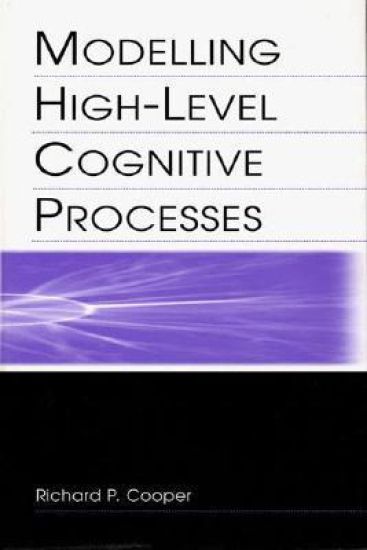
This book is a practical guide to building computational models of high-level cognitive processes and systems. High-level processes are those central cognitive processes involved in thinking, reasoning, planning, and so on. These processes appear to share representational and processing requirements, and it is for this reason that they are considered together in this text. The book is divided into three parts. Part I considers foundational and background issues. Part II provides a series of case studies spanning a range of cognitive domains. Part III reflects upon issues raised by the case studies. Teachers of cognitive modeling may use material from Part I to structure lectures and practical sessions, with chapters in Part II forming the basis of in-depth student projects. All models discussed in this book are developed within the COGENT environments. COGENT provides a graphical interface in which models may be sketched as "box and arrow" diagrams and is both a useful teaching tool and a productive research tool. As such, this book is designed to be of use to both students of cognitive modeling and active researchers. For students, the book provides essential background material plus an extensive set of example models, exercises and project material. Researchers of both symbolic and connectionist persuasions will find the book of interest for its approach to cognitive modeling, which emphasizes methodological issues. They will also find that the COGENT environment itself has much to offer.
This atlas describes the histologic changes relevant to the modern practice of forensic pathology. It guides the reader through the common questions that the forensic pathologist will need to answer in relation to the cause of death, such as: is this feature artifact or is this real? What does this signify? How old is this injury? The book focuses on key issues of forensic importance - e.g. sudden death, environmental deaths, injury timing and suspected child abuse. The book is highly illustrated with color photographs to increase the understanding of changes related to disease, decomposition and artifact. All illustrations are also available on a CD-ROM packaged with the print book. Ideal as a source of quick reference next to the microscope, this is essential reading for forensic pathologists, forensic pathology fellows, pathologists who consult in forensic cases, pathology residents, autopsy pathologists, coroners and forensic investigators.
Theory of Dislocations provides unparalleled coverage of the fundamentals of dislocation theory, with applications to specific metal and ionic crystals. Rather than citing final results, step-by-step developments are provided to offer an in-depth understanding of the topic. The text provides the solid theoretical foundation for researchers to develop modeling and computational approaches to discrete dislocation plasticity, yet it covers important experimental observations related to the effects of crystal structure, temperature, nucleation mechanisms, and specific systems. This new edition incorporates significant advances in theory, experimental observations of dislocations, and new findings from first principles and atomistic treatments of dislocations. Also included are new discussions on thin films, deformation in nanostructured systems, and connection to crystal plasticity and strain gradient continuum formulations. Several new computer programs and worked problems allow the reader to understand, visualize, and implement dislocation theory concepts.
The Systems of the Body series has established itself as a highly valuable resource for medical and other health science students following today’s systems-based courses. Now thoroughly revised and updated in this third edition, each volume presents the core knowledge of basic science and clinical conditions that medical students need, providing a concise, fully integrated view of each major body system that can be hard to find in more traditionally arranged textbooks or other resources. Multiple case studies help relate key principles to current practice, with links to clinical skills, clinical investigation and therapeutics made clear throughout. Each (print) volume also now comes with access to the complete, enhanced eBook version, offering easy anytime, anywhere access - as well as self-assessment material to check your understanding and aid exam preparation. The Endocrine System provides highly accessible coverage of the core basic science principles in the context of clinical case histories, giving the reader a fully integrated understanding of the system and its major diseases. Introduction Receptors and Hormone Action The Hypothalamus and Pituitary Part I: The Hypothalamus and Posterior Pituitary4 The Hypothalamus and Pituitary Part II: The Anterior Pituitary The Adrenal Glands Part I: The Adrenal Medulla The Adrenal Glands Part II: The Adrenal Cortex The Thyroid Gland Hormonal Control of Reproduction Part I: Male Reproductive System Hormonal Control of Reproduction Part II: Female Reproductive System Hormonal Control of Reproduction Part III: Development and Fertility Insulin and the Regulation of Plasma Glucose Hormonal Regulation of Plasma Calcium and Calcium Metabolism Miscellaneous Hormones Systems of the Body Series: The Renal System The Musculoskeletal System The Nervous System The Digestive System The Endocrine System The Respiratory System The Cardiovascular System
The world's 58 poorest countries are diverse in many respects, but they share the characteristic of a labor force overwhelmingly dependent on agriculture. Challenging the assumption that mass poverty and chronic hunger are insoluble problems, this book systematically explores the multiple aspects of economic development in these countries, which are home to 60 percent of the world's population. The authors offer a broad-based development strategy to raise incomes through agricultural productivity growth and expanded rural employment. They present rich new information on the rural informal sector and on agriculture-industry interactions, and they analyze the impact of macroeconomic and social policies on the rural economy. Policy instruments aimed at bringing about broad-based development are carefully assessed from fiscal policy to development of hew seeds and farm implements. The book includes detailed case studies of countries that have seized—or missed—development opportunities. Comparison of the successful economic transformations of Japan and the United States shows how key ideas, which the authors call strategic notions, have enabled policymakers to act with foresight. Analyses of strategic choices in China, the Soviet Union, Taiwan, Mexico, Kenya, and Tanzania also show how development strategies that emerge from the real-world political economy reflect a mix of individual interests and strategic notions.
[The book] provides guidance on how managers can use theory to influence themselves and others. . . . Achieves its purpose quite well. . . . Each chapter in the Sims and Lorenzi book provides practical guidelines for management behavior. --Administration in Social Work "I began this book with considerable interest, an interest sustained throughout. . . . What makes this book especially valuable is that it deals with some of the most powerful psychological findings in the last 50 years. . . . There has not been a complete treatment of learning, reinforcement, social learning, and cognition available for the business and managerial audience. This book fills that gap admirably. . . . The continual use of situational vignettes makes the abstract theory concrete and useful. . . . The book's usefulness is enhanced with the frequent use of charts and graphs and 'write bites,' summary capsules sprinkled throughout the work. . . . There is much to be gained from a deep reading as many of the concepts have profound implications for management and management style. . . . This is an up-to-date and thorough work of solid scholarship which is a welcome addition to the management-practitioner literature and well worth the investment for those desiring a cogent and expansive interpretation of social learning and cognition as it applies to management. . . . It will be most beneficial for those wishing to develop corporate training programs or for managers themselves." --Academy of Management Executive "It is written for a multifaceted readership including researchers, executives, undergraduates, and graduate students and college professors, and its discussion of social learning and cognition in organizations is, as the authors set out to achieve, 'theoretically sound and eminently practical.' . . . Part II of the book, which contains five chapters, provides a thorough examination of reinforcement theory in organizations, followed by Part III which delivers a comprehensive discussion of goal setting. . . . Sims and Lorenzi provide excellent vignettes which enliven what otherwise could become a barrage of unfamiliar terms and vocabulary for the novice. Readers will appreciate the implications for day-to-day leadership that are included in several recommendations/tips at the conclusion, as well as the lengthy, but important, discussion of the ethics of influencing behavior. The end-of-chapter notes are valuable, up-to-date and comprehensive. . . . For readers weary of pop-management literature but not eager for academic tomes, and who at the same time seek a framework of sound theory around which to build their notions of empowerment and leadership, The New Leadership Paradigm is an excellent choice." --Review of Public Personnel Administration "This is, without doubt, one of the most practical and informative books on leadership I have read. Perhaps it's a latent scientific-practitioner inclination, but the most notable feature, in my view, is the excellent balance between theory and application provided by the authors. The book organizes theory and research into easily grasped and immediately applicable techniques for directing, motivating, and influencing subordinates. Short and well-placed vignettes depict believable managerial situations that clearly demonstrate the useful techniques and concepts. There is something in the book for everyone--practitioner, researcher, senior executive, beginning and advanced student of organization behavior. "As the title indicates, this book offers a 'new paradigm' of leadership. The approach is new in that the authors examine contemporary management practices and philosophies of high involvement, empowerment, and self-management within the context of four social learning and cognition theories. . . . Though a lot of popular books have appeared on the topic, I've not seen a clearer and more practical presentation of skills, techniques, and concepts for achieving employee involvement, self-management, and building high involvement organizations. "This is an excellent book. For someone looking for a theoretically sound and pragmatic guidebook on leadership and performance management, this one is a good bet. I liked it for three reasons. First, the principles are sound. The techniques and strategies are well researched and have firm footings in the behavioral sciences. "Second, the material is very well written. It is concise yet complete. It effectively organizes theoretical principles with practical application, resulting in a clear understanding of behavior and how to effectively and ethically influence it. In doing so the book should appeal to a very broad audience. It should easily serve the needs of the aspiring manager, senior executive, research scientist, and student of organizational behavior. Each chapter can stand alone providing the practitioner with sound tips and tools for managing more effectively or the researcher with a solid grounding in current theoretical principles and research. "Finally, I like the philosophy of the book. The approach advocated replaces the outmoded practices of tight managerial control and assumes that people have the capability for self-control and self-management. The challenge put forth by the authors is for leaders to model self-management and encourage and reinforce self-management behavior of subordinates. The techniques for doing so are presented clearly and concisely in the book. . . . The book offers excellent insight, tools, and strategies for empowering people, promoting self-management, and building high involvement organizations." --Personnel Psychology "This useful book . . . provide[s] an expertly conducted tour through the tangle of reinforcement and cognitive theories, neatly combine(s) them, and illustrate[s] with numerous examples how the unified theory can be applied. As a theoretical and practical guide to leadership theory and practice, Sims and Lorenzi's very readable book will amply reward academic readers as well as practitioners." --Choice "A badly needed new look at leadership. It should help managers be more effective in the high involvement organizations of the future." --Edward S. Lawler III, Director, Center for Effective Organizations, Graduate School of Business Administration, University of Southern California "Sims and Lorenzi have come forth with a much-needed and long-sought treatment of the managerial applications of social learning and social cognition models. Deftly combining theory with vignettes that crackle with realism, they offer a superb medium that will entertain as well as inform. Every page reflects both craftsmanship and imagination." (FOR ADOPTIONS, ADD --teacher and student alike will see much to appreciate.) --Dennis Organ, Professor, Graduate School of Business, Indiana University "One of today's most severe challenges for management is to foster the kinds of leadership patterns that will help engage everyone throughout the organization. Fortunately, a great deal of academic work has been keeping pace with this need and an excellent result is The New Leadership Paradigm, by Henry Sims and Peter Lorenzi. It combines the disciplines of academia with the practicalities of the marketplace to provide many new ideas for managers seeking ways to help complement and sustain other fundamental changes taking place in their businesses." --Edward A. Brennan, Chairman of the Board, Sears, Roebuck and Co. "The book offers frameworks, concepts, and insights of value in structuring our research on leadership and our thinking about leadership practice." --Hal G. Rainey, The University of Georgia, Journal of Public Administration Research: Research and Theory What should managers do to manage performance more effectively in the workplace? Managers operating in a competitive, global, information-based business world often need to change their styles of leadership in order to meet changing demands. The social learning and cognition (SLC) perspective put forth in this volume provides both a proven and practical approach to managing performance. The distinguishing feature of this volume is its integration of both behavioral and cognitive approaches to managerial behavior. Sims and Lorenzi show how the concepts of reinforcement theory, goal setting theory, social learning theory, and social cognition theory can be applied by managers on a day-to-day basis to affect employee motivation, behavior, and performance. Highly practical case studies and on-the-job examples illustrate the managerial behaviors discussed and give both managers and students invaluable "real life" insights into managing employee behavior. Based on solid research, yet user-friendly with valid practical application, The New Leadership Paradigm significantly advances the concept and theories of leadership. For advanced students, sophisticated practitioners, and researchers.
This book is a practical guide to building computational models of high-level cognitive processes and systems. High-level processes are those central cognitive processes involved in thinking, reasoning, planning, and so on. These processes appear to share representational and processing requirements, and it is for this reason that they are considered together in this text. The book is divided into three parts. Part I considers foundational and background issues. Part II provides a series of case studies spanning a range of cognitive domains. Part III reflects upon issues raised by the case studies. Teachers of cognitive modeling may use material from Part I to structure lectures and practical sessions, with chapters in Part II forming the basis of in-depth student projects. All models discussed in this book are developed within the COGENT environments. COGENT provides a graphical interface in which models may be sketched as "box and arrow" diagrams and is both a useful teaching tool and a productive research tool. As such, this book is designed to be of use to both students of cognitive modeling and active researchers. For students, the book provides essential background material plus an extensive set of example models, exercises and project material. Researchers of both symbolic and connectionist persuasions will find the book of interest for its approach to cognitive modeling, which emphasizes methodological issues. They will also find that the COGENT environment itself has much to offer.
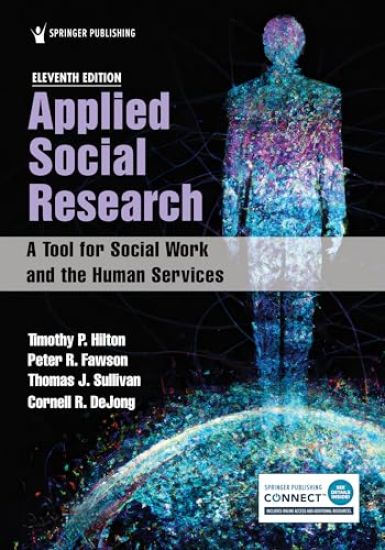
Praise for earlier editions: I have been using this textbook as a required reading for my research class since 2004 because I found the text’s coverage of research concepts to be in-depth, and easy to read without the technicalities. —Ziblim Abukari, PhD, MSW, Assistant Professor, Department of Social Work, Westfield State University Applied Social Research. . . is thorough, well organized, and clear, making it highly appreciated by my students. —Barry Loneck, PhD, School of Social Welfare, SUNY Albany Discover the practical side of research in human services with this easy-to-follow classic Designed for students and professionals in social work, public administration, nursing, criminal justice, and other human services fields, this text breaks down complex concepts into accessible, real-world applications. Follow along with easy-to-read language and engaging examples to uncover nonintimidating, practical tools for everyday problem-solving. Several new features, such as recorded practitioner interviews and Technology in Research boxes, clarify and reinforce the value of applied social research and innovative tools real professionals use in their work. This textbook takes readers on a journey through the entire research process, from identifying problems to collecting and analyzing data, and finally, to effectively communicating your findings. Each chapter closes with critical thinking and self-assessment questions to help evaluate students’ understanding of the Council on Social Work Education’s (CSWE) 2022 Educational Policy and Accreditation Standards (EPAS), promoting in-depth learning. Instructors will also welcome a wide array of instructor resources, including a new Instructor Manual, Sample Syllabi, Test Bank, and chapter PowerPoint presentations. Purchase includes online access via most mobile devices or computers. New to the Eleventh Edition: Every chapter opens with an extended vignette highlighting how professionals incorporate research methods into their work. New Practitioner Profiles provide real-world insights into human services, and podcast segments with recorded interviews are included with every chapter. Chapters now include Technology in Research and Research in Practice boxes, helping readers understand the research practice and technological innovations. The new Instructor Manual includes additional discussion questions relating to the podcasts, learning activities to help students evaluate competencies, and more. Key Features: Clear explanations of the research process, from problem-solving to data analysis, simplifies learning. Explore real-life stories via practitioner interviews and vignettes in every chapter. All chapters close with bulleted main points, key terms for review, and several types of questions for evaluating competencies and self-assessment. Understand the link between research and improved services and develop logic-based research skills.
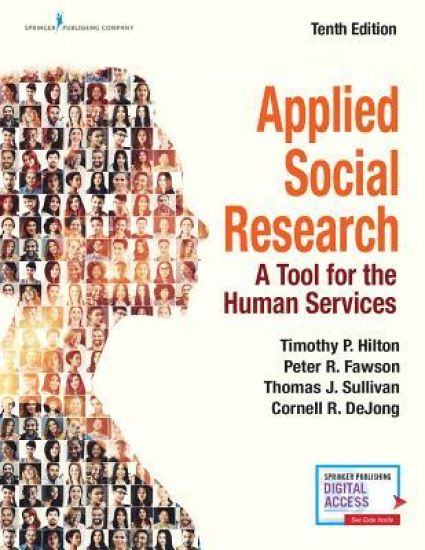
Praise for earlier editions: “I have been using this textbook as a required reading for my research class since 2004 because I found the text’s coverage of research concepts to be in-depth, and easy to read without the technicalities.” - Ziblim Abukari, PhD, MSW, Assistant Professor, Department of Social Work, Westfield State University “Applied Social Research… is thorough, well organized, and clear, making it highly appreciated by my students.” -Barry Loneck, PhD, School of Social Welfare, SUNY Albany The tenth edition of this classic text demonstrates how research skills are developed and used to facilitate best social work practices and improve client outcomes. New to this edition are additional examples and practitioner profiles demonstrating research-based practice, problem-solving extended vignettes, and broad inclusion of the 2015 CSWE competencies. The tenth edition also delivers directives for incorporating evidence-based practices into daily practice. Additional highlights include greater emphasis on conducting practice-informed research with minority and other disadvantaged populations. This engaging text for MSW and BSW students helps readers develop logic-based research skills that prepare them to be scientific practitioners who can use research-informed practice to improve clients’ lives. Emphasized throughout is the application of research methods in assessing and monitoring client functioning and outcomes. Additional features include robust instructor resources. The print version of the book includes free, searchable, digital access to the entire contents! New to the Tenth Edition: Practitioner Profiles recounting interviews with actual practitioners Evaluating Competency boxes highlighting the connections between text concepts and CSWE competencies Emphasis on conducting research with disadvantaged populations Enhanced instructor resources including updated test bank with multiple-choice, short answer, and essay questions, and PowerPoints Key Features: Demonstrates the crucial connection between research and practice to improve client outcomes Develops critical thinking and logic-based research skills Helps students to measure and monitor client functions and outcomes and critically evaluate practices, programs, and services Emphasizes scaling measures to assess client functioning Includes unique chapter on preparing and presenting data
Presents a concise, accessible, objective view of where the United States has been, now stands, and is going in the future in its long "war on drugs." The authors assess the success of drug policies to date and review possible reasons why they have not been more successful. They recommend management of the drug problem for the long term, use of different policy levers depending on the situation, and tolerance of cross-state policy variation.
En esta obra, Cómo enfrentarnos a la Reina del Cielo, C. Peter Wagner y Héctor Torres se unen para desenmascarar a esta deidad, y mostrarnos quién es, qué está haciendo para ganar adeptos y cómo podemos nosotros contrarrestar su nefasta influencia.
Realizing you are someone's treasure could really make one feel precious. Dreladden needed a bit of adventure and pain to finally contain Reuben's love. ... she could not get herself to feel liable to the man as everyone expected her to be, but could carelessly go as far as being with another man only to draw Reuben attention and get him boiling out every while. Then when finally on land, unsettled love matters almost led her leaving the beautiful island she had come to love. Reuben couldn't let go of her When suddenly Layden's long lost mother appeared, many truths were unveiled turning around the entire course of their lives.This classic novel exposes the reader to the many faces of love, rivalry, resilience, culture, family and purpose.
The Peninsular war was not only one of the great periods in British military history, it was also a war in which guerillas exerted a major influence, and as such, has continued relevance today. Salamanca established Wellington as one of the great military commanders of any age and it is one of the battles which produced significant results. As well as the battle the campaign contains two of the most memorable sieges ever under-taken by British arms, those of Ciudad Rodrigo and Badajoz. This book, originally published in 1972, uses eye-witness accounts with the result that the reader can hear the principal characters explain their actions and see the battlefield through the eyes of the men who were there.
The Peninsular war was not only one of the great periods in British military history, it was also a war in which guerillas exerted a major influence, and as such, has continued relevance today. Salamanca established Wellington as one of the great military commanders of any age and it is one of the battles which produced significant results. As well as the battle the campaign contains two of the most memorable sieges ever under-taken by British arms, those of Ciudad Rodrigo and Badajoz. This book, originally published in 1972, uses eye-witness accounts with the result that the reader can hear the principal characters explain their actions and see the battlefield through the eyes of the men who were there.