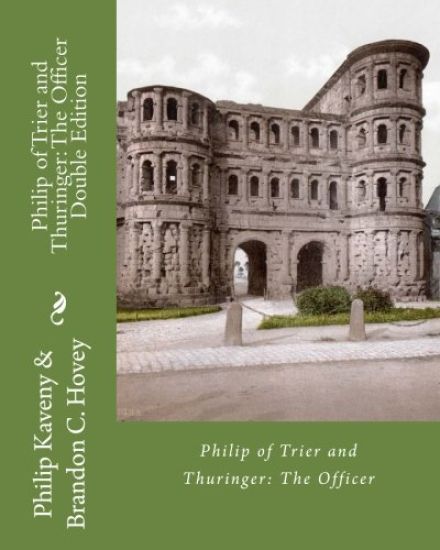
With Charles-Victor Langlois we see a scholar who has mastered difficult sources written in 13th century Church Latin and vernacular French. And he is not content to simply retell stories from medieval chroniclers, but goes beyond to explore his central thesis about the development and evolution of royal power and government administration in France. Even when he appears to minimize or cast Philip III in a bad light, it must impress the modern reader that Langlois, a man of the 19th century, had the integrity to develop his thesis based on rigorous inquiry of primary sources, the essence of professional history. Langlois was a man of his era, a century imbued with obsession over nationalism, and his history was also a search for the origins of the French nation. Contents include: 1.) Entourage of the King and intrigues at court, 2.) Succession of Philip III and external affairs, 3.) the disastrous crusade against the King of Aragon and the death of Philip III, 4.) the importance of state acquisitions operated by royalty in the 13th century, 5.) the relations of feudal royalty with the three orders of society, 6.) Philip and the Church, 7.) the relations of royalty with the towns at the end of the 13th century, 8.) Royal jurisdiction, theory and practice, 9.) royal legislation, 10.) Organisation of the King's court, 11.) Administration at the local level, 12.) Financial organization, 13.) Fiscal privileges, 14.) Military organization. This modern translation is based upon Le R gne de Philippe III le Hardi (Paris, 1887) This work of exacting scholarship was an early monograph by Langlois, who eventually won a position at the Sorbonne, or the University of Paris, where he taught paleography, bibliography, and medieval history. He was also director of the Archives Nationales, 1913-29.
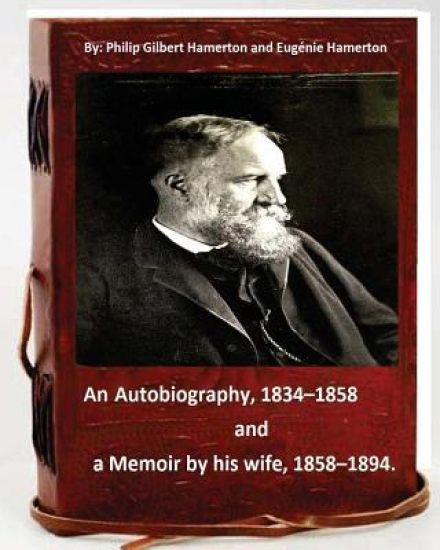
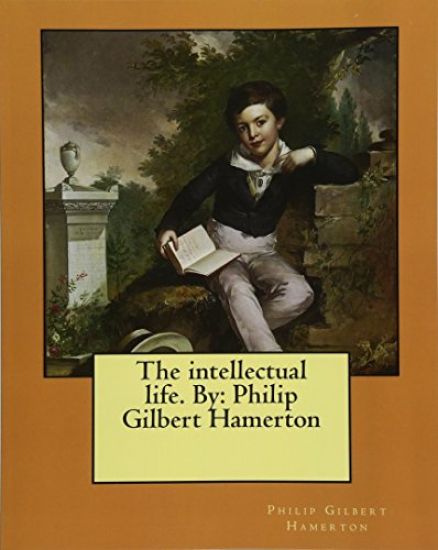
Philip Gilbert Hamerton (10 September 1834 - 4 November 1894), was an English artist, art critic and author.Philip Hamerton was born at Laneside, a hamlet near Shaw and Crompton, Lancashire, England. His mother died giving birth to him, and his father died ten years later. When he was about five, he was sent to live with his two aunts at an estate called the Hollins on the edge of Burnley, where he attended Burnley Grammar School.Hamerton's first literary attempt, a volume of poems, was unsuccessful, leading him to devote himself for a time entirely to landscape painting; he camped out in the Scottish Highlands, where he eventually rented the former island of Inistrynich in Loch Awe, upon which he settled with his wife Eug nie Gindriez, the daughter of a French republican magistrate, in 1858. Discovering after a time that he was more suited to art criticism than painting, he moved to his wife's native area in France, where?] where he produced his Painter's Camp in the Highlands (1863), which was very successful and prepared the way for his standard work on Etching and Etchers (1866). In the following year he published Contemporary French Painters, and in 1868 a continuation, Painting in France after the Decline of Classicism. He had by now become art critic to the Saturday Review, which necessitated frequent visits to England, forcing him to give it up. He proceeded (1870) to establish an art journal of his own, The Portfolio, a monthly periodical, each number of which consisted of a monograph upon some artist or group of artists, frequently written and always edited by him. The discontinuation of his painting gave him time for writing, and he successively produced The Intellectual Life (1873), perhaps the best known and most valuable of his writings; Round my House (1876), notes on French society by a resident; and Modern Frenchmen (1879), admirable short biographies. He also wrote two novels, Wenderholme (1870) and Marmorne (1878). In 1884 Human Intercourse, another volume of essays, was published, and shortly afterwards Hamerton began his autobiography, which he brought down to 1858. In 1882 he issued a finely illustrated work on the technique of the great masters of various arts, under the title of The Graphic Arts, and three years later another splendidly illustrated volume, Landscape, which traces the influence of landscape upon the mind of man. His last books were: Portfolio Papers (1889) and French and English (1889). In 1891 he removed to the neighbourhood of Paris, where he died suddenly in Boulogne-sur-Mer, occupied to the last with his labours on The Portfolio and other writings on art.
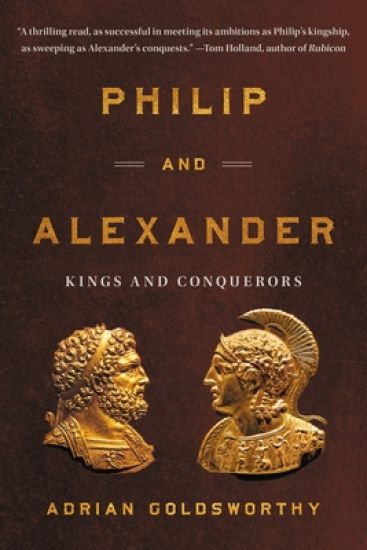
In this definitive biography of father and son, an eminent historian "brings to life the full drama of ancient history" (Wall Street Journal)Alexander the Great's conquests staggered the world. He led his army across thousands of miles, overthrowing the greatest empires of his time and building a new one in its place. He claimed to be the son of a god, but he was actually the son of Philip II of Macedon.Philip inherited a minor kingdom that was on the verge of dismemberment, but despite his youth and inexperience, he made Macedonia dominant throughout Greece. It was Philip who created the armies that Alexander led into war against Persia. In Philip and Alexander, classical historian Adrian Goldsworthy shows that without the work and influence of his father, Alexander could not have achieved so much. This is the groundbreaking biography of two men who together conquered the world.
This definitive biography of one of history's most influential father-son duos tells the story of two rulers who gripped the world -- and their rise and fall from power.Alexander the Great's conquests staggered the world. He led his army across thousands of miles, overthrowing the greatest empires of his time and building a new one in their place. He claimed to be the son of a god, but he was actually the son of Philip II of Macedon.Philip inherited a minor kingdom that was on the verge of dismemberment, but despite his youth and inexperience, he made Macedonia dominant throughout Greece. It was Philip who created the armies that Alexander led into war against Persia. In Philip and Alexander, classical historian Adrian Goldsworthy shows that without the work and influence of his father, Alexander could not have achieved so much. This is the groundbreaking biography of two men who together conquered the world.
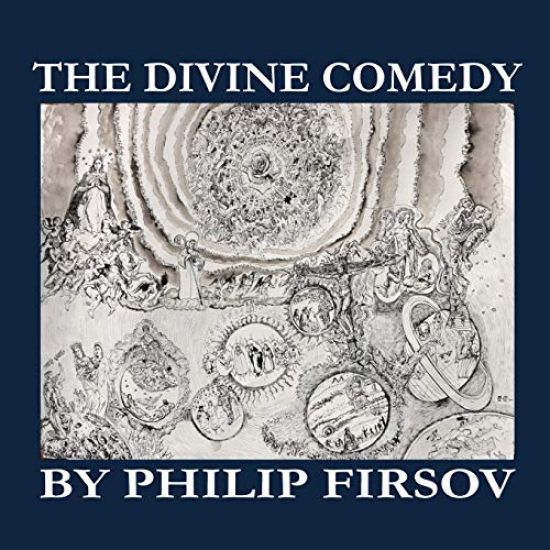
Philip Firsov's set of complete illustrations to all three books of The Divine Comedy by Dante: Inferno, Purgatory & Paradise in 3 indian ink drawings as well as 3 egravings (size A1) is the part of a Family project "La Divina Commedia", the cycle of three String Quartets commissioned by the University of Liverpool in association with the Rodewald Concerts Society for the Dante Quartet, as part of the musical programme of Liverpool as European Capital of Culture 2008: I. Inferno. Composed by Dmitri N. Smirnov. II. Purgatorio. Composed by Elena Firsova III. Paradiso. Composed by Alissa Firsova.
Philip Hamerton was born at Laneside, a hamlet near Shaw and Crompton, Lancashire, England. His mother died giving birth to him, and his father died ten years later. When he was about five, he was sent to live with his two aunts at an estate called the Hollins on the edge of Burnley, where he attended Burnley Grammar School.Hamerton's first literary attempt, a volume of poems, was unsuccessful, leading him to devote himself for a time entirely to landscape painting; he camped out in the Scottish Highlands, where he eventually rented the former island of Inistrynich in Loch Awe, upon which he settled with his wife Eug nie Gindriez, the daughter of a French republican magistrate, in 1858. Discovering after a time that he was more suited to art criticism than painting, he moved to his wife's native area in France, where?] where he produced his Painter's Camp in the Highlands (1863), which was very successful and prepared the way for his standard work on Etching and Etchers (1866). In the following year he published Contemporary French Painters, and in 1868 a continuation, Painting in France after the Decline of Classicism.
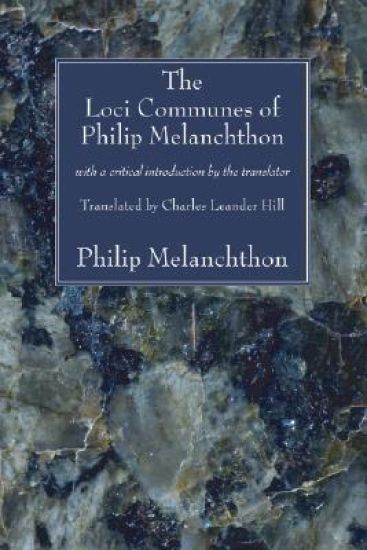
This work has special significance in the history of Protestant theology in that it was the first work written by a Protestant theologian on doctrinal theology. Hill's work seeks to bring Melanchthon out into the open where he may be seen as a constructive thinker, scholar, and systematizer of a theological worldview of his own.