Kirjojen hintavertailu. Mukana 12 016 292 kirjaa ja 12 kauppaa.

Kirjahaku

Etsi kirjoja tekijän nimen, kirjan nimen tai ISBN:n perusteella.

1000 tulosta hakusanalla R.S. Hamilton

Travels to Discover the Source of the Nile, in the Years 1768, 1769, 1770, 1771, 1772, and 1773. In six Volumes. By James Bruce of Kinnaird, Esq. F.R.S. ... of 6; Volume 6
The 18th century was a wealth of knowledge, exploration and rapidly growing technology and expanding record-keeping made possible by advances in the printing press. In its determination to preserve the century of revolution, Gale initiated a revolution of its own: digitization of epic proportions to preserve these invaluable works in the largest archive of its kind. Now for the first time these high-quality digital copies of original 18th century manuscripts are available in print, making them highly accessible to libraries, undergraduate students, and independent scholars.Delve into what it was like to live during the eighteenth century by reading the first-hand accounts of everyday people, including city dwellers and farmers, businessmen and bankers, artisans and merchants, artists and their patrons, politicians and their constituents. Original texts make the American, French, and Industrial revolutions vividly contemporary.++++The below data was compiled from various identification fields in the bibliographic record of this title. This data is provided as an additional tool in helping to insure edition identification: ++++Bodleian Library (Oxford)N027890In the imprints to vols. 2 and 4 "printed by William Sleater" is omitted. The titlepage to vol. 3 bears the imprint: printed by William Porter, for P. Wogan, L. White, P. Byrne, W. Porter, and 9 others in Dublin]; that to vol. 5 bears the imprint: printed by Graisberry and Campbell, for P. Wogan, L. White, P. Byrne, W. Porter, and 9 others in Dublin]. The titlepage to vol. 6 reads: 'Select specimens of natural history'; it bears the imprint: printed by Zachariah Jackson, for P. Wogan, L. White, P. Byrne, W. Porter, and 9 others in Dublin]. Vols 1 and 6 are dated 1790; vols. 2-5, 1791.Dublin: printed by William Sleater, for P. Wogan, L. White, P. Byrne, W. Porter, and 9 others in Dublin], 1790-91. 6v., plates: maps; 8
The History of the Absorbent System, Part the First. Containing the Chylography, or Description of the Human Lacteal Vessels, ... Illustrated by Figures, by John Sheldon, Surgeon, F.R.S.
The 18th century was a wealth of knowledge, exploration and rapidly growing technology and expanding record-keeping made possible by advances in the printing press. In its determination to preserve the century of revolution, Gale initiated a revolution of its own: digitization of epic proportions to preserve these invaluable works in the largest archive of its kind. Now for the first time these high-quality digital copies of original 18th century manuscripts are available in print, making them highly accessible to libraries, undergraduate students, and independent scholars.Medical theory and practice of the 1700s developed rapidly, as is evidenced by the extensive collection, which includes descriptions of diseases, their conditions, and treatments. Books on science and technology, agriculture, military technology, natural philosophy, even cookbooks, are all contained here.++++The below data was compiled from various identification fields in the bibliographic record of this title. This data is provided as an additional tool in helping to insure edition identification: ++++Cambridge University LibraryT154153With a half-title, a list of subscribers, and one leaf of errata following the text. Each plate is accompanied by an explanatory leaf. Another issue of this work appeared in 1784 omitting 'F.R.S.' from the title. No more published.London: printed for the author, 1784. 4], ii, 6], vi,52, 14]p., plates; 4
A Voyage to the Pacific Ocean. Undertaken, by the Command of His Majesty, for Making Discoveries in the Northern Hemisphere. ... In Three Volumes. Vol. I and II. Written by Captain James Cook, F.R.S. Vol. III The Second Edition. Volume 3 of 3
The 18th century was a wealth of knowledge, exploration and rapidly growing technology and expanding record-keeping made possible by advances in the printing press. In its determination to preserve the century of revolution, Gale initiated a revolution of its own: digitization of epic proportions to preserve these invaluable works in the largest archive of its kind. Now for the first time these high-quality digital copies of original 18th century manuscripts are available in print, making them highly accessible to libraries, undergraduate students, and independent scholars.Western literary study flows out of eighteenth-century works by Alexander Pope, Daniel Defoe, Henry Fielding, Frances Burney, Denis Diderot, Johann Gottfried Herder, Johann Wolfgang von Goethe, and others. Experience the birth of the modern novel, or compare the development of language using dictionaries and grammar discourses. ++++The below data was compiled from various identification fields in the bibliographic record of this title. This data is provided as an additional tool in helping to insure edition identification: ++++British LibraryT144425For additional holdings, please see N64143.London: printed by H. Hughs, for G. Nicol; and T. Cadell, 1785. 3v., plates: maps, ill., port.; 4
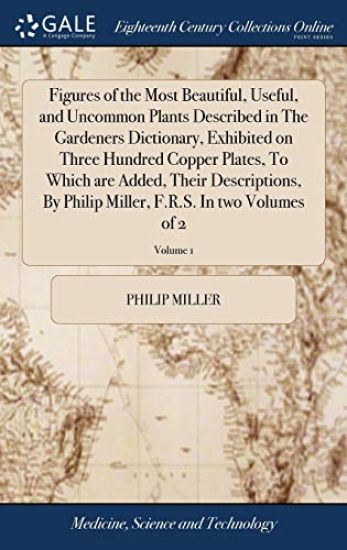
Figures of the Most Beautiful, Useful, and Uncommon Plants Described in The Gardeners Dictionary, Exhibited on Three Hundred Copper Plates, To Which are Added, Their Descriptions, By Philip Miller, F.R.S. In two Volumes of 2; Volume 1
The 18th century was a wealth of knowledge, exploration and rapidly growing technology and expanding record-keeping made possible by advances in the printing press. In its determination to preserve the century of revolution, Gale initiated a revolution of its own: digitization of epic proportions to preserve these invaluable works in the largest archive of its kind. Now for the first time these high-quality digital copies of original 18th century manuscripts are available in print, making them highly accessible to libraries, undergraduate students, and independent scholars.Medical theory and practice of the 1700s developed rapidly, as is evidenced by the extensive collection, which includes descriptions of diseases, their conditions, and treatments. Books on science and technology, agriculture, military technology, natural philosophy, even cookbooks, are all contained here.++++The below data was compiled from various identification fields in the bibliographic record of this title. This data is provided as an additional tool in helping to insure edition identification: ++++British LibraryT059417London: printed for the author; and sold by John Rivington, A. Millar, H. Woodfall, J. Whiston and B. White, J. Hinton and 8 others in London], 1760. 2v.(vi,200, 4]p.), plates; 2
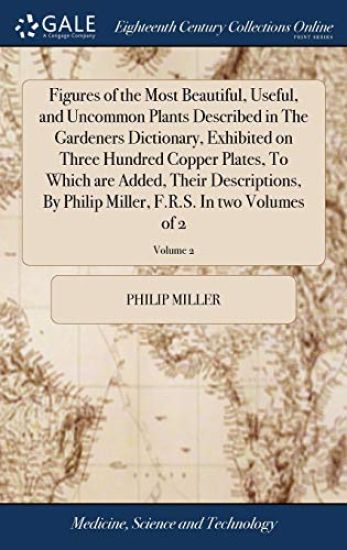
Figures of the Most Beautiful, Useful, and Uncommon Plants Described in The Gardeners Dictionary, Exhibited on Three Hundred Copper Plates, To Which are Added, Their Descriptions, By Philip Miller, F.R.S. In two Volumes of 2; Volume 2
The 18th century was a wealth of knowledge, exploration and rapidly growing technology and expanding record-keeping made possible by advances in the printing press. In its determination to preserve the century of revolution, Gale initiated a revolution of its own: digitization of epic proportions to preserve these invaluable works in the largest archive of its kind. Now for the first time these high-quality digital copies of original 18th century manuscripts are available in print, making them highly accessible to libraries, undergraduate students, and independent scholars.Medical theory and practice of the 1700s developed rapidly, as is evidenced by the extensive collection, which includes descriptions of diseases, their conditions, and treatments. Books on science and technology, agriculture, military technology, natural philosophy, even cookbooks, are all contained here.++++The below data was compiled from various identification fields in the bibliographic record of this title. This data is provided as an additional tool in helping to insure edition identification: ++++British LibraryT059417London: printed for the author; and sold by John Rivington, A. Millar, H. Woodfall, J. Whiston and B. White, J. Hinton and 8 others in London], 1760. 2v.(vi,200, 4]p.), plates; 2
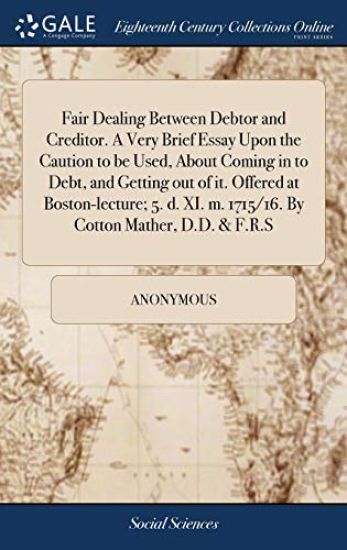
Fair Dealing Between Debtor and Creditor. A Very Brief Essay Upon the Caution to be Used, About Coming in to Debt, and Getting out of it. Offered at Boston-lecture; 5. d. XI. m. 1715/16. By Cotton Mather, D.D. & F.R.S
The 18th century was a wealth of knowledge, exploration and rapidly growing technology and expanding record-keeping made possible by advances in the printing press. In its determination to preserve the century of revolution, Gale initiated a revolution of its own: digitization of epic proportions to preserve these invaluable works in the largest archive of its kind. Now for the first time these high-quality digital copies of original 18th century manuscripts are available in print, making them highly accessible to libraries, undergraduate students, and independent scholars.Delve into what it was like to live during the eighteenth century by reading the first-hand accounts of everyday people, including city dwellers and farmers, businessmen and bankers, artisans and merchants, artists and their patrons, politicians and their constituents. Original texts make the American, French, and Industrial revolutions vividly contemporary.++++The below data was compiled from various identification fields in the bibliographic record of this title. This data is provided as an additional tool in helping to insure edition identification: ++++Bodleian Library (Oxford)W012184Caption title: The honest debtor.Boston: Printed by B. Green, for Samuel Gerrish, at his shop over against the north side of the Town-House, 1716. 2],30p.; 8
A catalogue of a collection of plaques, medallions, vases, figures, etc., in coloured jasper and basalte, produced by Josiah Wedgwood, F.R .S., at Etruria, in the county of Stafford, England, 1760-1795
This book has been considered by academicians and scholars of great significance and value to literature. This forms a part of the knowledge base for future generations. So that the book is never forgotten we have represented this book in a print format as the same form as it was originally first published. Hence any marks or annotations seen are left intentionally to preserve its true nature.
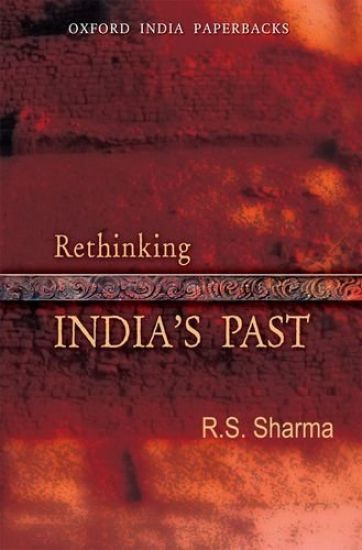
Rethinking India's Past

Rethinking India's Past

R.S. Sharma

OUP India
2010
nidottu
This volume explores the key aspects of early Indian history-political ideas and institutions; economic patterns and developments; and social orders and practices. Covering a long span-from the Vedic period to twelfth century AD-it explores the linkages between social formations and modes of production. It also examines the transition from ancient to medieval, underlining the accompanying socio-economic changes and the characteristic of the early medieval period. The book provides an incisive account of ancient social formations underscoring themes like oriental despotism, position of the sudras, feudalism, urban decay, and the sati. Using a rich array of literary and archaeological source material as well as linguistic and tribal studies, this book will be useful for undergraduate students and teachers of ancient Indian history.
A Midsummer Night’s Dream: Language and Writing

A Midsummer Night’s Dream: Language and Writing

R.S. White

BLOOMSBURY PUBLISHING PLC
2022
nidottu
This lively and informative guide to Shakespeare's popular comedy equips you with the critical skills to analyse its language, structure and themes and to expand and enrich your own response to the play. A Midsummer Night’s Dream is a perfect play for exploring Shakespeare’s diverse uses of language to reveal character and themes, from formal iambics and rhyming couplets of courtiers and lovers, and ‘warbling’ notes’ and nursery rhythms of fairies, to stocky prose by the artisan players including Bottom’s comic malapropisms. An introduction considers when and how the play was written, and addresses the language with which Shakespeare created A Midsummer Night’s Dream, as well as the generic, literary and theatrical conventions at his disposal. It then moves to a detailed examination and analysis of the play, focusing on its literary, technical and historical intricacies; an account of the play's performance history and its critical reception completes the volume. Each chapter offers a 'Writing matters' section, clearly linking the analysis of Shakespeare's language to your own writing strategies in coursework and examinations.
A Midsummer Night’s Dream: Language and Writing
Arden Student Skills: Language and Writing volumes offer a new type of study aid that combines lively critical insight with practical guidance on the writing skills you need to develop in order to engage fully with Shakespeare’s texts. The books’ core focus is on language: both understanding and enjoying Shakespeare’s complex dramatic language and expanding your own critical vocabulary as you respond to his plays. Each guide in the series will empower you to read and write about Shakespeare with increased confidence and enthusiasm.This lively and informative guide to Shakespeare's popular comedy equips you with the critical skills to analyse its language, structure and themes and to expand and enrich your own response to the play. A Midsummer Night’s Dream is a perfect play for exploring Shakespeare’s diverse uses of language to reveal character and themes, from formal iambics and rhyming couplets of courtiers and lovers, and ‘warbling’ notes’ and nursery rhythms of fairies, to stocky prose by the artisan players including Bottom’s comic malapropisms.An introduction considers when and how the play was written, and addresses the language with which Shakespeare created A Midsummer Night’s Dream, as well as the generic, literary and theatrical conventions at his disposal. It then moves to a detailed examination and analysis of the play, focusing on its literary, technical and historical intricacies, and its critical reception; an account of the play's movie adaptations completes the volume. Each chapter offers a 'writing matters' section, clearly linking the analysis of Shakespeare's language to your own writing strategies in coursework and examinations.