Kirjojen hintavertailu. Mukana 11 627 220 kirjaa ja 12 kauppaa.

Kirjahaku

Etsi kirjoja tekijän nimen, kirjan nimen tai ISBN:n perusteella.

1000 tulosta hakusanalla Reiff

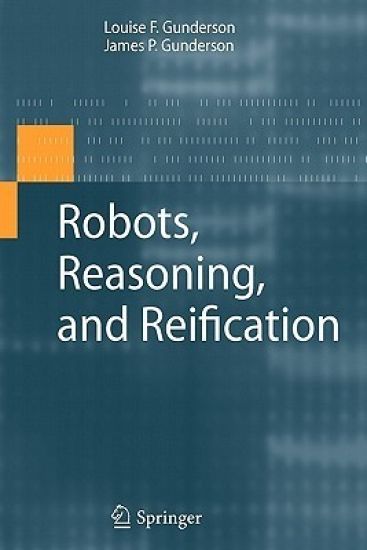
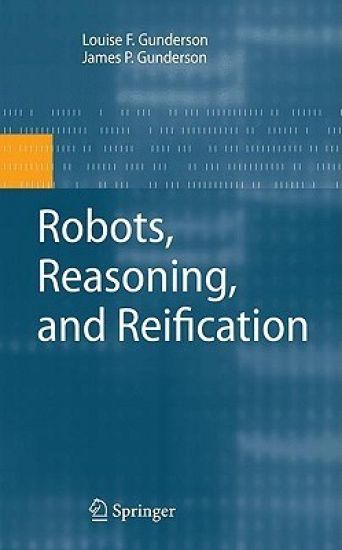
Robots, Reasoning, and Reification

Robots, Reasoning, and Reification

James P. Gunderson; Louise F. Gunderson

Springer-Verlag New York Inc.
2008
sidottu
This work was created from the statement “But, all you have to do is make the robot recognize its surroundings. Salamanders do it, and how complex are they?” Little did we know what a long path was started with those simple words. This book is a small step on that path, which we hope leads to robots that can serve as true and useful assistants to humans. At the least, we hope for some help with the tasks that are described by the 3 d**** words (dull, dirty, or dangerous). Fair warning, this work is a synthesis of ideas from many disciplines. As such, we have depended on the work of many other researchers and philosophers. The heart of this work, the lens model, comes from the work of Egon Brunswik. Even though he died in the 1950’s, his ideas are still strong enough to resonate into the 2000’s and into our robot. Another researcher who’s work has greatly in?uenced this work is Walter Freeman, Professor Emeritus of Neurobiology at the University of California, Berkeley. We have relied heavily on his work on preafference and attention to guide the development of our robot. In addition, we have used research from a myriad of different ?elds. Our huge thanks to all the researchers who’s work we used to synthesize this new theory. Denver, CO Louise F. Gunderson July 2008 James P.

Robots, Reasoning, and Reification

Robots, Reasoning, and Reification

James P. Gunderson; Louise F. Gunderson

Springer-Verlag New York Inc.
2010
nidottu
This work was created from the statement “But, all you have to do is make the robot recognize its surroundings. Salamanders do it, and how complex are they?” Little did we know what a long path was started with those simple words. This book is a small step on that path, which we hope leads to robots that can serve as true and useful assistants to humans. At the least, we hope for some help with the tasks that are described by the 3 d**** words (dull, dirty, or dangerous). Fair warning, this work is a synthesis of ideas from many disciplines. As such, we have depended on the work of many other researchers and philosophers. The heart of this work, the lens model, comes from the work of Egon Brunswik. Even though he died in the 1950’s, his ideas are still strong enough to resonate into the 2000’s and into our robot. Another researcher who’s work has greatly in?uenced this work is Walter Freeman, Professor Emeritus of Neurobiology at the University of California, Berkeley. We have relied heavily on his work on preafference and attention to guide the development of our robot. In addition, we have used research from a myriad of different ?elds. Our huge thanks to all the researchers who’s work we used to synthesize this new theory. Denver, CO Louise F. Gunderson July 2008 James P.

Der junge Kerbschnitzer. Musterbuch für Kunstarbeiten in Holz für die reifere Jugend
Der junge Kerbschnitzer. Musterbuch f r Kunstarbeiten in Holz f r die reifere Jugend ist ein unver nderter, hochwertiger Nachdruck der Originalausgabe aus dem Jahr 1898. Hansebooks ist Herausgeber von Literatur zu unterschiedlichen Themengebieten wie Forschung und Wissenschaft, Reisen und Expeditionen, Kochen und Ern hrung, Medizin und weiteren Genres. Der Schwerpunkt des Verlages liegt auf dem Erhalt historischer Literatur. Viele Werke historischer Schriftsteller und Wissenschaftler sind heute nur noch als Antiquit ten erh ltlich. Hansebooks verlegt diese B cher neu und tr gt damit zum Erhalt selten gewordener Literatur und historischem Wissen auch f r die Zukunft bei.
Russland im 21. Jahrhundert. Reif fuer eine multipolare Welt?
Wie mit Russland reden? Angesichts der aktuellen Ukraine-Krise identifiziert das Buch die strategische Kultur Russlands, zeigt deren Auswirkung auf die heutige Aussen- und Sicherheitspolitik auf und zieht Folgerungen fur den Umgang mit Russland. Neorealistische Analysen koennen Russlands Verhalten in der multipolaren Welt des 21. Jahrhunderts nur begrenzt erklaren und fuhren in ihren Schlussfolgerungen zu einem Wiederaufleben der fruheren Blockkonfrontation. Ein wesentlicher Wandel der strategischen Kultur erfolgte nach dem Zusammenbruch der Sowjetunion. Kooperative Politikansatze koennen darauf aufbauen. Der politische Westen sollte Mut zu mehr Pluralismus im internationalen System zeigen. Eine erneute Blockkonfrontation ist vermeidbar - dies ist eine zentrale Aussage des Buches.