Kirjojen hintavertailu. Mukana 11 699 587 kirjaa ja 12 kauppaa.

Kirjahaku

Etsi kirjoja tekijän nimen, kirjan nimen tai ISBN:n perusteella.

1000 tulosta hakusanalla Ryan Hutton

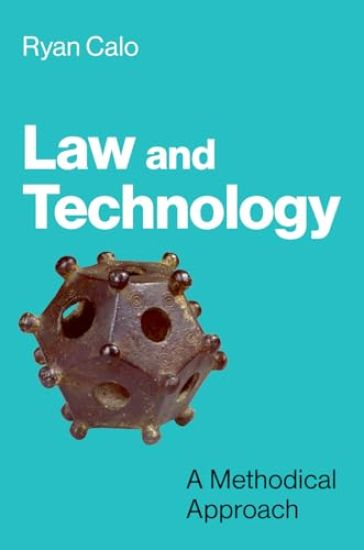
Law and Technology

Law and Technology

Ryan Calo

OXFORD UNIVERSITY PRESS INC
2026
sidottu
Law and Technology: A Methodical Approach offers a defensible and consistent approach to the legal analysis of technology. It puts forward a step-by-step methodology for thinking about and ultimately challenging technology to meet society's demands.
Broadway Bodies

Broadway Bodies

Ryan Donovan

OXFORD UNIVERSITY PRESS INC
2023
sidottu
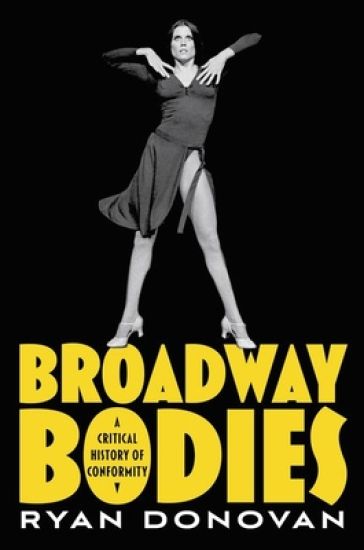
Broadway has body issues. What is a Broadway Body? Broadway has long preserved the ideology of the "Broadway Body": the hyper-fit, exceptionally able, triple-threat performer who represents how Broadway musicals favor certain kinds of bodies. Casting is always a political act, situated within a power structure that gives preference to the Broadway Body. In Broadway Bodies, author Ryan Donovan explores how ability, sexuality, and size intersect with gender, race, and ethnicity in casting and performance. To understand these intersectional relationships, he poses a series of questions: Why did A Chorus Line, a show that sought to individuate dancers, inevitably make dancers indistinguishable? How does the use of fat suits in musicals like Dreamgirls and Hairspray stigmatize fatness? What were the political implications of casting two straight actors as the gay couple in La Cage aux Folles in 1983? How did deaf actors change the sound of musicals in Deaf West's Broadway revivals? Whose bodies does Broadway cast and whose does it cast aside? In answering these questions, Broadway Bodies tells a history of Broadway's inclusion of various forms of embodied difference while revealing its simultaneous ambivalence toward non-conforming bodies.
Broadway Bodies

Broadway Bodies

Ryan Donovan

OXFORD UNIVERSITY PRESS INC
2023
nidottu
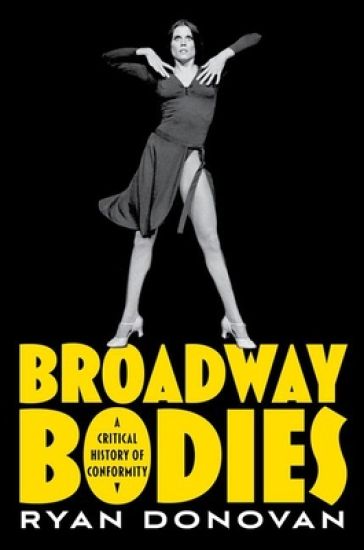
Broadway has body issues. What is a Broadway Body? Broadway has long preserved the ideology of the "Broadway Body": the hyper-fit, exceptionally able, triple-threat performer who represents how Broadway musicals favor certain kinds of bodies. Casting is always a political act, situated within a power structure that gives preference to the Broadway Body. In Broadway Bodies, author Ryan Donovan explores how ability, sexuality, and size intersect with gender, race, and ethnicity in casting and performance. To understand these intersectional relationships, he poses a series of questions: Why did A Chorus Line, a show that sought to individuate dancers, inevitably make dancers indistinguishable? How does the use of fat suits in musicals like Dreamgirls and Hairspray stigmatize fatness? What were the political implications of casting two straight actors as the gay couple in La Cage aux Folles in 1983? How did deaf actors change the sound of musicals in Deaf West's Broadway revivals? Whose bodies does Broadway cast and whose does it cast aside? In answering these questions, Broadway Bodies tells a history of Broadway's inclusion of various forms of embodied difference while revealing its simultaneous ambivalence toward non-conforming bodies.
Before Method and Models

Before Method and Models

Ryan Walter

OXFORD UNIVERSITY PRESS INC
2021
sidottu
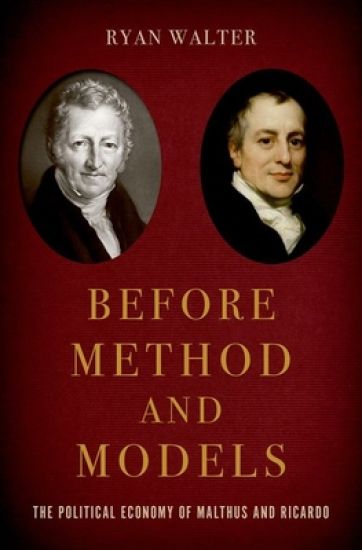
A boldly revisionist history of the first disputes in nineteenth-century Britain over the role of economists in society Economics now so dominates our understanding of how the world works that some of the field's most influential concepts seem akin to natural laws. Yet economists themselves are a relatively recent species of intellectual, first emerging in the late eighteenth and early nineteenth centuries. And like the economists of our own era, the pioneering work of the early economists was decidedly a product of its time. Before Method and Models looks back to the first disputes in nineteenth-century Britain over the role of economists in society to explain how the broader historical and intellectual context has always shaped the field. Ryan Walter's boldly revisionist history focuses on Thomas Robert Malthus and David Ricardo, both of whom were attacked for producing a type of knowledge that was perceived to be dangerous to society. Rather than simply assuming that "classical political economy" always existed, Walter recovers the historical circumstances that actually shaped the development of their methods and concepts. The book delves into the major political controversies of the time - the Bullion Controversy and the Corn Laws debate - and the arguments that Malthus and Ricardo advanced in order to shape the outcome. By examining the hostile responses of Malthus and Ricardo's contemporaries, the book shows how the major challenge facing the first economists was to legitimize the activity of theorizing and then reforming economic life. In a time when debate about commerce and politics was conducted without our modern methods and models, Malthus and Ricardo fought for the creation of the new field of political economy and a role for their work at the center of politics. Walter's reconstruction of the era reveals an exceedingly sophisticated debate regarding the costs and benefits of reforming both institutions and laws through the new science of political economy.
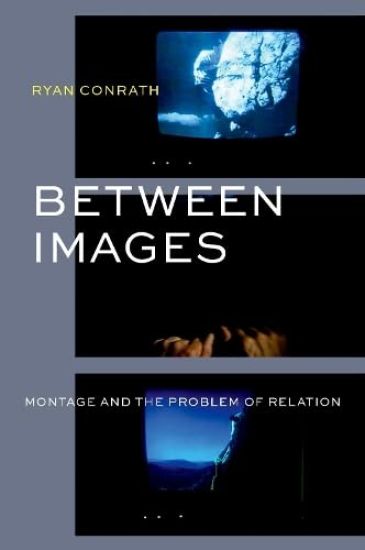
Between Images

Between Images

Ryan Conrath

OXFORD UNIVERSITY PRESS INC
2024
sidottu
In the early days of moving pictures, filmmakers learned that the montage could be an effective tool to show changes in time or locale. Casablanca's iconic travel montage is mimicked by filmmakers to this day. Since its use in Rocky, the training montage has become a staple for sports films. In the 2004 film Team America, the song "Montage" is a meta explanation of the device's universal use and understanding. Its history and affects are studied and practiced by student and professional filmmakers alike. "Between Images proposes a unique theory of montage a technique of relation: a way of rethinking and reshaping how humans relate—to ourselves and each other, to the material world, to the planet and its nonhuman inhabitants. Historically, film criticism has cast editing in one of several roles: as a device of spatiotemporal continuity to maintain the viewer's investment in the story-world; as an agent of disorder that confounds conventions of realism to prompt the viewer's intellectual engagement; and as an expressionistic device for augmenting the duration and combination of shots to leave a sensory impression. While not abandoning such accounts, this book ventures closer to the heart of montage by distinguishing the space between images as itself a powerful source of political, emotional, and aesthetic formation. Venturing into an "expanded field of montage," this study traces the cut and the splice across photographic and cinematic media, where the space between images becomes a setting for navigating and renegotiating the terms of relation, of the "being-with" that connects all forms of life. Between Images brings together a diverse cast of established and emerging film artists—Harun Farocki, Hito Steyerl, Steve McQueen, and Cauleen Smith, Daïchi Saito, and Ja'Tovia Gary among others—to demonstrate the abiding capacity of cinema to effect change."
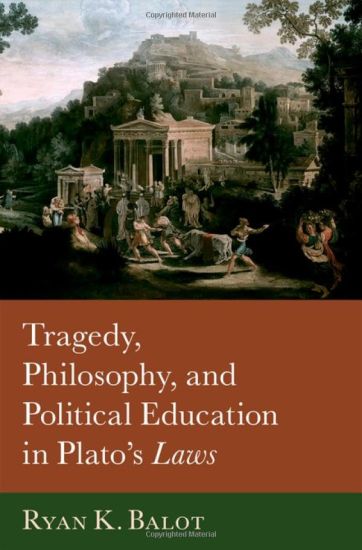
Tragedy, Philosophy, and Political Education in Plato's Laws

Tragedy, Philosophy, and Political Education in Plato's Laws

Ryan K. Balot

OXFORD UNIVERSITY PRESS INC
2024
sidottu
What are the prospects for ambitious political reform in communities of traditional, passionate, and even self-righteous citizens? Can thoughtful legislators create a healthy society for citizens whose judgment is typically unsound? In this searching and provocative book, Ryan K. Balot addresses these timely, yet perennial, political questions by offering a novel interpretation of Plato's last and longest dialogue, the Laws. Turning to the ancient past is often essential to reinvigorating our contemporary understanding of these critical issues. Previous scholars and writers have either celebrated the idealism in Plato's Laws or denounced its totalitarianism. Balot, by contrast, refuses to interpret the dialogue as a political blueprint, whether admirable or misguided. Instead, he shows that it constitutes Plato's greatest philosophical investigation of political life. In this transformative re-appraisal, Balot reveals that Plato's goal was to cultivate a tragic attitude toward our political passions, commitments, and aspirations. The result is a profound political inquiry with far-reaching consequences.
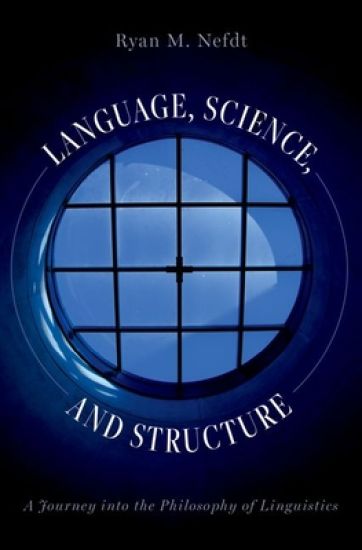
Language, Science, and Structure

Language, Science, and Structure

Ryan M. Nefdt

OXFORD UNIVERSITY PRESS INC
2023
sidottu
What is a language? What do scientific grammars tell us about the structure of individual languages and human language in general? What kind of science is linguistics? These and other questions are the subject of Ryan M. Nefdt's Language, Science, and Structure. Linguistics presents a unique and challenging subject matter for the philosophy of science. As a special science, its formalisation and naturalisation inspired what many consider to be a scientific revolution in the study of mind and language. Yet radical internal theory change, multiple competing frameworks, and issues of modelling and realism have largely gone unaddressed in the field. Nefdt develops a structural realist perspective on the philosophy of linguistics which aims to confront the aforementioned topics in new ways while expanding the outlook toward new scientific connections and novel philosophical insights. On this view, languages are real patterns which emerge from complex biological systems. Nefdt's exploration of this novel view will be especially valuable to those working in formal and computational linguistics, cognitive science, and the philosophies of science, mathematics, and language.
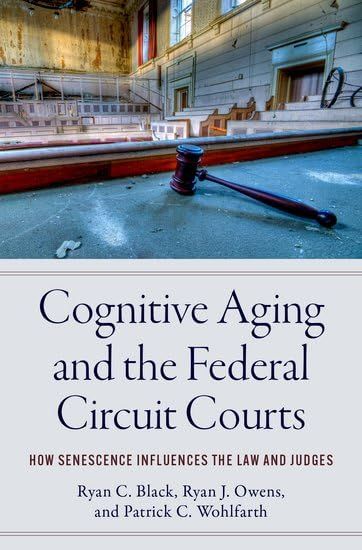
Cognitive Aging and the Federal Circuit Courts

Cognitive Aging and the Federal Circuit Courts

Ryan C. Black; Ryan J. Owens; Patrick C. Wohlfarth

OXFORD UNIVERSITY PRESS INC
2024
sidottu
In the United States, federal judges occupy weighty positions. They interpret the Constitution, define people's rights and liberties, and apply laws and regulations to myriad cases. They also are older than ever. In 2023, the median age of a federal judge reached 70 for the first time. Nearly one-third of federal judges exceeded the age of 75. And ten percent were 85 years or older. The federal judiciary has become a graying judiciary. Recent advances in neuroscience show that cognitive aging leads to processing speed delays, a decline in executive functioning skills like reasoning and memory, and a greater reliance on cognitive shortcuts. Judges are not immune from these effects. Simply put, cognitive aging influences all people. Judges are people. And so cognitive aging must influence them. In Cognitive Aging and the Federal Circuit Courts: How Senescence Influences the Law and Judges, a distinguished team of authors investigates how cognitive aging influences federal circuit court judges. The first-of-their-kind results show that as judges age, they require more time to craft their opinions; they rely more on cognitive shortcuts; their opinions become less complex; they increasingly rely on others to help them write opinions; and their legal influence on panels wanes just as their susceptibility to persuasion increases. These results are sure to transform broad debates about institutional reform.
The American Religious Landscape

The American Religious Landscape

Ryan P. Burge

OXFORD UNIVERSITY PRESS INC
2025
sidottu
At its founding, the United States was an overwhelmingly Protestant country. However, over the last 250 years, it has become increasingly diverse with tens of millions of Catholics, millions of Latter-day Saints, Muslims, Hindus, and Jews, alongside a rapidly increasing share of Americans who claim no religious affiliation at all. The American Religious Landscape uses an in-depth statistical analysis of large datasets to answer foundational questions about this diversity, such as: How many Hindus are there in the US? Which state has the highest concentration of Muslims? Are atheists more highly educated than the general population? How many Roman Catholics attend Mass weekly? It focuses on the overall size, geographic distribution, and demographic composition of twelve different religious groups in short and accessible chapters that, taken together, serve as a basic introduction to the state of religion in America. Through dozens of charts, graphs, and maps--designed for readability and clarity--readers will be left with a solid understanding of the contours of contemporary American religion and what it could look like in the future.
The American Religious Landscape

The American Religious Landscape

Ryan P. Burge

OXFORD UNIVERSITY PRESS INC
2025
nidottu
At its founding, the United States was an overwhelmingly Protestant country. However, over the last 250 years, it has become increasingly diverse with tens of millions of Catholics, millions of Latter-day Saints, Muslims, Hindus, and Jews, alongside a rapidly increasing share of Americans who claim no religious affiliation at all. The American Religious Landscape uses an in-depth statistical analysis of large datasets to answer foundational questions about this diversity, such as: How many Hindus are there in the US? Which state has the highest concentration of Muslims? Are atheists more highly educated than the general population? How many Roman Catholics attend Mass weekly? It focuses on the overall size, geographic distribution, and demographic composition of twelve different religious groups in short and accessible chapters that, taken together, serve as a basic introduction to the state of religion in America. Through dozens of charts, graphs, and maps--designed for readability and clarity--readers will be left with a solid understanding of the contours of contemporary American religion and what it could look like in the future.
The Book of Job in Wonderland

The Book of Job in Wonderland

Ryan M. Armstrong

OXFORD UNIVERSITY PRESS INC
2024
sidottu
The book of Job and Alice's Adventures in Wonderland may not seem like natural bedfellows at first, but both have become literary classics by lifting a voice of protest against injustice. They employ similar techniques to mock self-assured moralists: nonce-formation, unique orthography, frame tales, episodic plot structure, and parodies of religious songs. Both culminate in a chaotic trial that remains unresolved. At every turn, these books subvert conventions of genre and even language itself. Job and Alice become curiouser and curiouser as their most foundational beliefs are challenged. In this creative new study, Ryan M. Armstrong explores mediation in Job's land of Uz with insights gained from Wonderland - Job and Alice must both learn the value of honest protest, a lesson intensified by their would-be mediators. Readers throughout history have long been mesmerized by Job's search for a “redeemer,” a mediator that will stand between him and God. But few have noted the pervasiveness of mediation throughout the book, which opens and closes with mediatory acts. Armstrong turns attention to the mediation (and un-mediation) of Job's primary interlocutors. Like Wonderland's Queen of Hearts, God thunders into Job's life and reminds him that few mediators are willing to stand up to authority. Like the King of Hearts, Job's three friends take the side of the most powerful disputant, God. Like Wonderland's Gryphon, Elihu creates a cliffhanger before the dénouement and offers a moment of reflection. In the end, Job, like Alice, clings to his honesty and refuses to flatter authority. Making use of philological and linguistic analysis in conversation with history's rabbis, theologians, and artists, Armstrong provides detailed readings of key poems within their literary context. These readings are then viewed through a looking-glass of comparative work, relating Job and his friends to Wonderland and other cultural touchpoints. The Book of Job in Wonderland offers an important contribution to the field of biblical studies through the lens of a classic text.
The Disunited States

The Disunited States

Ryan D. Griffiths

OXFORD UNIVERSITY PRESS INC
2026
sidottu
Is the breakup of an increasingly polarized America into separate red and blue countries even possible? There is a growing interest in American secession. In February 2023, Marjorie Taylor Greene tweeted that "We need a national divorce...We need to separate by red states and blue states." Recent movements like Yes California have called for a national divorce along political lines. A 2023 Axios poll shows that 20 percent of Americans favor a national divorce. These trends show a sincere interest in American secession, and they will likely increase in the aftermath of the 2024 Presidential election. Proponents of secession make three arguments: the two sides have irreconcilable differences; secession is a legal right; and smaller political units are better. Through interviews with secessionist advocates in America, Ryan Griffiths explores the case for why Red America and Blue America should split up. But as The Disunited States shows, these arguments are fundamentally incorrect. Secession is the wrong solution to the problem of polarization. Red and Blue America are not neatly sorted and geographically concentrated. Splitting the two parts would require a dangerous unmixing of the population, one that could spiral into violence and state collapse. Drawing on his expertise on secessionism worldwide, he shows how the process has played out internationally-and usually disastrously. Ultimately, this book will disabuse readers of the belief that secession will fix America's problems. Rather than focus on national divorce as a solution, the better course of action is to seek common ground.
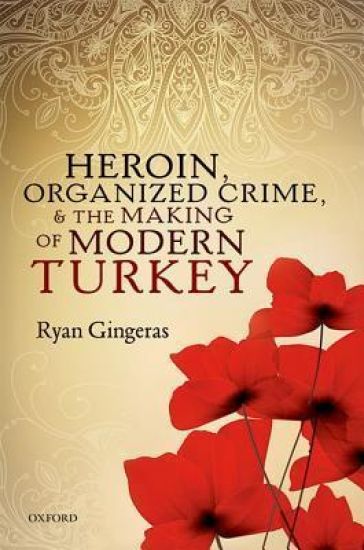
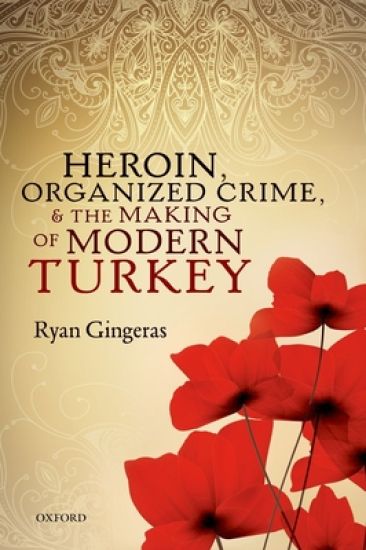
Heroin, Organized Crime, and the Making of Modern Turkey
Heroin, Organized Crime, and the Making of Modern Turkey explores the history of organized crime in Turkey and the roles which gangs and gangsters have played in the making of the Turkish state and Turkish politics. Turkey's underworld, which has been at the heart of several devastating scandals over the last several decades, is strongly tied to the country's long history of opium production and heroin trafficking. As an industry at the centre of the Ottoman Empire's long transition into the modern Turkish Republic, as important as the silk road had been in earlier centuries, the modern rise of the opium and heroin trade helped to solidify and complicate long-standing relationships between state officials and criminal syndicates. Such relationships produced not only ongoing patterns of corruption, but helped fuel and enable repeated acts of state violence. Drawing upon new archival sources from the United States and Turkey, including declassified documents from the Prime Minister's Archives of the Republic of Turkey and the Central Intelligence Agency, Heroin, Organized Crime, and the Making of Modern Turkey provides a critical window into how a handful of criminal syndicates played supporting roles in the making of national security politics in the contemporary Turkey. The rise of the 'Turkish mafia', from its origins in the late Ottoman period to its role in the 'deep state' revealed by the so-called Susurluk and Ergenekon scandals, is a story that mirrors troubling elements in the republic's establishment and emphasizes the transnational and comparative significance of narcotics and gangs in the country's past.
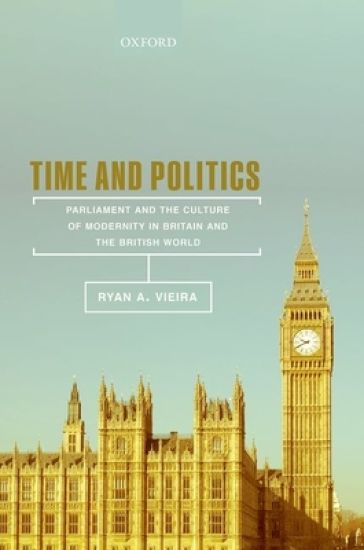
Time and Politics

Time and Politics

Ryan A. Vieira

Oxford University Press
2015
sidottu
Time and Politics is the first cultural and transnational history of modern procedural reform in the Westminster parliamentary system. The study centres on the nineteenth-century emergence of a desire to modernise and make more efficient the procedural rules of parliamentary law-making. Contrary to existing interpretations, which see this as a product of transformations in political structure and practice, this volume demonstrates how the evolution of Parliament's rules was structured by transformations within the wider culture of time. Ryan Vieira argues that the spread of an increasingly rigorous time discipline in concert with a growing consciousness of being modern worked to progressively erode the legitimacy of the historically developed rules of parliamentary debate and law-making, while simultaneously implanting new ways of judging the effectiveness of parliamentary institutions. By the 1880s, this process had transformed efficiency into the ultimate criteria of parliamentary effectiveness. Using the conceptual framework of the British world, Time and Politics demonstrates how this new understanding of parliamentary effectiveness was exported to the colonies of settlement through a series of communicative networks and provided colonial parliamentarians with the ability to imagine the inefficiencies of their own legislatures as part of a larger transnational problem. In making these arguments, this volume lays the groundwork for a new type of parliamentary history.
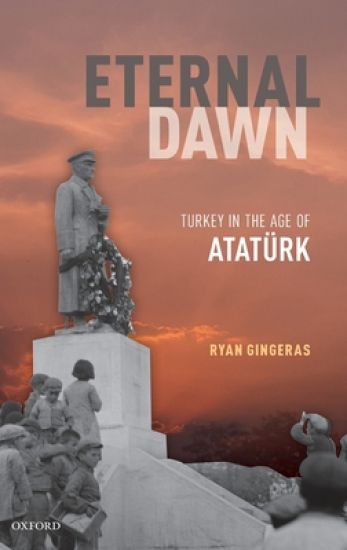
Eternal Dawn

Eternal Dawn

Ryan Gingeras

Oxford University Press
2019
sidottu
Amid the tensions and uncertainties that plagued the globe before the Second World War, the Republic of Turkey appeared to many as a unique and constructive model for how a state was to be reformed and governed in the modern era. For many interwar observers, Turkey was a country that seemed to have radically transformed itself into a nation that was united, strong, and progressive, one that was unburdened by its past. A general consensus held that Turkey's founding president, Mustafa Kemal Atatürk, was the chief architect and engineer of this feat, a belief that placed him among the greatest reforming statesmen in world history. This general perception of Atatürk and his revolutionary rule has largely endured to this day. As a study grounded in largely untapped archival and scholarly sources, Eternal Dawn presents a definitive look inside the development and evolution of Atatürk's Turkey. Rather than presenting the country's founding and transformation as an extension of Mustafa Kemal's life and achievements, scholar Ryan Gingeras presents Turkey's early years as the culmination of a variety of social and political forces dating back to the late Ottoman Empire. Eternal Dawn presses beyond the reigning mythology that still envelops this period and challenges many of the standing assumptions about the limits, successes, and consequences of the reforms that comprised Mustafa Kemal's revolution. Through a detailed survey of social and political conditions that defined life in the capital as well as Turkey's diverse provinces, Gingeras lays bare many of the harsh realities and bitter legacies incurred as a result of the republic's establishment and transformation. Atatürk's revolution, upon final analysis, destroyed as much as it built, and established precedents that both strengthen and torment the country to this day.
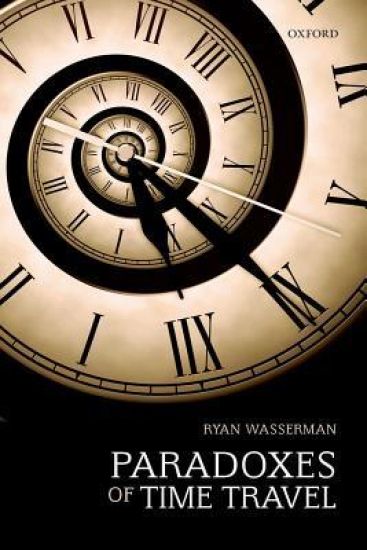
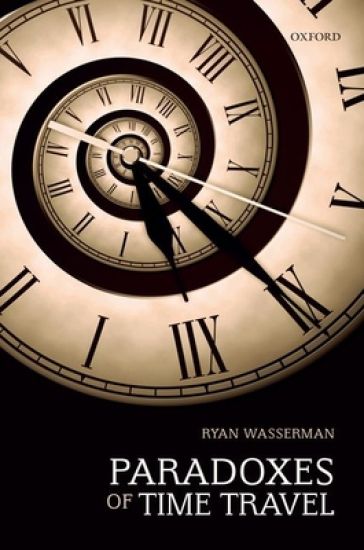
Paradoxes of Time Travel

Paradoxes of Time Travel

Ryan Wasserman

Oxford University Press
2017
sidottu
Ryan Wasserman presents a wide-ranging exploration of puzzles raised by the possibility of time travel, including the grandfather paradox, the bootstrapping paradox, and the twin paradox of special relativity. He draws out their implications for our understanding of time, tense, freedom, fatalism, causation, counterfactuals, laws of nature, persistence, change, and mereology. The Paradoxes of Time Travel is written in an accessible style, and filled with entertaining examples from physics, science fiction, and popular culture.
Heroin, Organized Crime, and the Making of Modern Turkey
Heroin, Organized Crime, and the Making of Modern Turkey explores the history of organized crime in Turkey and the roles which gangs and gangsters have played in the making of the Turkish state and Turkish politics. Turkey's underworld, which has been at the heart of several devastating scandals over the last several decades, is strongly tied to the country's long history of opium production and heroin trafficking. As an industry at the centre of the Ottoman Empire's long transition into the modern Turkish Republic, as important as the silk road had been in earlier centuries, the modern rise of the opium and heroin trade helped to solidify and complicate long-standing relationships between state officials and criminal syndicates. Such relationships produced not only ongoing patterns of corruption, but helped fuel and enable repeated acts of state violence. Drawing upon new archival sources from the United States and Turkey, including declassified documents from the Prime Minister's Archives of the Republic of Turkey and the Central Intelligence Agency, Heroin, Organized Crime, and the Making of Modern Turkey provides a critical window into how a handful of criminal syndicates played supporting roles in the making of national security politics in the contemporary Turkey. The rise of the 'Turkish mafia', from its origins in the late Ottoman period to its role in the 'deep state' revealed by the so-called Susurluk and Ergenekon scandals, is a story that mirrors troubling elements in the republic's establishment and emphasizes the transnational and comparative significance of narcotics and gangs in the country's past.
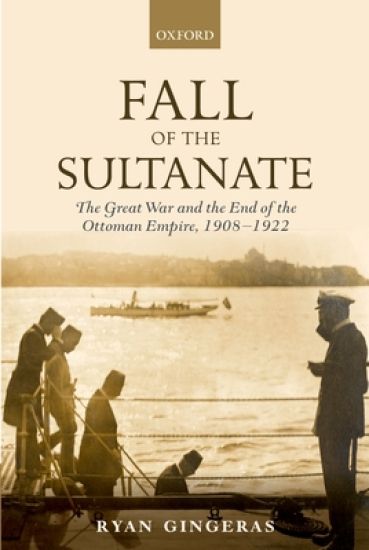
Fall of the Sultanate

Fall of the Sultanate

Ryan Gingeras

Oxford University Press
2019
nidottu
The collapse of the Ottoman Empire was by no means a singular event. After six hundred years of ruling over the peoples of North Africa, the Balkans and Middle East, the death throes of sultanate encompassed a series of wars, insurrections, and revolutions spanning the early twentieth century. This volume encompasses a full accounting of the political, economic, social, and international forces that brought about the passing of the Ottoman state. In surveying the many tragedies that transpired in the years between 1908 and 1922, Fall of the Sultanate explores the causes that eventually led so many to view the legacy of the Ottomans with loathing and resentment. The volume provides a retelling of this critical history as seen through the eyes of those who lived through the Ottoman collapse. Drawing upon a large gamut of sources in multiple languages, Ryan Gingeras strikes a critical balance in presenting and interpreting the most impactful experiences that shaped the lives of the empire's last generation. The story presented here takes into account the perspectives of the empire's diverse population as well as the leaders who piloted the state to its end. In surveying the personal, communal and national struggles that defined Italy's invasion of Libya, the Balkan War, the Great War, and the Turkish War of Independence, Fall of the Sultanate presents readers with a fresh and comprehensive exposition of how and why Ottoman imperial rule ended in bloodshed and disillusionment.
Paradoxes of Time Travel

Paradoxes of Time Travel

Ryan Wasserman

Oxford University Press
2020
nidottu
Ryan Wasserman explores a range of fascinating questions raised by the possibility of time travel. This volume explores a wide-range of puzzles such as the grandfather paradox, the bootstrapping paradox, and the twin paradox of special relativity. Ryan Wasserman draws out their implications for our understanding of time, tense, freedom, fatalism, causation, counterfactuals, laws of nature, persistence, change, and mereology. Paradoxes of Time Travel is written in an accessible style, and filled with entertaining examples from physics, science fiction, and popular culture.
Thomas Reid's Theory of Perception

Thomas Reid's Theory of Perception

Ryan Nichols

Clarendon Press
2007
sidottu
The thesis that the mind cannot directly apprehend features of the physical world - what Reid calls the Way of Ideas - is a staple of Early Modern philosophical tradition. This commitment to the direct awareness of, and only of, mental representations unifies the otherwise divergent philosophical systems of Rationalists and Empiricists. Thomas Reid battles against this thesis on many fronts, in particular over the nature of perception. Ryan Nichols lays the groundwork for Reid's theory of perception by developing Reid's unheralded argument against a representational theory of thought, which Nichols applies to his discussion of the intentionality of perceptual states and Reid's appeal to 'signs'. Reid's efforts to preserve common sense epistemic commitments also lead him to adopt unique theories about our concepts of primary and secondary qualities, and about original and acquired perceptions. About the latter pair, Nichols argues that most perceptual beliefs depend for their justification upon inferences. The Way of Ideas holds that sensations are objects of awareness and that our senses are not robustly unified. Nichols develops Reid's counter-proposals by examining his discussion of the evolutionary purpose of sensations, and the nature of our awareness of sensations, as well as his intriguing affirmative answer to Molyneux's questions. Nichols brings to the writing of this book a consummate knowledge of Reid's texts, published and unpublished, and a keen appreciation for Reid's responses to his predecessors. He frequently reconstructs arguments in premise/conclusion form, thereby clarifying disputes that have frustrated previous Reid scholarship. This clarification, his lively examples, and his plainspoken style make this book especially readable. Reid's theory of perception is by far the most important feature of Reid's philosophical system, and Nichols offers what will be, for a long time to come, the definitive analysis of this theory.