Kirjojen hintavertailu. Mukana 12 016 292 kirjaa ja 12 kauppaa.

Kirjahaku

Etsi kirjoja tekijän nimen, kirjan nimen tai ISBN:n perusteella.

1000 tulosta hakusanalla S. Jason Cunningham

Conqueror of the Sun 4 - Queen's Chaos

Conqueror of the Sun 4 - Queen's Chaos

Jason Marcus Torraunt

Independently Published
2019
pokkari
Conqueror of the Sun - Book 4 - Queen's Chaos tells the story of Sarah Arc inheriting the IRF Empire after her husband's death. As the years pass by and the empire continues to crumble under the empress's reign, Jareth Arc seeks to become the new emperor and the Conqueror of the Sun to restore the old glory of the IRF. Can Jareth Arc rebuild the IRF Empire and finally realize his father's dream of a global empire? Will the supernatural demonic priestess Ashley help Jareth to victory or lead him to destruction? The Conqueror of the Sun series is a seven-book saga that has been 30 years in the making. The story is about a man named Shawn Arc and his desire for power and control beyond anything achieved in human history so far. The tale takes place in an alternate history that starts in the 1990s and extends far, far into the future. Shawn Arc is willing to do anything to accomplish his goals, whether it be by deception, conspiracy, war, betrayal, or on the backs of millions of dead. At the same time, the story shows that Shawn Arc is also about love, romance, and intimate relationships. Can this man be both monster and human? Or is he merely a larger than normal mirror to reflect the essence of the human condition?
Madison Mosby and the Beggar's Court

Madison Mosby and the Beggar's Court

Jason Winn

Independently Published
2019
nidottu
The Moonmilk War has ended and magic has gone viral.All of which is drawing more unwanted attention to Madison Mosby and her sisters. Sorcerers are settling old scores in the streets, making them prime targets for foreign countries looking to abduct and exploit them. It's only a matter of time before everyone goes looking for the match that sparked the magical revolution. A search that will lead straight to the Mosby girls.With her closest ally dead, Madison has few people she can count on to help stave off attacks that are closing in from all sides. Just when they fear their grandmothers legacy will crumble, one Mosby sister learns a dark secret that could change everything...From author Jason Winn comes an epic noir/ urban fantasy mash-up that will leave readers enthralled
A New Life: An Innkeeper's Story

A New Life: An Innkeeper's Story

Jason Menendez

Independently Published
2019
nidottu
The greatest thing about being an Innkeeper is having people from all walks of life staying with you. This story tells the tale of 1 Innkeeper and the daily trials of running a Bed & Breakfast. The final book of the Turndown Service Requested series has the 2 main characters moving into a place of their own where Xavier will be the Innkeeper, and discover firsthand running your own small business is no easy feat.
A Distorted Revolution: How Eric's Trip Changed Music, Moncton and Me
In this narrative history and memoir, journalist, musician, and Monctonian Jason Murray follows the rise of the band that put the Maritimes on the map.Eric's Trip was a band defined as much by its DIY ethos as its low-fi, discordant music. The four-piece formed in an early-'90s Moncton basement and in a few short years, went from recording themselves on a four-track and selling cassettes at local record stores to signing on Seattle's Sub Pop records, opening for Sonic Youth, and touring internationally.Twenty years after the band's breakup (1996), A Distorted Revolution is the ultimate nostalgia trip. Through personal recollections, interviews with band members and others integral to the early 90s scene, this highly anticipated book offers a rare glimpse inside the band's formation, success, and ultimate unravelling. Includes over 20 images.
The The Insider’s Guide to Arm Cortex-M Development

The The Insider’s Guide to Arm Cortex-M Development

Zachary Lasiuk; Pareena Verma; Jason Andrews

PACKT PUBLISHING LIMITED
2022
nidottu
Learn and implement the latest Arm Cortex-M microcontroller development concepts such as performance optimization, security, software reuse, machine learning, continuous integration, and cloud-based development from industry expertsKey FeaturesLearn how to select the best Cortex-M hardware, software, and tools for your projectUnderstand the use of key software components and how to optimize and develop modern applicationsGet hands-on experience implementing quality software using example code provided in the bookPurchase of the print or Kindle book includes a free eBook in the PDF formatBook DescriptionCortex-M has been around since 2004, so why a new book now? With new microcontrollers based on the Cortex-M55 and Cortex-M85 being introduced this year, Cortex-M continues to expand. New software concepts, such as standardized software reuse, have emerged alongside new topics including security and machine learning. Development methodologies have also significantly advanced, with more embedded development taking place in the cloud and increased levels of automation. Due to these advances, a single engineer can no longer understand an entire project and requires new skills to be successful.This book provides a unique view of how to navigate and apply the latest concepts in microcontroller development. The book is split into two parts. First, you’ll be guided through how to select the ideal set of hardware, software, and tools for your specific project. Next, you’ll explore how to implement essential topics for modern embedded developers. Throughout the book, there are examples for you to learn by working with real Cortex-M devices with all software available on GitHub. You will gain experience with the small Cortex-M0+, the powerful Cortex-M55, and more Cortex-M processors.By the end of this book, you’ll be able to practically apply modern Cortex-M software development concepts.What you will learnFamiliarize yourself with heuristics to identify the right components for your Cortex-M projectBoot code to efficiently start up a Cortex-M deviceOptimize algorithms with compilers, middleware, and other meansGet to grips with machine learning frameworks and implementation techniquesUnderstand security in the embedded space with solutions like TrustZone and TF-MExplore cloud-based development methodologies to increase efficiencyDive into continuous integration frameworks and best practicesIdentify future trends that could impact Cortex-M software developmentWho this book is forThis book is for practicing engineers and students working with embedded and IoT systems who want to quickly learn how to develop quality software for Arm Cortex-M processors without reading long technical manuals. If you’re looking for a book that explains C or assembly language programming for the purpose of creating a single application or mastering a type of programming such as digital signal processing algorithms, then this book is NOT for you. A basic understanding of embedded hardware and software, along with general C programming skills will assist with understanding the concepts covered in this book.
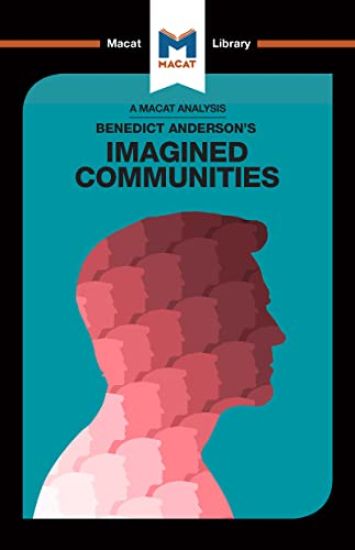
An Analysis of Benedict Anderson's Imagined Communities

An Analysis of Benedict Anderson's Imagined Communities

Jason Xidias

Macat International Limited
2017
nidottu
Benedict Anderson’s 1983 masterpiece Imagined Communities is a ground-breaking analysis of the origins and meanings of “nations” and “nationalism”. A book that helped reshape the field of nationalism studies, Imagined Communities also shows the critical thinking skills of interpretation and analysis working at their highest levels. One crucial aspect of Anderson’s work involves the apparently simple act of defining precisely what we mean when we say ‘nation’ or ‘nationalism’ – an interpretative step that is vital to the analysis he proceeds to carry out. For Anderson, it is clear that nations are not ‘natural;’ as historians and anthropologists are well aware, nations as we understand them are a relatively modern phenomenon, dating back only as far as around 1500. But if this is the case, how can we agree what a ‘nation’ is? Anderson’s proposed definition is that they are “imagined communities” – comprising groups of people who regard themselves as belonging to the same community, even if they have never met, and have nothing in common otherwise. The analysis that follows from this insight is all about examining and breaking down the historical processes that helped foster these communities – above all the birth of printing, and the development of capitalism. Brilliantly incisive, Anderson’s analysis shows how good interpretative skills can form the foundations for compelling and original insight.
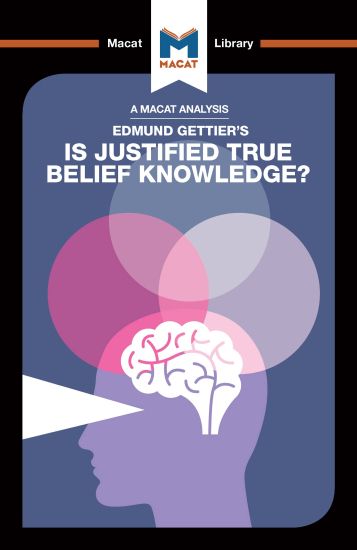
An Analysis of Edmund Gettier's Is Justified True Belief Knowledge?
For 2,000 years, the standard philosophical model of knowledge was that it could be defined as a justified true belief. According to this way of thinking, we can know, for example, that we are human because [1] we believe ourselves to be human; [2] that belief is justified (others treat us as humans, not as dogs); and [3] the belief is true. This definition, which dates to Plato, was challenged by Edmund Gettier in one of the most influential works of philosophy published in the last century – a three page paper that produced two clear examples of justified true beliefs that could not, in fact, be considered knowledge. Gettier's achievement rests on solid foundations provided by his mastery of the critical thinking skill of analysis. By understanding the way in which Plato – and every other epistemologist – had built their arguments, he was able to identify the relationships between the parts, and the assumptions that underpinned then. That precise understanding was what Gettier required to mount a convincing challenge to the theory – one that was bolstered by a reasoning skill that put his counter case pithily, and in a form his colleagues found all but unchallengeable.
An Analysis of Robert A. Dahl's Who Governs? Democracy and Power in an American City

An Analysis of Robert A. Dahl's Who Governs? Democracy and Power in an American City

Astrid Noren Nilsson; Jason Xidias

Macat International Limited
2017
nidottu
American political theorist Robert Dahl’s 1961 work of political theory exhibits deep levels of creative thinking. When Dahl wrote, the American system of liberal democracy was generally considered to be shaped by a small group of powerful individuals who dominate because they are wealthy and influential. But by connecting the evidence in a new way in Who Governs? Dahl argued convincingly against this view.Dahl suggested that power is actually distributed among a number of competing groups, and that each of those groups seeks to influence decisions. He puts forward a definition of political power as the ability to make others do what you want them to, concluding that – while most people do not actively participate in politics and so do not exert a direct influence – power is still fragmented, and citizens do indirectly shape decision-making.Dahl’s novel explanation of the existing evidence emerged from a study of three areas of policy-making in the city of New Haven: political nominations, urban redevelopment, and public education. His research revealed that different people wielded power in each area, and that only the mayor, whose power is checked by those who vote for him, was powerful in all three. These new connections allowed Dahl to arrive at fresh conclusions and convincingly demonstrated that the US operates a pluralist system in which power is divided between different interest groups.
An Analysis of Martin Luther King Jr.'s Why We Can't Wait

An Analysis of Martin Luther King Jr.'s Why We Can't Wait

Jason Xidias

Macat International Limited
2017
nidottu
Martin Luther King’s policy of non-violent protest in the struggle for civil rights in the United States during the second half of the twentieth century led to fundamental shifts in American government policy relating to segregation, and a cultural shift in the treatment of African Americans. King’s 1964 book Why We Can’t Wait creates strong, well-structured arguments as to why he and his followers chose to wage a nonviolent struggle in the fight to advance freedom and equality for black people following ‘three hundred years of humiliation, abuse, and deprivation.’ The author highlights a number of reasons why African Americans must demand their civil rights, including frustration at the lack of political will to tackle racism and inequality. Freedoms gained by African nations after years of colonial rule, as well as the US trumpeting its own values of freedom and equality in an ideological war with the Soviet Union, also played their part. King dealt with the counter-argument that civil rights for blacks would be detrimental to whites in America by explaining that racism is a disease that deeply penetrates both the white and the black psyche. His reasoning dictated that the brave act of nonviolent mass protest would provoke the kind of thinking that would eventually eliminate racism, and give birth to equality for all of ‘God’s children.’
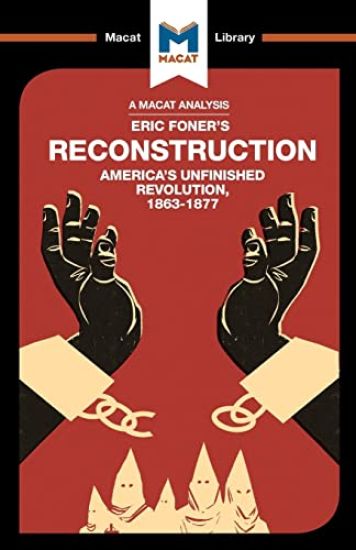
An Analysis of Eric Foner's Reconstruction

An Analysis of Eric Foner's Reconstruction

Jason Xidias

Macat International Limited
2017
nidottu
‘Reconstruction’ is the name given to the period that, beginning shortly before the end of the American Civil War and running until 1877, saw the frustration of federal government's attempts to integrate the newly freed slaves into the American political and economic system. It ended in frustration, disillusionment and also violence, with individual southern states denying rights to freed slaves, preventing them from voting, and largely forcing them back into roles that exploited their labor and prevented them from gaining access to education. For much of the 20th century, the predominant view of the Reconstruction period was that of the Dunning School, which argued that former slaves were unprepared for the responsibilities of voting and holding office, and that it was their incapability of handling such responsibilities – and not the racist actions of whites – that was largely responsible for the failures of the Reconstruction period. Eric Foner's great work reverses those judgements. Foner adopts a problem-solving approach, asking productive questions of state archives and generating and assessing alternative possibilities to assess the views of the Dunning School in a much wider context. His verdict – that slaves and freedmen were often key figures who shaped the eventual emergence of a more progressive American democracy – is backed up by persuasive reasoning which explains how these results came about and shows how the white establishment, led by President Andrew Johnson, was primarily responsible for the disasters of the Reconstruction era.
An Analysis of Edmund Gettier's Is Justified True Belief Knowledge?
For 2,000 years, the standard philosophical model of knowledge was that it could be defined as a justified true belief. According to this way of thinking, we can know, for example, that we are human because [1] we believe ourselves to be human; [2] that belief is justified (others treat us as humans, not as dogs); and [3] the belief is true. This definition, which dates to Plato, was challenged by Edmund Gettier in one of the most influential works of philosophy published in the last century – a three page paper that produced two clear examples of justified true beliefs that could not, in fact, be considered knowledge. Gettier's achievement rests on solid foundations provided by his mastery of the critical thinking skill of analysis. By understanding the way in which Plato – and every other epistemologist – had built their arguments, he was able to identify the relationships between the parts, and the assumptions that underpinned then. That precise understanding was what Gettier required to mount a convincing challenge to the theory – one that was bolstered by a reasoning skill that put his counter case pithily, and in a form his colleagues found all but unchallengeable.
An Analysis of Benedict Anderson's Imagined Communities

An Analysis of Benedict Anderson's Imagined Communities

Jason Xidias

Macat International Limited
2017
sidottu
Benedict Anderson’s 1983 masterpiece Imagined Communities is a ground-breaking analysis of the origins and meanings of “nations” and “nationalism”. A book that helped reshape the field of nationalism studies, Imagined Communities also shows the critical thinking skills of interpretation and analysis working at their highest levels. One crucial aspect of Anderson’s work involves the apparently simple act of defining precisely what we mean when we say ‘nation’ or ‘nationalism’ – an interpretative step that is vital to the analysis he proceeds to carry out. For Anderson, it is clear that nations are not ‘natural;’ as historians and anthropologists are well aware, nations as we understand them are a relatively modern phenomenon, dating back only as far as around 1500. But if this is the case, how can we agree what a ‘nation’ is? Anderson’s proposed definition is that they are “imagined communities” – comprising groups of people who regard themselves as belonging to the same community, even if they have never met, and have nothing in common otherwise. The analysis that follows from this insight is all about examining and breaking down the historical processes that helped foster these communities – above all the birth of printing, and the development of capitalism. Brilliantly incisive, Anderson’s analysis shows how good interpretative skills can form the foundations for compelling and original insight.
An Analysis of Robert A. Dahl's Who Governs? Democracy and Power in an American City

An Analysis of Robert A. Dahl's Who Governs? Democracy and Power in an American City

Astrid Noren Nilsson; Jason Xidias

Macat International Limited
2017
sidottu
American political theorist Robert Dahl’s 1961 work of political theory exhibits deep levels of creative thinking. When Dahl wrote, the American system of liberal democracy was generally considered to be shaped by a small group of powerful individuals who dominate because they are wealthy and influential. But by connecting the evidence in a new way in Who Governs? Dahl argued convincingly against this view.Dahl suggested that power is actually distributed among a number of competing groups, and that each of those groups seeks to influence decisions. He puts forward a definition of political power as the ability to make others do what you want them to, concluding that – while most people do not actively participate in politics and so do not exert a direct influence – power is still fragmented, and citizens do indirectly shape decision-making.Dahl’s novel explanation of the existing evidence emerged from a study of three areas of policy-making in the city of New Haven: political nominations, urban redevelopment, and public education. His research revealed that different people wielded power in each area, and that only the mayor, whose power is checked by those who vote for him, was powerful in all three. These new connections allowed Dahl to arrive at fresh conclusions and convincingly demonstrated that the US operates a pluralist system in which power is divided between different interest groups.
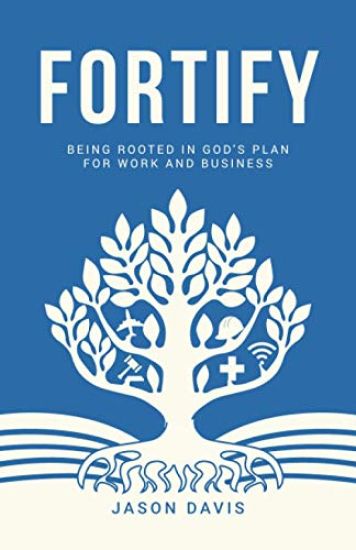
Fortify: Being Rooted in God's Plan For Work And Business
The mounting pressures of work environments are causing Christians to comply with the world's way of handling business, rather than changing the business climate with their faith. Fortify: Being Rooted in God's Plan For Work And Business is Christian Literature for Christian business owners and employees desiring to learn more about God's significance in the workplace. Readers will learn why they work, who they really work for, what business accomplishes when it's conducted in a Godly fashion, and how the world's business acumen borrows from the ultimate source: God's Word. Grounded in scripture, Jason Davis will take you through an insightful exploration of ten business concepts, including purpose, stewardship, leadership, values, planning, human resources, teamwork, conflict, rest, and continuous improvement. Jason has helped lead people out of over $310,000 of debt and set aside upwards of $100,000 in savings. His impact extends to the organizational level, having trained over 1000 individuals on the concepts of leadership development and teamwork. Jason is a John Maxwell Certified Trainer and Coach, a DISCflex Certified Coach, a graduate of Dave Ramsey's Financial Coach Master Training, and a Kanban Management Professional. The world says a lot about business, but God says more. Don't conform to the world's way of doing business. Transform by doing business God's way.
Gripped: Your Personality Is What's Holding You Back

Gripped: Your Personality Is What's Holding You Back

Jason Donnelly

Createspace Independent Publishing Platform
2020
nidottu
Marky McCarren was just living his boring, everyday life... that is, until he lost his job, his TV started talking directly to him, and a program he didn't order started telling him how to live his life. When he's not following directions from the ominously named, "Your Personality is What's Holding You Back" group, he's just trying to meet a nice girl, take care of his cat, and "take care" of himself. This book will make you believe you're already in the program, because honestly, we're all taking cues from one group or another.
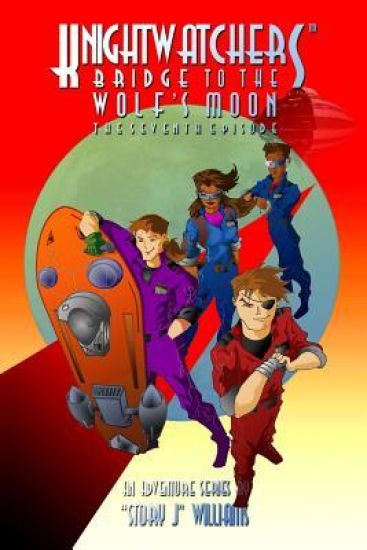
KnightWatchers: Bridge to the Wolf's Moon - the seventh episode

KnightWatchers: Bridge to the Wolf's Moon - the seventh episode

Jason D. Williams

Createspace Independent Publishing Platform
2018
nidottu
One month has transpired since the rescue of Flash's Neutronian countryman, Betaqui Osyrus, who is now a student of Tecmonian Institute. Decked out in her new blue and brown freshman jumpsuit, Osyrus is soon besieged in training alongside Flash, Ace, and Alabam for their new duties. However, their first mission as a foursome has already arrived.Princess Alayna has been called to Canis Alpha, a planet inhabited by intelligent canines, for a trade settlement. However, instead of calling upon adult galactic soldiers for protection, Alayna insists her three young knights and newcomer Beta, accompany her to the negotiations. But as soon as the T-16's away, the shadows are at play and a separate plot arises. Information has gone missing from the computer banks and sent to an unknown receiver. A cloaked man is on the station sending surreptitious communications - and let's face it, cloaked men are never a good thing in stories like these. Will they make it to Canis Alpha alive?Will they discover their shadowy intruder?Will cloaks come back into fashion?These melodramatic questions and more may all be answered in "Bridge to the Wolf's Moon."
Zhizn posle travmy: Kak pomoch blizkomu s posttravmaticheskim stressovym rasstrojstvom
Pervoe izdanie dlja tekh, kto nakhoditsja rjadom s ljudmi, stradajuschimi PTSR, ikh blizkikh i druzej. Pomogaet adaptirovatsja, ponjat, kak sebja vesti, ustanovit lichnye granitsy, vmeste idti k vyzdorovlenijuOgromnoe kolichestvo istorij realnykh ljudejAvtory - vrachi, klinicheskie psikhologi, kotorye postojanno rabotajut s klientami s PTSRPoterja blizkogo cheloveka, perezhitoe nasilie, avtomobilnaja avarija ili uchastie v boevykh dejstvijakh redko prokhodjat bessledno. Perezhivanie psikhologicheskoj travmy zachastuju soprjazheno s povyshennoj trevozhnostju, izmenenijami v nastroenii i povedenii, bessonnitsej i golovnymi boljami. Ponimanie i podderzhka vazhny dlja pomoschi tem, kto stradaet posttravmaticheskim stressovym rasstrojstvom, no potrebnosti ikh rodstvennikov i druzej chasto upuskajutsja iz vidu. Chto delat, chtoby uskorit vosstanovlenie psikhiki blizkogo cheloveka, no ne nanesti vred svoej? Kuda obratitsja, esli vy chuvstvuete, chto ne spravljaetes s nagruzkoj?Rodnym i druzjam postradavshikh prikhoditsja prinimat mnogo neprostykh reshenij. Vas vse vremja muchajut voprosy: kak vam vesti sebja s nim, kak emu pomoch, skolko vremeni emu posvjaschat? Voprosy mogut kasatsja i melkikh povsednevnykh problem: "Nado li segodnja ostavatsja s nim doma ili mozhno pojti na vstrechu s podrugami?" Ili: "Ona vse ravno ujdet v samom nachale vecherinki - tak stoit li ee voobsche priglashat?" No nekotorye voprosy kasajutsja kuda bolee znachimykh aspektov vashej zhizni: "On pugaet menja, kogda bet kulakami po stenam, no ja ljublju ego - stoit li razryvat s nim otnoshenija?"Opytnye klinicheskie psikhologi Klaudia Zejfert i Dzhejson Deviva v svoej knige rasskazyvajut o tom, kak vesti sebja s ljudmi s PTSR, kak okazyvat dejstvennuju podderzhku, no ne zabyvat o sobstvennom blagopoluchii. Ikh kniga - podrobnoe rukovodstvo, kotoroe pomozhet preodolevat trudnosti vmeste s blizkimi i zhit zdorovoj polnotsennoj zhiznju.Kak uzhe govorilos v glave 2, izbeganie - odin iz trekh osnovnykh simptomov PTSR. Spetsialisty schitajut, chto izbeganie ljudej, mest i sobytij, napominajuschikh o travme ili vyzyvajuschikh svjazannye s nej mysli i chuvstva, ne daet postradavshim osoznat, chto v tselom mir dlja nikh bezopasen. Poka oni ne osoznajut eto, oni budut nakhoditsja v sostojanii posttravmaticheskogo stressa. Izuchiv i ponjav etot protsess, vy stanete luchshe razbiratsja v tom, chto perezhivaet vash blizkij, i pomozhete emu dvigatsja dalshe.Dlja kogoDlja ljudej, stolknuvshikhsja s simptomami PTSR u blizkikh.Dlja vsekh, komu interesna psikhologija travmy.Esli postradavshemu ne udalos obrabotat vpechatlenija ot proizoshedshego vo vremja travmirujuschego opyta ili posle nego, vospominanija o travme stanovjatsja nezavershennym dejstviem. Mozg po-prezhnemu pytaetsja ikh obrabotat libo vo vremja sna, libo kogda vospominanija vozvraschajutsja po kakim-libo prichinam. Kogda vospominanija pronikajut v soznanie, oni prinosjat s soboj vse oschuschenija, emotsii i smysly, kotorye svjazany u postradavshego s etim sobytiem.
Es Solo Un Pensamiento / It's Just a Thought: Explora Tu Mente Maravillosa / Explore Your Marvellous Mind
Ilustraciones de Ignasi Font «Esto es asqueroso , «me encanta el tofu , « eres de M xico? . Los pensamientos pueden ser felices, tristes, terror ficos, alegres o de preocupaci n, y siempre llegan a nuestra mente en un flujo constante. Pero solo son pensamientos y ninguno de ellos nos define. La magia de tu mente es que se trta de un espacio donde todo es posible Illustrations by Ignasi Font "This is disgusting", "I love tofu", "are you from Mexico?". Thoughts can be happy, sad, scary, joyful, or worrying, and they always come to our mind in a steady stream. But they are only thoughts and none of them define us. The magic of your mind is that it is a space where everything is possible