Kirjojen hintavertailu. Mukana 12 016 292 kirjaa ja 12 kauppaa.

Kirjahaku

Etsi kirjoja tekijän nimen, kirjan nimen tai ISBN:n perusteella.

1000 tulosta hakusanalla Seth a. Graham

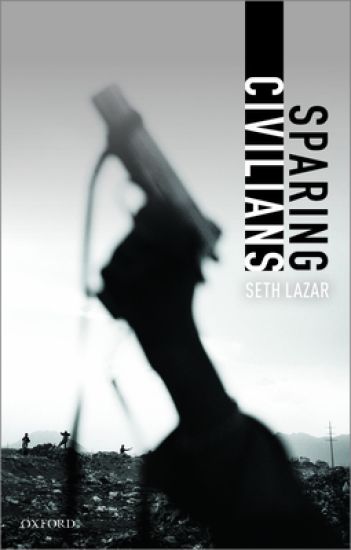
Sparing Civilians

Sparing Civilians

Seth Lazar

Oxford University Press
2015
sidottu
Killing civilians is worse than killing soldiers. If any moral principle commands near universal assent, this one does. It is written into every major historical and religious tradition that has addressed armed conflict. It is uncompromisingly inscribed in international law. It underpins and informs public discussion of conflict--we always ask first how many civilians died? And it guides political practice, at least in liberal democracies, both in how we fight our wars and in which wars we fight. Few moral principles have been more widely and more viscerally affirmed than this one. And yet, in recent years it has faced a rising tide of dissent. Political and military leaders seeking to slip the constraints of the laws of war have cavilled and qualified. Their complaints have been unwittingly aided by philosophers who, rebuilding just war theory from its foundations, have concluded that this principle is at best a useful fiction. Sparing Civilians aims to turn this tide, and to vindicate international law, and the ruptured consensus. In doing so, Seth Lazar develops new insights into the morality of harm, relevant to everyone interested in normative ethics and political philosophy.
Sparing Civilians

Sparing Civilians

Seth Lazar

Oxford University Press
2020
nidottu
Killing civilians is worse than killing soldiers. If any moral principle commands near universal assent, this one does. It is written into every major historical and religious tradition that has addressed armed conflict. It is uncompromisingly inscribed in international law. It underpins and informs public discussion of conflict—we always ask first how many civilians died? And it guides political practice, at least in liberal democracies, both in how we fight our wars and in which wars we fight. Few moral principles have been more widely and more viscerally affirmed than this one. And yet, in recent years it has faced a rising tide of dissent. Political and military leaders seeking to slip the constraints of the laws of war have cavilled and qualified. Their complaints have been unwittingly aided by philosophers who, rebuilding just war theory from its foundations, have concluded that this principle is at best a useful fiction. Sparing Civilians aims to turn this tide, and to vindicate international law, and the ruptured consensus. In doing so, Seth Lazar develops new insights into the morality of harm, relevant to everyone interested in normative and applied ethics.
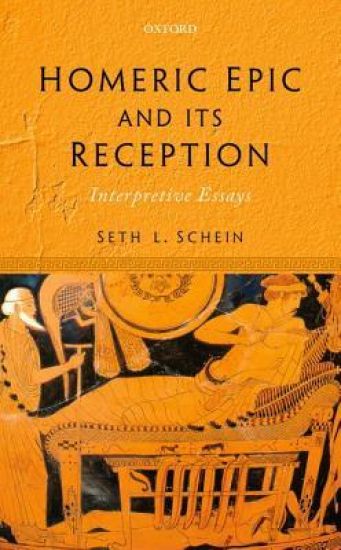
Homeric Epic and its Reception

Homeric Epic and its Reception

Seth L. Schein

Oxford University Press
2015
sidottu
Homeric Epic and its Reception, comprising twelve chapter--some previously published but revised for this collection, and others appearing here in print for the first time--offers literary interpretations of the Iliad, the Odyssey, and the Homeric Hymn to Aphrodite. While some chapters closely study the diction, meter, style, and thematic resonance of particular passages and episodes in the Iliad and the Odyssey, others follow diverse pathways into the interpretation of the epics, including mythological allusion, intertextuality, the metrics of the Homeric hexameter, and the fundamental contrast between divinity and humanity. Also included are two chapters which focus on the work of Milman Parry and Ioannis Kakridis, founders of the two most fruitful twentieth-century scholarly approaches to Homeric scholarship: the study of the Iliad and the Odyssey as traditional oral formulaic poetry (Parry), and the study of the poems' adaptations and transformations of traditional mythology, folktales, and poetic motifs in accordance with their distinctive themes and poetic purposes (Kakridis). The volume draws to a close with three chapters which discuss some of the most compelling poetic and critical receptions of the Iliad and the Odyssey since the late nineteenth century, and the institutional reception of the epics in colleges and universities in the United States over the past two centuries. Written over a period of 45 years, this collection reflects the authors long-standing interest in, and scholarly and critical approaches to, the literary interpretation of Homeric poetry.
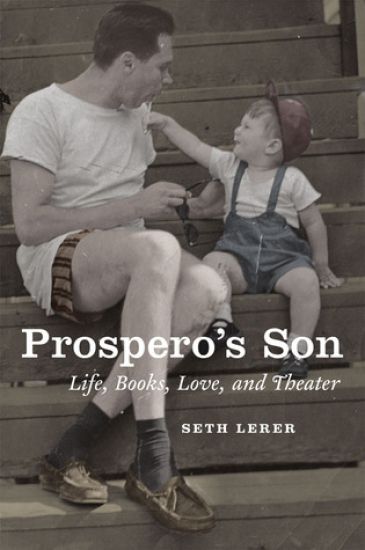
Prospero's Son

Prospero's Son

Seth Lerer

University of Chicago Press
2013
sidottu
This book is the record of a struggle between two temperaments, two consciousnesses and almost two epochs." That's how Edmund Gosse opened "Father and Son", the classic 1907 book about his relationship with his father. Seth Lerer's "Prospero's Son" is, as fits our latter days, altogether more complicated, layered, and multivalent, but at its heart is that same problem: the fraught relationship between fathers and sons. At the same time, Lerer's memoir is about the power of books and theater, the excitement of stories in a young man's life, and the transformative magic of words and performance. A flamboyantly performative father, a teacher and lifelong actor, comes to terms with his life as a gay man. A bookish boy becomes a professor of literature and an acclaimed expert on the very children's books that set him on his path in the first place. And when that boy grows up, he learns how hard it is to be a father and how much books can, and cannot, instruct him. Throughout these intertwined accounts of changing selves, Lerer returns again and again to stories - the ways they teach us about discovery, deliverance, forgetting, and remembering. "A child is a man in small letter," wrote Bishop John Earle in the seventeenth century. "His father hath writ him as his own little story." With "Prospero's Son", Seth Lerer acknowledges the author of his story while simultaneously reminding us that we all confront the blank page of life on our own, as authors of our lives.
The Rhetoric of Morality and Philosophy

The Rhetoric of Morality and Philosophy

Seth Benardete

University of Chicago Press
2009
nidottu
"The Rhetoric of Morality and Philosophy", one of the most groundbreaking works of twentieth-century Platonic studies, is now back in print for a new generation of students and scholars to discover. In this volume, distinguished classicist Seth Benardete interprets and pairs two important Platonic dialogs, the Gorgias and the Phaedrus, illuminating Socrates' notion of rhetoric and Plato's conception of morality and eros in the human soul. Following his discussion of the Gorgias as a dialog about the rhetoric of morality, Benardete turns to the Phaedrus as a discourse about genuine rhetoric, namely the science of eros, or true philosophy. This novel interpretation addresses numerous issues in Plato studies: the relation between the structure of the Gorgias and the image of soul/city in the Republic, the relation between the structure of Phaedrus and the concept of eros, and Socrates' notion of ignorance, among others.
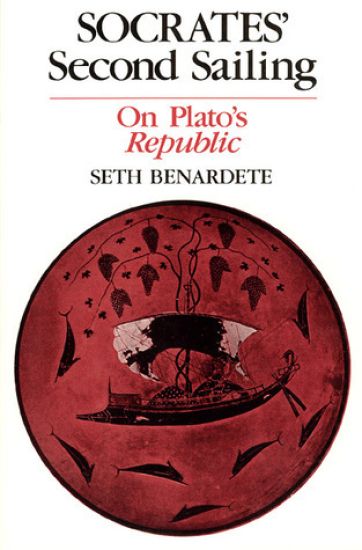
Socrates' Second Sailing

Socrates' Second Sailing

Seth Benardete

University of Chicago Press
1992
nidottu
In this section-by-section commentary, Benardete argues that Plato's Republic is a holistic analysis of the beautiful, the good, and the just. This book provides a fresh interpretation of the Republic and a new understanding of philosophy as practiced by Plato and Socrates. "Cryptic allusions, startling paradoxes, new questions ...all work to give brilliant new insights into the Platonic text."--Arlene W. Saxonhouse, Political Theory
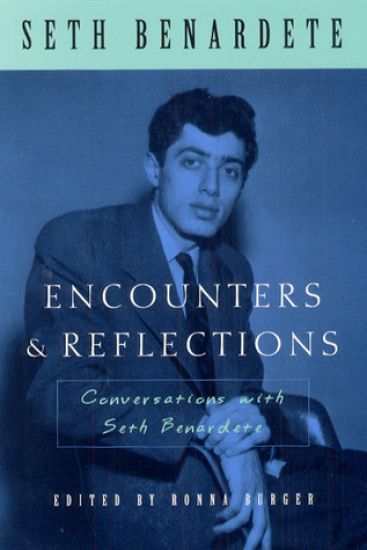
Encounters and Reflections

Encounters and Reflections

Seth Benardete

University of Chicago Press
2003
sidottu
By turns wickedly funny and profoundly illuminating, "Encounters and Reflections" presents a captivating and unconventional portrait of the life and works of Seth Benardete. One of the leading scholars of ancient thought, Benardete here reflects on both the people he knew and the topics that fascinated him throughout his career in a series of candid, freewheeling conversations with Robert Berman, Ronna Burger and Michael Davis. The first part of the book discloses vignettes about fellow students, colleagues and acquaintances of Benardete's who later became major figures in the academic and intellectual life of 20th-century America. We glimpse the student days of Allan Bloom, Stanley Rosen and George Steiner, and we discover the life of the mind as lived by well-known scholars such as David Grene, Jacob Klein and Benardete's mentor Leo Strauss. We also encounter a number of other learned and sometimes eccentric luminaries, including T.S. Eliot, James Baldwin, Werner Jaeger, John Davidson Beazley and Willard Quine. In the book's second part, Benardete reflects on his own intellectual growth and on his ever-evolving understanding of the texts and ideas he spent a life-time studying. Revisiting some of his recurrent themes - among them eros and the beautiful, the city and the law, and the gods and the human soul - Benardete shares his views on thinkers such as Plato, Homer and Heidegger, as well as the relations between philosophy and science and between Christianity and ancient Roman thought. Engaging and informative, "Encounters and Reflections" brings Benardetes's thought to life to enlighten and inspire a new generation of thinkers.
Prospero's Son

Prospero's Son

Seth Lerer

University of Chicago Press
2014
nidottu
Seth Lerer's moving memoir Prospero's Son is rooted in the age-old problem of the fraught relationship between fathers and sons. But at the same time, it is about the power of books and theater, the excitement of stories in a young man's life, and the transformative magic of words and performance. A flamboyantly performative father, a teacher and lifelong actor, comes to terms with his life as a gay man. A bookish boy becomes a professor of literature and an acclaimed expert on the very children's books that set him on his path in the first place. And when that boy grows up, he learns how hard it is to be a father and just how much books can - and cannot - instruct him. Throughout these intertwined accounts of changing selves, Lerer returns again and again to stories - the ways they teach us about discovery, deliverance, forgetting, and remembering.
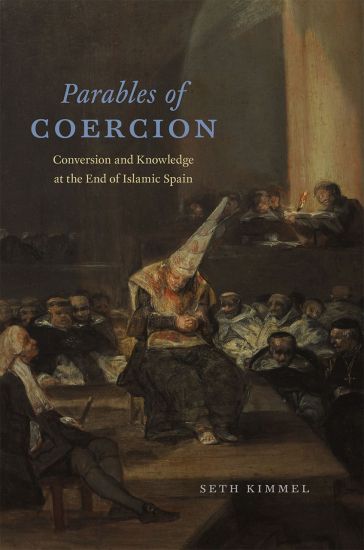
Parables of Coercion

Parables of Coercion

Seth Kimmel

University of Chicago Press
2015
sidottu
In the sixteenth and seventeenth centuries, competing scholarly communities sought to define a Spain that was, at least officially, entirely Christian, even if many suspected that newer converts from Islam and Judaism were Christian in name only. Unlike previous books on conversion in early modern Spain, however, Parables of Coercion focuses not on the experience of the converts themselves, but rather on how questions surrounding conversion drove religious reform and scholarly innovation. In its careful examination of how Spanish authors transformed the history of scholarship through debate about forced religious conversion, Parables of Coercion makes us rethink what we mean by tolerance and intolerance, and shows that debates about forced conversion and assimilation were also disputes over the methods and practices that demarcated one scholarly discipline from another.
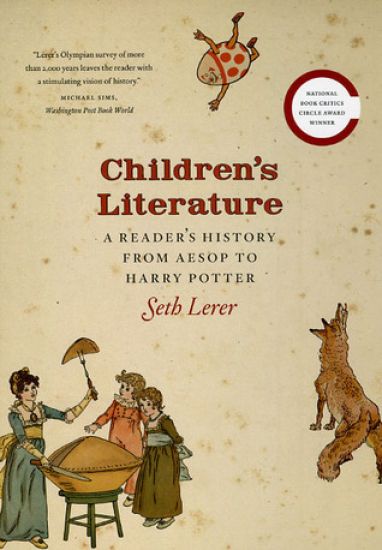
Children's Literature

Children's Literature

Seth Lerer

University of Chicago Press
2009
nidottu
Ever since children have learned to read, there has been children's literature. Seth Lerer here charts the makings of the Western literary imagination from Aesop's fables to Mother Goose, from Alice's Adventures in Wonderland to Peter Pan, from "Where the Wild Things Are" to "Harry Potter". The only single-volume work to capture the rich and diverse history of children's literature in its full panorama, this extraordinary book reveals why J. R. R. Tolkien, Dr. Seuss, Laura Ingalls Wilder, Beatrix Potter, and many others, despite their divergent styles and subject matter, have all resonated with generations of readers. "Children's Literature" is an exhilarating quest across centuries, continents, and genres to discover how, and why, we first fall in love with the written word.
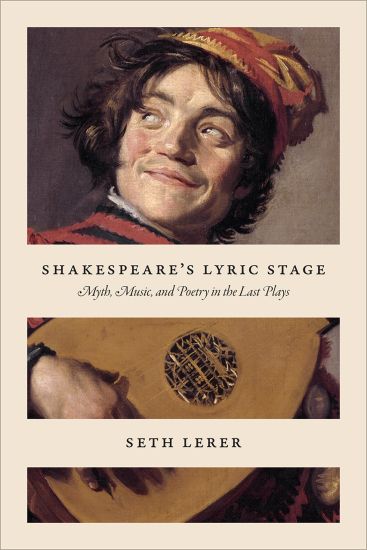
Shakespeare's Lyric Stage

Shakespeare's Lyric Stage

Seth Lerer

University of Chicago Press
2018
sidottu
What does it mean to have an emotional response to poetry and music? And, just as important but considered less often, what does it mean not to have such a response? What happens when lyric utterances—which should invite consolation, revelation, and connection—somehow fall short of the listener’s expectations? As Seth Lerer shows in this pioneering book, Shakespeare’s late plays invite us to contemplate that very question, offering up lyric as a displaced and sometimes desperate antidote to situations of duress or powerlessness. Lerer argues that the theme of lyric misalignment running throughout The Tempest, The Winter’s Tale, Henry VIII, and Cymbeline serves a political purpose, a last-ditch effort at transformation for characters and audiences who had lived through witch-hunting, plague, regime change, political conspiracies, and public executions. A deep dive into the relationship between aesthetics and politics, this book also explores what Shakespearean lyric is able to recuperate for these “victims of history” by virtue of its disjointed utterances. To this end, Lerer establishes the concept of mythic lyricism: an estranging use of songs and poetry that functions to recreate the past as present, to empower the mythic dead, and to restore a bit of magic to the commonplaces and commodities of Jacobean England. Reading against the devotion to form and prosody common in Shakespeare scholarship, Lerer’s account of lyric utterance’s vexed role in his late works offers new ways to understand generational distance and cultural change throughout the playwright’s oeuvre.
Shakespeare's Lyric Stage

Shakespeare's Lyric Stage

Seth Lerer

University of Chicago Press
2018
nidottu
What does it mean to have an emotional response to poetry and music? And, just as important but considered less often, what does it mean not to have such a response? What happens when lyric utterances—which should invite consolation, revelation, and connection—somehow fall short of the listener’s expectations? As Seth Lerer shows in this pioneering book, Shakespeare’s late plays invite us to contemplate that very question, offering up lyric as a displaced and sometimes desperate antidote to situations of duress or powerlessness. Lerer argues that the theme of lyric misalignment running throughout The Tempest, The Winter’s Tale, Henry VIII, and Cymbeline serves a political purpose, a last-ditch effort at transformation for characters and audiences who had lived through witch-hunting, plague, regime change, political conspiracies, and public executions. A deep dive into the relationship between aesthetics and politics, this book also explores what Shakespearean lyric is able to recuperate for these “victims of history” by virtue of its disjointed utterances. To this end, Lerer establishes the concept of mythic lyricism: an estranging use of songs and poetry that functions to recreate the past as present, to empower the mythic dead, and to restore a bit of magic to the commonplaces and commodities of Jacobean England. Reading against the devotion to form and prosody common in Shakespeare scholarship, Lerer’s account of lyric utterance’s vexed role in his late works offers new ways to understand generational distance and cultural change throughout the playwright’s oeuvre.
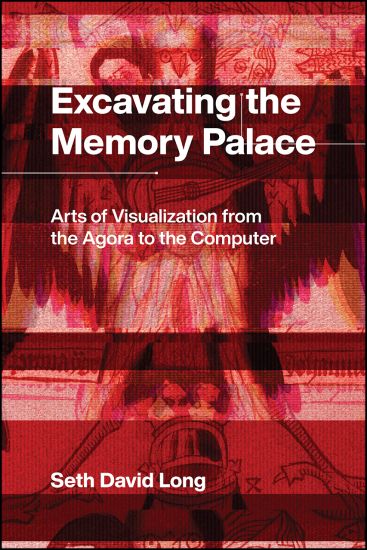
Excavating the Memory Palace

Excavating the Memory Palace

Seth Long

University of Chicago Press
2020
sidottu
With the prevalence of smartphones, massive data storage, and search engines, we might think of today as the height of the information age. In reality, every era has faced its own challenges of storing, organizing, and accessing information. While they lacked digital devices, our ancestors, when faced with information overload, utilized some of the same techniques that underlie our modern interfaces: they visualized and spatialized data, tying it to the emotional and sensory spaces of memory, thereby turning their minds into a visual interface for accessing information. In Excavating the Memory Palace, Seth David Long mines the history of Europe’s arts of memory to find the origins of today’s data visualizations, unearthing how ancient constructions of cognitive pathways paved the way for modern technological interfaces. Looking to techniques like the memory palace, he finds the ways that information has been tied to sensory and visual experience, turning raw data into lucid knowledge. From the icons of smart phone screens to massive network graphs, Long shows us the ancestry of the cyberscape and unveils the history of memory as a creative act.
Excavating the Memory Palace

Excavating the Memory Palace

Seth Long

University of Chicago Press
2020
nidottu
With the prevalence of smartphones, massive data storage, and search engines, we might think of today as the height of the information age. In reality, every era has faced its own challenges of storing, organizing, and accessing information. While they lacked digital devices, our ancestors, when faced with information overload, utilized some of the same techniques that underlie our modern interfaces: they visualized and spatialized data, tying it to the emotional and sensory spaces of memory, thereby turning their minds into a visual interface for accessing information. In Excavating the Memory Palace, Seth David Long mines the history of Europe’s arts of memory to find the origins of today’s data visualizations, unearthing how ancient constructions of cognitive pathways paved the way for modern technological interfaces. Looking to techniques like the memory palace, he finds the ways that information has been tied to sensory and visual experience, turning raw data into lucid knowledge. From the icons of smart phone screens to massive network graphs, Long shows us the ancestry of the cyberscape and unveils the history of memory as a creative act.
Plantation Goods

Plantation Goods

Seth Rockman

THE UNIVERSITY OF CHICAGO PRESS
2024
sidottu
A Pulitzer Prize finalist in History, this eye-opening rethinking of nineteenth-century American history reveals the interdependence of the Northern industrial economy and Southern slave labor. The industrializing North and the agricultural South—that’s how we have been taught to think about the United States in the early nineteenth century. But in doing so, we overlook the economic ties that held the nation together before the Civil War. We miss slavery’s long reach into small New England communities, just as we fail to see the role of Northern manufacturing in shaping the terrain of human bondage in the South. Using plantation goods—the shirts, hats, hoes, shovels, shoes, axes, and whips made in the North for use in the South—historian Seth Rockman locates the biggest stories in American history in the everyday objects that stitched together the lives and livelihoods of Americans—white and Black, male and female, enslaved and free—across an expanding nation. By following the stories of material objects, such as shoes made by Massachusetts farm women that found their way to the feet of a Mississippi slave, Rockman reveals a national economy organized by slavery—a slavery that outsourced the production of its supplies to the North, and a North that outsourced its slavery to the South. Melding business and labor history through powerful storytelling, Plantation Goods brings northern industrialists, southern slaveholders, enslaved field hands, and paid factory laborers into the same picture. In one part of the country, entrepreneurs envisioned fortunes to be made from “planter’s hoes” and rural women spent their days weaving “negro cloth” and assembling “slave brogans.” In another, enslaved people actively consumed textiles and tools imported from the North to contest their bondage. In between, merchants, marketers, storekeepers, and debt collectors laid claim to the profits of a thriving interregional trade. Examining producers and consumers linked in economic and moral relationships across great geographic and political distances, Plantation Goods explores how people in the nineteenth century thought about complicity with slavery while showing how slavery structured life nationwide and established a modern world of entrepreneurship and exploitation. Rockman brings together lines of American history that have for too long been told separately, as slavery and capitalism converge in something as deceptively ordinary as a humble pair of shoes.
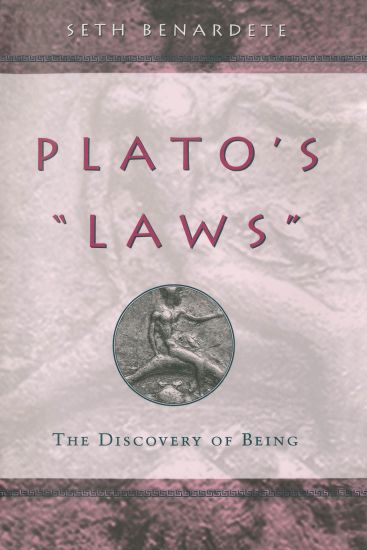
Plato's "Laws"

Plato's "Laws"

Seth Benardete

THE UNIVERSITY OF CHICAGO PRESS
2024
nidottu
An insightful commentary on Plato’s Laws, his complex final work. The Laws was Plato’s last work, his longest, and one of his most difficult. In contrast to the Republic, which presents an abstract ideal, the Laws appears to provide practical guidelines for the establishment and maintenance of political order in the real world. Classicist Seth Benardete offers a rich analysis of each of the twelve books of the Laws, which illuminates Plato’s major themes and arguments concerning theology, the soul, justice, and education. Most importantly, Benardete shows how music in a broad sense, including drama, epic poetry, and even puppetry, mediates between reason and the city in Plato’s philosophy of law. Benardete also uncovers the work’s concealed ontological dimension, explaining why it is hidden and how it can be brought to light. In establishing the coherence and underlying organization of Plato’s last dialogue, Benardete makes a significant contribution to Platonic studies.
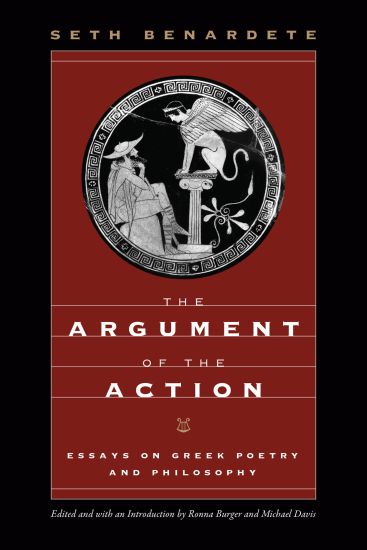
The Argument of the Action

The Argument of the Action

Seth Benardete

THE UNIVERSITY OF CHICAGO PRESS
2024
nidottu
This volume brings together Seth Benardete’s studies of Hesiod, Homer, and Greek tragedy, eleven Platonic dialogues, and Aristotle’s Metaphysics.The Argument of the Action spans four decades of Seth Benardete’s work, documenting its impressive range. Benardete’s philosophic reading of the poets and his poetic reading of the philosophers share a common ground, guided by the key he found in the Platonic dialogue: probing the meaning of speeches embedded in deeds, he uncovers the unifying intention of the work by tracing the way it unfolds through a movement of its own. Benardete’s original interpretations of the classics are the fruit of this discovery of the “argument of the action.”
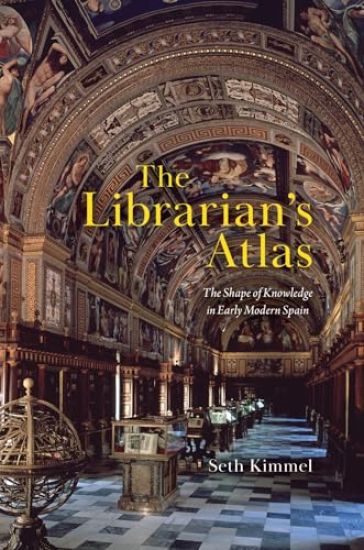
The Librarian's Atlas

The Librarian's Atlas

Seth Kimmel

THE UNIVERSITY OF CHICAGO PRESS
2024
sidottu
A history of early modern libraries and the imperial desire for total knowledge. Medieval scholars imagined the library as a microcosm of the world, but as novel early modern ways of managing information facilitated empire in both the New and Old Worlds, the world became a projection of the library. In The Librarian’s Atlas, Seth Kimmel offers a sweeping material history of how the desire to catalog books coincided in the sixteenth and seventeenth centuries with the aspiration to control territory. Through a careful study of library culture in Spain and Morocco—close readings of catalogs, marginalia, indexes, commentaries, and maps—Kimmel reveals how the booklover’s dream of a comprehensive and well-organized library shaped an expanded sense of the world itself.
The Last Mixtape

The Last Mixtape

Seth Long

THE UNIVERSITY OF CHICAGO PRESS
2025
sidottu
A reflection on the evolution of physical media into metaphor, through the history of music curation. Obsolescence makes the heart grow fonder, at least in the case of the mixtape. Not all technologies are so lucky. Some (say, wax cylinders) fade almost completely from cultural memory. A lucky few pass into metaphor: we still “hang up” our smartphones, “cut” film, and “patch” computer code. As digital streaming completes the obsolescence of physical media, what will become of the humble cassette? In The Last Mixtape, Seth Long offers a microhistory of music curation, anchored by the cassette, from which he explores the meanings of obsolescence, ownership, nostalgia, and the speed of cultural change. A moving meditation on our relationship with music, memory, and curation in the digital century, Long ultimately calls for a return to the media ecology represented by the mixtape: a world in which media is cheap and abundant but tactile and meaningfully engaged.
The Last Mixtape

The Last Mixtape

Seth Long

THE UNIVERSITY OF CHICAGO PRESS
2025
nidottu
A reflection on the evolution of physical media into metaphor, through the history of music curation. Obsolescence makes the heart grow fonder, at least in the case of the mixtape. Not all technologies are so lucky. Some (say, wax cylinders) fade almost completely from cultural memory. A lucky few pass into metaphor: we still “hang up” our smartphones, “cut” film, and “patch” computer code. As digital streaming completes the obsolescence of physical media, what will become of the humble cassette? In The Last Mixtape, Seth Long offers a microhistory of music curation, anchored by the cassette, from which he explores the meanings of obsolescence, ownership, nostalgia, and the speed of cultural change. A moving meditation on our relationship with music, memory, and curation in the digital century, Long ultimately calls for a return to the media ecology represented by the mixtape: a world in which media is cheap and abundant but tactile and meaningfully engaged.