
Kirjahaku
Etsi kirjoja tekijän nimen, kirjan nimen tai ISBN:n perusteella.
1000 tulosta hakusanalla Spender


Spencer Compton, 1st Earl of Wilmington
OmniScriptum
2026
pokkari

Spencer Perceval
VDM Publishing House
2010
nidottu
Observera att förlaget som ger ut denna produkt baserar innehållet i sina produkter på fria källor som Wikipedia. Boken är med stor sannolikhet endast ett utdrag ur dessa informationskällor, alltså inte en vanlig bok i den bemärkelsen.

Spencer County, Kentucky
VDM Publishing House
2010
nidottu
Observera att förlaget som ger ut denna produkt baserar innehållet i sina produkter på fria källor som Wikipedia. Boken är med stor sannolikhet endast ett utdrag ur dessa informationskällor, alltså inte en vanlig bok i den bemärkelsen.

Spencer County, Indiana
VDM Publishing House
2010
nidottu
Observera att förlaget som ger ut denna produkt baserar innehållet i sina produkter på fria källor som Wikipedia. Boken är med stor sannolikhet endast ett utdrag ur dessa informationskällor, alltså inte en vanlig bok i den bemärkelsen.

Spencer Chamberlain
VDM Publishing House
2010
nidottu
Observera att förlaget som ger ut denna produkt baserar innehållet i sina produkter på fria källor som Wikipedia. Boken är med stor sannolikhet endast ett utdrag ur dessa informationskällor, alltså inte en vanlig bok i den bemärkelsen.

Spenser Wilkinson
VDM Publishing House
2010
nidottu
Observera att förlaget som ger ut denna produkt baserar innehållet i sina produkter på fria källor som Wikipedia. Boken är med stor sannolikhet endast ett utdrag ur dessa informationskällor, alltså inte en vanlig bok i den bemärkelsen.

Slender Group
VDM Publishing House
2010
nidottu
Observera att förlaget som ger ut denna produkt baserar innehållet i sina produkter på fria källor som Wikipedia. Boken är med stor sannolikhet endast ett utdrag ur dessa informationskällor, alltså inte en vanlig bok i den bemärkelsen.

Spencer Township, Guernsey County, Ohio
VDM Publishing House
2010
nidottu
Observera att förlaget som ger ut denna produkt baserar innehållet i sina produkter på fria källor som Wikipedia. Boken är med stor sannolikhet endast ett utdrag ur dessa informationskällor, alltså inte en vanlig bok i den bemärkelsen.

Spencer Township, Lucas County, Ohio
VDM Publishing House
2010
nidottu
Observera att förlaget som ger ut denna produkt baserar innehållet i sina produkter på fria källor som Wikipedia. Boken är med stor sannolikhet endast ett utdrag ur dessa informationskällor, alltså inte en vanlig bok i den bemärkelsen.

Spencer Township, Allen County, Ohio
VDM Publishing House
2010
nidottu
Observera att förlaget som ger ut denna produkt baserar innehållet i sina produkter på fria källor som Wikipedia. Boken är med stor sannolikhet endast ett utdrag ur dessa informationskällor, alltså inte en vanlig bok i den bemärkelsen.
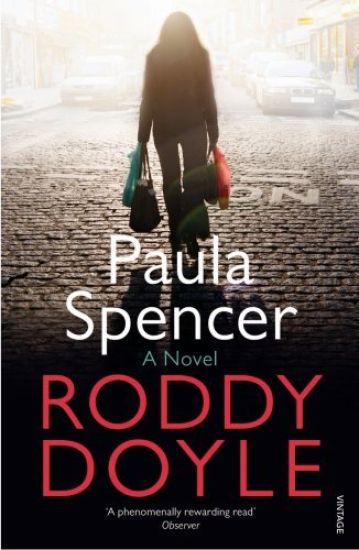
Ten years on from The Woman Who Walked into Doors, Booker Prize-winning author, Roddy Doyle, returns to one of his greatest characters, Paula Spencer. Paula Spencer is turning forty-eight, and hasnâ??t had a drink for four months and five days.

Picking up nearly ten years after the tale, The Woman Who Walked into Doors, Dublin widow Paula begins her fifth month of sobriety while endeavoring to raise the two children who are still at home, an endeavor during which she struggles to make ends meet, attends parent-teacher conferences, and develops a taste for rock music. Reprint.
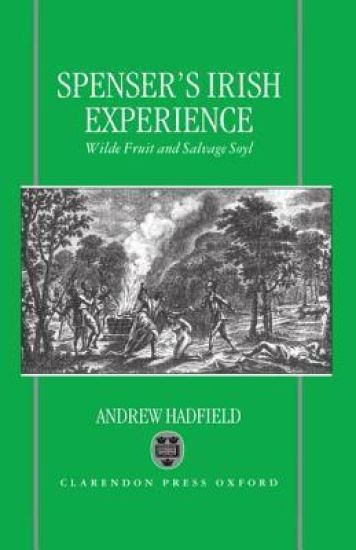
Spenser's Irish Experience is the first sustained critical work to argue that Edmund Spenser's perception and fragmented representation of Ireland shadows the whole narrative of his major work, The Faerie Queene, traditionally regarded as one of the finest achievements of the English Renaissance. The poem has often been read in specifically English contexts but, as Hadfield argues, demands to be read in terms of England's expanding colonial hegemony within the British Isles and the ensuing fear that such national ambition would actually lead to the destruction of England's post-Reformation legacy. Spenser should be seen less as an English writer and more as a new English writer in Ireland, his prose and poetry expressing the hopes and fears of his class. Where A View of the Present State of Ireland attempts to provide a violent political solution to England's Irish problem, The Faerie Queene exposes the apocalyptic fear that there may be no solution at all. The book contains an analysis of Spenser's life on the Munster plantation, readings of the political rhetoric and antiquarian discourse of A View of the Present State of Ireland, and three chapters which argue the case that the apparently Anglocentric allegory of The Faerie Queene reveals a land gradually--but clearly--transformed into its Irish other. Spenser emerges from this study as a writer whose experience in Ireland rendered him implacably opposed to the vacillations of his English monarch.

Edmund Spenser's innovative poetic works have a central place in the canon of English literature. Yet he is remembered as a morally flawed, self-interested sycophant; complicit in England's ruthless colonisation of Ireland; in Karl Marx's words, 'Elizabeth's arse-kissing poet'-- a man on the make who aspired to be at court and who was prepared to exploit the Irish to get what he wanted. In his vibrant and vivid book, the first biography of the poet for 60 years, Andrew Hadfield finds a more complex and subtle Spenser. How did a man who seemed destined to become a priest or a don become embroiled in politics? If he was intent on social climbing, why was he so astonishingly rude to the good and the great - Lord Burghley, the earl of Leicester, Sir Walter Ralegh, Elizabeth I and James VI? Why was he more at home with 'the middling sort' -- writers, publishers and printers, bureaucrats, soldiers, academics, secretaries, and clergymen -- than with the mighty and the powerful? How did the appalling slaughter he witnessed in Ireland impact on his imaginative powers? How did his marriage and family life shape his work? Spenser's brilliant writing has always challenged our preconceptions. So too, Hadfield shows, does the contradictory relationship between his between life and his art.
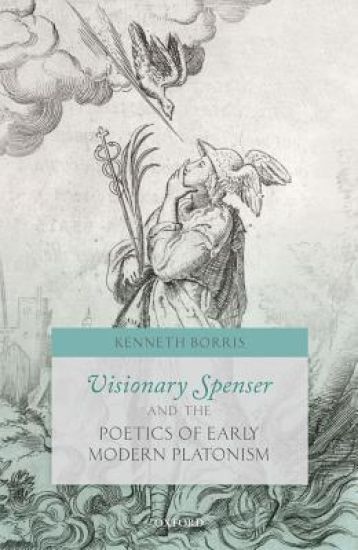
Visionary Spenser and the Poetics of Early Modern Platonism
Kenneth Borris
Oxford University Press
2017
sidottu
Platonic concerns and conceptions profoundly affected early modern English and continental poetics, yet the effects have had little attention. This book defines Platonism's roles in early modern theories of literature, then reappraise the Platonizing major poet Edmund Spenser. It makes important new contributions to the knowledge of early modern European poetics and advances our understanding of Spenser's role and significance in English literary history. Literary Platonism energized pursuits of the sublime, and knowledge of this approach to poetry yields cogent new understandings of Spenser's poetics, his principal texts, his poetic vocation, and his cultural influence. By combining Christian resources with doctrines of Platonic poetics such as the poet's and lover's inspirational furies, the revelatory significance of beauty, and the importance of imitating exalted ideals rather than the world, he sought to attain a visionary sublimity that would ensure his enduring national significance, and he thereby became a seminal figure in the English literary "line of vision" including Milton and Blake among others. Although readings of Spenser's Shepheardes Calender typically bypass Plato's Phaedrus, this text deeply informs the Calender's treatments of beauty, inspiration, poetry's psychagogic power, and its national responsibilities. In The Faerie Queene, both heroism and visionary poetics arise from the stimuli of love and beauty conceived Platonically, and idealized mimesis produces its faeryland. Faery's queen, projected from Elizabeth I as in Platonic idealization of the beloved, not only pertains to temporal governance but also points toward the transcendental Ideas and divinity. Whereas Plato's Republic valorizes philosophy for bringing enlightenment to counter society's illusions, Spenser champions the learned and enraptured poetic imagination, and proceeds as such a philosopher-poet.
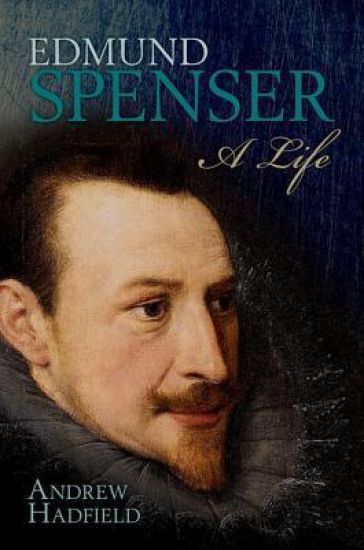
Edmund Spenser's innovative poetic works have a central place in the canon of English literature. Yet he is remembered as a morally flawed, self-interested sycophant; complicit in England's ruthless colonisation of Ireland; in Karl Marx's words, 'Elizabeth's arse-kissing poet'-- a man on the make who aspired to be at court and who was prepared to exploit the Irish to get what he wanted. In his vibrant and vivid book, the first biography of the poet for 60 years, Andrew Hadfield finds a more complex and subtle Spenser. How did a man who seemed destined to become a priest or a don become embroiled in politics? If he was intent on social climbing, why was he so astonishingly rude to the good and the great - Lord Burghley, the earl of Leicester, Sir Walter Ralegh, Elizabeth I and James VI? Why was he more at home with 'the middling sort' -- writers, publishers and printers, bureaucrats, soldiers, academics, secretaries, and clergymen -- than with the mighty and the powerful? How did the appalling slaughter he witnessed in Ireland impact on his imaginative powers? How did his marriage and family life shape his work? Spenser's brilliant writing has always challenged our preconceptions. So too, Hadfield shows, does the contradictory relationship between his between life and his art.

The republication of this book is eminently fitting at this time. Jay Rumney's Herbert Spencer's Sociology first appeared in 1937. In that year Talcott Parsons, citing Crane Brinton, declared: "Spencer is dead. But who killed him and how?" It was the thesis of Parsons' famous The Structure of Social Action that the evolution of scientific theory had put an end to Spencer. For more than a generation the man whose name had been synonymous with sociology was, or so it seemed, repressed and forgotten.

Herbert Spencer remains a significant but poorly understood figure in 19th century intellectual life. His ideas on evolution ranged across the natural sciences and philosophy, and he pioneered new ideas in psychology and sociology. This book comprehensively examines his work and strips away common misconceptions about his sociology.