Set in the present, "Barren" tells the story of a world spiraling into chaos as a plague unseen since the disappearance of the ancient Mayan and Aztec civilizations is resurrected and thrust upon an unsuspecting and far more crowded planet. 'The Calamity' has rendered all female mammalian life suddenly sterile, and women around the world begin to lose their unborn babies Yvonne Balfour, a newlywed in middle-America, is in her doctor's office when the first tragic calls come in. The rivers of India run red with the blood of the miscarried and stillborn, while Beijing's Peoples Hospital is inundated with panic-stricken patients. Orphans everywhere vanish almost overnight as the black-market for children explodes to exploit this newly finite resource. Dr. Robert Keener, Director of the Centers For Disease Control, races to find the cause - and hopefully a cure - for The Calamity, using every resource at his disposal, including a brilliant young doctor of paleobotany, Emmanuel James. Cultures and nations are shaken to their cores, and Asia is engulfed in war for control of what is now the most valuable resource on Earth: people. High above the smoke-smeared globe, Humanity's last hope may well reside in the two female astronauts aboard the International Space Station who are unaware they have become the most coveted objects in the world. "Barren" explores a worldwide conflict - Russia invading Ukraine and other former Soviet republics; India confronted by both Pakistan and communist China; Iran striking out to remake the Persian Empire; Venezuela attacking its neighbors in South America - as the most valuable resource on Earth becomes people.
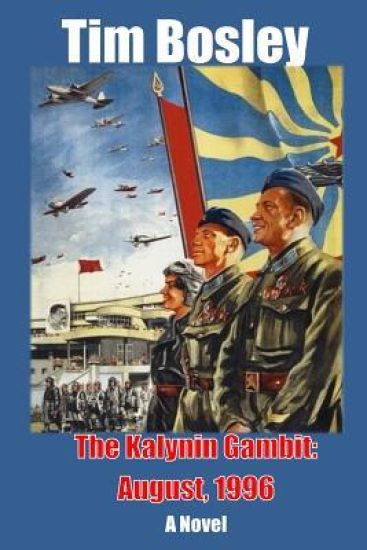
General Joseph Kalynin is a man born and raised in the Soviet Union. As a career soldier and dedicated communist, he is disheartened by the corruption and decay he sees consuming his beloved Motherland. Even as General Kalynin puts his daring plans into motion, Hektor Lavski, a young Military Intelligence (GRU) captain, begins to piece together the truth, unaware there is a deeper and even more dangerous conspiracy in motion. After Kalynin's men assault a Russian Strategic Rocket Forces base to secure several nuclear weapons, the General leads the hand-picked men of the Second Guards Airborne Division on a dangerous trek out of their homeland toward an uncertain future. Half a world away, Simon Weldy, a new analyst at the CIA, is tasked with monitoring and deciphering the unusual events taking place in Russia, while Allied forces react to the sudden flurry of Russian military activity. Around the world, Russian forces sympathetic to Kalynin's cause confront U.S. and NATO units, threatening to ignite a fresh conflict between the old Cold War antagonists. Amid the chaos, the General's wife, Raisa Kalynin, leads the families of the men of the Second Guards Airborne division on an equally perilous exodus from Russia, hoping to join her husband in their new country: the Soviet Socialist Republic of Africa. As international tensions escalate, Russia's President finds himself embattled by nationwide, pro-communist demonstrations. Pressured from all sides, he acquiesces to the American 'requests' for swift and sure military action, and gives his nod for a U.S.-led attack to bring an end to the crisis before his own government is toppled. On the ground in Africa, U.S. Navy SEALs fight to secure Kalynin's nuclear weapons, while Marines launch a joint assault with soldiers of the vaunted 82nd Airborne Division on the occupied African territory. Through it all, an ex-KGB agent guides and watches these events from the shadows, certain that whether General Kalynin succeeds or fails, his own ambitions will be served. "The Kalynin Gambit: August, 1996," is a fast-paced thriller in the style of early Tom Clancy or Dale Brown, perfect for any fan of the military/historical fiction genre
In Zeiten allgemeiner Knappheit öffentlicher Haushalte lassen sich staatliche Investitionen in die öffentliche Infrastruktur nur noch selten oder sehr eingeschränkt realisieren. Zunehmend beteiligen sich private Investoren an der Finanzierung öffentlicher Infrastruktur. Tim Metje untersucht die Möglichkeit Private im Rahmen so genannter BOT-Modelle (BOT = Build, Operate, Transfer) einzubinden. Dies sind öffentlich-private Partnerschaften, bei denen private Investoren Infrastrukturprojekte in staatlichem Auftrag realisieren, betreiben und erst nach einem Zeitraum von bis zu 30 Jahren auf den sie beauftragenden Staat rückübertragen. Da das Engagement privater Investoren ganz wesentlich von einem stabilen nationalen und internationalen Investitionsschutzregime abhängt, das sich letztlich auch im Streitfall bewähren muss, liegt hier der Schwerpunkt der Untersuchung.Nach einer Einführung in die wesentlichen Funktionsmechanismen internationaler BOT-Projekte auf der Grundlage einzelner Beispiele und nach Ausführungen zu den Erwartungen der Projektbeteiligten diskutiert der Autor die Chancen und Risiken des geltenden Investitionsschutzrechts. Zugleich bewertet er neuere investitionsschutzrechtliche Ansätze, wie etwa die Flexibilisierung von Vertragsverhältnissen. Dies lässt ihn - unter Berücksichtigung der Besonderheiten von BOT-Projekten - auch die Frage nach einem für alle Beteiligten effektiven Streitbeilegungsmechanismus thematisieren.