Kirjojen hintavertailu. Mukana 12 016 292 kirjaa ja 12 kauppaa.

Kirjahaku

Etsi kirjoja tekijän nimen, kirjan nimen tai ISBN:n perusteella.

1000 tulosta hakusanalla Toby Neighbors

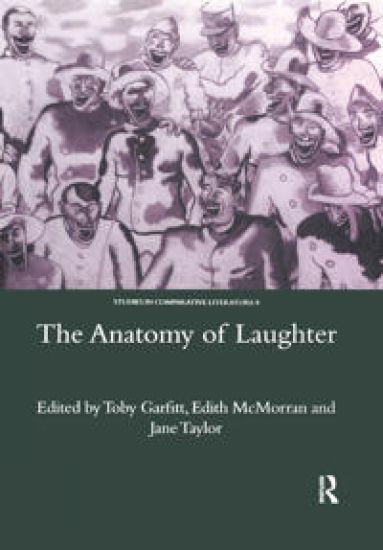
The Anatomy of Laughter

The Anatomy of Laughter

Toby Garfitt

Routledge
2020
nidottu
This volume consists of a selection of the papers given at a major conference, The Anatomy of Laughter/Traduire le Rire, held in September 2001. It focuses on the latter aspect of observations of the situations in which laughter is expressed, and stresses the acoustic features of laughter.
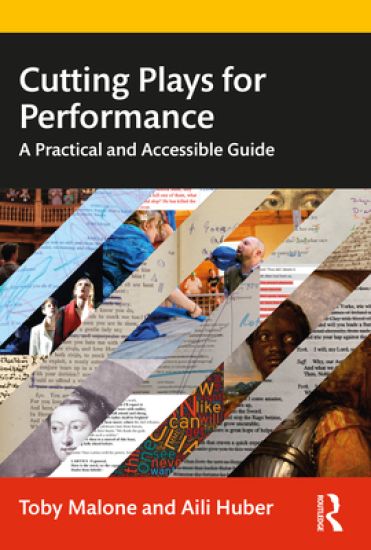
Cutting Plays for Performance

Cutting Plays for Performance

Toby Malone; Aili Huber

TAYLOR FRANCIS LTD
2021
nidottu
Cutting Plays for Performance offers a practical guide for cutting a wide variety of classical and modern plays. This essential text offers insight into the various reasons for cutting, methods to serve different purposes (time, audience, story), and suggests ways of communicating cuts to a production team. Dealing with every aspect of the editing process, it covers structural issues, such as plot beats, rhetorical concepts, and legal considerations, why and when to cut, how to cut with a particular goal in mind such as time constraints, audience and storytelling, and ways of communicating cuts to a production team. A set of practical worksheets to assist with the planning and execution of cuts, as well as step-by-step examples of the process from beginning to end in particular plays help to round out the full range of skills and techniques that are required when approaching this key theatre-making task. This is the first systematic guide for those who need to cut play texts. Directors, dramaturgs, and teachers at every level from students to seasoned professionals will find this an indispensable tool throughout their careers.
Cutting Plays for Performance

Cutting Plays for Performance

Toby Malone; Aili Huber

TAYLOR FRANCIS LTD
2021
sidottu
Cutting Plays for Performance offers a practical guide for cutting a wide variety of classical and modern plays. This essential text offers insight into the various reasons for cutting, methods to serve different purposes (time, audience, story), and suggests ways of communicating cuts to a production team. Dealing with every aspect of the editing process, it covers structural issues, such as plot beats, rhetorical concepts, and legal considerations, why and when to cut, how to cut with a particular goal in mind such as time constraints, audience and storytelling, and ways of communicating cuts to a production team. A set of practical worksheets to assist with the planning and execution of cuts, as well as step-by-step examples of the process from beginning to end in particular plays help to round out the full range of skills and techniques that are required when approaching this key theatre-making task. This is the first systematic guide for those who need to cut play texts. Directors, dramaturgs, and teachers at every level from students to seasoned professionals will find this an indispensable tool throughout their careers.
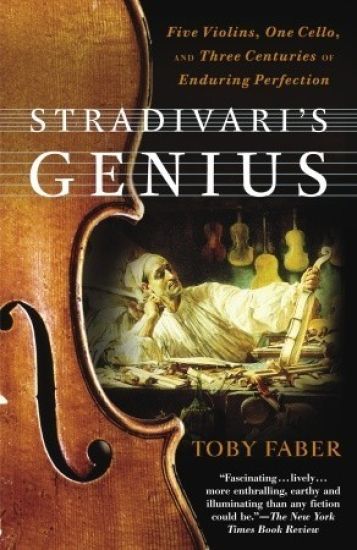
Stradivari's Genius: Five Violins, One Cello, and Three Centuries of Enduring Perfection
Antonio Stradivari (1644--1737) was a perfectionist whose single-minded pursuit of excellence changed the world of music. In the course of his long career in the northern Italian city of Cremona, he created more than a thousand stringed instruments; approximately six hundred survive, their quality unequalled by any subsequent violin-maker. In this fascinating book, Toby Faber traces the rich, multilayered stories of six of these peerless creations-five violins and a cello-and the one towering artist who brought them into being. Blending history, biography, meticulous detective work, and an abiding passion for music, Faber takes us from the salons of Vienna to the concert halls of New York, and from the breakthroughs of Beethoven's last quartets to the first phonographic recordings. This magnificent narrative invites us to share the life, the intrigue, and the incomparable beauty of the world's most marvelous stringed instruments.
Tutankhamun's Trumpet: Ancient Egypt in 100 Objects from the Boy-King's Tomb
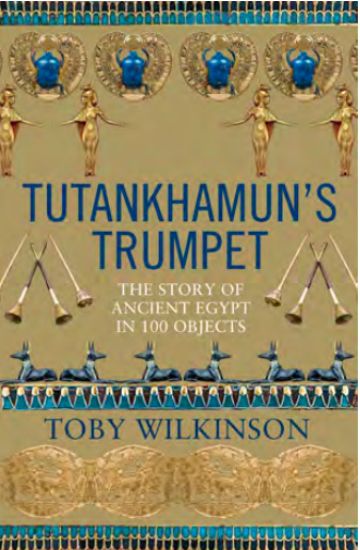
In 1922, after fifteen years of searching, archaeologists finally discovered the tomb of King Tutankhamun. There, buried alongside the king's mummy, they found more than 5,000 unique objects, from the mundane to the extravagant, from the precious to the everyday. Tutankhamun's spectacular gold mask is justifiably famous, but the rest of the treasures remain largely unknown, their stories untold.In this rich and beautifully illustrated work of history, renowned Egyptologist Toby Wilkinson allows one hundred artifacts from the boy king's tomb to speak again--not only for themselves, but as witnesses of the civilization that created them. A gold-decorated chariot reveals the impressive scale of Egyptian technology. Loaves of bread, baskets of fruit, and jars of wine hint at the fertility of the Nile Valley and the abundant feasts enjoyed by its people. Ebony and ivory from Nubia and a jewel of Libyan desert glass show the range of Egypt's trading and diplomatic networks. Shaving equipment and board games provide a window into the everyday lives of the people. And perhaps most poignant of all the objects in the tomb is one that conjures up a lost world of human experience: Tutankhamun's silver trumpet.Through these treasures, Wilkinson bring us face-to-face with the culture of the pharaohs, its extraordinary development, its remarkable flourishing, and its lasting impact. Filled with surprising insights and vivid details, Tutankhamun's Trumpet offers an indelible portrait of the history, people, and legacy of ancient Egypt.
Doing Couple Therapy

Doing Couple Therapy

Toby Bobes; Barbara Rothman

WW Norton Co
2002
nidottu
Here, in one brief volume, are the answers to these questions and many others. Doing Couple Therapy will be a lifesaver for family therapy students and beginning therapists. In a straightforward manner, the authors sift through years of family therapy theory to draw out for readers a a treasury of ways to sort out the many factors, past and present, that crowd couples' relationships. These include family-of-origin issues, previous relationships, secrets, children, in-laws, unresolves lodes, job demands, financial worries—to name just a few. The authors' framework, built from the major influential theories of family and marital therapy, will enable therapists to work effectively and briefly, though not superficially, with couples. The book not only presents theory but also links theory with practice. An extraordinary contribution is the presentation of a typical case from beginning to end, through tender moments, rough spots, family-of-origin work, revelation of deeply held secrets, alcohol abuse, ultimatums, and finally, renewal of commitment to the relationship. This practical, real-life guide to couple therapy will give both students and seasoned therapists a new take on the demanding work of couple therapy.
A World Beneath the Sands: The Golden Age of Egyptology
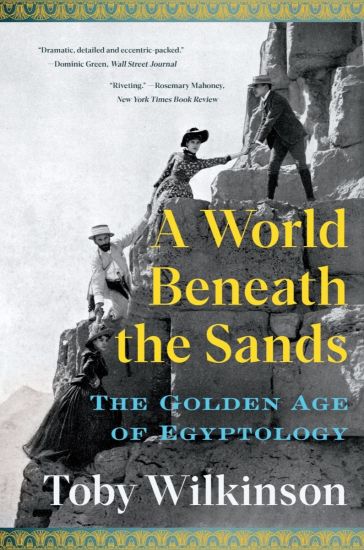
From the decipherment of hieroglyphics in 1822 to the discovery of Tutankhamun's tomb by Howard Carter and Lord Carnarvon a hundred years later, the uncovering of Egypt's ancient past took place in an atmosphere of grand adventure and international rivalry.In A World Beneath the Sands, acclaimed Egyptologist Toby Wilkinson chronicles the ruthless race between the British, French, Germans, and Americans to lay claim to its mysteries and treasures. He tells riveting stories of the men and women whose obsession with Egypt's ancient civilization helped to enrich and transform our understanding of the Nile Valley and its people, and left a lasting impression on Egypt, too. Travelers and treasure-hunters, ethnographers and archaeologists: whatever their motives, whatever their methods, a century of adventure and scholarship revealed a lost world, buried for centuries beneath the sands.
Early Dynastic Egypt

Early Dynastic Egypt

Toby A.H. Wilkinson

Routledge
1999
sidottu
Early Dynastic Egypt spans the five centuries preceding the construction of the Great Pyramid at Giza. This was the formative period of ancient Egyptian civilization, and it witnessed the creation of a distinctive culture that was to endure for 3,000 years. This book examines the background to that great achievement, the mechanisms by which it was accomplished, and the character of life in the Nile valley during the first 500 years of Pharaonic rule.The results of over thirty years of international scholarship and excavation are presented in a single highly illustrated volume. It traces the re-discovery of Early Dynastic Egypt, explains how the dynasties established themselves in government and concludes by examining the impact of the early state on individual communities and regions.
Early Dynastic Egypt

Early Dynastic Egypt

Toby A.H. Wilkinson

Routledge
2001
nidottu
Early Dynastic Egypt spans the five centuries preceding the construction of the Great Pyramid at Giza. This was the formative period of ancient Egyptian civilization, and it witnessed the creation of a distinctive culture that was to endure for 3,000 years. This book examines the background to that great achievement, the mechanisms by which it was accomplished, and the character of life in the Nile valley during the first 500 years of Pharaonic rule.The results of over thirty years of international scholarship and excavation are presented in a single highly illustrated volume. It traces the re-discovery of Early Dynastic Egypt, explains how the dynasties established themselves in government and concludes by examining the impact of the early state on individual communities and regions.
The Twelver Shi'a as a Muslim Minority in India
One of the most important current debates within and about Islam concerns its relation with power. Can Muslims be fundamentally content without power or as a minority? This book considers the voice of an important Muslim minority through its sermons. Indian Shi'i Muslims are a minority within a minority, constituting about ten to fifteen percent of the population as a whole, but comprising of about fifteen million people. Ten sermons are presented entirely and many more are quoted in order to analyze the preaching tradition in full. This book is the first survey to present the Indian mourning gathering and explain the history of this extraordinary phenomenon.
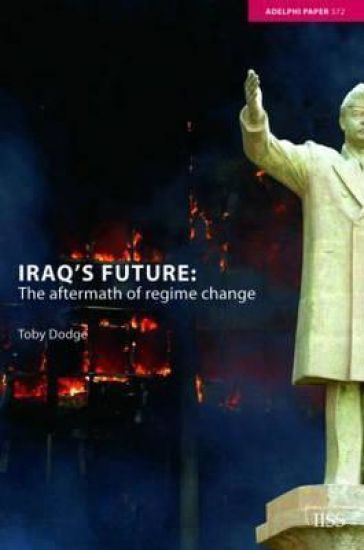
Iraq's Future

Iraq's Future

Toby Dodge

Routledge
2005
nidottu
It is hard to over estimate what is at stake in Iraq today. The removal of Saddam Hussein’s regime in April 2003 has proved to be the beginning, not the culmination, of a long and very uncertain process of state-building. This Adelphi Paper examines this process from a military, political and sociological perspective. Possible futures for Iraq are charted, first by studying the evolution of the criminal and politically-motivated violence that has come to dominate the everyday lives of ordinary Iraqis. The paper then details the strengths and weaknesses of the political structures built after the fall of Saddam’s regime, from the formation of the Iraqi Governing Council in 2004 to the elections of January 2005, and traces the forces driving political mobilization in post-Saddam Iraq. It concludes by analyzing the ramifications of regime change for US policy and the wider Middle East.
The Mask Handbook

The Mask Handbook

Toby Wilsher

Routledge
2006
sidottu
This book, from Europe’s leading Mask director and co-founder of the Trestle Theatre Company, provides a fascinating demystification of the process of using masks.Full of simple explanations, and collating over twenty-five years’ experience of writing for, directing and acting in masks, The Mask Handbook examines how masks have the ability to play the fundamental game of theatre – the suspension of disbelief.The Handbook includes:an introduction to the origin of masksadvice on preparing, making and using maskstips on writing, devising and directing maskworklots of fun and effective practical exercises. This accessible and inspiring handbook will empower teachers, directors and actors to fully explore the world of the mask.
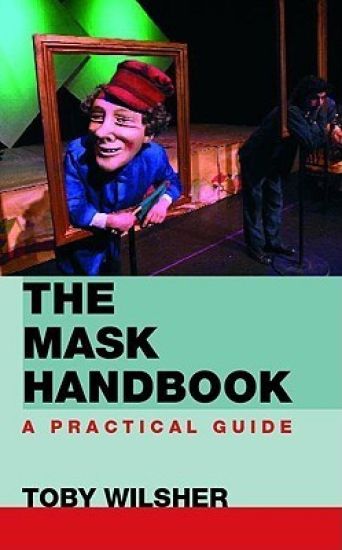
The Mask Handbook

The Mask Handbook

Toby Wilsher

Routledge
2006
nidottu
This book, from Europe’s leading Mask director and co-founder of the Trestle Theatre Company, provides a fascinating demystification of the process of using masks.Full of simple explanations, and collating over twenty-five years’ experience of writing for, directing and acting in masks, The Mask Handbook examines how masks have the ability to play the fundamental game of theatre – the suspension of disbelief.The Handbook includes:an introduction to the origin of masksadvice on preparing, making and using maskstips on writing, devising and directing maskworklots of fun and effective practical exercises. This accessible and inspiring handbook will empower teachers, directors and actors to fully explore the world of the mask.
A History of Drugs

A History of Drugs

Toby Seddon

Routledge Cavendish
2009
sidottu
Why are some psychoactive substances regarded as ‘dangerous drugs’, to be controlled by the criminal law within a global prohibition regime, whilst others – from alcohol and tobacco, through to those we call ‘medicines’ – are seen and regulated very differently? A History of Drugs traces a genealogy of the construction and governance of the ‘drug problem’ over the past 200 years, calling into question some of the most fundamental ideas in this field: from ‘addiction’ to the very concept of ‘drugs’. At the heart of the book is the claim that it was with the emergence in the late eighteenth century of modern liberal capitalism, with its distinctive emphasis on freedom, that our concerns about the consumption of some of these substances began to grow. And, indeed, notions of freedom, free will and responsibility remain central to the drug question today. Pursuing an innovative inter-disciplinary approach, A History of Drugs provides an informed and insightful account of the origins of contemporary drug policy. It will be essential reading for students and academics working in law, criminology, sociology, social policy, history and political science.
Monitoring Forest Biodiversity

Monitoring Forest Biodiversity

Toby Gardner

Routledge
2012
nidottu
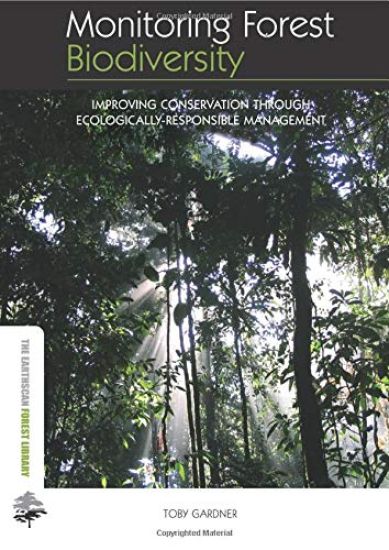
The fate of much of the world's terrestrial biodiversity depends upon our ability to improve the management of forest ecosystems that have already been substantially modified by humans. Monitoring is an essential ingredient in meeting this challenge, allowing us to measure the impact of different human activities on biodiversity and identify more responsible ways of managing the environment. Nevertheless many biodiversity monitoring programs are criticised as being little more than 'tick the box' compliance exercises that waste precious resources and erode the credibility of science in the eyes of decision makers and conservation investors. The purpose of this book is to examine the factors that make biodiversity monitoring programs fail or succeed. The first two sections lay out the context and importance of biodiversity monitoring, and shed light on some of the key challenges that have confounded many efforts to date. The third and main section presents an operational framework for developing monitoring programs that have the potential to make a meaningful contribution to forest management. Discussion covers the scoping, design and implementation stages of a forest biodiversity monitoring program, including defining the purpose, goals and objectives of monitoring, indicator selection, and the process of data collection, analysis and interpretation. Underpinning the book is the belief that biodiversity monitoring should be viewed not as a stand-alone exercise in surveillance but rather as an explicit mechanism for learning about how to improve opportunities for conservation. To be successful in this task, monitoring needs to be grounded in clear goals and objectives, effective in generating reliable assessments of changes in biodiversity and realistic in light of real-world financial, logistical and social constraints.
A History of Drugs

A History of Drugs

Toby Seddon

Routledge Cavendish
2010
nidottu
Why are some psychoactive substances regarded as ‘dangerous drugs’, to be controlled by the criminal law within a global prohibition regime, whilst others – from alcohol and tobacco, through to those we call ‘medicines’ – are seen and regulated very differently? A History of Drugs traces a genealogy of the construction and governance of the ‘drug problem’ over the past 200 years: calling into question some of the most fundamental ideas in this field: from ‘addiction’ to the very concept of ‘drugs’. At the heart of the book is the claim that it was with the emergence in the late eighteenth century of modern liberal capitalism, with its distinctive emphasis on freedom, that our concerns about the consumption of some of these substances began to grow. And, indeed, notions of freedom, free will and responsibility remain central to the drug question today. Pursuing an innovative inter-disciplinary approach, A History of Drugs provides an informed and insightful account of the origins of contemporary drug policy. It will be essential reading for students and academics working in law, criminology, sociology, social policy, history and political science.
The Twelver Shi'a as a Muslim Minority in India
One of the most important current debates within and about Islam concerns its relation with power. Can Muslims be fundamentally content without power or as a minority? This book considers the voice of an important Muslim minority through its sermons. Indian Shi'i Muslims are a minority within a minority, constituting about ten to fifteen percent of the population as a whole, but comprising of about fifteen million people. Ten sermons are presented entirely and many more are quoted in order to analyze the preaching tradition in full. This book is the first survey to present the Indian mourning gathering and explain the history of this extraordinary phenomenon.
Television Studies: The Basics

Television Studies: The Basics

Toby Miller

Routledge
2009
sidottu
Television Studies: The Basics is a lively introduction to the study of a powerful medium. It examines the major theories and debates surrounding production and reception over the years and considers both the role and future of television. Topics covered include: broadcasting history and technology institutions and ownership genre and content audiences Complete with global case studies, questions for discussion, and suggestions for further reading, this is an invaluable and engaging resource for those interested in how to study television.
Television Studies: The Basics

Television Studies: The Basics

Toby Miller

Routledge
2009
nidottu
Television Studies: The Basics is a lively introduction to the study of a powerful medium. It examines the major theories and debates surrounding production and reception over the years and considers both the role and future of television. Topics covered include: broadcasting history and technology institutions and ownership genre and content audiences Complete with global case studies, questions for discussion, and suggestions for further reading, this is an invaluable and engaging resource for those interested in how to study television.
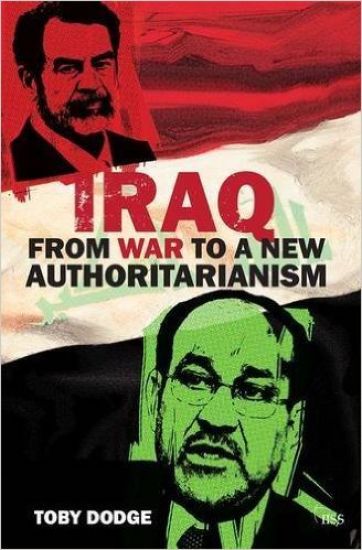
Iraq – From War to a New Authoritarianism
Iraq recovered its full sovereignty at the end of 2011, with the departure of all US military forces. The 2003 invasion was undertaken to dismantle a regime that had long threatened its own population and regional peace, as well as to establish a stable, democratic state in the heart of the Middle East. This Adelphi looks at the legacy of that intervention and subsequent state-building efforts. It analyses the evolution of the insurgency, the descent into full-scale civil war and the implementation of the ‘surge’ as a counterinsurgency strategy. It goes on to examine US and Iraqi efforts to reconstruct the state’s military and civilian capacity. By developing a clear understanding of the current situation in Iraq, this book seeks to answer three questions that are central to the country’s future. Will it continue to suffer high levels of violence or even slide back into a vicious civil war? Will Iraq continue on a democratic path, as exemplified by the three competitive national elections held since 2005? And does the new Iraq pose a threat to its neighbours?