Explore the fascinating world of acetylene with "Acetylene, The Principles Of Its Generation And Use," a practical handbook by F. H. Leeds and W. J. Atkinson Butterfield. This meticulously prepared print republication delves into the production, purification, and treatment of acetylene, a gas pivotal in the development of light, heat, and power. Aimed at those interested in industrial chemistry and engineering, this volume offers a comprehensive overview of acetylene's generation and diverse applications. Discover the principles behind this essential gas, its role in lighting and heating technologies, and its significance in early power generation systems. Covering a range of topics related to acetylene and gas production, this book remains a valuable resource for anyone studying the history of technology, chemical engineering, and industrial processes. Whether you are a student, researcher, or simply curious about the evolution of technology, this book provides a unique glimpse into a crucial aspect of our industrial past.This work has been selected by scholars as being culturally important, and is part of the knowledge base of civilization as we know it.This work is in the public domain in the United States of America, and possibly other nations. Within the United States, you may freely copy and distribute this work, as no entity (individual or corporate) has a copyright on the body of the work.Scholars believe, and we concur, that this work is important enough to be preserved, reproduced, and made generally available to the public. We appreciate your support of the preservation process, and thank you for being an important part of keeping this knowledge alive and relevant.
Research is never free of pressures and constraints and to understand its results properly these have to be assessed and analyzed. In agriculture, research into biotechnology and GMOs, as well as pesticides and herbicides, is big business - agribusiness. This book looks at the crucial roles of funding and the political context on the research agenda and its results in agricultural development. It provides a critical evaluation of the participatory methods now widely used and explores the ways in which research into biotechnology have reflected the interests of the various parties involved.
Research is never free of pressures and constraints and to understand its results properly these have to be assessed and analyzed. In agriculture, research into biotechnology and GMOs, as well as pesticides and herbicides, is big business - agribusiness. This book looks at the crucial roles of funding and the political context on the research agenda and its results in agricultural development. It provides a critical evaluation of the participatory methods now widely used and explores the ways in which research into biotechnology have reflected the interests of the various parties involved.
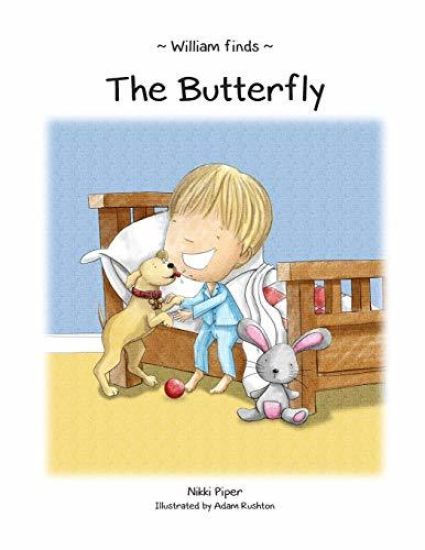
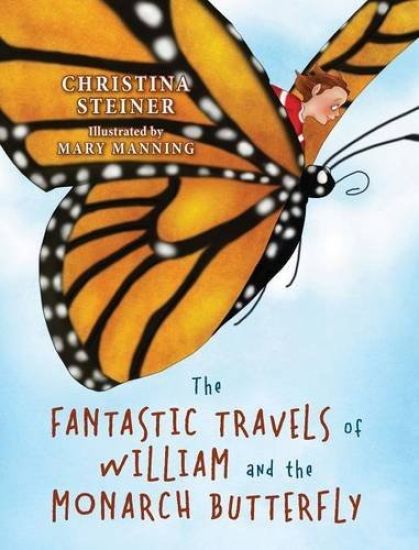
William and Sunny the dog have always been best friends. They do everything together.Until one day when William gets some sad news about his beloved dog.Join William as he learns what it means to lose something he loves and how he celebrates the memory of his special pet.
The 18th century was a wealth of knowledge, exploration and rapidly growing technology and expanding record-keeping made possible by advances in the printing press. In its determination to preserve the century of revolution, Gale initiated a revolution of its own: digitization of epic proportions to preserve these invaluable works in the largest archive of its kind. Now for the first time these high-quality digital copies of original 18th century manuscripts are available in print, making them highly accessible to libraries, undergraduate students, and independent scholars.This collection reveals the history of English common law and Empire law in a vastly changing world of British expansion. Dominating the legal field is the Commentaries of the Law of England by Sir William Blackstone, which first appeared in 1765. Reference works such as almanacs and catalogues continue to educate us by revealing the day-to-day workings of society.++++The below data was compiled from various identification fields in the bibliographic record of this title. This data is provided as an additional tool in helping to insure edition identification: ++++British LibraryT093407With a half-title.London: printed for W. Owen, and G. Kearsly, 1775. 4],53, 1]p.; 2
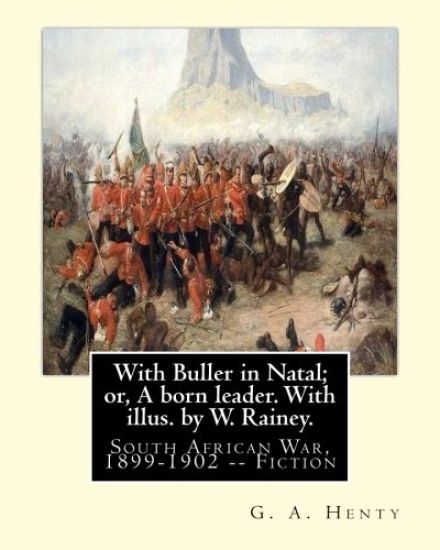
Rainey, W. (William), 1852-1936 ill: With Kitchener in the Soudan; a story of Atbara and Omdurman, by G. A. Henty ... with ten illustrations by William Rainey, R.I., and three maps. (New York, C. Scribner's Sons, 1902), also by G. A. Henty, N.Y.) prt Caxton Press (New York, and Charles Scribner's Sons. pbl (page images at HathiTrust)... George Alfred Henty (8 December 1832 - 16 November 1902) was a prolific English novelist and war correspondent.He is best known for his historical adventure stories that were popular in the late 19th century. His works include The Dragon & The Raven (1886), For The Temple (1888), Under Drake's Flag (1883) and In Freedom's Cause (1885).Biography--G.A.Henty was born in Trumpington, near Cambridge. He was a sickly child who had to spend long periods in bed. During his frequent illnesses he became an avid reader and developed a wide range of interests which he carried into adulthood. He attended Westminster School, London, and later Gonville and Caius College, Cambridge, where he was a keen sportsman. He left the university early without completing his degree to volunteer for the Army Hospital Commissariat when the Crimean War began. He was sent to the Crimea and while there he witnessed the appalling conditions under which the British soldier had to fight. His letters home were filled with vivid descriptions of what he saw. His father was impressed by his letters and sent them to The Morning Advertiser newspaper which printed them. This initial writing success was a factor in Henty's later decision to accept the offer to become a special correspondent, the early name for journalists now better known as war correspondents. Shortly before resigning from the army as a captain in 1859 he married Elizabeth Finucane. The couple had four children. Elizabeth died in 1865 after a long illness and shortly after her death Henty began writing articles for the Standard newspaper. In 1866 the newspaper sent him as their special correspondent to report on the Austro-Italian War where he met Giuseppe Garibaldi. He went on to cover the 1868 British punitive expedition to Abyssinia, the Franco-Prussian War, the Ashanti War, the Carlist Rebellion in Spain and the Turco-Serbian War.He also witnessed the opening of the Suez Canal and travelled to Palestine, Russia and India. Henty was a strong supporter of the British Empire all his life; according to literary critic Kathryn Castle: "Henty...exemplified the ethos of the new imperialism, and glorified in its successes".Henty's ideas about politics were influenced by writers such as Sir Charles Dilke and Thomas Carlyle.Henty once related in an interview how his storytelling skills grew out of tales told after dinner to his children. He wrote his first children's book, Out on the Pampas in 1868, naming the book's main characters after his children. The book was published by Griffith and Farran in November 1870 with a title page date of 1871. While most of the 122 books he wrote were for children, he also wrote adult novels, non-fiction such as The March to Magdala and Those Other Animals, short stories for the likes of The Boy's Own Paper and edited the Union Jack, a weekly boy's magazine.

![The Battle of Maldon, and Other Renderings from the Anglo-Saxon; Together with Original Verse. by F. W. L. B. [I.E. Sir Frederick William Louis Butterfield.]](/covers/9781241695767.jpg)
![The Elephant's Ball and Grand Fete Champetre. [in Verse.] Intended as Companion to Those Much Admired Pieces, the Butterfly's Ball, and the Peacock at Home. Illustrated with Elegant Engravings [by William Mulready]. by W. B.](/covers/9781241098490.jpg)