Kirjojen hintavertailu. Mukana 12 056 299 kirjaa ja 12 kauppaa.

Kirjahaku

Etsi kirjoja tekijän nimen, kirjan nimen tai ISBN:n perusteella.

1000 tulosta hakusanalla Zero Edge

Zero Liquid Discharge Wastewater Treatment System

Zero Liquid Discharge Wastewater Treatment System

Springer International Publishing AG
2025
sidottu
A Zero Liquid Discharge System (ZLDS) is a process that recovers water and solvents from wastewater. The remaining constituents are dehydrated to form pure water, resulting in zero waste. This book is a unique research-oriented guide covering the entire zero-liquid discharge process, from its introduction to its application. Zero liquid discharge water treatment plants require high engineering expertise and careful planning to achieve zero shots. Although it is an efficient wastewater treatment technique, improper industrial wastewater disposal can lead to environmental hazards such as water and soil pollution. This book focuses on ecological degradation and delves deeply into the consequences of improper industrial wastewater disposal, highlighting its effects on water pollution, ecosystem imbalance, and risks to human health. It offers a detailed examination of the resulting contamination and its far-reaching implications, emphasizing the need for proper disposal methods. One of the most critical needs for a healthy life is to provide healthy water and contaminants to be taken from the public water supplies. The book may reflect the healthy situation in many by presenting best practices, aiming to foster an understanding of the role of chemical contaminants in water systems in mitigating environmental hazards and the application of "zero liquid discharge technology" in detail. As industrial pollution continues to rise, there is a need to explore practical ways of managing industrial residues from wastewater. This book presents innovative research on using a "zero liquid discharge system" to achieve this locally and internationally. It also examines appropriate resource management strategies to address environmental concerns. This book critically reviews the health effects of industrial chemicals in the water supply. It examines current frameworks' limitations, challenges, and opportunities and discusses the benefits of using a "zero liquid discharge system" and their impact on global sustainability. The book also emphasizes this technology to limit toxic industrial material utilization. This chapter provides an overview of the occurrence of industrial chemicals in drinking water and the associated human health risks. This book also analyzes existing policies related to industrial wastewater and proposes policy recommendations for effective wastewater management using a zero-liquid discharge system. It discusses implementation strategies and policy adoption, emphasizing the role of policy in shaping and improving industrial wastewater management frameworks. The edited volume aims to highlight the critical operating factors and consider the large capital investments of this system and the operational costs. However, in this research-oriented book, the readers will clearly understand that this novel system can leave behind a dry sludge containing high concentrations of hazardous chemicals and heavy metals. This edited volume will show that the application of a Zero Liquid Discharge System (ZLDS) requires careful planning and analysis.

Zero Outage

Zero Outage

Stephan Kasulke; Jasmin Bensch

Springer International Publishing AG
2017
sidottu
This reference book shows how the Zero Outage method leads to more stability in operations, more reliability in projects and, ultimately, to greater customer satisfaction. It explains why clear standards for platforms, processes and personnel are essential for ensuring high ICT quality from end to end and what to look out for during changes – the most common cause of IT outages. Readers also learn how to resolve errors as quickly as possible and permanently eliminate them, and why industry-wide collaboration will only be possible with a shared standard of quality. This book is a practical introduction to making your ICT world even more failsafe and efficient. The authors share key knowledge in quality management and offer an exclusive insight into their extensively tested and continually enhanced formula for success: the Zero Outage approach.
Zero Outage

Zero Outage

Stephan Kasulke; Jasmin Bensch

Springer International Publishing AG
2018
nidottu
This reference book shows how the Zero Outage method leads to more stability in operations, more reliability in projects and, ultimately, to greater customer satisfaction. It explains why clear standards for platforms, processes and personnel are essential for ensuring high ICT quality from end to end and what to look out for during changes – the most common cause of IT outages. Readers also learn how to resolve errors as quickly as possible and permanently eliminate them, and why industry-wide collaboration will only be possible with a shared standard of quality. This book is a practical introduction to making your ICT world even more failsafe and efficient. The authors share key knowledge in quality management and offer an exclusive insight into their extensively tested and continually enhanced formula for success: the Zero Outage approach.
Zero Hunger

Zero Hunger

Springer International Publishing AG
2020
sidottu
The problems related to the process of industrialisation such as biodiversity depletion, climate change and a worsening of health and living conditions, especially but not only in developing countries, intensify. Therefore, there is an increasing need to search for integrated solutions to make development more sustainable. The United Nations has acknowledged the problem and approved the “2030 Agenda for Sustainable Development”. On 1st January 2016, the 17 Sustainable Development Goals (SDGs) of the Agenda officially came into force. These goals cover the three dimensions of sustainable development: economic growth, social inclusion and environmental protection. The Encyclopedia of the UN Sustainable Development Goals comprehensively addresses the SDGs in an integrated way. It encompasses 17 volumes, each devoted to one of the 17 SDGs. This volume addresses SDG 2, namely "End hunger, achieve food security and improved nutrition and promote sustainable agriculture" and contains the description of a range of related terms, to allow for a better understanding and foster knowledge. Our planet produces enough food to feed everyone. Malnutrition and hunger are the result of inappropriate food production processes, bad governance and injustice. SDG 2 seeks to guarantee quality and nutritious food to ensure healthy life by adopting a holistic approach that involves various actions targeting different actors, technologies, policies and programs. These initiatives have to face challenges coming from extensive environmental degradation, loss of biodiversity and the interrelated effects of climate change.Concretely, the defined targets are:End hunger and ensure access by all people, in particular the poor and people in vulnerable situations, including infants, to safe, nutritious and sufficient food all year roundEnd all forms of malnutrition, including achieving the internationally agreed targets on stunting and wasting in children under 5 years of age, and address the nutritional needs of adolescent girls, pregnant and lactating women and older personsDouble the agricultural productivity and incomes of small-scale food producers, in particular women, indigenous peoples, family farmers, pastoralists and fishers, including through secure and equal access to land, other productive resources and inputs, knowledge, financial services, markets and opportunities for value addition and non-farm employmentEnsure sustainable food production systems and implement resilient agricultural practices that increase productivity and production, that help maintain ecosystems, that strengthen capacity for adaptation to climate change, extreme weather, drought, flooding and other disasters and that progressively improve land and soil qualityMaintain the genetic diversity of seeds, cultivated plants and farmedand domesticated animals and their related wild species, including through soundly managed and diversified seed and plant banks at the national, regional and international levels, and promote access to and fair and equitable sharing of benefits arising from the utilization of genetic resources and associated traditional knowledge, as internationally agreedIncrease investment, including through enhanced international cooperation, in rural infrastructure, agricultural research and extension services, technology development and plant and livestock gene banks in order to enhance agricultural productive capacity in developing countries, in particular least developed countriesCorrect and prevent trade restrictions and distortions in world agricultural markets, including through the parallel elimination of all forms of agricultural export subsidies and all export measures with equivalent effect, in accordance with the mandate of the Doha Development RoundAdopt measures to ensure the proper functioning of food commodity markets and their derivatives and facilitate timely access to market information, including on food reserves, in order to help limit extreme food price volatilityEditorial BoardDatu Buyung Agusdinata, Mohammad Sadegh Allahyari, Usama Awan, Nerise Johnson, Paschal Arsein Mugabe, Vincent Onguso Oeba, Tony Wall
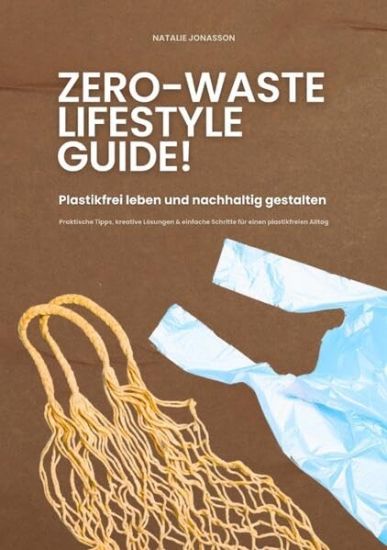
Zero Waste Lifestyle Guide

Zero Waste Lifestyle Guide

Natalie Jonasson

tredition GmbH
2025
pokkari
Zero Waste Lifestyle Guide: Plastikfrei leben und nachhaltig gestalten (Praktische Tipps, kreative L sungen & einfache Schritte f r einen plastikfreien Alltag) Bist du bereit, Plastik den Kampf anzusagen und deinen Alltag nachhaltig zu gestalten? "Zero Waste Lifestyle Guide: Plastikfrei leben und nachhaltig gestalten" ist dein umfassender Begleiter f r ein Leben ohne Plastik - egal, ob du erste Schritte wagst oder bereits Erfahrung hast. Mit 20 praxisnahen Zero-Waste-Tipps, kreativen L sungen und einfachen Strategien zeigst du Plastik die rote Karte und wirst zum Vorbild f r eine gr nere Zukunft. Was dich erwartet: Plastikfrei starten - leicht gemacht f r Einsteiger Von plastikfrei einkaufen ber Reisen ohne M ll bis hin zu DIY-Ideen f r Haushalt und Garten: Dieses Buch liefert dir konkrete Anleitungen f r jeden Lebensbereich. Entdecke, wie du K che, Badezimmer oder B ro plastikfrei umgestaltest, nat rliche Reinigungsmittel selbst herstellst oder sogar nachhaltige Mode und Fair Fashion in deinen Alltag integrierst. F r alle - ob Single, Familie oder WG Egal, ob du allein lebst, Kinder hast oder im Team etwas bewegen willst: Hier findest du passende L sungen f r deine Zero Waste Familie. Lerne, wie du gemeinsam plastikfrei lebst, Kinder f r Umweltschutz begeisterst oder sogar im Berufsalltag M ll reduzierst. Kreativit t trifft Nachhaltigkeit: Upcycling & Ressourcenschonung Warum teure Plastikalternativen kaufen, wenn du Upcycling-Projekte selbst umsetzen kannst? Tauche ein in die Welt der biologisch abbaubaren Materialien, entlarve Greenwashing und entdecke, wie du mit simplen Tricks Geld sparst, w hrend du die Umwelt sch tzt. Gesundheit und Umwelt Hand in Hand Plastikfrei zu leben bedeutet nicht nur, die Meere zu retten - es ist auch ein Gewinn f r deine plastikfreie Gesundheit. Erfahre, wie du Schadstoffe im Alltag vermeidest, plastikfreie Beauty-Routinen entwickelst und mit nat rlichen Reinigungsmitteln ein strahlendes Zuhause schaffst. Das macht dieses
Zero-Migration

Zero-Migration

Heinz K. Stahl

Gabler Verlag
1996
nidottu
Steigende Akquistionskosten sowie abnehmende Wachstums- und Differenzierungschancen haben zu einer Wiederentdeckung langfristiger Kunden-Lieferanten-Beziehung geführt. Doch die Umsetzungeiner kundenorientierten Unternehmensstrategie in die Praxis scheitert häufig an der offenkundigen Distanz zwischen Beziehungsebene und Unternehmensführung. Heinz K. Stahl entwickelt ein kundenorientiertes Konzept der strategischen Unternehmensführung. Es signalisiert nicht nur eine auf dauerhafte Kunden-Lieferanten-Beziehung ausgerichtete unternehmerische Grundhaltung, sondern stellt auch Empfehlungen zur Diagnose und Entwicklung aktueller Kunden-Lieferanten-Beziehungen bereit. Der Autor zeigt auf, wie die Grundbedingungen einer dauerhaften Kunden-Lieferanten-Beziehungen in die Unterneh mensführung integriert werden können. Verzeichnis: Ein Konzept, das nicht nur eine auf dauerhafte Kunden-Lieferanten-Beziehung ausgerichtete unternehmerische Grundhaltung signalisiert, sondern auch Empfehlungen zur Diagnose und Entwicklung aktueller Kunden-Lieferanten-Beziehungen bereitstellt.
Zero Limits

Zero Limits

Joe Vitale; Ihaleakala Hew Len; Carsten Roth

Wiley-VCH Verlag GmbH
2016
nidottu
ZeroLimits Es tut mir leid.Bitte verzeih mir.Ich liebe dich.Ich danke dir.Vier einfache Sätze mit überwältigender Wirkung. Vier Sätze, die die Kraft haben, Ihr Leben zu verändern. Sie Sind Bestandteil der modernisierten Version der uralten hawaiianischen Heilmethode »Hoöponopono«, die Ihnen den Weg zur Vollkommenheit weist.
Zero-Base-Budgeting ALS Methode Des Strategischen Kostenmanagements
Hauptseminararbeit aus dem Jahr 2005 im Fachbereich Wirtschaft - Controlling, einseitig bedruckt, Note: 1,3, Veranstaltung: Controlling 2, 16 Eintragungen im Literaturverzeichnis, Sprache: Deutsch, Abstract: Die vorliegende Seminararbeit wurde im Rahmen des Studiums für Wirtschaftsingenieurwesen im Fach Controlling zum Themenbereich des Kostenmanagements angefertigt. Das strategische Kostenmanagement besitzt im heutigen Controlling einen hohen Stellenwert. Durch den Einsatz verschiedener Strategien, Maßnahmen und Instrumente versucht das Controlling, die Kosten vorteilhaft zu gestalten und damit die Wettbewerbsposition seines Unternehmens zu stärken. In dieser Seminararbeit wird aus dem Bereich des Kostenmanagement das Instrument bzw. die Methode des Zero-Base-Budgeting erläutert. Nach einem kurzen Überblick auf die historische Entwicklung und einer allgemeinen Begriffsbestimmung des Zero-Base-Budgeting wird das Kostenmanagementinstrument in seinem Ablauf detailliert erläutert. Abschließend wird die Budgetierungstechnik differenziert bewertet und aufgezeigt welchen Stellenwert das Zero-Base-Budgeting im heutigen Controlling einnimmt.
Zero-Phonon Lines

Zero-Phonon Lines

Springer-Verlag Berlin and Heidelberg GmbH Co. K
2011
nidottu
Lasers are playing a more and more dominant role in modern optical spec- troscopy, offering an increased potential for high resolution and, thus, for more detailed spectroscopic information on dynamic and structural param- eters. This book on Zero-Phonon Lines and Spectral Hole Burning in Spec- troscopy and Photochemistry gives a concise and very useful survey of some of the pioneering and current work on solid state spectroscopy of various groups in the USSR. It focusses on the optical Mossbauer analogue, the "zero-phonon line" , and "hole burning" spectroscopy, a method which increases the resolu- tion well beyond the zero-phonon linewidth. In this conte. . 'Ct, the present work is complementary to Persistent Spectral Hole-Burning: Science and Applica- tions (ed. by W. E. Moerner, Springer, Berlin, Heidelberg 1988), which deals in more detail with the various aspects of laser spectroscopy with ultrahigh spectral resolution. Zero-phonon lines and an understanding of the various phonon coupling mechanisms which are treated in this book are a prerequi- site for applying and understanding techniques of ultrahigh resolution such as hole-burning or optical echoes. Bayreuth, March 1988 D. Haarer Preface The investigation of zero-phonon lines (ZPLs) is one of the foremost and most informative fields of present-day condensed-matter spectroscopy. Along with its definite function in physical cognition and investigation methods, the spectroscopy of ZPLs is also gaining purely practical applications. This is due to the fact that ZPLs are extra-sensitive quantum-mechanical detectors.