Kirjojen hintavertailu. Mukana 12 095 222 kirjaa ja 12 kauppaa.

Kirjahaku

Etsi kirjoja tekijän nimen, kirjan nimen tai ISBN:n perusteella.

1000 tulosta hakusanalla "Protest"

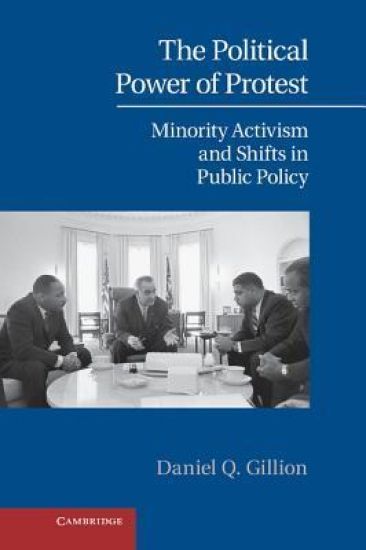
The Political Power of Protest

The Political Power of Protest

Daniel Q. Gillion

Cambridge University Press
2013
sidottu
Gillion demonstrates the direct influence that political protest behavior has on Congress, the presidency and the Supreme Court, illustrating that protest is a form of democratic responsiveness that government officials have used, and continue to draw on, to implement federal policies. Focusing on racial and ethnic minority concerns, this book shows that the context of political protest has served as a signal for political preferences. As pro-minority rights behavior grew and anti-minority rights actions declined, politicians learned from minority protest and responded when they felt emboldened by stronger informational cues stemming from citizens' behavior, a theory referred to as the 'information continuum'. Although the shift from protest to politics as a political strategy has opened the door for institutionalized political opportunity, racial and ethnic minorities have neglected a powerful tool to illustrate the inequalities that exist in contemporary society.
A Social Psychology of Protest

A Social Psychology of Protest

Jacquelien van Stekelenburg; Bert Klandermans

Cambridge University Press
2023
sidottu
Protest is typically rare behavior, yet the ?rst decade of the twenty-?rst century has been named the era of protest. Successful protests bring masses to the streets, and the emergence of social media has fundamentally changed the process of mobilization. What protests need to be successful is demand (grievances, anger, and indignation), supply (protest organizations), and mobilization (e?ective communication networks). Motivation to participate can be instrumental, expressive, and identity driven, and politicized collective identity plays an important role in the dynamics of collective action. This volume brings together insights from social psychology, political psychology, sociology, and political science to provide a comprehensive and up-to-date analysis of protest participation, particularly to the question of why some people protest while others do not. It is essential reading for scholars interested in the social and political psychology of individuals in action.
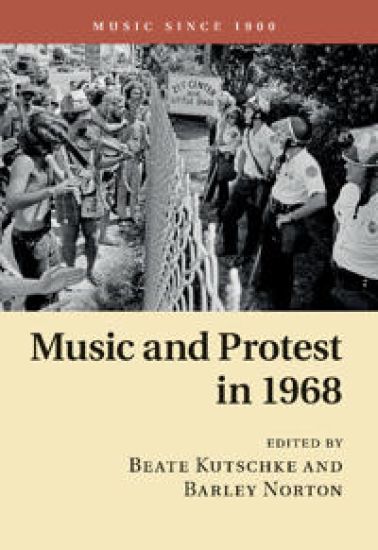
Music and Protest in 1968

Music and Protest in 1968

Cambridge University Press
2014
pokkari
Music was integral to the profound cultural, social and political changes that swept the globe in 1968. This collection of essays offers new perspectives on the role that music played in the events of that year, which included protests against the ongoing Vietnam War, the May riots in France and the assassination of Martin Luther King, Jr. From underground folk music in Japan to antiauthoritarian music in Scandinavia and Germany, Music and Protest in 1968 explores music's key role as a means of socio-political dissent not just in the US and the UK but in Asia, North and South America, Europe and Africa. Contributors extend the understanding of musical protest far beyond a narrow view of the 'protest song' to explore how politics and social protest played out in many genres, including experimental and avant-garde music, free jazz, rock, popular song, and film and theatre music.
The Political Power of Protest

The Political Power of Protest

Daniel Q. Gillion

Cambridge University Press
2013
pokkari
Gillion demonstrates the direct influence that political protest behavior has on Congress, the presidency and the Supreme Court, illustrating that protest is a form of democratic responsiveness that government officials have used, and continue to draw on, to implement federal policies. Focusing on racial and ethnic minority concerns, this book shows that the context of political protest has served as a signal for political preferences. As pro-minority rights behavior grew and anti-minority rights actions declined, politicians learned from minority protest and responded when they felt emboldened by stronger informational cues stemming from citizens' behavior, a theory referred to as the 'information continuum'. Although the shift from protest to politics as a political strategy has opened the door for institutionalized political opportunity, racial and ethnic minorities have neglected a powerful tool to illustrate the inequalities that exist in contemporary society.
Negotiating Memories of Protest in Western Europe
Negotiating Memories of Protest in Western Europe explores the transmission of memories of 1970s protest movements in Italy, Germany, France and Great Britain. Focusing on Italy, it analyzes commemorative rituals, memory sites and other forms of 'memory work' performed by social groups in a city where a protester was killed by police in 1977.
Theatre and Protest

Theatre and Protest

Lara Shalson

Red Globe Press
2017
nidottu
How does protest engage with theatre? What does theatre have to gain from protest?Theatre and protest are often closely interlinked in the contemporary cultural and political landscape, and the line between protest and performance is often difficult to draw. Yet this relationship is also beset with doubts about theatre’s capacity to intervene in the social world. This fresh and insightful text thinks through the intersections and tensions between theatre and protest. Exploring the cross-fertilization of international theatre and protest across the 12th and 21st centuries, Lara Shalson illuminates how and why these two are mutually influencing and enriching forms.
Women in Protest 1800-1850

Women in Protest 1800-1850

Malcolm I. Thomis; Jennifer Grimmett

Routledge
2014
nidottu
There is still much uncertainty about the role of nineteenth-century British women in social and political protest. As politics was a man’s world virtually all official accounts and statistics of popular protest deal only with the men involved. It is well known that women participated in food riots and mobilised support for Chartism, and as the dramatic changes in the economy during this period greatly increased the demand for women’s labour, this stimulated their widespread involvement in political and social agitation, particularly the parliamentary reform movement of 1819.First published in 1982, this book provides a descriptive account of the part played by women – mainly working class women – in a variety of social and political activities that can broadly be categorised as protest. It establishes the basic outlines and offers an interpretation of the course of events.
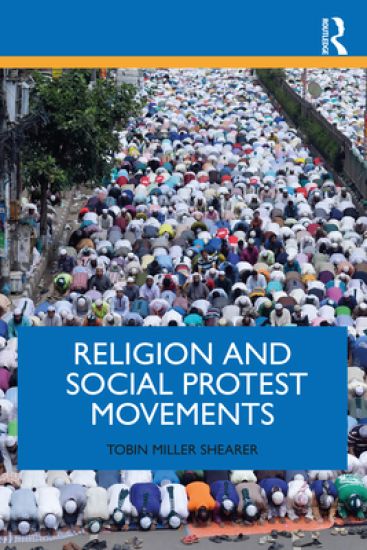
Religion and Social Protest Movements

Religion and Social Protest Movements

Tobin Miller Shearer

Routledge
2021
sidottu
What role has religion played in social protest movements? This important book examines how activists have used religious resources such as liturgy, prayer, song and vestments with a focus on the following global case studies: The mid-twentieth century US civil rights movement. The late twentieth century antiabortion movement in the United States of America. The early twenty-first century water protectors’ movement at Standing Rock, North Dakota. Indian independence led by Mohandas Gandhi in the early 1930s. The Polish Solidarity movement of the 1980s. The South African anti-apartheid movement of the 1980s and 1990s. Prayer as a sacred act is usually associated with piety and pacifism; however, it can be argued that those who pray in public while protesting are more likely to encounter violence. Drawing on journalistic accounts, participant reflections, and secondary literature, Religion and Social Protest Movements offers both historical and theoretical perspectives on the persistent correlation of the use of public prayer with an increase in conflict and violence. This book is an important read for students and researchers in history and religious studies, and those in related fields such as sociology, African-American studies, and Native American studies.
Religion and Social Protest Movements

Religion and Social Protest Movements

Tobin Miller Shearer

Routledge
2021
nidottu
What role has religion played in social protest movements? This important book examines how activists have used religious resources such as liturgy, prayer, song and vestments with a focus on the following global case studies: The mid-twentieth century US civil rights movement. The late twentieth century antiabortion movement in the United States of America. The early twenty-first century water protectors’ movement at Standing Rock, North Dakota. Indian independence led by Mohandas Gandhi in the early 1930s. The Polish Solidarity movement of the 1980s. The South African anti-apartheid movement of the 1980s and 1990s. Prayer as a sacred act is usually associated with piety and pacifism; however, it can be argued that those who pray in public while protesting are more likely to encounter violence. Drawing on journalistic accounts, participant reflections, and secondary literature, Religion and Social Protest Movements offers both historical and theoretical perspectives on the persistent correlation of the use of public prayer with an increase in conflict and violence. This book is an important read for students and researchers in history and religious studies, and those in related fields such as sociology, African-American studies, and Native American studies.
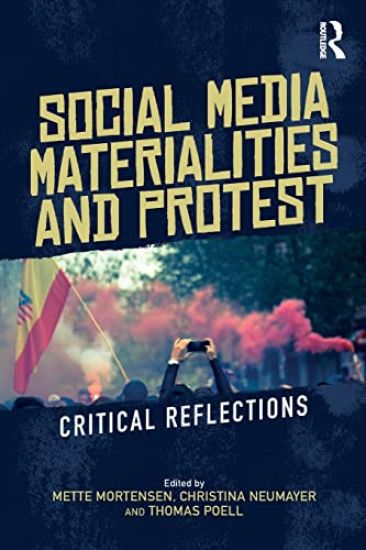
Social Media Materialities and Protest
Far from being neutral, social media platforms – such as Facebook, Twitter, YouTube, and WeChat – possess their own material characteristics, which shape how people engage, protest, resist, and struggle. This innovative collection advances the notion of social media materialities to draw attention to the ways in which the wires and silicon, data streams and algorithms, user and programming interfaces, business models and terms of service steer contentious practices and, inversely, how technologies and economic models are handled and performed by users. The key question is how the tension between social media’s techno-commercial infrastructures and activist agency plays out in protest. Addressing this, the volume goes beyond singular empirical examples and focuses on the characteristics of protest and social media materialities, offering further conceptualizations and guidance for this emerging field of research. The various contributions explore a wide variety of activist projects, protests, and regions, ranging from Occupy in the USA to environmental protests in China, and from the Mexican Barrio Nómada to the Copenhagen-based activist television channel TV Stop (1987–2005).
Social Media Materialities and Protest
Far from being neutral, social media platforms – such as Facebook, Twitter, YouTube, and WeChat – possess their own material characteristics, which shape how people engage, protest, resist, and struggle. This innovative collection advances the notion of social media materialities to draw attention to the ways in which the wires and silicon, data streams and algorithms, user and programming interfaces, business models and terms of service steer contentious practices and, inversely, how technologies and economic models are handled and performed by users. The key question is how the tension between social media’s techno-commercial infrastructures and activist agency plays out in protest. Addressing this, the volume goes beyond singular empirical examples and focuses on the characteristics of protest and social media materialities, offering further conceptualizations and guidance for this emerging field of research. The various contributions explore a wide variety of activist projects, protests, and regions, ranging from Occupy in the USA to environmental protests in China, and from the Mexican Barrio Nómada to the Copenhagen-based activist television channel TV Stop (1987–2005).
Peace Movements: International Protest and World Politics Since 1945
There is a long tradition of opposition to war and organized peace campaigns date from 1815. Since 1945, however, modern weapons technology has threatened world wide destruction and has stimulated widespread protests. This book sketches in the background of thinking about peace and resistance to war before 1945, and then examines how public opposition to nuclear weapons and testing grew in the 1950s and early 1960s. Later chapters cover the major ressurgence of nuclear disarmament campaigns in the 1980s. The book also looks at how peace protest has spread from its origins in North America and North West Europe to embrace many parts of the world; opposition to nuclear testing has indeed been particularly strong in Japan, Australia, New Zealand and the Pacific islands. The period 1945 to 1990 was dominated by the Cold War between the USA and USSR, and the role of the Soviet-sponsored World Peace Council caused difficulties for indeptendent peace groups in the West. During the 1980s the emergence of autonomous peace activity in a number of East European countries, and even on a very small scale in the USSR itself, transformed the possibilities for East-West co-operation between citizens to urge disarmament and political change. A chapter examines these developments. Opposition to all forms of militarism has spread in the last 30 years. This book charts the struggles to extend the right to conscientious objection to military service, and draft resistance to particular wars - for example in Southern Africa and Israel. It also looks in some detail at the growing opposition to the war in the Vietnam. The recent protests against the Gulf War are surveyed briefly in an epilogue.
The Policing of Transnational Protest
Having long been a neglected issue, the policing of protest began to attract considerable attention in the 1990s, climaxing in the events in Seattle of 1999. These protests and the changing political climate since September 11, 2001 mean that a new cycle of protest is challenging the concept of law and order and civil liberties. This book examines how new policing styles are developing using case studies from North America and Europe. The volume brings together researchers from a number of disciplines - sociology, criminology, political science and mass communication - who focus on new forms of political protest, policing and public order.
Media Practices and Protest Politics
How do precarious workers employed in call-centres, universities, the fashion industry and many other labour markets organise, struggle and communicate to become recognised, influential political subjects? "Media Practices and Protest Politics; How Precarious Workers Mobilise" reveals the process by which individuals at the margins of the labour market and excluded from the welfare state communicate and struggle outside the realm of institutional politics to gain recognition in the political sphere. In this important and thought provoking work Alice Mattoni suggests an all-encompassing approach to understanding grassroots political communication in contemporary societies. Using original examples from precarious workers mobilizations in Italy she explores a range of activist media practices and compares different categories of media technologies, organizations and outlets from the printed press to web application and from mainstream to alternative media. Explaining how activists perceive and understand the media environment in which they are embedded the book discusses how they must interact with a diverse range of media professionals and technologies and considers how mainstream, radical left-wing and alternative media represent protests. Media Practices and Protest Politics offers important insights for understanding mechanisms and patterns of visibility in struggles for recognition and redistribution in post-democratic societies and provides a valuable contribution to the field of political communication and social movement studies.
Landscapes of Protest in the Scottish Highlands after 1914
In November 1918, the implementation of agrarian change in the Scottish Highlands threatened another wave of unemployment and eviction for the land-working population, which led to widespread and varied social protest. Those who had been away on war service (and their families) faced returning to exactly the same social and economic conditions in the Scottish Highlands they had hoped they had left behind in the struggle to make ’a land fit for heroes’. Widespread and varied social protest rapidly followed. It argues that, previously, there has been a failure to capture fully the geography, chronology typology and rate of occurrence of these events. The book not only offers new insights and a greater understanding of what was happening in the Highlands in this period, but illustrates how a range of forms of protest were used which demand attention, not least for the fact that these events, unlike most of the earlier Land Wars period, were successful. There are functioning townships in the Highlands today that owe their existence to the land invasions of the 1920s. The book innovatively concentrates on formulating explanation and interpretation from within and looks to the crofting landscape as base, means and motive to disturbance and interpretation. It proposes that protest is much more convincingly understood as an expression of environmental ethics from 'the bottom up' coming increasingly into conflict with conservationist views expressed from 'the top down' It focuses on individual case studies in order to engage more convincingly with an important evidential base - that of popular memory of land disturbances - and to adopt a frame and lens through which to explore the fluid and contingent nature of protest performances. Based upon the belief that in the study of landscapes of social protest the old shibboleth of space as solely passive setting and symbolic register is no longer tenable is paid here to nature/culture interactions, to vernacular ecological b
Anti-Islamic Protest in the UK

Anti-Islamic Protest in the UK

William Allchorn

Routledge
2018
sidottu
Demonstrations by far-right groups, such as the English Defence League, Britain First and PEGIDA, have caused considerable social and civic unrest in UK cities for nearly a decade. But how should policymakers respond to far-right and anti-Muslim activism? Drawing on extensive primary research with stakeholders, local authorities and policymakers, this book investigates the political, socio-economic and historic trends that fuel this form of political extremism across the UK. It also maps the different types of policy responses available to local politicians, police forces and behind-the-scenes policy officials involved in the day-to-day management of anti-Islamic street protest. The author demonstrates that it is only through developing successful countermeasures in the realm of politics, security and community-based politics that politicians, police and state actors will truly get to grips with this new far-right activism.
Anti-nuclear Protest in Post-Fukushima Tokyo
This book explores the politics of anti-nuclear activism in Tokyo after the Fukushima nuclear disaster of March 2011. Analyzing the protests in the context of a longer history of citizen activism in Tokyo, it also situates the movement within the framework of a global struggle for democracy, from the Arab Spring to Occupy Wall Street.By examining the anti-nuclear movement at both urban and transnational scales, the book also reveals the complex geography of today’s globally connected social movements. It emphasizes the contestation of urban space by anti-nuclear activists in Tokyo and the weaving together of urban and cyber space in their praxis. By focusing on the cultural life of the movement—from its characteristic demonstration style to its blogs, zines and pamphlets—this book communicates activists’ voices in their own words. Based on excellent ethnographic research, it concludes that the anti-nuclear protests in Tokyo after the Fukushima disaster have redefined social movement politics for a new era.Providing an analysis of a unique period in Japan’s contemporary urban history from the perspective of eyewitness observations, this book will be useful to students and scholars of Japanese Politics, Sociology and Japanese Studies in general.