Kirjojen hintavertailu. Mukana 11 518 949 kirjaa ja 12 kauppaa.

Kirjahaku

Etsi kirjoja tekijän nimen, kirjan nimen tai ISBN:n perusteella.

1000 tulosta hakusanalla ART WIEDERHOLD

Art, Form, and Civilization

Art, Form, and Civilization

Ernest Mundt

University of California Press
2022
sidottu
Western civilization is grappling with a profound crisis of unity and meaning, as analytical methods and intense specialization have fragmented knowledge and severed its connection to the holistic purpose of life: enabling humanity to embrace existence more fully. In this fragmented state, man is compartmentalized into roles such as economic, political, scientific, or philosophical beings, losing the harmony of a unified self that relates to others, nature, and the divine. This compartmentalization has led to disillusionment, as the optimism of the nineteenth and early twentieth centuries has given way to the grim realities of economic depression, devastating wars, and societal disintegration. Thinkers like Lewis Mumford, Reinhold Niebuhr, and Erich Kahler argue for a return to integration—a recognition of the essential oneness of all life—as the only path forward. Art, with its unique ability to bridge divides and foster unification, is poised to play a critical role in this process, as it has in the past. This belief underpins the ideas in this book, which acknowledges the contributions of figures like Hans Poelzig and Cecilia Odefey Mundt, whose insights into art and civilization have guided its creation. Through art's potential to reconcile fragmented disciplines and inspire a more unified humanity, this work offers hope for a new synthesis capable of transcending the crises of modernity. This title is part of UC Press's Voices Revived program, which commemorates University of California Press’s mission to seek out and cultivate the brightest minds and give them voice, reach, and impact. Drawing on a backlist dating to 1893, Voices Revived makes high-quality, peer-reviewed scholarship accessible once again using print-on-demand technology. This title was originally published in 1952.
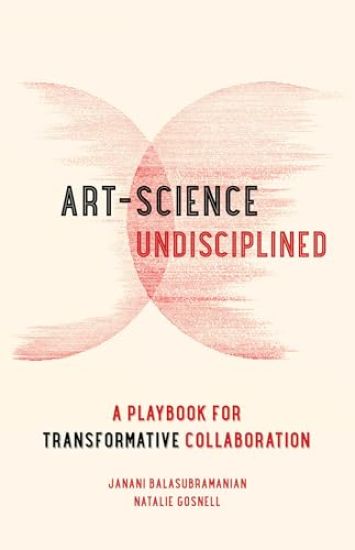
Art-Science Undisciplined

Art-Science Undisciplined

Janani Balasubramanian; Natalie Gosnell

University of California Press
2026
sidottu
A guide to mutually transformative collaboration between artists and scientists. Art-Science Undisciplined invites us into a collaborative journey grounded in mutual exploration and transformation. Moving beyond transactional exchanges of expertise, artist Janani Balasubramanian and astrophysicist Natalie Gosnell draw on their own experiences, as well as stories from other art-science collaborators, to offer an imaginative guide for developing a values-based and joyful undisciplined practice. This playbook offers practical and conceptual tools for co-creation that foster new, powerful alliances among artists, scientists, and their supporters. While attentive to the everyday reality of busy schedules and institutional demands, Balasubramanian and Gosnell illuminate strategies to change our current ways of working and dare us to imagine a more expansive future. The projects, potentials, and possibilities resulting from undisciplined creation will reshape not only the practitioners but their worlds altogether.
Art-Science Undisciplined

Art-Science Undisciplined

Janani Balasubramanian; Natalie Gosnell

University of California Press
2026
pokkari
A guide to mutually transformative collaboration between artists and scientists. Art-Science Undisciplined invites us into a collaborative journey grounded in mutual exploration and transformation. Moving beyond transactional exchanges of expertise, artist Janani Balasubramanian and astrophysicist Natalie Gosnell draw on their own experiences, as well as stories from other art-science collaborators, to offer an imaginative guide for developing a values-based and joyful undisciplined practice. This playbook offers practical and conceptual tools for co-creation that foster new, powerful alliances among artists, scientists, and their supporters. While attentive to the everyday reality of busy schedules and institutional demands, Balasubramanian and Gosnell illuminate strategies to change our current ways of working and dare us to imagine a more expansive future. The projects, potentials, and possibilities resulting from undisciplined creation will reshape not only the practitioners but their worlds altogether.
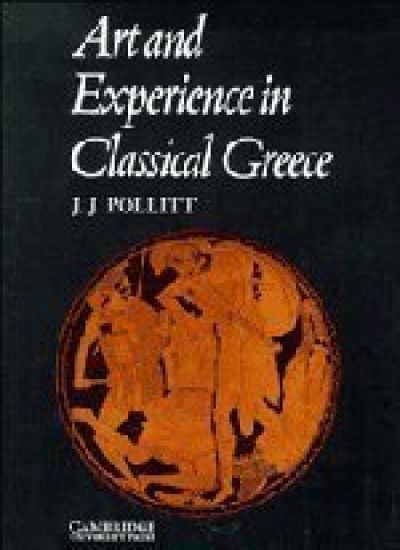
Art and Experience in Classical Greece

Art and Experience in Classical Greece

Jerome Jordan Pollitt

Cambridge University Press
1972
pokkari
An account of the development of Greek art in the Classical period (about 480–320 BC) which places particular emphasis on the meaning and content of Greek sculpture, architecture and painting. Professor Pollitt reminds us that the visual arts in Greece, as elsewhere, were primarily vehicles of expression. He does not ignore formal development but always relates this to social and cultural history, which it reflected and from which it grew. While his subject is art, he refers frequently to the literature and philosophy of the period which were shaped by the same influences.
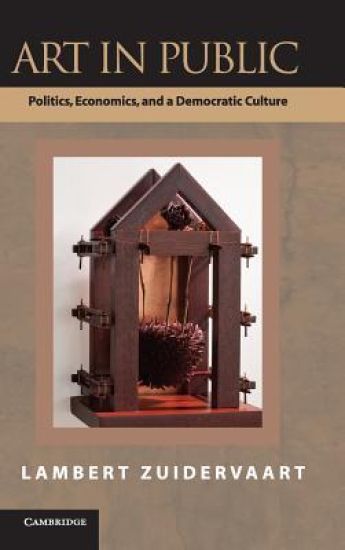
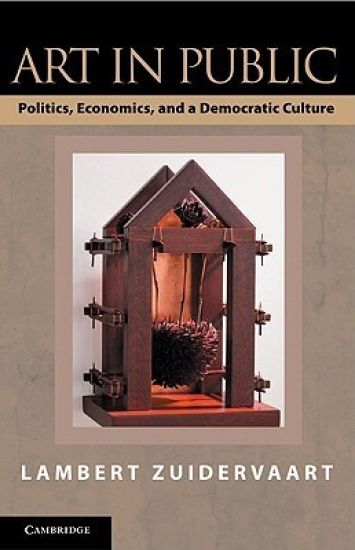
Art in Public

Art in Public

Lambert Zuidervaart

Cambridge University Press
2010
sidottu
This book examines fundamental questions about funding for the arts: why should governments provide funding for the arts? What do the arts contribute to daily life? Do artists and their publics have a social responsibility? Challenging questionable assumptions about the state, the arts and a democratic society, Lambert Zuidervaart presents a vigorous case for government funding, based on crucial contributions the arts make to civil society. He argues that the arts contribute to democratic communication and a social economy, fostering the critical and creative dialogue that a democratic society needs. Informed by the author's experience leading a non-profit arts organisation as well as his expertise in the arts, humanities and social sciences, this book proposes an entirely new conception of the public role of art with wide-ranging implications for education, politics and cultural policy.
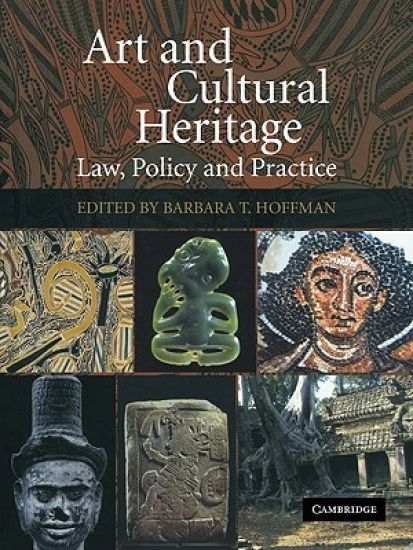
Art and Cultural Heritage

Art and Cultural Heritage

Cambridge University Press
2009
pokkari
Art and Cultural Heritage is appropriately, but not solely, about national and international law respecting cultural heritage. It is a bubbling cauldron of law mixed with ethics, philosophy, politics and working principles looking at how cultural heritage law, policy and practice should be sculpted from the past as the present becomes the future. Art and cultural heritage are two pillars on which a society builds its identity, its values, its sense of community and the individual. The authors explore these demanding concerns, untangle basic values, and look critically at the conflicts and contradictions in existing art and cultural heritage law and policy in its diverse sectors. The rich and provocative contributions collectively provide a reasoned discussion of the issues from a multiplicity of views to permit the reader to understand the theoretical and philosophical underpinnings of the cultural heritage debate.
Art in Public

Art in Public

Lambert Zuidervaart

Cambridge University Press
2010
pokkari
This book examines fundamental questions about funding for the arts: why should governments provide funding for the arts? What do the arts contribute to daily life? Do artists and their publics have a social responsibility? Challenging questionable assumptions about the state, the arts and a democratic society, Lambert Zuidervaart presents a vigorous case for government funding, based on crucial contributions the arts make to civil society. He argues that the arts contribute to democratic communication and a social economy, fostering the critical and creative dialogue that a democratic society needs. Informed by the author's experience leading a non-profit arts organisation as well as his expertise in the arts, humanities and social sciences, this book proposes an entirely new conception of the public role of art with wide-ranging implications for education, politics and cultural policy.
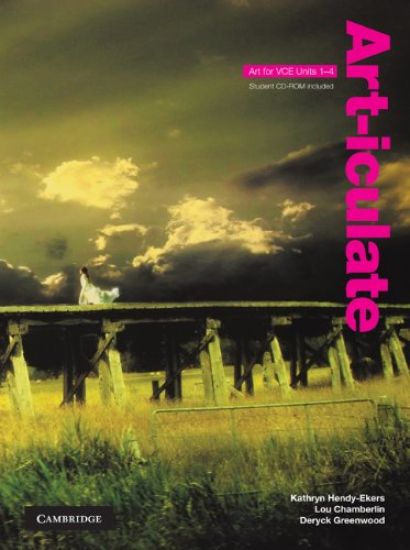
Art-iculate

Art-iculate

Kathryn Hendy-ekers; Lou Chamberlin; Deryck Greenwood

Cambridge University Press
2010
pokkari
This text has been written by practising Art teachers to give students every opportunity to succeed at their VCE Art studies.
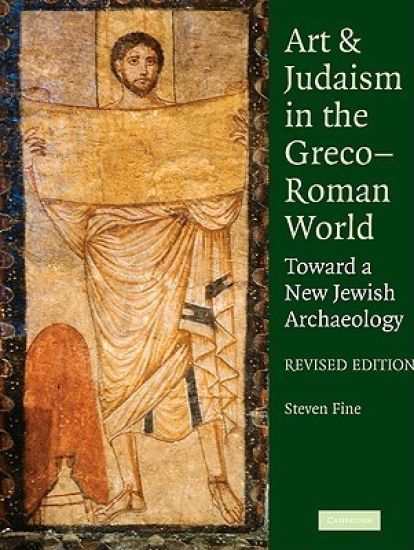
Art and Judaism in the Greco-Roman World

Art and Judaism in the Greco-Roman World

Steven Fine

Cambridge University Press
2010
pokkari
Art and Judaism in the Greco-Roman World explores the Jewish experience with art during the Greco-Roman period - from the Hellenistic period through the rise of Islam. It starts with the premise that Jewish art in antiquity was a 'minority' or 'ethnic' art and surveys ways that Jews fully participated in, transformed, and at times rejected the art of their general environment. Art and Judaism focuses upon the politics of identity during the Greco-Roman period, even as it discusses ways that modern identity issues have sometimes distorted and at other times refined scholarly discussion of ancient Jewish material culture. Art and Judaism, the first historical monograph on ancient Jewish art in forty years, evaluates earlier scholarship even as it sets out in new directions. Placing literary sources in careful dialogue with archaeological discoveries, this 'New Jewish Archaeology' is an important contribution to Judaic Studies, Religious Studies, Art History, and Classics.
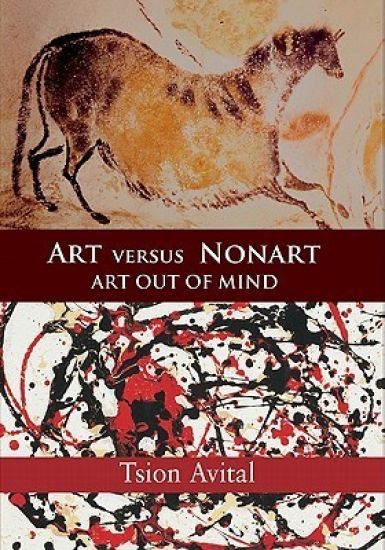
Art versus Nonart

Art versus Nonart

Tsion Avital

Cambridge University Press
2011
pokkari
In Art versus Nonart, Tsion Avital poses the question: 'Is modern art art at all?' He argues that much, if not all, of the nonrepresentational art produced in the twentieth century was not art, but rather the debris of the visual tradition it replaced. Modern art has thrived on the total confusion between art and pseudo-art and the inability of many to distinguish between them. As Avital demonstrates, modern art has served as a critical intermediate stage between art of the past and the future. This book, first published in 2003, proposes a distinct way to define art, anchoring the nature of art in the nature of the mind, solving a major problem of art and aesthetics for which no solution has yet been provided. The definition of art proposed in this book paves the way for a fresh and promising paradigm for future art.
Art and Identity in Dark Age Greece, 1100–700 BC

Art and Identity in Dark Age Greece, 1100–700 BC

Susan Langdon

Cambridge University Press
2010
pokkari
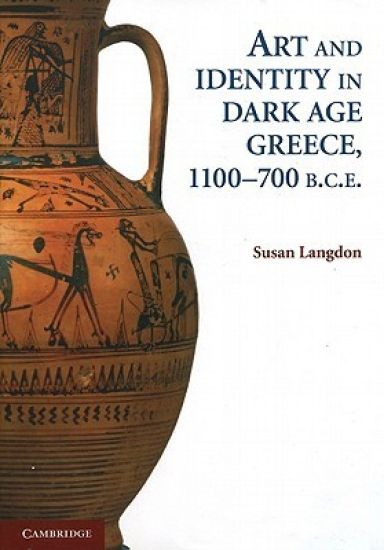
This book explores how art and material culture were used to construct age, gender and social identity in the Greek Early Iron Age, 1100–700 BCE. Coming between the collapse of the Bronze Age palaces and the creation of Archaic city-states, these four centuries witnessed fundamental cultural developments and political realignments. Whereas previous archaeological research has emphasized class-based aspects of change, this study offers a more comprehensive view of early Greece by recognizing the place of children and women in a warrior-focused society. Combining iconographic analysis, gender theory, mortuary analysis, typological study and object biography, Susan Langdon explores how early figural art was used to mediate critical stages in the life-course of men and women. She shows how an understanding of the artistic and material contexts of social change clarifies the emergence of distinctive gender and class asymmetries that laid the basis for classical Greek society.
Art as Plunder

Art as Plunder

Margaret M. Miles

Cambridge University Press
2009
pokkari
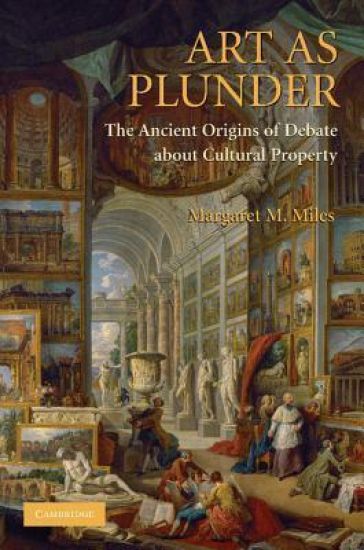
This book examines the ancient origins of debate about art as cultural property. What happens to art in time of war? Who should own art, and what is its appropriate context? Should the victorious ever allow the defeated to keep their art? These questions were posed by Cicero during his prosecution of a Roman governor of Sicily, Gaius Verres, for extortion. Cicero's published speeches had a very long afterlife, affecting debates about collecting art in the eighteenth century and reactions to the looting of art by Napoleon. The focus of the book's analysis is theft of art in Greek Sicily, Verres' trial, Roman collectors of art, and the later impact of Cicero's arguments. The book concludes with the British decision after Waterloo to repatriate Napoleon's stolen art to Italy and an epilogue on the current threats to art looted from archaeological contexts.
Art, Theory, and Culture in Sixteenth-Century Italy

Art, Theory, and Culture in Sixteenth-Century Italy

Robert Williams

Cambridge University Press
2011
pokkari
Art, Theory and Culture in Sixteenth-Century Italy was originally published in 1998, and offers a critical overview of the literature on the visual arts produced during the High and Late Renaissance. Analysing and interpreting texts by such writers as Vasari, Lomazzo, Zuccaro, and Tasso, Robert Williams demonstrates how these works offer insight into the experience of contemporary viewers, thus permitting a clearer view of the relationship between abstract thought and lived experience. Also examined is the argument that art is a privileged form of knowledge that subordinates all others. By focusing on a hitherto neglected, but important, body of literature, Williams shows how an understanding of it can transform our knowledge and appreciation of the Renaissance.
Art in the Hellenistic Age

Art in the Hellenistic Age

Jerome Jordan Pollitt

Cambridge University Press
1986
pokkari
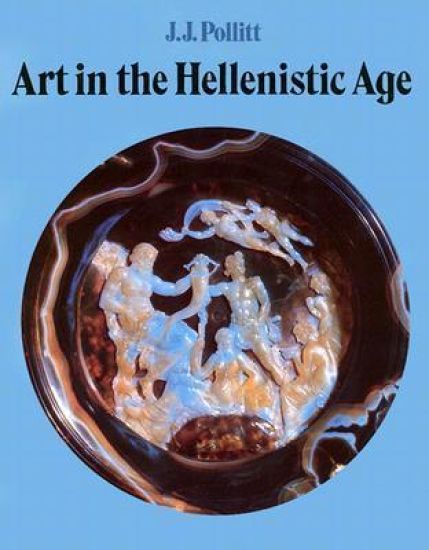
'The best reason to study Hellenistic art is for its own sake' writes Professor Pollitt in the Preface to Art in the Hellenistic Age. 'But', he continues, 'I would suggest that there is an additional quality that should make the art of the Hellenistic age of particular interest to modern audiences: the fact that in background and content it was the product of an age in many ways similar to our own … The result of the historical conditions (of the age) was an art which, like much modern art, was heterogenous, often cosmopolitan, increasingly individualistic, and frequently elite in its appeal'. This 1986 book is an interpretative history of Greek art during the Hellenistic period - i.e. from the death of Alexander the Great in 323 BC, to the establishment of the Roman Empire at the end of the first century BC - which also explores ways in which that art is an expression of the cultural experience and aspirations of the Hellenistic age.
Art and Patronage in the Medieval Mediterranean

Art and Patronage in the Medieval Mediterranean

Jill Caskey

Cambridge University Press
2011
pokkari
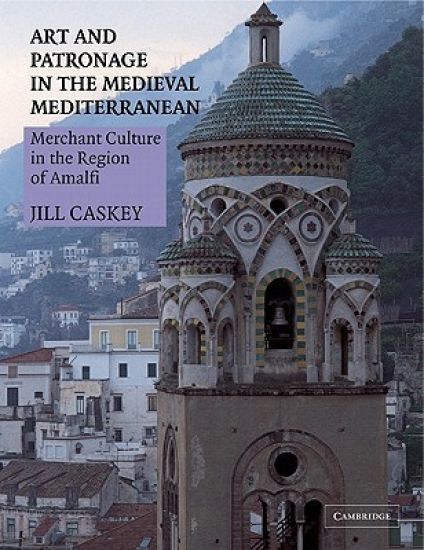
An important trade centre in the Medieval Mediterranean, Amalfi and the surrounding region of southern Italy sustained strong art production and patronage from the eleventh through to the thirteenth centuries. Merchant patrons realised a wide variety of religious and residential complexes that were evocative of Byzantine, Islamic, Western, and local traditions. With the rise of the Angevin kingdom, a demise of this eclectic art tradition took place and by the fourteenth century, Amalfitan painting and sculpture reflected compromises between local and Neapolitan styles, demonstrating the erosion of its autonomy. Originally published in 2004, this book evaluates the Amalfitan art production in terms of moral, economic, and social structures, including investment strategies, anxieties about wealth and salvation, and southern Italy's diverse religious communities. Historiographical analyses and postcolonial models of interpretation offer further insight into Amalfitan art and its ever-shifting relationship to the visual cultures of sovereign authorities in southern Italy.
Art and History

Art and History

Cambridge University Press
1988
pokkari
This book was originally published in 1988. Although they pursue divergent lines of analysis, these essays by historians and art historians reveal their mutual appreciation of art as historic evidence shaped by imagination as well as tradition and purpose.