Excerpt from Luther, Gustav Adolf und Maximilian I, von Bayern: Biographische Skizzen Folchen, bie auf ber (R)egenfeite finnoen, bofie (c)ererhtigfeit miber fahren 311 Inffen, fo mirb bie (R)efchichte ai? sd?itte f r einen ihr. About the Publisher Forgotten Books publishes hundreds of thousands of rare and classic books. Find more at www.forgottenbooks.com This book is a reproduction of an important historical work. Forgotten Books uses state-of-the-art technology to digitally reconstruct the work, preserving the original format whilst repairing imperfections present in the aged copy. In rare cases, an imperfection in the original, such as a blemish or missing page, may be replicated in our edition. We do, however, repair the vast majority of imperfections successfully; any imperfections that remain are intentionally left to preserve the state of such historical works.
Excerpt from Luther, Gustav Adolf und Maximilian I, von Bayern: Biographische Skizzen Folchen, bie auf ber (R)egenfeite finnoen, bofie (c)ererhtigfeit miber fahren 311 Inffen, fo mirb bie (R)efchichte ai? sd?itte f r einen ihr. About the Publisher Forgotten Books publishes hundreds of thousands of rare and classic books. Find more at www.forgottenbooks.com This book is a reproduction of an important historical work. Forgotten Books uses state-of-the-art technology to digitally reconstruct the work, preserving the original format whilst repairing imperfections present in the aged copy. In rare cases, an imperfection in the original, such as a blemish or missing page, may be replicated in our edition. We do, however, repair the vast majority of imperfections successfully; any imperfections that remain are intentionally left to preserve the state of such historical works.
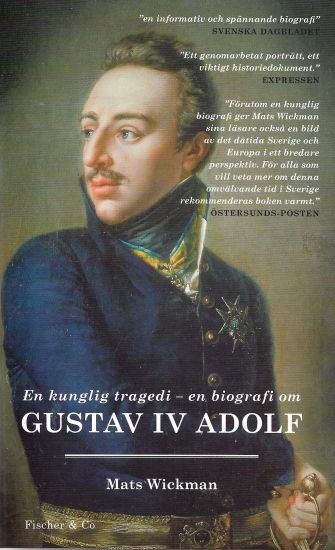
Av svenska kungar har få gått ett så tragiskt och okänt öde till mötes som Gustaf IV Adolf. Hans liv bildar en närmast osannolik händelsekedja, fylld av kontraster och dramatik. Den stora vändpunkten kom med avsättningen den 13 mars 1809. Kuppen var oblodig och har därför kallats för en "operettkupp". Men det är inte bara avsättningen som är operettliknande. Hela hans liv skulle kunna utgöra den bärande handlingen i en operett eller kanske snarare en opera. Från hans besynnerliga och hårda uppfostran som kronprins till att han bruten till kropp och själ irrade omkring på kontinenten, allt medan ungarna skrek "Schwedenkönig" efter honom och försökte pricka hans höga, otidsenliga hatt med snöbollar. De sista månaderna av sitt liv tillbringade den forne kungen sjuk och alkoholiserad på ett litet värdshus i Schweiz där han tog in under namnet överste Gustafsson. Slutet blir allt annat än glättigt. Det är just dramatiken och kontrasten till hans tidigare kungliga tillvaro som utgjort drivkraften för Mats Wickman att måla upp detta porträtt av Gustaf IV Adolf. Länge var Gustaf IV Adolf förpassad till historiens glömska. Först under 1900-talet började historiker intressera sig för honom men det har bara skett sporadiskt. En kunglig tragedi är den första heltäckande biografin som ges ut på över 60 år. Här citeras också ur hans egna - och så gott som okända - memoarer, vilka ger en unik inblick i kungens tankevärld. MATS WICKMAN är kulturhistoriker, journalist och författare till flera böcker, bland andra Stadshuset i Stockholm och Stockholm förr och nu. Hans texter präglas av sakkunskap i förening med en ovanlig förmåga att berätta och levandegöra.
HÖGSTA BETYG AV BTJ, SVERIGES BIBLIOTEK! (Publicering i BTJ-häftet nr 23.) Gustav Adolf, vilken kung! Han lyckades med helt otroliga saker - som att göra Sverige till en stormakt till exempel. Men när hans nya coola båt sjönk mitt i Stockholm, eller när han red vilse i dimman - då var det inte lika kul. En superkändis var han i alla fall - Lejonet från Norden. Boksmart ger ut sagolika historier för dig mellan 3-115 år - skrivna och illustrerade med både humor och värme. På bara tio minuter får du och ditt barn koll på en historisk person och händelse som ni kan minnas livet ut. För vem glömmer en saga? "Att på detta roliga, lekfulla och fantasirika sätt få barn (och vuxna) intresserade av historia är fantastiskt. Jag känner en enorm glädje när jag säljer dessa böcker som gåvor till barn och barnbarn. De ger mig också möjlighet att föra in historia som en naturlig del i mina egna barns liv."JENNY FORSBERG, TREBARNSMOR OCH BUTIKSANSVARIG PÅ KALMAR LÄNSMUSEUM
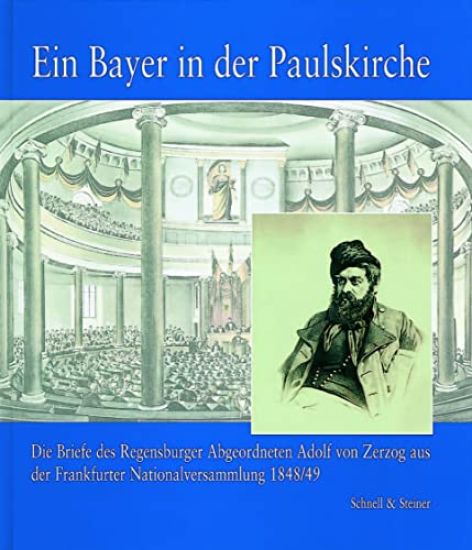
Aktuell zum 150. Gedenktag der Revolution von 1848/49 liegt mit diesem Buch ein aussergewohnlicher Beitrag zur Revolutionsgeschichte aus dem suddeutschen Raum vor: Der Briefwechsel des Regensburger Abgeordneten Adolf von Zerzog (1799-1889).
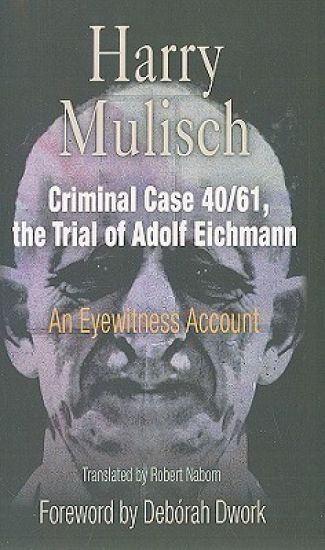
The trial of Adolf Eichmann began in 1961 under a deceptively simple label, "criminal case 40/61." Hannah Arendt covered the trial for the New Yorker magazine and recorded her observations in Eichmann in Jerusalem: The Banality of Evil. Harry Mulisch was also assigned to cover the trial for a Dutch news weekly. Arendt would later say in her book's preface that Mulisch was one of the few people who shared her views on the character of Eichmann. At the time, Mulisch was a young and little-known writer; in the years since he has since emerged as an author of major international importance, celebrated for such novels as The Assault and The Discovery of Heaven. Mulisch modestly called his book on case 40/61 a report, and it is certainly that, as he gives firsthand accounts of the trial and its key players and scenes (the defendant's face strangely asymmetric and riddled by tics, his speech absurdly baroque). Eichmann's character comes out in his incessant bureaucratizing and calculating, as well as in his grandiose visions of himself as a Pontius Pilate-like innocent. As Mulisch intersperses his dispatches from Jerusalem with meditative accounts of a divided and ruined Berlin, an eerily rebuilt Warsaw, and a visit to the gas chambers of Auschwitz, Criminal Case 40/61, the Trial of Adolf Eichmann becomes as a disturbing and highly personal essay on the Nazi extermination of European Jews and on the human capacity to commit evil ever more efficiently in an age of technological advancement. Here presented with a foreword by Deborah Dwork and translated for the first time into English, Criminal Case 40/61 provides the reader with an unsettling portrait not only of Eichmann's character but also of technological precision and expertise. It is a landmark of Holocaust writing.
This work has been selected by scholars as being culturally important, and is part of the knowledge base of civilization as we know it. This work was reproduced from the original artifact, and remains as true to the original work as possible. Therefore, you will see the original copyright references, library stamps (as most of these works have been housed in our most important libraries around the world), and other notations in the work.This work is in the public domain in the United States of America, and possibly other nations. Within the United States, you may freely copy and distribute this work, as no entity (individual or corporate) has a copyright on the body of the work.As a reproduction of a historical artifact, this work may contain missing or blurred pages, poor pictures, errant marks, etc. Scholars believe, and we concur, that this work is important enough to be preserved, reproduced, and made generally available to the public. We appreciate your support of the preservation process, and thank you for being an important part of keeping this knowledge alive and relevant.
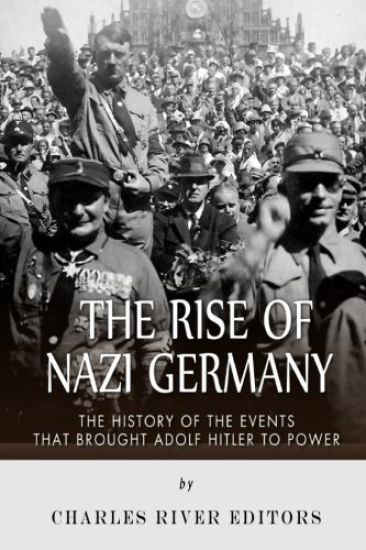
*Includes pictures *Profiles the seminal events that helped Hitler rise to power and consolidate his position, including the end of World War I, the Beer Hall Putsch, the Burning of the Reichstag, and the Night of the Long Knives *Includes online resources for further reading *Includes a table of contents "I cannot remember in my entire life such a change in the attitude of a crowd in a few minutes, almost a few seconds ... Hitler had turned them inside out, as one turns a glove inside out, with a few sentences. It had almost something of hocus-pocus, or magic about it." - Dr. Karl Alexander von Mueller It is often claimed that Adolf Hitler rose to power in Germany through democratic means, and while that is a stretch, it is true that he managed to become an absolute dictator as Chancellor of Germany in the 1930s through a mixture of politics and intimidation. Ironically, he had set such a course only because of the failure of an outright coup attempt known as the Beer Hall Putsch about a decade earlier. At the close of World War I, Hitler was an impoverished young artist who scrapped by through selling souvenir paintings, but within a few years, his powerful oratory brought him to the forefront of the Nazi party in Munich and helped make the party much more popular. A smattering of followers in the hundreds quickly became a party of thousands, with paramilitary forces like the SA backing them, and at the head of it all was a man whose fiery orations denounced Jews, communists and other "traitors" for bringing upon the German nation the Treaty of Versailles, which had led to hyperinflation and a wrecked economy. The early 1930s were a tumultuous period for German politics, even in comparison to the ongoing transition to the modern era that caused various forms of chaos throughout the rest of the world. In the United States, reliance on the outdated gold standard and an absurdly parsimonious monetary policy helped bring about the Great Depression. Meanwhile, the Empire of Japan began its ultimately fatal adventurism with the invasion of Manchuria, alienating the rest of the world with the atrocities it committed. Around the same time, Gandhi began his drive for the peaceful independence of India through nonviolent protests against the British. It was in Germany, however, that the strongest seeds of future tragedy were sown. The struggling Weimar Republic had become a breeding ground for extremist politics, including two opposed and powerful authoritarian entities: the right-wing National Socialists and the left-wing KPD Communist Party. As the 1930s dawned, these two totalitarian groups held one another in a temporary stalemate, enabling the fragile ghost of democracy to continue a largely illusory survival for a few more years. That stalemate was broken in dramatic fashion on a bitterly cold night in late February 1933, and it was the Nazis who emerged decisively as the victors. A single act of arson against the famous Reichstag building proved to be the catalyst that propelled Adolf Hitler to victory in the elections of March 1933, which set the German nation irrevocably on the path towards World War II. Like other totalitarian regimes, the leader of the Nazis kept an iron grip on power in part by making sure nobody else could attain too much of it, leading to purges of high-ranking officials in the Nazi party. Of these purges, the most notorious was the Night of the Long Knives, a purge in the summer of 1934 that came about when Hitler ordered the surprise executions of several dozen leaders of the SA. This fanatically National Socialist paramilitary organization had been a key instrument in overthrowing democratic government in Germany and raising Hitler to dictatorial power in the first place. However, the SA was an arm of the Nazi phenomenon which had socialist leanings and which was the private army of Ernst R hm, which was enough for Hitler to consider the organization dangerous.