Kirjojen hintavertailu. Mukana 12 016 292 kirjaa ja 12 kauppaa.

Kirjahaku

Etsi kirjoja tekijän nimen, kirjan nimen tai ISBN:n perusteella.

1000 tulosta hakusanalla Alfred Durancy

Alfred The Great - Myths, Legends & History

Alfred The Great - Myths, Legends & History

Kiv Books

Independently Published
2018
pokkari
Alfred the Great was not likely to be king if the circumstances of his life did not happen. He was the youngest son of Aethelwulf, king of Wessex and he had four elder brothers who were in line to succeed in the throne.Yet, as if in an act of fate, his father and all his older brothers died during the invasion of the Vikings. You can say that greatness was in him and yet greatness was thrown into his lap as things turned from good to worse.One of the great hallmarks of his life was the defense of England against the Danes. Yet he was more scholar than warrior. In fact, one of the best things he was known for is the provision of education to the commoners in their native English language.In this book you will catch a glimpse into the life and struggles of Alfred the Great. The book covers his exploits, his weaknesses, and all the things that made him great.Like all historic figures from centuries past, his actual history has been blurred in a mixture of fact, fiction, myth, and legend. This book will try to reconstruct the high and low points of his life and retell the reasons why he is the only king in all of England to be called The Great.
Alfred North Whitehead, Philosopher Of Time

Alfred North Whitehead, Philosopher Of Time

Remy Lestienne

World Scientific Europe Ltd
2022
sidottu
Alfred North Whitehead (1861-1947), a mathematician and logician by training, was the author of highly original works at the crossroads of science and philosophy which explore the nature of the world around us and its temporal flow.Convinced that everyday terms distort reality, Whitehead invented or borrowed terms more appropriate to his project. The word 'Process', which gives its title to his most famous work Process and Reality (1929), is central to his thinking. Process introduces his vision of nature as a succession of crystallizations, each of which proves the finite granularity of time: the instant does not exist. It also implies a confrontation with the theory of relativity and quantum physics. Whitehead's perspective allows for the occurrence of creative novelties, but necessitates that the world cooperates with a deity, the role of which is examined in this book's last chapter.In Alfred North Whitehead, Philosopher of Time, the author mixes biographical elements with intellectual advances, from logicism to philosophies of nature. A compelling introduction to Whitehead's demanding work, this book deciphers a metaphysical landscape often considered too abstract to be approachable, but points out the philosopher's imperfections with respect to the scientific advances of our time.
Alfred Cort Haddon

Alfred Cort Haddon

Ciarán Walsh

BERGHAHN BOOKS
2023
sidottu
An innovative account of one of the least-understood characters in the history of anthropology. Using previously overlooked, primary sources Ciarán Walsh argues that Haddon, the grandson of anti-slavery activists, set out to revolutionize anthropology in the 1890s in association with a network of anarcho-utopian activists and philosophers. He regards most of what has been written about Haddon in the past as a form of disciplinary folklore shaped by a theory of scientific revolutions. The main action takes place in Ireland, where Haddon adopted the persona of a very English savage in a new form of performed photo-ethnography that constituted a singularly modernist achievement in anthropology. From the Introduction: Alfred Cort Haddon was written out of the story of anthropology for the same reasons that make him interesting today. He was passionately committed to the protection of simpler societies and their civilisations from colonists and their supporters in parliament and the armed forces.
Alfred Cort Haddon

Alfred Cort Haddon

Ciarán Walsh

BERGHAHN BOOKS
2023
nidottu
An innovative account of one of the least-understood characters in the history of anthropology. Using previously overlooked, primary sources Ciarán Walsh argues that Haddon, the grandson of anti-slavery activists, set out to revolutionize anthropology in the 1890s in association with a network of anarcho-utopian activists and philosophers. He regards most of what has been written about Haddon in the past as a form of disciplinary folklore shaped by a theory of scientific revolutions. The main action takes place in Ireland, where Haddon adopted the persona of a very English savage in a new form of performed photo-ethnography that constituted a singularly modernist achievement in anthropology. From the Introduction: Alfred Cort Haddon was written out of the story of anthropology for the same reasons that make him interesting today. He was passionately committed to the protection of simpler societies and their civilisations from colonists and their supporters in parliament and the armed forces.
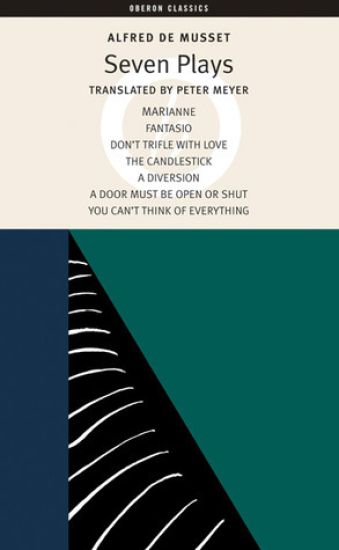
Alfred de Musset: Seven Plays

Alfred de Musset: Seven Plays

Alfred De Musset

Oberon Modern Plays
2006
nidottu
"Marianne, Fantasio, Don't Trifle With Love, The Candlestick, A Diversion, A Door Must be Open or Shut, You Can't Think of Everything The seven plays in this collection share a light-hearted tone, though with occasional and unexpected moments of seriousness. In Marianne, a confirmed cynic intercedes with a married woman on behalf of his best friend. In the eponymous hero of the modern 'fairy tale' Fantasio, by turns imaginative, abrupt and perceptive, Musset provides us with a compelling self-portrait. Don't Trifle with Love shows the dangerous strategems of two childhood sweethearts, supposedly destined for marriage. In The Candlestick, an infatuated clerk is set up as a decoy by his employer's young wife and her lover. The one-act plays A Diversion, A Door Must be Open or Shut and You Can't Think of Everything deal, in witty, epigrammatic style, with various aspects of romance: a wife and her friend test her husband's fidelity, or lack of it; a man wants to propose to his bantering, blase hostess; and a couple in love, one absent-minded, the other forgetful, tries to concentrate long enough to get married."
Alfred's Wars: Sources and Interpretations of Anglo-Saxon Warfare in the Viking Age
Collection of source material and crucial interpretations, offering a comprehensive guide to Anglo-Saxon warfare. WINNER: 2012 CHOICE Outstanding Academic Title Award The warfare of the late Anglo-Saxon period had momentous consequences for the development of the English state following Alfred the Great's reign. This book provides a comprehensive guide, with extracts in translation from the principal sources for our knowledge, accompanied by the most important interpretations by scholars through the ages, and new introductions by thepresent author. It looks at every aspect of the topic, from land and sea forces to logistics and campaigning, from fortifications and the battlefield to the final peacemaking. In so doing, it highlights the significance of warfareand its organisation for the late Anglo-Saxon state, and the multitude of ways in which it was recorded and remembered. Dr Ryan Lavelle is Senior Lecturer in Medieval History at the University of Winchester.
Alfred's Wars: Sources and Interpretations of Anglo-Saxon Warfare in the Viking Age
Collection of source material and crucial interpretations, offering a comprehensive guide to Anglo-Saxon warfare. Selected by Choice as an Outstanding Academic Title. The warfare of the late Anglo-Saxon period had momentous consequences for the development of the English state following Alfred the Great's reign. This book provides acomprehensive guide, with extracts in translation from the principal sources for our knowledge, accompanied by the most important interpretations by scholars through the ages, and new introductions by the present author. It looksat every aspect of the topic, from land and sea forces to logistics and campaigning, from fortifications and the battlefield to the final peacemaking. In so doing, it highlights the significance of warfare and its organisation for the late Anglo-Saxon state, and the multitude of ways in which it was recorded and remembered. Dr Ryan Lavelle is Senior Lecturer in Medieval History at the University of Winchester.
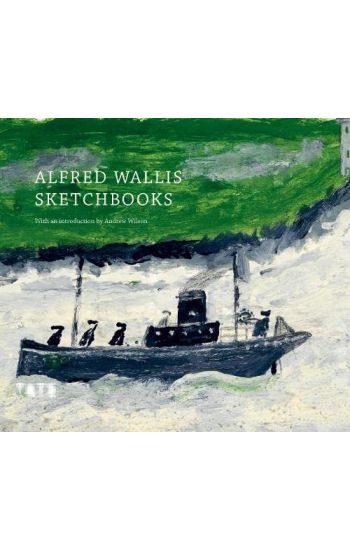
Alfred Wallis Sketchbooks
These sketchbooks have an extraordinary story behind them, created as they were in 1942, Alfred Wallis’s final year, when he lived in the Penzance poorhouse. They shine new light on his contribution to the development of modern art in Britain. A Cornish mariner and scrap metal dealer, he was self-taught and started to paint in around 1925 following the death of his wife three years earlier. A potent influence in the late 1920s for artists Winifred and Ben Nicholson and Christopher Wood, his simple and direct style communicated a truth of experience that also came to personify the overriding character of St Ives as an art community that valued his authenticity of expression. The legacy of his art continues to inspire artists today. This book brings together the contents of three sketchbooks that Wallis filled with drawings. With an introduction by curator Andrew Wilson, it offers a remarkable insight into Wallis’s art of memory made tangible. 'No, I don’t think a good Wallis is representational it is simply REAL.’ - Ben Nicholson.
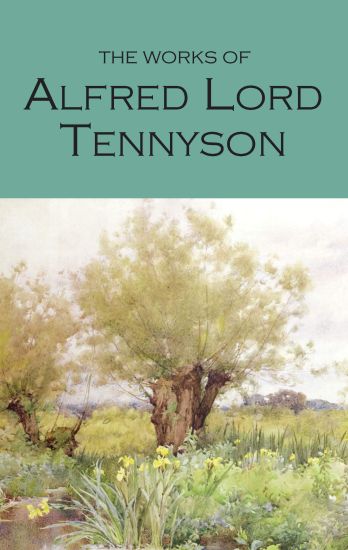
The Works of Alfred Lord Tennyson

The Works of Alfred Lord Tennyson

Alfred Tennyson

Wordsworth Editions Ltd
1994
nidottu
Selected by Rosemary Gray. Poignant, wry, chilling, challenging, amusing, thought-provoking and always intriguing, these accomplished tales from the pens of great writers are object-lessons in the art of creating a literary masterpiece on a small canvas. From the straightforwardly anecdotal to the more analytical of human behaviour, all are guaranteed to capture the imagination, stir the emotions, linger in the memory and whet the reader's appetite for more. In this book, Wordsworth Editions presents the modern reader with a rich variety of short stories by a host of towering literary figures ranging from Arnold Bennett to Virginia Woolf. This disparate and distinguished company of writers has rarely - if ever - met within the pages of one volume: the result is a positive feast.
Alfred Marshall’s Lectures to Women

Alfred Marshall’s Lectures to Women

Edward Elgar Publishing Ltd
1995
sidottu
The Lectures to Women given by Alfred Marshall at Cambridge in 1873, which focus on the effects of working conditions on man's character and prospects, are unique in their content and purpose. They offer insight into a radical period in Marshall's life of which relatively little is known.This new critical edition makes the Lectures, which have sometimes been referred to by Marshallian scholars, available to a wider body of historians of economic thought. Based on Mary Paley Marshall's original notes, corrected by Marshall himself, the Lectures are supplemented by Marshall's lecture outlines. Some contemporary and related texts are also published here including a paper on the future of the working classes from the same year and Marshall's exchange of articles with the trade unionist John Holmes in 1874 known as the Bee-Hive debate. A contextualised commentary on the lectures is provided by Rita McWilliams Tullberg, Ernesto Biagini and Tiziano Raffaelli who adopt three lines of enquiry respectively: the lectures as part of the movement for higher education for women in the Victorian era, the lectures as indicative of Marshall's stand vis-a-vis the political-ideological framework of the time and the lectures as an indicator of Marshall's methodological tendencies concerning the study of social phenomena.
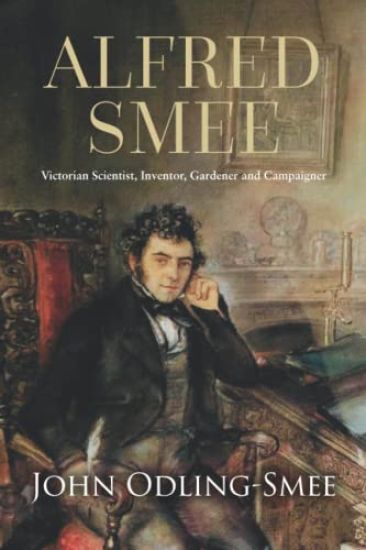
Alfred Smee

Alfred Smee

John Odling-Smee

Mereo Books
2022
pokkari
Alfred Smee (1818-1877) was a doctor, scientist and inventor and also a businessman, campaigner and horticulturalist. His inventions led to his election at age 22 to a Fellowship of the Royal Society. He developed nonfading ink for the Bank of England and better techniques for printing banknotes. Some of his insights into the brain were echoed a century later in computational science. He was chairman of several companies, campaigned for better water and sewage services in London and stood for Parliament. His passion was plants and gardens, and he created a garden of eight acres which he stocked with plants he collected from far and wide. His wide-ranging, full and successful life has now been chronicled by hisgreat-great-grandson, John Odling-Smee.
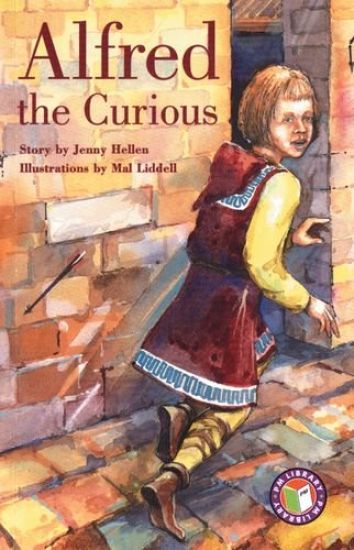
Alfred the Curious

Alfred the Curious

Cengage Learning New Zealand
2000
nidottu
PM is a firm favourite amongst Primary Schools due to its reputation for reading success. Offering over 800 carefully levelled fiction and non-fiction books, PM builds confidence through gradual progression and step-by-step support.
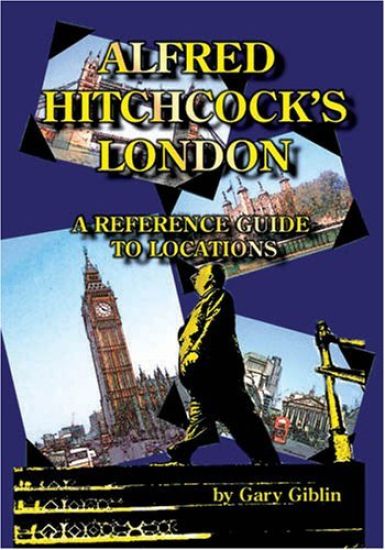
Alfred Hitchcock's London

Alfred Hitchcock's London

Gary Giblin

Midnight Marquee Press, Inc.
2009
nidottu
Good evening, ladies and gentlemen. Tonight you are going to visit one of the world's most famous cities. Here you will see historic palaces, elegant hotels, and magnificent restaurants. If you're lucky, you may even see a corpse floating down the Thames. For tonight we shall visit: ALFRED HITCHCOCK'S LONDON Now you can follow in the footsteps of the most famous film director of all time, from the corridors of Scotland Yard and the stalls of the Royal Albert Hall to the top of Tower Bridge and the dome of St Paul's Cathedral. There was a hardly a corner of London that Hitchcock didn't visit and they're all here--over 200 of them--from the site of his birth in 1899 to the cathedral where he was memorialized in 1980.
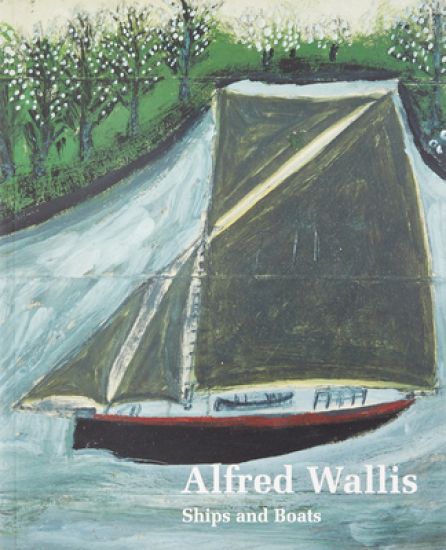
Alfred Wallis Ships & Boats

Alfred Wallis Ships & Boats

KETTLE'S YARD GALLERY
2012
nidottu
Alfred Wallis (1855-1942) is one of the most original and inspiring British artists of the 20th Century. Promoted by the artist Ben Nicholson amongst others, Wallis’s paintings influenced the development of British art between the wars. The directness of Wallis’ vision reflected a lifetime of living by and from the sea. His paintings are of what he knew, remembered and imagined. Yet they are also timeless stories about survival and the nature of our relationship with the world. As Jim Ede commented “Wallis is never local.” With over 70 illustrations, excerpts from letters and texts by Michael Bird, Ben Nicholson and Jim Ede, this book takes a fresh look at this extraordinary artist and his relationship to Kettle's Yard. It includes some of Wallis's best works from the Kettle’s Yard collection including many that are not normally on display, from ambitious paintings such as Saltash to what Wallis knew and loved best: ships and boats. Kettle's Yard, the University of Cambridge's modern and contemporary art gallery, holds the largest public collection of works by Alfred Wallis. Wallis was born in Devon. He was a fisherman and later a scrap-metal merchant in St. Ives. He took up painting in his later years, following the death of his wife in 1922. He was admired by Ben Nicholson and Christopher Wood, who came across his work when visiting St. Ives in 1928 and included it in the Seven & Five Society’s exhibition of 1929. He died in Madron Poorhouse.