
Kirjahaku
Etsi kirjoja tekijän nimen, kirjan nimen tai ISBN:n perusteella.
1000 tulosta hakusanalla Benjamin Franklin Perry

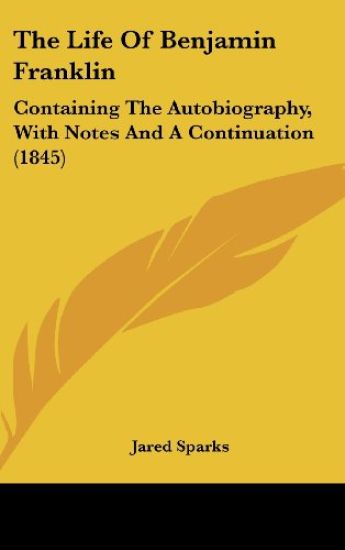
The Life Of Benjamin Franklin: Containing The Autobiography, With Notes And A Continuation (1845)
Jared Sparks
KESSINGER PUBLISHING, LLC
2008
sidottu
Letters to Benjamin Franklin from His Family and Friends, 1751-1790
William Duane
Trieste Publishing
2018
nidottu

Pictorial Life of Benjamin Franklin; Embracing Anecdotes Illustrative of His Character
H Hastings Weld
Trieste Publishing
2018
nidottu
Pictorial Life of Benjamin Franklin; Embracing Anecdotes Illustrative of His Character
H Hastings Weld
Trieste Publishing
2018
nidottu

Letters of Benjamin Franklin and Jane Mecom
Princeton University Press
2015
pokkari
The delightful correspondence between Benjamin Franklin and his favorite sister, with an introduction and notes by Carl Van Doren. Franklin wrote more letters to Jane Mecom than he is known to have written to any other person, and as she emerges through these letters we understand the reasons for the esteem in which he held her. The letters cover a period of over sixty years, give new and intimate glimpses of Franklin and of the times, particularly in Philadelphia and Boston, and will enchant any reader of 18th century Americana. Originally published in 1950. The Princeton Legacy Library uses the latest print-on-demand technology to again make available previously out-of-print books from the distinguished backlist of Princeton University Press. These editions preserve the original texts of these important books while presenting them in durable paperback and hardcover editions. The goal of the Princeton Legacy Library is to vastly increase access to the rich scholarly heritage found in the thousands of books published by Princeton University Press since its founding in 1905.

Letters of Benjamin Franklin and Jane Mecom
Princeton University Press
2016
sidottu
The delightful correspondence between Benjamin Franklin and his favorite sister, with an introduction and notes by Carl Van Doren. Franklin wrote more letters to Jane Mecom than he is known to have written to any other person, and as she emerges through these letters we understand the reasons for the esteem in which he held her. The letters cover a period of over sixty years, give new and intimate glimpses of Franklin and of the times, particularly in Philadelphia and Boston, and will enchant any reader of 18th century Americana. Originally published in 1950. The Princeton Legacy Library uses the latest print-on-demand technology to again make available previously out-of-print books from the distinguished backlist of Princeton University Press. These editions preserve the original texts of these important books while presenting them in durable paperback and hardcover editions. The goal of the Princeton Legacy Library is to vastly increase access to the rich scholarly heritage found in the thousands of books published by Princeton University Press since its founding in 1905.
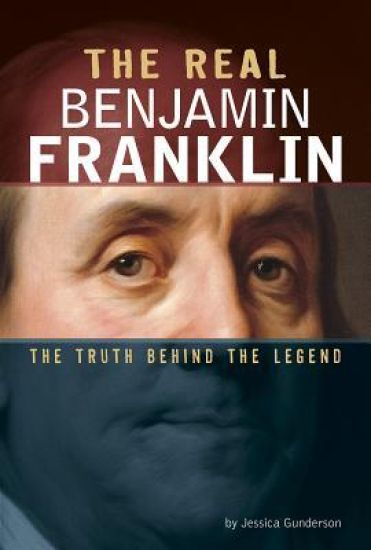
The Real Benjamin Franklin: The Truth Behind the Legend
Jessica Gunderson
Compass Point Books
2019
sidottu
Benjamin Franklin led a productive life, but is it possible his accomplishments include everything attributed to him? The answer is yes, for the most part. He never did suggest the wild turkey should be the national symbol of the United States. He did, however, lend his wisdom to the founding of the country, and he was the only person to sign four of the documents most critical to the creation and character of the nation.
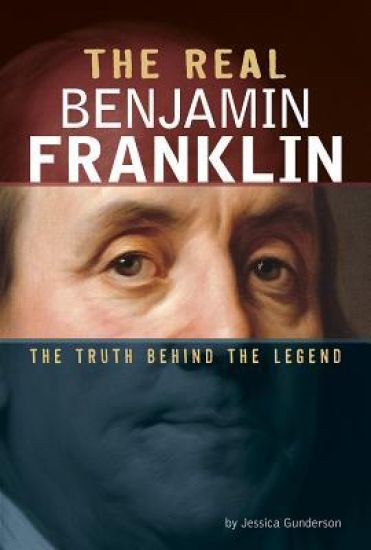
The Real Benjamin Franklin: The Truth Behind the Legend
Jessica Gunderson
Compass Point Books
2019
nidottu
Benjamin Franklin led a productive life, but is it possible his accomplishments include everything attributed to him? The answer is yes, for the most part. He never did suggest the wild turkey should be the national symbol of the United States. He did, however, lend his wisdom to the founding of the country, and he was the only person to sign four of the documents most critical to the creation and character of the nation.
The Radical Enlightenments of Benjamin Franklin
Douglas Anderson
Johns Hopkins University Press
2001
pokkari
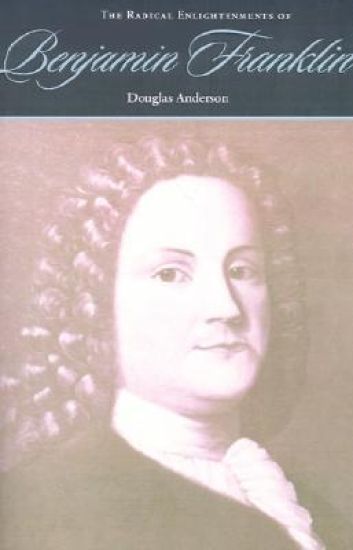
Benjamin Franklin, writes Douglas Anderson in his preface, is "no one's contemporary...Blending elements of the fifteenth-century spiritual discipline of Thomas a Kempis with the journalistic energy of Daniel Defoe, the urbane reason of Lord Shaftesbury with the scientific initiative of Thomas Edison, Franklin places exceptional demands on the historical imagination of his readers-demands that are inevitably slighted by writers who emphasize only one set of interests or one facet of a complex temperament." In The Radical Enlightenments of Benjamin Franklin Anderson takes a fresh look at the intellectual roots of one of the most engaging and multifaceted of America's founders. Anderson begins by tracing the evolution of young Franklin's theology of works between the letters of Silence Dogood (1722) and his impassioned defense of the heterodox Irish clergyman Samuel Hemphill in 1735. He places the twenty-five-year production of Poor Richard's Almanac in the context of early eighteenth-century moral and educational psychology. He examines the broad intellectual continuities uniting Franklin's 1726 journal of his return voyage to Philadelphia with successive editions of his Experiments and Observations on Electricity, first published in 1751. And he offers a careful examination of Franklin's seminal, and controversial, 1751 essay "Observations Concerning the Increase of Mankind." The Radical Enlightenments of Benjamin Franklin brings us a much fuller understanding of Franklin's intellectual and literary roots and his later influence among common readers.
The Political Philosophy of Benjamin Franklin
Lorraine Smith Pangle
Johns Hopkins University Press
2007
sidottu
The most famous man of his age, Benjamin Franklin was an individual of many talents and accomplishments. He invented the wood-burning stove and the lightning rod, he wrote Poor Richard's Almanac and The Way to Wealth, and he traveled the world as a diplomat. But it was in politics that Franklin made his greatest impact. Franklin's political writings are full of fascinating reflections on human nature, on the character of good leadership, and on why government is such a messy and problematic business. Drawing together threads in Franklin's writings, Lorraine Smith Pangle illuminates his thoughts on citizenship, federalism, constitutional government, the role of civil associations, and religious freedom. Of the American Founders, Franklin had an unrivaled understanding of the individual human soul. At the heart of his political vision is a view of democratic citizenship, a rich understanding of the qualities of the heart and mind necessary to support liberty and sustain happiness. This concise introduction reflects Franklin's valuable insight into political issues that continue to be relevant today.
The Political Philosophy of Benjamin Franklin
Lorraine Smith Pangle
Johns Hopkins University Press
2007
pokkari
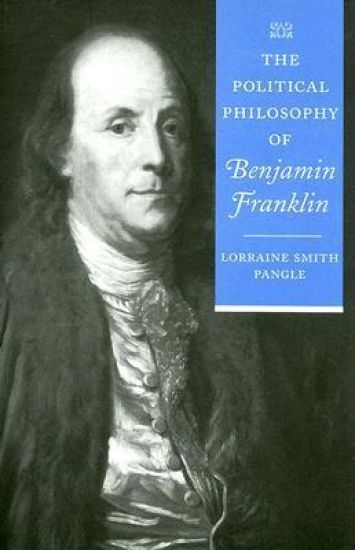
The most famous man of his age, Benjamin Franklin was an individual of many talents and accomplishments. He invented the wood-burning stove and the lightning rod, he wrote Poor Richard's Almanac and The Way to Wealth, and he traveled the world as a diplomat. But it was in politics that Franklin made his greatest impact. Franklin's political writings are full of fascinating reflections on human nature, on the character of good leadership, and on why government is such a messy and problematic business. Drawing together threads in Franklin's writings, Lorraine Smith Pangle illuminates his thoughts on citizenship, federalism, constitutional government, the role of civil associations, and religious freedom. Of the American Founders, Franklin had an unrivaled understanding of the individual human soul. At the heart of his political vision is a view of democratic citizenship, a rich understanding of the qualities of the heart and mind necessary to support liberty and sustain happiness. This concise introduction reflects Franklin's valuable insight into political issues that continue to be relevant today.
The Life of Benjamin Franklin, Volume 1
J. A. Leo Lemay
University of Pennsylvania Press
2005
sidottu
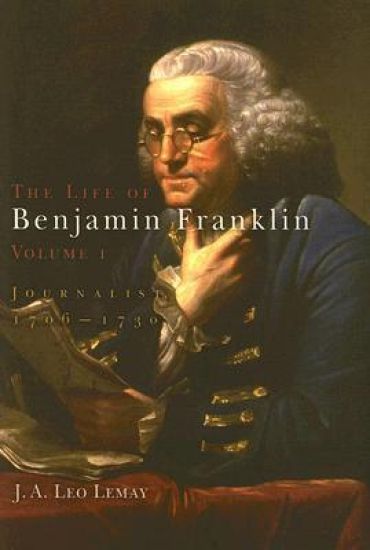
Named "one of the best books of 2006" by The New York Sun Described by Carl Van Doren as "a harmonious human multitude," Benjamin Franklin was the most famous American of his time, of perhaps any time. His life and careers were so varied and successful that he remains, even today, the epitome of the self-made man. Born into a humble tradesman's family, this adaptable genius rose to become an architect of the world's first democracy, a leading light in Enlightenment science, and a major creator of what has come to be known as the American character. Journalist, musician, politician, scientist, humorist, inventor, civic leader, printer, writer, publisher, businessman, founding father, and philosopher, Franklin is a touchstone for America's egalitarianism. The first volume traces young Franklin's life to his marriage in 1730. It traces the New England religious, political, and cultural contexts, exploring previously unknown influences on his philosophy and writing, and attributing new writings to him. After his move to Philadelphia, made famous in his Autobiography, Franklin became the Water American in London in 1725, where he was welcomed into that city's circle of freethinkers. Upon his return to the colonies, the sociable Franklin created a group of young friends, the Junto, devoted to self-improvement and philanthropy. He also started his own press and began to edit and publish the Pennsylvania Gazette, which became the most popular American paper of its day and the first to consistently feature American news.
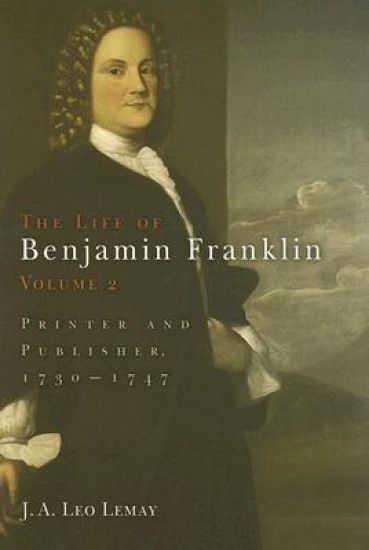
The Life of Benjamin Franklin, Volume 2
J. A. Leo Lemay
University of Pennsylvania Press
2005
sidottu
Named "one of the best books of 2006" by The New York Sun Described by Carl Van Doren as "a harmonious human multitude," Benjamin Franklin was the most famous American of his time, of perhaps any time. His life and careers were so varied and successful that he remains, even today, the epitome of the self-made man. Born into a humble tradesman's family, this adaptable genius rose to become an architect of the world's first democracy, a leading light in Enlightenment science, and a major creator of what has come to be known as the American character. Journalist, musician, politician, scientist, humorist, inventor, civic leader, printer, writer, publisher, businessman, founding father, philosopher, Franklin is a touchstone for America's egalitarianism. Volume 2 takes Franklin from his marriage in 1730 to his retirement as a printer at the beginning of 1748, examining the mysteries of the illegitimate William Franklin's birth and mother and Franklin's increasing civic activities-starting the Library Company in Philadelphia in 1731, forming Pennsylvania's first volunteer fire company, and becoming an advocate for a clean Philadelphia environment. J. A. Leo Lemay assesses Franklin's numerous writings, attributing to him for the first time a deistic Indian speech, remarking on his use of the second African American persona in journalism, and analyzing his publishing sensation of 1747, The Speech of Miss Polly Baker. These belletristic works are complemented by Franklin's religious, political, and scientific writings, which he produced prodigiously.
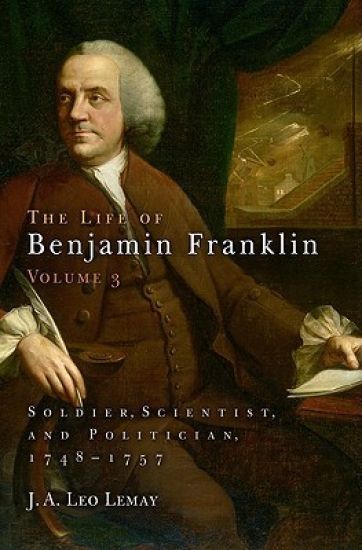
The Life of Benjamin Franklin, Volume 3
J. A. Leo Lemay
University of Pennsylvania Press
2008
sidottu
Described as "a harmonious human multitude," Ben Franklin's life and careers were so varied and successful that he remains, even today, the epitome of the self-made man. Born into a humble tradesman's family, this adaptable genius rose to become an architect of the world's first democracy, a leading light in Enlightenment science, and a major creator of what has come to be known as the American character. Journalist, musician, politician, scientist, humorist, inventor, civic leader, printer, writer, publisher, businessman, founding father, philosopher-a genius in all fields and a bit of a magician in some. Volume 3 begins in the year 1748, when Franklin was known in Pennsylvania as clerk of the Pennsylvania Assembly and in the Middle Colonies as the printer and editor of Poor Richard's Almanac and the Pennsylvania Gazette, the best-known colonial publications. By the middle of 1757, where this volume leaves off, he had become famous in Pennsylvania as a public-spirited citizen and soldier in the conflicts of the Seven Years' War; well known throughout America as a writer, politician, and the most important theorist and patriot of the American empire; and renowned in the western world as a natural philosopher. This volume tells the story of that transformation.
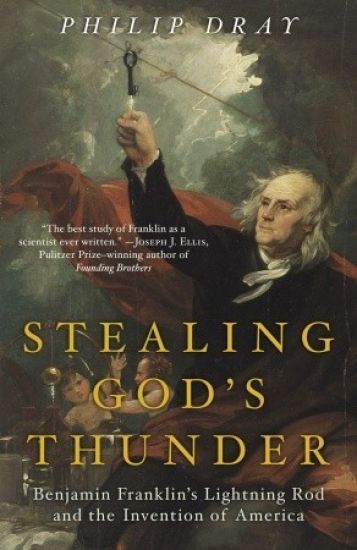
Stealing God's Thunder: Benjamin Franklin's Lightning Rod and the Invention of America
Philip Dray
Random House Trade
2005
nidottu
"Dray captures the genius and ingenuity of Franklin's scientific thinking and then does something even more fascinating: He shows how science shaped his diplomacy, politics, and Enlightenment philosophy."-Walter Isaacson, author of Benjamin Franklin: An American Life Today we think of Benjamin Franklin as a founder of American independence who also dabbled in science. But in Franklin's day, the era of Enlightenment, long before he was an eminent statesman, he was famous for his revolutionary scientific work. Pulitzer Prize finalist Philip Dray uses the evolution of Franklin's scientific curiosity and empirical thinking as a metaphor for America's struggle to establish its fundamental values. He recounts how Franklin unlocked one of the greatest natural mysteries of his day, the seemingly unknowable powers of lightning and electricity. Rich in historical detail and based on numerous primary sources, Stealing God's Thunder is a fascinating original look at one of our most beloved and complex founding fathers.
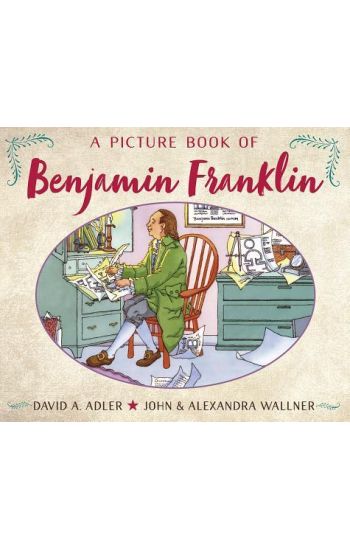
Writer, printer, scientist, inventor, statesman, and youngest son in a family of seventeen children, Benjamin Franklin is considered one of our greatest Americans. Supported by colorful illustrations, Adler's biography brings to life one of America's founding fathers, Benjamin Franklin. Adler highlights Franklin's stunning accomplishments and his day-to-day life from his time as a young boy in Boston, Massachusetts through his role as the oldest delegate to the Constitutional Congress at the age of 81. A lifelong book lover and printer, Franklin poularized famous sayings like haste makes waste and early to bed, early to rise, makes a man healthy, wealthy, and wise in his annual Poor Richard's Almanack. An energetic inventor and public servant, he created the Franklin stove and bifocal glasses and established the first lending library and hospital in America. Young readers looking for insight into one of America's greatest founders, will find inspiration while gaining understanding and appreciation of US colonial history. For almost thirty years, David Adler's Picture Book Biography series has profiled famous people who changed the world. Colorful, kid-friendly illustrations combine with Adler's "expert mixtures of facts and personality" (Booklist) to introduce young readers to history through compelling biographies of presidents, heroes, inventors, explorers, and adventurers. These books are ideal for first and second graders interested in history, or who need reliable sources for school book reports.