
Kirjahaku
Etsi kirjoja tekijän nimen, kirjan nimen tai ISBN:n perusteella.
1000 tulosta hakusanalla Bert Becker


Official Report of the Thirty - Seventh International Christian Endeavor Convention: Cleveland, Ohio July 6 - 11, 1939
Bert H. Davis; International Society of Christian Endea
First Fruits Press
2015
nidottu
The digital copies of this book are available for free at First Fruits website. place.asburyseminary.edu/firstfruits OFFICIAL REPORT OF THE THIRTY - SEVENTH INTERNATIONAL CHRISTIAN ENDEAVOR CONVENTION Held in Cleveland, Ohio July 6 - 11, 1939
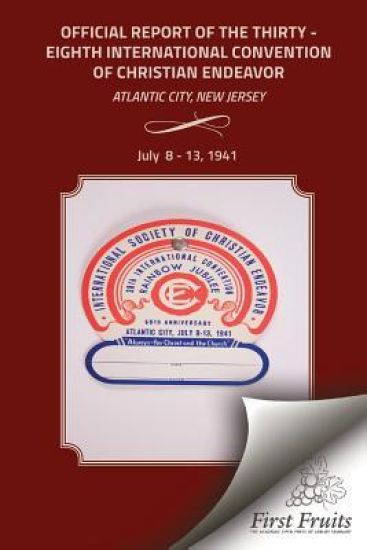
Official Report of the Thirty-Eighth International Convention of Chirstian Endeavor: Held at Atlantic City, New Jersey July 8 - 13, 1941
Bert H. Davis; International Society of Christian Endea
First Fruits Press
2015
nidottu
The digital copies of this book are available for free at First Fruits website. place.asburyseminary.edu/firstfruits OFFICIAL REPORT OF THE THIRTY - EIGHTH INTERNATIONAL COVENTION OF CHRISTIAN ENDEAVOR Held at Atlantic City, New Jersey July 8 - 13, 1941
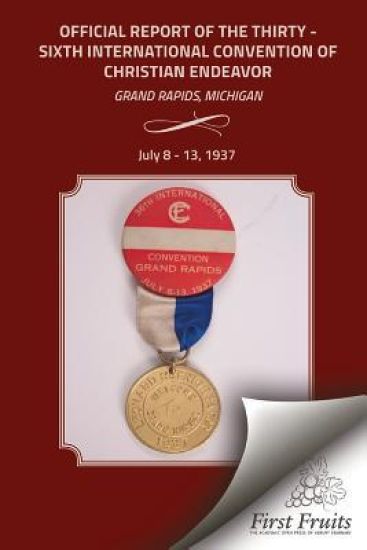
Official Report of the Thirty - Sixth International Convention of Christian Endeavor: Grand Rapids, Michigan July 8 - 13, 1937
Bert H. Davis; International Society of Christian Endea
First Fruits Press
2015
nidottu
The digital copies of this book are available for free at First Fruits website. place.asburyseminary.edu/firstfruits OFFICIAL REPORT OF THE THIRTY - SIXTH INTERNATIONAL COVENTION OF CHRISTIAN ENDEAVOR Held at Grand Rapids, Michigan July 8 - 13, 1937
A biblical exploration of the foundational truths that should form our concept of God.The clearest expression of salvation in the Bible is John 3:16: "For God so loved the world, that He gave His only begotten Son, that whoever believes in Him shall not perish, but have eternal life." This one verse encapsulates six core teachings of the Christian Faith by using words filled with great depth and meaning. When each word is understood as Jesus Himself taught, it provides an entire worldview through which we can understand God, life, the hereafter, and the gospel.In his first book of the six-part series Good News in John 3:16, Bert Davidson elaborates on just one word of this powerful message: "For GOD so loved the world ..." In systematic fashion using scripture as the final authority, fundamental truths about God are explored and given practical application to everyday life. Topics include: How a person's God impacts all aspects of their life.How the God of Christianity differs from false gods of ages past.The eternal, immaterial and formless nature of God's existence.The infinite knowledge, wisdom and power God possesses.The variety of emotions and feelings God can experience.
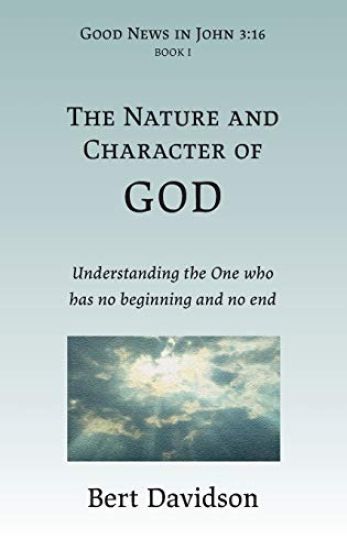
A biblical exploration of the foundational truths that should form our concept of God.The clearest expression of salvation in the Bible is John 3:16: "For God so loved the world, that He gave His only begotten Son, that whoever believes in Him shall not perish, but have eternal life." This one verse encapsulates six core teachings of the Christian Faith by using words filled with great depth and meaning. When each word is understood as Jesus Himself taught, it provides an entire worldview through which we can understand God, life, the hereafter, and the gospel.In his first book of the six-part series Good News in John 3:16, Bert Davidson elaborates on just one word of this powerful message: "For GOD so loved the world ..." In systematic fashion using scripture as the final authority, fundamental truths about God are explored and given practical application to everyday life. Topics include: How a person's God impacts all aspects of their life.How the God of Christianity differs from false gods of ages past.The eternal, immaterial and formless nature of God's existence.The infinite knowledge, wisdom and power God possesses.The variety of emotions and feelings God can experience.
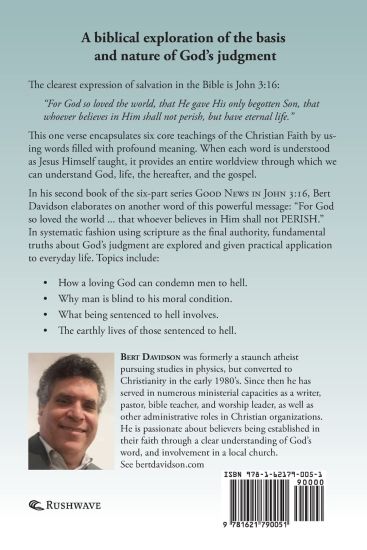
A BIBLICAL EXPLORATION OF THE BASIS AND NATURE OF GOD'S JUDGMENT.The clearest expression of salvation in the Bible is John 3:16: "For God so loved the world, that He gave His only begotten Son, that whoever believes in Him shall not perish, but have eternal life." This one verse encapsulates six core teachings of the Christian Faith by using words filled with profound meaning. When each word is understood as Jesus Himself taught, it provides an entire worldview through which we can understand God, life, the hereafter, and the gospel. In his second book of the six-part series "Good News in John 3:16," Bert Davidson elaborates on another word of this powerful message: "For God so loved the world ... that whoever believes in Him shall not PERISH." In systematic fashion using scripture as the final authority, fundamental truths about God's judgment are explored and given practical application to everyday life. Topics include: How a loving God can condemn men to hell.Why man is blind to his moral condition.What being sentenced to hell involves.The earthly lives of those sentenced to hell.And much more.
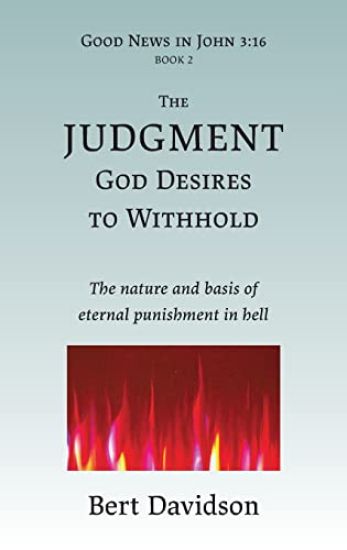
A BIBLICAL EXPLORATION OF THE BASIS AND NATURE OF GOD'S JUDGMENT. The clearest expression of salvation in the Bible is John 3:16: "For God so loved the world, that He gave His only begotten Son, that whoever believes in Him shall not perish, but have eternal life." This one verse encapsulates six core teachings of the Christian Faith by using words filled with profound meaning. When each word is understood as Jesus Himself taught, it provides an entire worldview through which we can understand God, life, the hereafter, and the gospel. In his second book of the six-part series "Good News in John 3:16," Bert Davidson elaborates on another word of this powerful message: "For God so loved the world ... that whoever believes in Him shall not PERISH." In systematic fashion using scripture as the final authority, fundamental truths about God's judgment are explored and given practical application to everyday life. Topics include: How a loving God can condemn men to hell.Why man is blind to his moral condition.What being sentenced to hell involves.The earthly lives of those sentenced to hell.And much more.



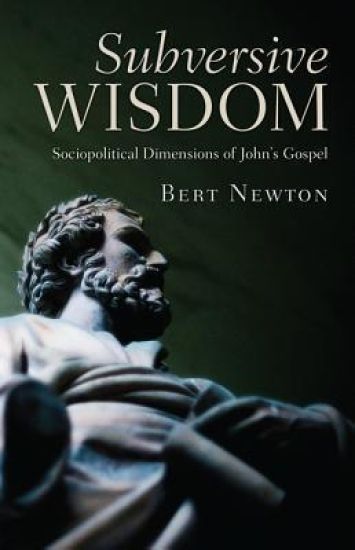
These essays are critical explorations of different societal and cultural themes and phenomena, including love, life, worldviews, the human subject, time, politics, woman's desire, art, cinema, architecture and literature. The various topics are approached from critical-philosophical, psychoanalytical and poststructuralist perspectives, in the process engaging with thinkers such as Plato, Freud, Nietzsche, Heidegger, Kant, Deleuze and Guattari, Lacan, Kristeva and Ranci re. Their aim is to shed light on some areas where human experience and theoretical scrutiny converge, and to do so at a time when critical philosophical thinking is waning in the face of the superficiality that all too often marks communicational exchanges on social media. "Bert Olivier's brilliantly argued compilation of essays is replete with penetrating insights into a wide panorama of critical concerns. Considerations of the deleterious consequences of neo-liberal capitalism on what Snyder (2004) calls "the living dead" in "Psychoanalysis and social change" are afforded as much painstaking attention as the plight of "voiceless" women in "The Piano: What a woman wants." It is precisely Olivier's ability to enter into and engage with the lived experiences of both men and women that makes his writing so compelling - and relevant to our times. Moreover, his depth of insight into a wide and diverse range of thinkers such as Plato, Freud, Nietzsche, Heidegger, Deleuze and Guattari, Lacan, Kristeva and Ranci re evinces prodigious erudition and a master of the craft at work. Not only is Olivier's book a tour de force of intellectual acumen, it is also a visceral delight as evident in "The pleasure of food and the spiritual: Eat, Pray, Love and Babette's Feast." From this we can infer that, far from being an abstruse, anaemic intellectual exercise, Olivier's book is eminently readable, and is bound to appeal to both specialists in his field as well as informed readers. When viewed as a whole, Olivier's project resonates with Foucault's (1977) view of the intellectual as something akin to a "strategist" the intellectual's task is to "make things more fragile" so as to clear a path for others to engage in resistance against certain aspects of the regime of truth, if they choose and in ways they choose for themselves." Olivier more than fulfils this mandate in "Critical Perspectives on Contemporary Culture and Society." N.A. Denis
There is great news and bad news when it comes to podcasting.The great news? Anybody can start a podcast. The bad news? Anybody can start a podcast. And it seems as if everyone is starting a podcast.A simple Google search reveals countless guides about how to start a podcast. From equipment to software, someone can go live with a new podcast in a matter of days with simple step-by-step instructions about recording and launching their show.But what’s lacking is simple and effective training on how to create a podcast that’s actually listenable—that makes listeners hit that subscribe button. In Listenable, syndicated morning-drive radio host, Bert Weiss, shares a simple content and delivery strategy anyone can use to produce a show that builds a large, loyal audience.
God is holy, and He is listening for a certain holy sound. This book, You Don't Know Who You Are, is a call to return to holiness for the church musician and singer so that their musical offering can be accepted by God. This book is a spiritual road map for worshipping God in Spirit and in truth. The reader will understand why God created worship, what true worship is, how and where worship is to be offered, the complete direction of worship, and what will be expected as the vocation and occupation of worshippers in eternity. As you read this book, you will be enlightened, encouraged, invigorated, and compelled to find out who you are, as to return your personal praise and worship that glorifies and honors the Father, God, the Creator of the Universe.
Highly regarded for its exceptional clarity, imaginative and instructive exercises, and fine writing style, this concise book offers an ideal introduction to the fundamentals of topology. Originally conceived as a text for a one-semester course, it is directed to undergraduate students whose studies of calculus sequence have included definitions and proofs of theorems. The book's principal aim is to provide a simple, thorough survey of elementary topics in the study of collections of objects, or sets, that possess a mathematical structure.The author begins with an informal discussion of set theory in Chapter 1, reserving coverage of countability for Chapter 5, where it appears in the context of compactness. In the second chapter Professor Mendelson discusses metric spaces, paying particular attention to various distance functions which may be defined on Euclidean n-space and which lead to the ordinary topology.Chapter 3 takes up the concept of topological space, presenting it as a generalization of the concept of a metric space. Chapters 4 and 5 are devoted to a discussion of the two most important topological properties: connectedness and compactness. Throughout the text, Dr. Mendelson, a former Professor of Mathematics at Smith College, has included many challenging and stimulating exercises to help students develop a solid grasp of the material presented.
Inventing Greenland is a critical and timely assemblage of stories highlighting a shifting landscape - one born from the imagination, projections, and ambitions of a wide range of actors. Geared towards a design audience, this book combines spatial sensibilities with Greenland's local cultural, social, and environmental realities. Inventing Greenland is a critical and timely assemblage of stories highlighting a shifting landscape - one born from the imagination, projections, and ambitions of a wide range of actors. Today, especially within the design discipline, there is a lack of understanding of Greenland as a complex constellation of perspectives, histories, and forces. This book aims to fill that knowledge vacuum. Geared towards architects, landscape architects, and urban planners, this book combines spatial sensibilities with local cultural, social, and environmental realities. More specifically, spatial sensibility is a way of responding to and reading beyond a diverse array of relationships in the built environment. Furthermore, Inventing Greenland provides a broad understanding of a unique island undergoing intense transformation while drawing attention to its historical and current challenges and emerging opportunities. Distinctly, each individual story is anchored to a common thread and interest in architecture, landscape architecture, and urbanism. Such discourse may serve to prepare designers at large as they take on projects in a rapidly developing Arctic. In the past, the extremeness of Greenland's landscape did not impede the first immigration of Inuit hunting tribes, Norsemen from becoming Greenland Vikings, and European explorers from searching for new trade routes and eventually reaching the North Pole. Every single one of them read, saw, and understood the Greenlandic landscape differently, while projecting their hopes and dreams onto new landscapes, seascapes, and icescapes. As will become apparent, similar hopes and dreams of the early settlers and explorers continue in postcolonial times in a different set of actors, among them the U.S. military, foreign investors, and an Inuit-run government.

This is the story of my brother LeRoy's life. Despite being abandoned by both parents and institutionalized for 10 years at Bethany Orphan's Home, LeRoy has remained a happy person for most of his 92 years. While the coping mechanisms LeRoy developed were remarkably different than my own, the lessons he learned at Bethany served him well throughout his interesting (and busy ) life.
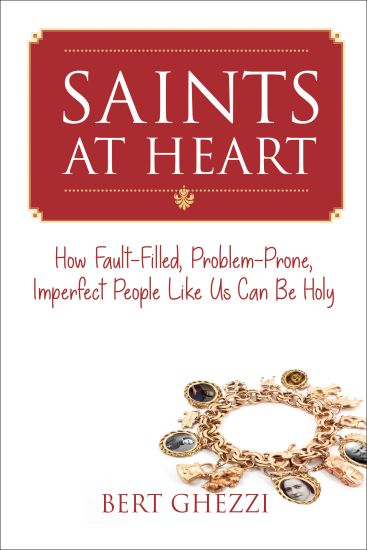
Saints at Heart presents an engaging picture of the spiritual life as shown in the experience and writings of the saints. The title announces the book's double theme: the lives of holy men and women who have consecrated their lives to God, and to the possibility of our following them and also dedicating our hearts to God. Readers will discover in this book well-told and appealing stories of women and men, ordinary human beings like themselves, who knew God and whose lives as a consequence radiated light, love, and joy. Each story presents the core message of a saint's life and highlights an important spiritual path that readers will be encouraged to follow.

BERLIN, 1942. The Gestapo arrest eighteen-year-old Bert Lewyn and his parents, sending the latter to their deaths and Bert to work in a factory making guns for the Nazi war effort. Miraculously tipped off the morning the Gestapo round up all the Jews who work in the factories, Bert goes underground. He finds shelter sometimes with compassionate civilians, sometimes with people who find his skills useful and sometimes in the cellars of bombed-out buildings. Without proper identity papers, he survives as a hunted Jew in the flames and terror of Nazi Berlin in part by successfully mimicking non-Jews, even masquerading as an SS officer. But the Gestapo are hot on his trail… Before World War II, 160,000 Jews lived in Berlin. By 1945, only 3,000 remained alive. Bert was one of the few, and his thrilling memoir—from witnessing the famous 1933 book burning to the aftermath of the war in a displaced persons camp—offers an unparalleled depiction of the life of a runaway Jew caught in the heart of the Nazi empire.