Kirjojen hintavertailu. Mukana 12 083 983 kirjaa ja 12 kauppaa.

Kirjahaku

Etsi kirjoja tekijän nimen, kirjan nimen tai ISBN:n perusteella.

1000 tulosta hakusanalla Bryan R. Simms

Speculative Grace

Speculative Grace

Adam S. Miller; Levi R. Bryant

Fordham University Press
2013
sidottu
This book offers a novel account of grace framed in terms of Bruno Latour's "principle of irreduction." It thus models an object-oriented approach to grace, experimentally moving a traditional Christian understanding of grace out of a top-down, theistic ontology and into an agent-based, object-oriented ontology. In the process, it also provides a systematic and original account of Latour's overall project. The account of grace offered here redistributes the tasks assigned to science and religion. Where now the work of science is to bring into focus objects that are too distant, too resistant, and too transcendent to be visible, the business of religion is to bring into focus objects that are too near, too available, and too immanent to be visible. Where science reveals transcendent objects by correcting for our nearsightedness, religion reveals immanent objects by correcting for our farsightedness. Speculative Grace remaps the meaning of grace and examines the kinds of religious instruments and practices that, as a result, take center stage.

Speculative Grace

Speculative Grace

Adam S. Miller; Levi R. Bryant

Fordham University Press
2013
pokkari
This book offers a novel account of grace framed in terms of Bruno Latour's "principle of irreduction." It thus models an object-oriented approach to grace, experimentally moving a traditional Christian understanding of grace out of a top-down, theistic ontology and into an agent-based, object-oriented ontology. In the process, it also provides a systematic and original account of Latour's overall project. The account of grace offered here redistributes the tasks assigned to science and religion. Where now the work of science is to bring into focus objects that are too distant, too resistant, and too transcendent to be visible, the business of religion is to bring into focus objects that are too near, too available, and too immanent to be visible. Where science reveals transcendent objects by correcting for our nearsightedness, religion reveals immanent objects by correcting for our farsightedness. Speculative Grace remaps the meaning of grace and examines the kinds of religious instruments and practices that, as a result, take center stage.
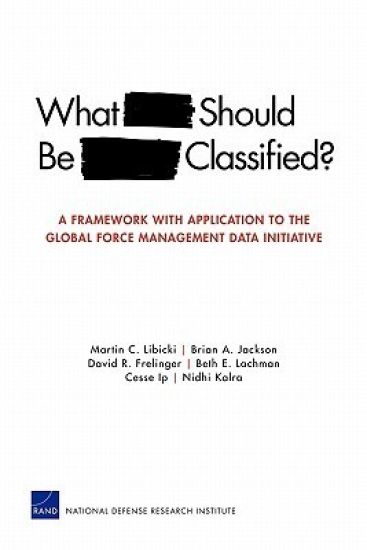
What Should be Classified?

What Should be Classified?

Martin C. Libicki; Brian A. Jackson; David R. Frelinger; Beth E. Lachman; Cesse Ip

RAND
2011
pokkari
The Global Force Management Data Initiative was launched to improve aggregation of unclassified force-structure data. Aggregation, though, raised concerns about classification because the system might be attractive to a potential adversary. The authors develop a framework for evaluating classification decisions to determine that, while overall classification is not indicated, the inclusion of some data will require careful consideration.
Profiles of Sport Industry Professionals: The People Who Make the Games Happen

Profiles of Sport Industry Professionals: The People Who Make the Games Happen

Matthew Robinson; Mary Hums; R. Brian Crow; Dennis Phillips

Aspen Publishers Inc.,U.S.
2000
nidottu
The sports field is becoming increasingly complex and multifaceted, and sports is big business. Students will learn how their careers evolved, how they prepared, and what their failures and successes have been. The editors of this unique text compiled interviews of a sport agent, high school athletic director, sport attorney, fitness trainer, ice rink manager, reporter, and many more
Why Can't I Stop?

Why Can't I Stop?

Jon E. Grant; Brian L. Odlaug; Samuel R. Chamberlain

Johns Hopkins University Press
2016
sidottu
At some point in our lives, we all engage in behaviors that are risky, irrational, or unwise. We might find it exciting and temporarily rewarding to gamble on the lottery or impulsively buy an expensive gadget. But just as substances like alcohol and narcotics have the potential to become addictive, so do certain behaviors. A person addicted to gambling, shopping, the internet, food, or picking at their skin may suffer shame in the shadows while their behavior consumes time and energy and disrupts their life. Some people with behavioral addictions lose their family, job, savings, and home. With a physical basis in the brain, behavioral addictions are serious illnesses-but simply willing yourself to stop is usually not enough. Why Can't I Stop? is for anyone who has a behavioral addiction, as well as their supportive families and friends. Examining seven of the most common and serious addictions-gambling, sex, stealing, internet use, shopping and buying, hair pulling and skin picking, and food-the authors bring together cutting-edge research to describe behavioral addiction, its causes, and how it can be diagnosed and treated. Featuring patient stories of behavioral addiction and recovery, as well as information about treatment centers, this compassionate guide will help readers better understand the complicated issues surrounding these addictions and teach family members how to help the addicted person while helping themselves.
Why Can't I Stop?

Why Can't I Stop?

Jon E. Grant; Brian L. Odlaug; Samuel R. Chamberlain

Johns Hopkins University Press
2016
pokkari
At some point in our lives, we all engage in behaviors that are risky, irrational, or unwise. We might find it exciting and temporarily rewarding to gamble on the lottery or impulsively buy an expensive gadget. But just as substances like alcohol and narcotics have the potential to become addictive, so do certain behaviors. A person addicted to gambling, shopping, the internet, food, or picking at their skin may suffer shame in the shadows while their behavior consumes time and energy and disrupts their life. Some people with behavioral addictions lose their family, job, savings, and home. With a physical basis in the brain, behavioral addictions are serious illnesses-but simply willing yourself to stop is usually not enough. Why Can't I Stop? is for anyone who has a behavioral addiction, as well as their supportive families and friends. Examining seven of the most common and serious addictions-gambling, sex, stealing, internet use, shopping and buying, hair pulling and skin picking, and food-the authors bring together cutting-edge research to describe behavioral addiction, its causes, and how it can be diagnosed and treated. Featuring patient stories of behavioral addiction and recovery, as well as information about treatment centers, this compassionate guide will help readers better understand the complicated issues surrounding these addictions and teach family members how to help the addicted person while helping themselves.
Historical Dictionary of American Criminal Justice

Historical Dictionary of American Criminal Justice

Matthew J. Sheridan; Raymond R. Rainville; Anna King; Brian Royster; Giuseppe M. Fazari

Rowman Littlefield
2019
sidottu
There has never been a more important time for those involved in criminal justice policy, operations and civil service to know their history. The Historical Dictionary of American Criminal Justice provides a comprehensive overview of the development of criminal justice in the United States. Criminal justice is a multidisciplinary endeavor, emerging across time and place through the fields of philosophy, law, biology, anthropology, and sociology. Developments occur quickly and regularly, the meanings of which are deeply embedded, not only in an historical context, but in complicated social, economic, and political circumstances as well. The field is particularly vulnerable to the exploitations of power being as closely aligned with the forces of social control as it is. The Historical Dictionary of American Criminal Justice contains a chronology, an introduction, appendixes, and an extensive bibliography. The dictionary section has over 1,200 cross-referenced entries on the most relevant concepts, cases, people, and terms. This book is an excellent resource for students, researchers, and anyone wanting to know more about American criminal justice.
Sports Journalism

Sports Journalism

Kathryn T. Stofer; James R. Schaffer; Brian A. Rosenthal

Rowman Littlefield
2019
sidottu
The second edition of Sports Journalism: An Introduction to Reporting and Writing has passed the test of time, been used in classrooms internationally, received approval and praise from professors and students, and now it, too, has moved into the new environment of sports media. New chapters on social media and topical issues in the sports world, as well as fresh examples and new references to current technology fill its pages whether you choose to read from a tablet, a Smartphone, a Chromebook or old-fashioned paper wrapped in a cardboard cover. Inside this new edition you’ll find • Three new chapters devoted to the evolution from a daily news source to a 24/7 news cycle. • Interviews with journalists whose circulation is measured in the number of Twitter followers he or she has. • A chapter encouraging discussion of ethical issues affecting today’s athletes: Should college athletes be paid to compete? Can play be too violent? Is there a level playing field for men and women? How should eligibility be determined for athletes who may be transitioning their gender identity? • A glossary that includes terms such as ‘hot takes,’ ‘scrum,’ ‘trolls.’
Sports Journalism

Sports Journalism

Kathryn T. Stofer; James R. Schaffer; Brian A. Rosenthal

Rowman Littlefield
2019
nidottu
The second edition of Sports Journalism: An Introduction to Reporting and Writing has passed the test of time, been used in classrooms internationally, received approval and praise from professors and students, and now it, too, has moved into the new environment of sports media. New chapters on social media and topical issues in the sports world, as well as fresh examples and new references to current technology fill its pages whether you choose to read from a tablet, a Smartphone, a Chromebook or old-fashioned paper wrapped in a cardboard cover. Inside this new edition you’ll find • Three new chapters devoted to the evolution from a daily news source to a 24/7 news cycle. • Interviews with journalists whose circulation is measured in the number of Twitter followers he or she has. • A chapter encouraging discussion of ethical issues affecting today’s athletes: Should college athletes be paid to compete? Can play be too violent? Is there a level playing field for men and women? How should eligibility be determined for athletes who may be transitioning their gender identity? • A glossary that includes terms such as ‘hot takes,’ ‘scrum,’ ‘trolls.’
The Royal Navy Officer’s Jutland Pocket-Manual 1916

The Royal Navy Officer’s Jutland Pocket-Manual 1916

W. M. James R.N.; Brian Lavery

The Pool of London Press
2016
sidottu
Published months before the Battle of Jutland, W. M. James' book was originally published as New Battleship Organisations. It was considered the ultimate guide to command and organization of every aspect of a modern First World War capital ship. Now republished as The Royal Navy Officer's Jutland Pocket-Manual 1916, this reprint marks the centenary of the First World War's most famous and deadly naval encounter. This small, but infinitely interesting manual provides a unique and highly revealing insight into life aboard ship: the mechanics of command and seamanship, the issuing of orders, and the broad expectations placed upon British naval officers. Specific sections are dedicated to the organization of watches; the division of work; naval routine; parades; anchor and cable work; coaling; the organization of chapel; on-board shops; cleaning; and even the ship's barbers. A series of detailed tables, diagrams, and humorous cartons accompany the lucid, period language of the First World War Senior Service and provide a further glimpse below-deck that will appeal to social and family historians as well as anyone with an interest in naval history.
The Scandinavian Home

The Scandinavian Home

Patricia G. Berman; Dawn R. Brean; Michelle Facos

D GILES LTD
2025
pokkari
The Scandinavian Home is the first publication to examine the entangled notions of home and homeland that were central to the art and material culture of Denmark, Norway, Sweden, and Finland in the second half of the nineteenth century. “Home” was a central metaphor in the nation-building activities of each country. The arts played a crucial role in reinforcing a shared sense of belonging amongst Nordic countries as they strove to identify and celebrate authentic local and national identities. The linkages among land, landscape, handicraft, and domestic dwellings as dimensions of home are embedded in this survey of the extensive David and Sue Werner Collection of Scandinavian art, presented to the public for the first time. Encompassing an impressive range of almost 150 painting, drawing, furniture, textiles, glass, metalwork, ceramics, and works on paper, highlights include rare tapestries and a wooden cabinet by the Norwegian artist Gerhard Munthe; Finnish ceramics by Willy Finch; landscape paintings by Hilma af Klint, Akseli Gallen-Kallela, Gustav Fjaestad and Pekka Halonen; and anonymous functional objects by outstanding handicraft artists – covering embroideries, metalwork, and wooden implements.
Violence in the Military

Violence in the Military

Monty T. Baker; Alyssa R. Ojeda; Hannah Pressley; Jessica Blalock; Riki Ann Martinez; Brian A. Moore; Vincent B. Van Hasselt

Springer International Publishing AG
2023
nidottu
This brief highlights issues relating to military service members’ expression of violence outside of the military due to the constant readiness for or the exposure to organized violence. It investigates how service members are affected by these experiences, considering both the exacerbation of aggressive traits and the impact it has on mental health. The chapters address the following types of non-combat related violence:Suicide and Self-Harm in the MilitaryMilitary Sexual Violence: Sexual Assault, Sexual Harassment, and Sexual HazingIntimate Partner and Domestic Violence Among Military PopulationsViolent Criminal Behavior in the Military The volume also reviews the contributing factors to the perpetration of violence, including personality traits (i.e., aggression), the military life cycle, interpersonal dynamics, and mental health. It ultimately poses future directions to mitigate risk factors for non-combat related violence. This brief is ideal for military leaders, military psychologists, and mental health providers of service members and veterans.
Regional Economic Development

Regional Economic Development

Robert J. Stimson; Roger R. Stough; Brian H. Roberts

Springer-Verlag Berlin and Heidelberg GmbH Co. K
2006
nidottu
The second edition of this book represents a re-editing and in some cases signi- cant rewriting of the original book published in 2001. Substantial editing occurred and new material has been included in the introductory chapter and in Chap. 10, the concluding chapter. The reason for this was to bring forward to 2006 the ori- nal thesis of the book about the need for regions to be prepared to experience - creasingly greater shocks and to have increasingly less time to respond in adju- ing their economic development to achieve sustainability. Events that have occurred over the past five years - such as the 9/11 terrorist attacks, continuing the rapid advances in technology, the rise of sustained economic growth in China and beginning to unfold in India, the Indonesian Tsunami, Hurricane Katrina devas- tion in New Orleans, the invasion of Iraq and continued unrest in the Middle East represents on-going and unforeseen risks and new challenges which continue to confront and impact nations around the globe and the regions and localities within them. Regions need to be fast and flexible and agile in order to be not only expe- tiously adaptive to change, but also to be proactive in developing strategies to - dress and shape their futures. In addition, some significant new material has been added to the other chapters to reflect recent advances in thinking and approaches to regional economic dev- opment analysis and planning strategy.
Madness in Post-1945 British and American Fiction

Madness in Post-1945 British and American Fiction

C. Baker; P. Crawford; Brian Brown; Maurice Lipsedge; R. Carter

Palgrave Macmillan
2010
sidottu
A comprehensive and thematic exploration of representations of madness in postwar British and American Fiction, this book is relevant to those with interests in literary studies and is a vital read for psychiatric clinicians and professionals who are interested in how literature can inform and enhance clinical practices.
Evidence-Based Medicine

Evidence-Based Medicine

Sharon E. Straus; Paul Glasziou; W. Scott Richardson; R. Brian Haynes

Elsevier Health Sciences
2018
nidottu
Now in its fifth edition, this classic introduction to the practice and teaching of evidence-based medicine is written for busy clinicians at any stage of their career who want to learn how to practise and teach evidence-based medicine (EBM). It is short and practical, emphasizing direct clinical application of EBM and tactics to practise and teach EBM in real-time. The online toolkit includes Critical appraisal worksheets, Educational prescription, Pocket Cards, EBM calculators, Educational Prescriptions, Clinical Questions log, Self evaluations. Thoroughly updated with examples from latest evidence/studies. Revised electronic ancillaries, now available online Expanded coverage of audit and measuring quality improvement. Teaching moments now indexed for easy reference. New contributing authors Reena Pattani and Areti Angeliki Veroniki
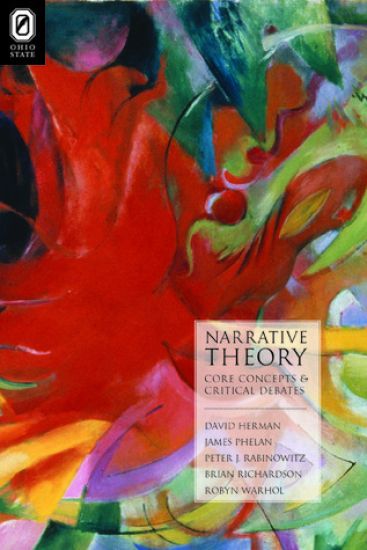
Narrative Theory

Narrative Theory

David Herman; James Phelan; Peter J Rabinowitz; Brian Richardson; Robyn R Warhol

OHIO STATE UNIVERSITY PRESS
2012
pokkari
Narrative Theory: Core Concepts and Critical Debates addresses two frequently asked questions about narrative studies: "what is narrative theory?" and "how do different approaches to narrative relate to each other?" In engaging with these questions, the book demonstrates the diversity and vitality of the field and promotes a broader dialogue about its assumptions, methods, and purposes. In Part One, the co-authors explore the scope and aims of narrative from four distinct perspectives: rhetorical (Phelan and Rabinowitz), feminist (Warhol), mind-oriented (Herman), and unnatural (Richardson). Using case studies (Huckleberry Finn, Persuasion, On Chesil Beach, and Midnight's Children, respectively), the co-authors explain their different takes on the same core concepts: authors, narrators, narration; plot, time, and progression; space, setting, and perspective; character; reception and the reader; and narrative values. In Part Two, the co-authors respond to one another's views. As they discuss the relation of the approaches to each other, they highlight significant current debates and map out key developments in the field. Accessibly written, Narrative Theory can serve as the basis for a wide range of courses, even as its incisive presentation of four major approaches and its lively give-and-take about the powers and limitations of each make the book an indispensable resource for specialists.
Toward a Sustainable Blood Supply in the United States

Toward a Sustainable Blood Supply in the United States

Andrew W. Mulcahy; Kandice A. Kapinos; Brian Briscombe; Lori Uscher-Pines; Ritika Chaturvedi; Spencer R. Case; Jakub Hlavka; Benjamin M. Miller

RAND
2016
pokkari
This report describes the status quo in the U.S. blood system, explores a set of six specific research questions related to the sustainability of this system through analysis and discussion, and presents policy alternatives and recommendations that aim to improve blood system is sustainability. We employed a mixed-methods approach, blending insight from analyses of available data and from interviews and other interactions with stakeholders.
Expert SharePoint 2010 Practices

Expert SharePoint 2010 Practices

Winsmarts LLC; Sahil Malik; Brian Farnhill; Razi bin Rais; Ed Richard; Ed Musters; Darrin Bishop; Matthew McDermott; Mark Orange; Cory R. Loriot; Matt Eddinger; Doug Ortiz; Tahir Naveed; Karthick Sethunarayanan; Barry Ralston; Steve Wright; Ed Hild; Joerg Krause; Dave Milner; Dan Bakmand-Mikalski

APress
2011
nidottu
Expert SharePoint 2010 Practices is a valuable compendium of best practices, tips, and secrets straight from the most knowledgeable SharePoint gurus in the industry.Learn from the experts as you dive into topics like multitenancy, solution deployment, business intelligence, and administration. Our team of carefully chosen contributors, most with Microsoft's Most Valuable Professional (MVP) designation bestowed upon them, shares with you the secrets and practices that have brought them success in a wide variety of SharePoint scenarios.Each contributor is passionate about the power of SharePoint and wants to help you leverage the capabilities of the platform in your business—but in the proper way. Go beyond procedures and manuals, and benefit from hundreds of years of combined experience, which the authors of Expert SharePoint 2010 Practices provide in these pages.Learn from the masters and take control of SharePoint 2010 like you never have before with Expert SharePoint 2010 Practices!