Kirjahaku
Etsi kirjoja tekijän nimen, kirjan nimen tai ISBN:n perusteella.
1000 tulosta hakusanalla C. David Heymann
In an age of intense economic competition and continual change, the ability to learn is a key factor in survival and prosperity. This book examines the changing interaction of the world economy, Britain’s prospects for prosperity, the connections between different kinds of work and the learning that support them. Focusing on specific areas where changed attitudes and ways of working are long overdue, the authors show the need for a better balance between formal provision in schools, colleges and within employment, and less tangible informal learning at home and in the workplace. These, in turn, open up issues of the curriculum (especially in the formative later years in schools and colleges), guidance for education and work and the qualifications structure.
Treating Couples Well shows clinicians how to create a collaborative approach to couple therapy, which will empower couples to take charge of their own treatment.Written in an engaging and conversational style, the book carefully explains how to help couples choose between a variety of clinical approaches and offers effective treatment strategies for a wide range of issues, including infidelity, intimacy and sexuality, communication, mental illness, and addiction. Chapters also explore the importance of considering the therapist’s own life experience and its impact on working with couples. Practical interventions, clinical vignettes, and homework exercises are included throughout to help therapists to successfully support the needs of each couple and to encourage meaningful work between sessions.Drawing on a plethora of case examples from the career of a leading couple therapist, Treating Couples Well will be a valuable resource to couple and marriage and family therapists at all levels.
Athletic and Orthopedic Injury Assessment
David C. Berry; Michael G. Miller; Leisha M. Berry
Routledge
2019
sidottu
Athletic and Orthopedic Injury Assessment: Case Responses and Interpretations is a companion book that provides responses and interpretations to the case studies in Athletic and Orthopedic Injury Assessment: A Case Study Approach. Research, evidence-based practices, and professional experience form the basis of these responses and interpretations. The suggested answers for case questions include information such as identification of differential and clinical diagnoses, explanations of diagnostic tests, relevant anatomical information, and more. We hope you find this book helpful in responding to the case questions, whether you are an instructor leading class discussions and analyzing student work, a preprofessional preparing to interpret the case scenarios on the BOC national certification examination, or a student seeking to compare the suggested answers with your own analyses.
A repeat of the Florida debacle in the 2000 presidential election is the fear of every election administrator. Despite the relatively complication-free 2008 election, we are working with fairly new federal legislation designed to ease election administration problems. The implementation of the Help America Vote Act of 2002 (HAVA) raises the question, how effective have reforms been? Could another Florida happen? Helping America Vote is focused on the conflict between values of access and integrity in U.S. election administration. Kropf and Kimball examine both what was included in HAVA and what was not. Widespread agreement that voting equipment was a problem made technology the centerpiece of the legislation, and it has remedied a number of pressing concerns. But there is still reason to be concerned about key aspects of electronic voting, ballot design, and the politics of partisan administrators. It takes a legitimacy crisis for serious election reforms to happen at the federal level, and seemingly, the crisis has passed. However, the risk is still very much present for the electoral process to fail. What are the implications for democracy when we attempt reform?
Chronic Fatigue Syndrome
David C Klonoff; Gregg C Fisher; James M Oleske; Nelson M Gantz; Paul R Cheney
Grand Central Publishing
1997
pokkari
In this enlightening and compassionate guide, one of the foremost specialists in Chronic Fatigue Syndrome--himself a ten-year survivor of the disease--helps victims and their loved ones regain control of their lives. This updated edition includes new information about current medical treatments, related disorders, and strategies for living with the CFS.
Find out how Events Processing (EP) works and how it can work for you Business Event Processing: An Introduction and Strategy Guide thoroughly describes what EP is, how to use it, and how it relates to other popular information technology architectures such as Service Oriented Architecture. Explains how sense and response architectures are being applied with tremendous results to businesses throughout the world and shows businesses how they can get started implementing EPShows how to choose business event processing technology to suit your specific business needs and how to keep costs of adopting it downProvides practical guidance on how EP is best integrated into an overall IT strategy and how its architectural styles differ from more conventional approaches This book reveals how to make the most advantageous use of event processing technology to develop real time actionable management information from the events flowing through your company's networks or resulting from your business activities. It explains to managers and executives what it means for a business enterprise to be event-driven, what business event processing technology is, and how to use it.
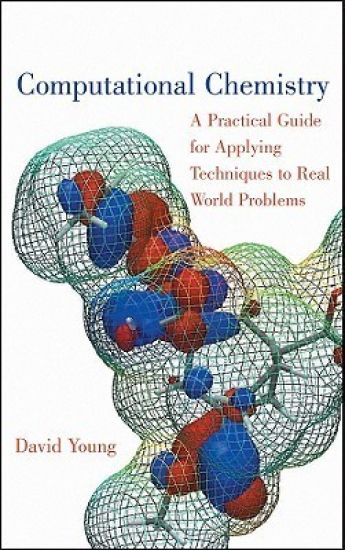
A practical, easily accessible guide for bench-top chemists, this book focuses on accurately applying computational chemistry techniques to everyday chemistry problems. * Provides nonmathematical explanations of advanced topics in computational chemistry. * Focuses on when and how to apply different computational techniques. * Addresses computational chemistry connections to biochemical systems and polymers. * Provides a prioritized list of methods for attacking difficult computational chemistry problems, and compares advantages and disadvantages of various approximation techniques. * Describes how the choice of methods of software affects requirements for computer memory and processing time.
Surface-Launched Acoustic Wave Sensors
Michael Thompson; David C. Stone
John Wiley Sons Inc
1997
sidottu
This book concerns the design, operation and application of devices capable of generating acoustic waves in the ultrasonic frequency range. It emphasizes the study of chemical and/or biochemical systems imposed on the surface of such devices, whether operated in the gas- or liquid-phase, i.e. on acoustic wave chemical and biological sensors. It focuses on devices that employ acoustic waves launched and received on the same surface. It touches upon such diverse areas as acoustic wave physics, applied mathematics, chemistry, electronics, fluid mechanics, materials science and polymer science.
A well-functioning budget process is more than a set of proceduresit provides a focus for the organization and management to analyze key financial and strategic issues. This invaluable reference addresses the fundamentals of managerial incentives, resource allocation, and practical ways in which these incentives can be managed to serve the strategic goals of the organization by taking an in-depth look at the principles of budgeting for not-for-profit organizationshigher education, charities and foundations, religious organizations, and hospitals and healthcare organizations.
The Psychopharmacology Treatment Planner
David C. Purselle; Charles B. Nemeroff; David J. Berghuis
John Wiley Sons Inc
2003
nidottu
The Psychopharmacology Treatment Planner provides all the elements necessary to quickly and easily develop formal treatment plans that satisfy the demands of HMOs, managed care companies, third-party payors, and state and federal review agencies. *Saves you hours of time-consuming paperwork, yet offers the freedom to develop customized treatment plans for clients whose therapy includes psychotropic drugs *Organized around 28 main presenting problems regularly treated with a combination of psychotropic and psychotherapeutic interventions or treatment modalities, from ADHD, dementia, and substance abuse to antisocial behavior, bipolar disorders, and more *Over 1,000 well-crafted, clear statements describe the behavioral manifestations of each relational problem, long-term goals, short-term objectives, and clinically tested treatment options *Easy-to-use reference format helps locate treatment plan components by behavioral problem or DSM-IV-TR™ diagnosis *Includes a sample treatment plan that conforms to the requirements of most third-party payors and accrediting agencies (including HCFA, JCAHO, and NCQA)
This unique textbook takes a broad look at the rapidly expanding field of fresh water microbiology. Concentrating on the interactions between viruses, bacteria, algae, fungi and micro-invertebrates, the book gives a wide biological appeal. Alongside conventional aspects such as phytoplankton characterization, seasonal changes, and nutrient cycles, the title focuses on the dynamic and applied aspects that aren't covered within the current books in the field.
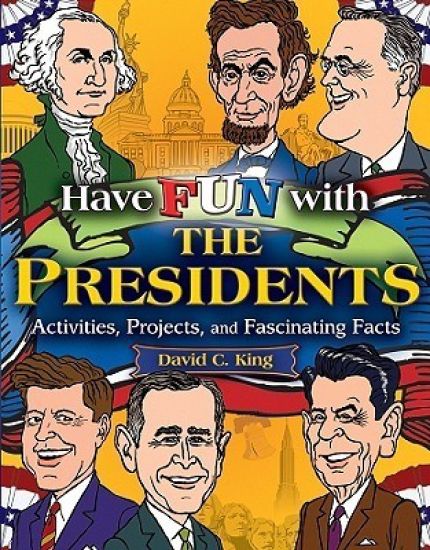
It’s important to learn about the U.S. presidents, but it’s even better to have fun while doing it. Have Fun with the Presidents is filled with activities, recipes, games, puzzles, profiles, quotes, and fascinating facts, about all 42 American presidents, from George Washington to George W. Bush. You will learn all kinds of interesting things about the presidents, their families, and the times in which they lived, but this is much more than just a book of facts. The games and activities in Have Fun with the Presidents will give you a better understanding of each president’s important contributions, interesting hobbies, and unique personality. In Have Fun with the Presidents you will learn that Herbert Hoover and his wife spoke Chinese in the White House as a way of maintaining their privacyDwight Eisenhower was an enthusiastic cook who loved grilling on the roof of the White HouseTwo of Theodore Roosevelt’s sons managed to sneak a pony into a White House elevator so they could take it to their sick brother’s bedroomGeorge H.W. Bush hated broccoli so much he had it banned from the White House kitchenAnd much more!
A Guide to Michigan's Endangered Wildlife
David C. Evers
The University of Michigan Press
1992
nidottu
Endowed with an abundance of natural resources, Michigan is host to diverse wildlife. Wolves, lynx, eagles, loons, butterflies, and sturgeon make Michigan their home. Yet, through widespread logging, commercial harvest, wetland destruction, and water and land pollution, the precarious balance between nature and humans has been seriously disrupted to the point that many of the wildlife populations are struggling to survive. A Guide to Michigan's Endangered Wildlife profiles eighty-one of Michigan's endangered and threatened wildlife species. Detailed descriptive sketches are accompanied by beautiful color illustrations by some of Michigan's foremost nature photographers. Also featured are maps that delineate the distribution of endangered and threatened wildlife in Michigan.
The Changing Face of Economics
David C. Colander; Richard P.F. Holt; J.Barkley Rosser
The University of Michigan Press
2004
sidottu
"The Changing Face of Economics" gives the reader a sense of the modern economics profession and how it is changing. The volume does so with a set of nine interviews with cutting edge economists, followed by interviews with two Nobel Prize winners, Paul Samuelson and Kenneth Arrow, reflecting on the changes that are occurring. What results is a clear picture of today's economics--and it is no longer standard neoclassical economics. The interviews and commentary together demonstrate that economics is currently undergoing a fundamental shift in method and is moving away from traditional neoclassical economics into a dynamic set of new methods and approaches. These new approaches include work in behavioral economics, experimental economics, evolutionary game theory and ecological approaches, complexity and nonlinear dynamics, methodological analysis, and agent-based modeling. David E. Colander is Professor of Economics, Middlebury College.J. Barkley Rosser, Jr., is Professor of Economics and Kirby L. Kramer Jr. Professor of Business Administration, James Madison University.Richard P. F. Holt is Professor of Churchill Honors and Economics, Southern Oregon University.
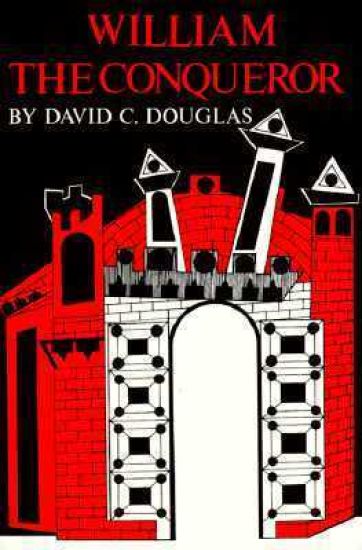
In "William the Conqueror", Professor Douglas analyzes the causes and the true character of the Norman impact upon England in the eleventh century. The work is both a study of Anglo-Norman history and a biography of a man whose personal career was spectacular, and as reviewers have remarked, it is distinguished by a wealth of scholarship linked to a lucid and agreeable style.
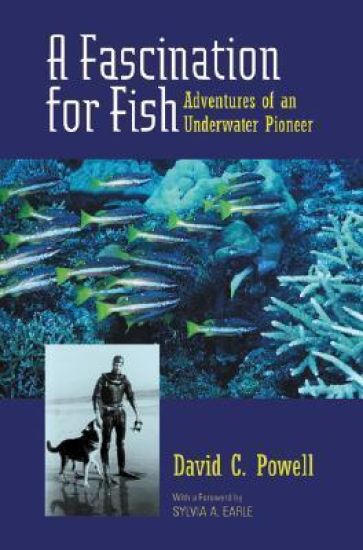
This engaging memoir presents one man's lifelong love of the ocean and gives a highly personal, behind-the-scenes look at California's magnificent and innovative aquariums. David Powell, for many years curator of the world-renowned Monterey Bay Aquarium, tells the story of his life as a pioneering aquarist. From handling great white sharks to transporting delicate fish on bumpy airplanes to night diving for fish in the Indian Ocean, "A Fascination for Fish" describes many of the mind-boggling challenges that make modern aquariums possible and offers an intriguing glimpse beneath the ocean's surface. Powell's career in diving and aquarium development goes back to the beginning of modern methods in both areas. From the early techniques he devised to get fish into aquariums alive and healthy to his later exploratory dive to a depth of eleven hundred feet in a two-person submarine, Powell's action-packed narrative inspires laughter, wonder, and philosophical reflection. A "Fascination for Fish" also includes many stories about Powell's diving adventures on the California coast, in the Sea of Cortez, and in many remote and exotic locations around the world.
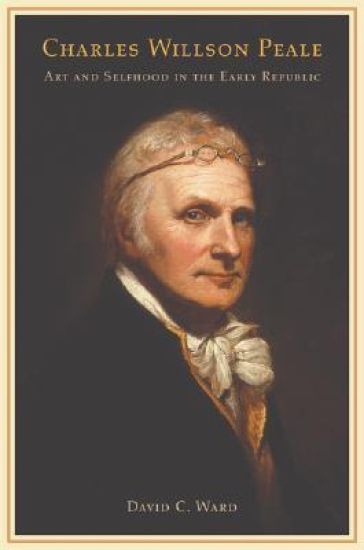
Son of a convicted felon whose early death left the family impoverished, Charles Willson Peale (1741-1827) went on to lead a staggeringly full and successful life. A portrait painter who produced an unparalleled body of work, including the iconic "The Artist in His Museum", Peale was also a revolutionary soldier, a radical activist, an impresario of moving pictures, a natural historian, an inventor, and the proprietor of one of the first modern museums. His many other interests included a lifelong preoccupation with writing; in fact, his autobiography is one of the first examples of the genre in the United States. David C. Ward's engaging book, richly textured with references to the history and culture of the time, is the first full critical biography of Peale. It links the artist's autobiography to his painting, illuminating the man, his art, and his times. Peale emerges for the first time as that particularly American phenomenon: the self-made man. Before Peale's time, autobiographies had been written mainly as religious and confessional documents. Peale, however, produced his secular work to describe, not how God made him, but how he worked to make himself. This compelling study, drawing extensively from Peale's extraordinary autobiography, shows how Peale's life itself documents the development of American independence and individualism. Ultimately Ward addresses Hector St. John de Crevecoeur's great question, 'What then is the American, this new man?' as he sheds light on one of these new men and on the formative years in which he lived.
In "Big Ecology", David C. Coleman documents his historically fruitful ecological collaborations in the early years of studying large ecosystems in the United States. As Coleman explains, the concept of the ecosystem - a local biological community and its interactions with its environment - has given rise to many institutions and research programs, like the National Science Foundation's program for Long Term Ecological Research. Coleman's insider account of this important and fascinating trend toward big science takes us from the paradigm of collaborative interdisciplinary research, starting with the International Geophysical Year (IGY) of 1957, through the International Biological Program (IBP) of the late 1960s and early 1970s, to the Long-Term Ecological Research (LTER) programs of the 1980s.