Kirjojen hintavertailu. Mukana 12 077 976 kirjaa ja 12 kauppaa.

Kirjahaku

Etsi kirjoja tekijän nimen, kirjan nimen tai ISBN:n perusteella.

1000 tulosta hakusanalla Carrie Shultz

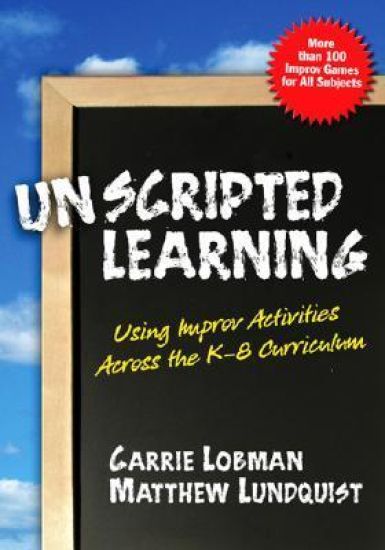
Unscripted Learning

Unscripted Learning

Carrie Lobman; Matthew Lundquist

Teachers' College Press
2007
nidottu
Improvisation is recognized internationally as an exciting tool to jump-start learning. In this practical book, teachers will discover how to use improvisation throughout the K-8 curriculum to boost creativity and to develop a class into a finely-tuned learning ensemble. Readers will learn how to use this revolutionary tool to teach literacy, math, social studies, and science...and have fun doing it!
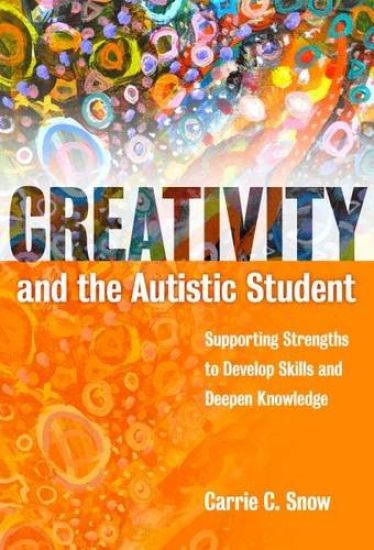
Creativity and the Autistic Student

Creativity and the Autistic Student

Carrie Snow

Teachers' College Press
2015
nidottu
Using creativity as a lens to explore the meaningful learning experiences of autistic youth, Carrie Snow evaluates and challenges common conceptions about autism and offers a strengths-based demonstration of the many ways that autistic people express creativity and imagination. She then identifies key qualities of education that are commonly cited by autistic people to be significant to the development of fulfilling lives, healthy identities, promising careers and vocations, and creativity in general. This important resource shows how educators can support autistic K-12 students in public, private, inclusive as well as specialized schools. Creativity and the Autistic Student forwards the idea that autistic people offer valuable skills and abilities that can strengthen communities, within school and beyond.
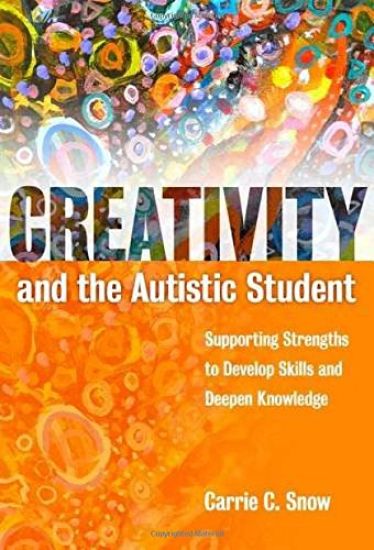
Creativity and the Austic Student

Creativity and the Austic Student

Carrie Snow

Teachers' College Press
2015
sidottu
Using creativity as a lens to explore the meaningful learning experiences of autistic youth, Carrie Snow evaluates and challenges common conceptions about autism and offers a strengths-based demonstration of the many ways that autistic people express creativity and imagination. She then identifies key qualities of education that are commonly cited by autistic people to be significant to the development of fulfilling lives, healthy identities, promising careers and vocations, and creativity in general. This important resource shows how educators can support autistic K-12 students in public, private, inclusive as well as specialized schools. Creativity and the Autistic Student forwards the idea that autistic people offer valuable skills and abilities that can strengthen communities, within school and beyond.
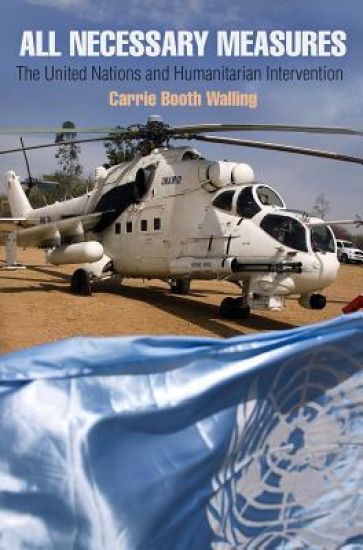
All Necessary Measures

All Necessary Measures

Carrie Booth Walling

University of Pennsylvania Press
2016
pokkari
What prompts the United Nations Security Council to engage forcefully in some crises at high risk for genocide and ethnic cleansing but not others? In All Necessary Measures, Carrie Booth Walling identifies several systematic patterns in the stories that council members tell about conflicts and the policy solutions that result from them. Drawing on qualitative comparative case studies spanning two decades, including situations where the council has intervened to stop mass killing (Somalia, Bosnia-Herzegovina, and Sierra Leone) as well as situations where it has not (Rwanda, Kosovo, and Sudan), Walling posits that the arguments council members make about the cause and character of conflict as well as the source of sovereign authority in target states have the potential to enable or constrain the use of military force in defense of human rights. At a moment when constructivist scholars in international relations are pushing beyond empirical claims for the value of norms and toward critical analysis of such norms, All Necessary Measures establishes discourse's real-world explanatory power. From her comparative chronology, Walling demonstrates that humanitarian intervention becomes possible when the majority of Security Council members come to a shared understanding of the conflict, perpetrators, and victims-and probable when the Council understands state sovereignty as complementary to human rights norms. By illuminating the relationship between national interests and the core values of Security Council members and how it influences decision-making, All Necessary Measures suggests when and where the Security Council is likely to intervene in the future.
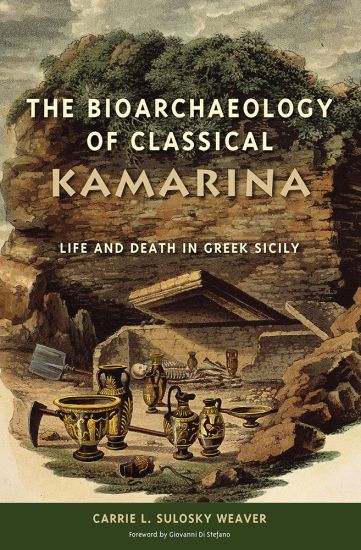
The Bioarchaeology of Classical Kamarina

The Bioarchaeology of Classical Kamarina

Carrie L. Sulosky Weaver

University Press of Florida
2015
sidottu
Human remains and burial customs are often considered separately in studies of ancient Greek populations. In this seminal work, Carrie Sulosky Weaver synthesizes skeletal, material, and ritual data to reconstruct the cultural practices of Kamarina, a city-state in Sicily.Using evidence from 258 recovered graves from the Passo Marinaro necropolis (circa the fifth to the third century BCE), Sulosky Weaver suggests that Kamarineans were closely linked to their counterparts in neighboring Greek cities. Evidence of violence, like head trauma and a high young adult mortality rate, indicate exposure to a series of catastrophic events. Other evidence at burial sites allude to Kamarina's mixed ancestry, ethnicity, and social hierarchy. Despite the tumultuous nature of the times, the resulting portrait reveals that Kamarina was a place where individuals of diverse ethnicities and ancestries were united in life and death by shared culture and funerary practices.
Thatched Roofs and Open Sides

Thatched Roofs and Open Sides

Carrie Dilley

University Press of Florida
2015
sidottu
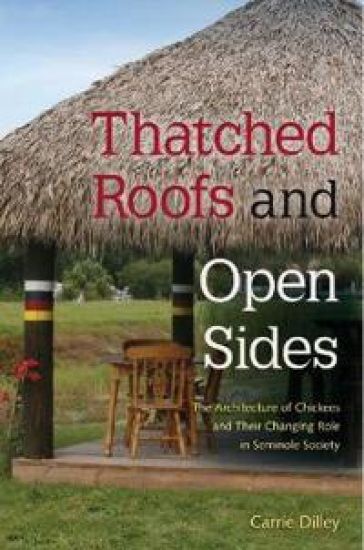
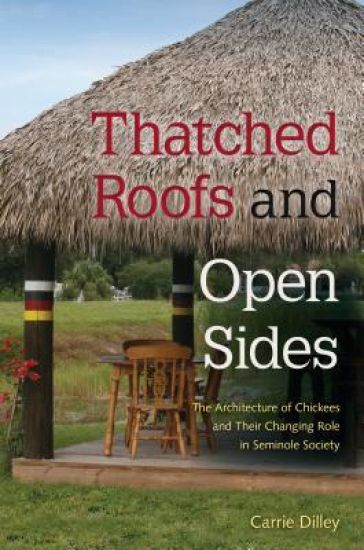
One of the most prevalent misconceptions about the architecture of Native Americans is that they all lived in teepees or wigwams. In Thatched Roofs and Open Sides, Carrie Dilley reveals the design, construction, history, and cultural significance of the chickee, the unique Seminole structure made of palmetto and cypress.The naturalist-explorer William Bartram first sighted chickees when he penetrated Florida’s dense tropical forests. During the Seminole Wars, the thatched roof platforms served as hideouts and shelters. In the twentieth century, the government and charitable organizations deemed the abodes ""primitive"" and ""unfit,"" and, rather than move into non-chickee housing, the Seminoles began to modernize them. Today, chickees can still be found throughout tribal land, but they are no longer primary residences. Instead, they are built to teach people about Seminole life and history and to encourage tribal youth to reflect on that aspect of their culture.Dilley interviews builders and surveys over five hundred chickees on the Big Cypress Indian Reservation, illustrating how the multipurpose structure has evolved over time to meet the changing needs of the Seminole Tribe.
Thatched Roofs and Open Sides

Thatched Roofs and Open Sides

Carrie Dilley

University Press of Florida
2018
nidottu
Southeast Chapter of the Society of Architectural Historians Award of Excellence for a Book.In Thatched Roofs and Open Sides, Carrie Dilley reveals the design, construction, history, and cultural significance of the chickee, the unique Seminole structure made of palmetto and cypress. Dilley illustrates how the multipurpose structure has developed over time to meet the changing needs of the Seminole Tribe.
Uncommon Sense

Uncommon Sense

Carrie D. Shanafelt

University of Virginia Press
2022
sidottu
Infamous for authoring two concepts since favored by government powers seeking license for ruthlessness—the utilitarian notion of privileging the greatest happiness for the most people and the panopticon—Jeremy Bentham is not commonly associated with political emancipation. But perhaps he should be. In his private manuscripts, Bentham agonized over the injustice of laws prohibiting sexual nonconformity, questioning state policy that would put someone to death merely for enjoying an uncommon pleasure. He identified sources of hatred for sexual nonconformists in philosophy, law, religion, and literature, arguing that his goal of "the greatest happiness" would be impossible as long as authorities dictate whose pleasures can be tolerated and whose must be forbidden. Ultimately, Bentham came to believe that authorities worked to maximize the suffering of women, colonized and enslaved persons, and sexual nonconformists in order to demoralize disenfranchised people and prevent any challenge to power.In Uncommon Sense, Carrie Shanafelt reads Bentham’s sexual nonconformity papers as an argument for the toleration of aesthetic difference as the foundation for egalitarian liberty, shedding new light on eighteenth-century aesthetics and politics. At odds with the common image of Bentham as a dehumanizing calculator or an eccentric projector, this innovative study shows Bentham at his most intimate, outraged by injustice and desperate for the end of sanctioned, discriminatory violence.
Uncommon Sense

Uncommon Sense

Carrie D. Shanafelt

University of Virginia Press
2022
pokkari
Infamous for authoring two concepts since favored by government powers seeking license for ruthlessness—the utilitarian notion of privileging the greatest happiness for the most people and the panopticon—Jeremy Bentham is not commonly associated with political emancipation. But perhaps he should be. In his private manuscripts, Bentham agonized over the injustice of laws prohibiting sexual nonconformity, questioning state policy that would put someone to death merely for enjoying an uncommon pleasure. He identified sources of hatred for sexual nonconformists in philosophy, law, religion, and literature, arguing that his goal of "the greatest happiness" would be impossible as long as authorities dictate whose pleasures can be tolerated and whose must be forbidden. Ultimately, Bentham came to believe that authorities worked to maximize the suffering of women, colonized and enslaved persons, and sexual nonconformists in order to demoralize disenfranchised people and prevent any challenge to power.In Uncommon Sense, Carrie Shanafelt reads Bentham’s sexual nonconformity papers as an argument for the toleration of aesthetic difference as the foundation for egalitarian liberty, shedding new light on eighteenth-century aesthetics and politics. At odds with the common image of Bentham as a dehumanizing calculator or an eccentric projector, this innovative study shows Bentham at his most intimate, outraged by injustice and desperate for the end of sanctioned, discriminatory violence.
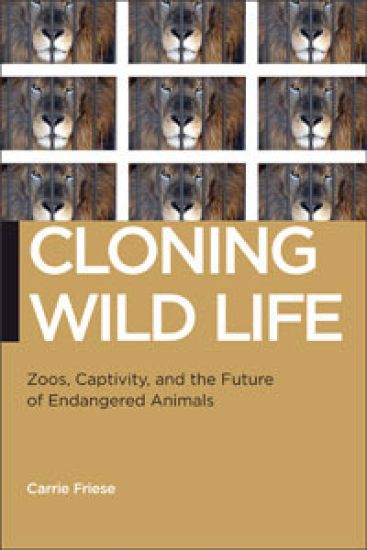
Cloning Wild Life

Cloning Wild Life

Carrie Friese

New York University Press
2013
sidottu
The natural world is marked by an ever-increasing loss of varied habitats, a growing number of species extinctions, and a full range of new kinds of dilemmas posed by global warming. At the same time, humans are also working to actively shape this natural world through contemporary bioscience and biotechnology. In Cloning Wild Life, Carrie Friese posits that cloned endangered animals in zoos sit at the apex of these two trends, as humans seek a scientific solution to environmental crisis. Often fraught with controversy, cloning technologies, Friese argues, significantly affect our conceptualizations of and engagements with wildlife and nature. By studying animals at different locations, Friese explores the human practices surrounding the cloning of endangered animals. She visits zoos—the San Diego Zoological Park, the Audubon Center in New Orleans, and the Zoological Society of London—to see cloning and related practices in action, as well as attending academic and medical conferences and interviewing scientists, conservationists, and zookeepers involved in cloning. Ultimately, she concludes that the act of recalibrating nature through science is what most disturbs us about cloning animals in captivity, revealing that debates over cloning become, in the end, a site of political struggle between different human groups. Moreover, Friese explores the implications of the social role that animals at the zoo play in the first place—how they are viewed, consumed, and used by humans for our own needs. A unique study uniting sociology and the study of science and technology, Cloning Wild Life demonstrates just how much bioscience reproduces and changes our ideas about the meaning of life itself.
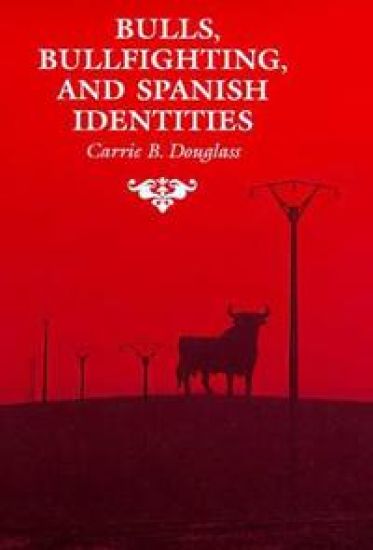
Bulls, Bullfighting, and Spanish Identities

Bulls, Bullfighting, and Spanish Identities

Carrie B. Douglass

University of Arizona Press
1999
nidottu
The matador flourishes his cape, the bull charges, the crowd cheers: this is the image of Spain best known to the world. But while the bull has long been a symbol of Spanish culture, it carries more meaning than has previously been recognized. In this book, anthropologist Carrie B. Douglass views bulls and bullfighting as a means of discussing fundamental oppositions in Spanish society and explains the political significance of those issues for one of Europe's most regionalized countries.In talking about bulls and bullfighting, observes Douglass, one ends up talking not only about differences in region, class, and politics in Spain but also about that country's ongoing struggle between modernity and tradition. She relates how Spaniards and outsiders see bullfighting as representative of a traditional, irrational Spain contrasted with a more civilized Europe, and she shows how Spaniards' ambivalence about bullfighting is actually a way of expressing ambivalence about the loss of traditional culture in a modern world. To fully explore the symbolism of bulls and bullfighting, Douglass offers an overview of Spain's fiesta cycle, in which the bull is central. She broadly and meticulously details three different fiestas through ethnographic fieldwork conducted over a number of years, delineating the differences in festivals held in different regions.She also shows how a cycle of these fiestas may hold the key to resolving some of Spain's fundamental political contradictions by uniting the different regions of Spain and reconciling opposing political camps--the right, which holds that there is one Spain, and the left, which contends that there are many. Bulls, Bullfighting, and Spanish Identities is an intriguing study of symbolism used to examine the broader anthropological issues of identity and nationhood. Through its focus on the political discourse of bulls and bullfighting, it makes an original contribution to understanding not only Spanish politics but also Spain's place in the modern world.
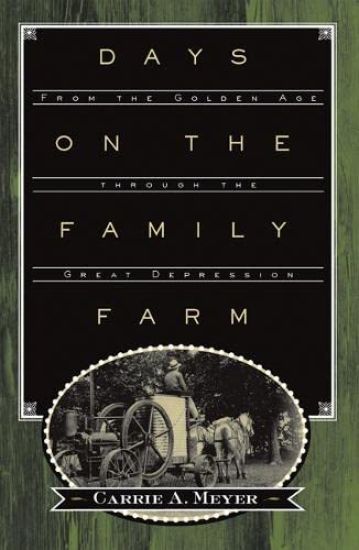
Days on the Family Farm

Days on the Family Farm

Carrie A. Meyer

University of Minnesota Press
2007
sidottu
From the beginning of the twentieth century to World War II, farm wife May Lyford Davis kept a daily chronicle that today offers a window into a way of life that has all but disappeared. May and her husband Elmo lived through two decades of prosperity, the Great Depression, and two World Wars in their Midwestern farming community. Like many women of her time, Davis kept diaries that captured the everyday events of the family farm; she also kept meticulous farming accounts. In doing so, she left an extraordinary record that reflects not only her own experiences but also the history of early twentieth-century American agriculture. May and Elmo’s story, engagingly told by Carrie A. Meyer, showcases the large-scale evolution of agriculture from horses to automobile and tractors, a surprisingly vibrant family and community life, and the business of commercial farming. Details such as what items were bought and sold, what was planted and harvested, the temperature and rainfall, births and deaths, and the direction of the wind are gathered to reveal a rich picture of a world shared by many small farmers. With sustainable and small-scale farming again on the rise in the United States, Days on the Family Farm resonates with both the profound and mundane aspects of rural life—past and present—in the Midwest. Carrie A. Meyer is associate professor of economics at George Mason University.
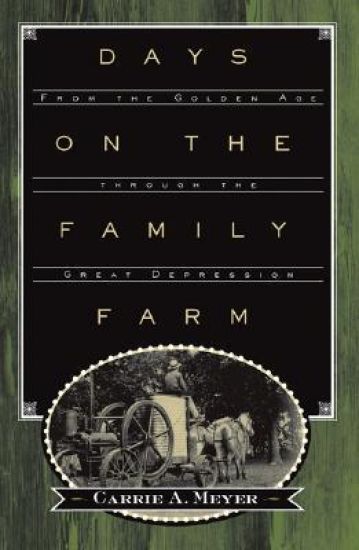
Days on the Family Farm

Days on the Family Farm

Carrie A. Meyer

University of Minnesota Press
2007
nidottu
From the beginning of the twentieth century to World War II, farm wife May Lyford Davis kept a daily chronicle that today offers a window into a way of life that has all but disappeared. May and her husband Elmo lived through two decades of prosperity, the Great Depression, and two World Wars in their Midwestern farming community. Like many women of her time, Davis kept diaries that captured the everyday events of the family farm; she also kept meticulous farming accounts. In doing so, she left an extraordinary record that reflects not only her own experiences but also the history of early twentieth-century American agriculture. May and Elmo’s story, engagingly told by Carrie A. Meyer, showcases the large-scale evolution of agriculture from horses to automobile and tractors, a surprisingly vibrant family and community life, and the business of commercial farming. Details such as what items were bought and sold, what was planted and harvested, the temperature and rainfall, births and deaths, and the direction of the wind are gathered to reveal a rich picture of a world shared by many small farmers. With sustainable and small-scale farming again on the rise in the United States, Days on the Family Farm resonates with both the profound and mundane aspects of rural life-past and present-in the Midwest. Carrie A. Meyer is associate professor of economics at George Mason University.
Internal Desecration

Internal Desecration

Carrie Doehring

University Press of America
1993
nidottu
Overwhelming life experiences, such as physical and sexual abuse during childhood, have the potential to obliterate internal representations of a loving God. In this book the author explores the inter-relationship between severity of childhood traumatization and mental representations of God through a comprehensive review of psychodynamic literature and quantitative research methodology. The research findings of a study with forty seven women demonstrate the complexity of this subject and illustrate how the empirical truth of quantitative findings may or may not resonate with the metaphorical truth of psychodynamic models of traumatization. The author discusses the significance of these findings for clinicians and faith communities.
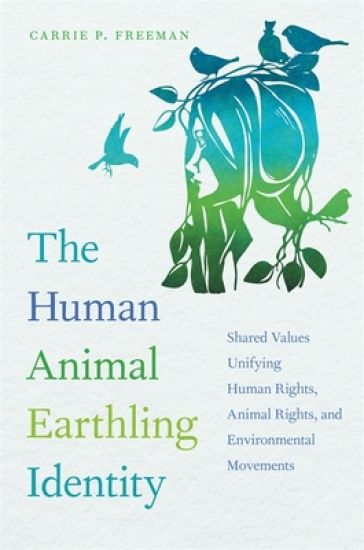
The Human Animal Earthling Identity

The Human Animal Earthling Identity

Carrie P. Freeman

University of Georgia Press
2020
pokkari
With The Human Animal Earthling Identity Carrie P. Freeman asks us to reconsider the devastating division we have created between the human and animal conditions, leading to mass exploitation, injustice, and extinction. As a remedy, Freeman believes social movements should collectively foster a cultural shift in human identity away from an egoistic anthropocentrism (human-centered outlook) and toward a universal altruism (species-centered ethic), so people may begin to see themselves more broadly as “human animal earthlings.”To formulate the basis for this identity shift, Freeman examines overlapping values (supporting life, fairness, responsibility, and unity) that are common in global rights declarations and in the current campaign messages of sixteen global social movement organizations that work on human/civil rights, nonhuman animal protection, and/or environmental issues, such as Amnesty International, Human Rights Watch, CARE, People for the Ethical Treatment of Animals, the World Wildlife Fund, the Sea Shepherd Conservation Society, the Nature Conservancy, the Rainforest Action Network, and Greenpeace. She also interviews the leaders of these advocacy groups to gain their insights on how human and nonhuman protection causes can become allies by engaging common opponents and activating shared values and goals on issues such as the climate crisis, enslavement, extinction, pollution, inequality, destructive farming and fishing, and threats to democracy.Freeman’s analysis of activist discourse considers ethical ideologies on behalf of social justice, animal rights, and environmentalism, using animal rights’ respect for sentient individuals as a bridge connecting human rights to a more holistic valuing of species and ecological systems. Ultimately, Freeman uses her findings to recommend a set of universal values around which all social movements’ campaign messages can collectively cultivate respectful relations between “human animal earthlings,” fellow sentient beings, and the natural world we share.
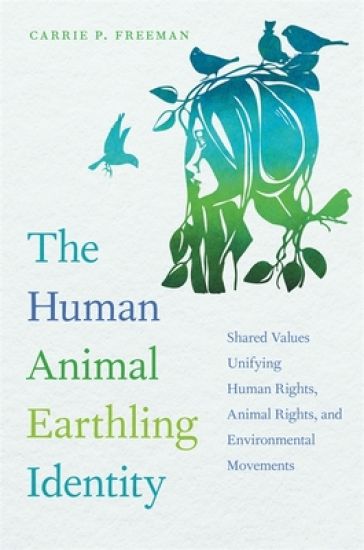
The Human Animal Earthling Identity

The Human Animal Earthling Identity

Carrie P. Freeman

University of Georgia Press
2020
sidottu
With The Human Animal Earthling Identity Carrie P. Freeman asks us to reconsider the devastating division we have created between the human and animal conditions, leading to mass exploitation, injustice, and extinction. As a remedy, Freeman believes social movements should collectively foster a cultural shift in human identity away from an egoistic anthropocentrism (human-centered outlook) and toward a universal altruism (species-centered ethic), so people may begin to see themselves more broadly as “human animal earthlings.”To formulate the basis for this identity shift, Freeman examines overlapping values (supporting life, fairness, responsibility, and unity) that are common in global rights declarations and in the current campaign messages of sixteen global social movement organizations that work on human/civil rights, nonhuman animal protection, and/or environmental issues, such as Amnesty International, Human Rights Watch, CARE, People for the Ethical Treatment of Animals, the World Wildlife Fund, the Sea Shepherd Conservation Society, the Nature Conservancy, the Rainforest Action Network, and Greenpeace. She also interviews the leaders of these advocacy groups to gain their insights on how human and nonhuman protection causes can become allies by engaging common opponents and activating shared values and goals on issues such as the climate crisis, enslavement, extinction, pollution, inequality, destructive farming and fishing, and threats to democracy.Freeman’s analysis of activist discourse considers ethical ideologies on behalf of social justice, animal rights, and environmentalism, using animal rights’ respect for sentient individuals as a bridge connecting human rights to a more holistic valuing of species and ecological systems. Ultimately, Freeman uses her findings to recommend a set of universal values around which all social movements’ campaign messages can collectively cultivate respectful relations between “human animal earthlings,” fellow sentient beings, and the natural world we share.
A Tang Miscellany

A Tang Miscellany

Carrie E. Reed

Peter Lang Publishing Inc
2003
sidottu
Youyang zazu is an important Tang dynasty miscellany by the erudite and well-traveled chronicler, Duan Chengshi (c. 800-863). Duan collected over thirteen hundred anecdotes, notes, and tales, which he recorded based on firsthand information, hearsay, and books. Duan's entries treat a fantastically broad array of subjects, including tattoos, fancy foods, supernatural occurrences, flora and fauna, temple art of Chang'an, and falconry. A Tang Miscellany: An Introduction to 'Youyang zazu' includes a biographical sketch of Duan, a textual history of the miscellany, a summary of the content of the collection, and a selection of 145 translations.
Second Wounds

Second Wounds

Carrie A. Rentschler

Duke University Press
2011
sidottu
The U.S. victims’ rights movement has transformed the way that violent crime is understood and represented in the United States. It has expanded the concept of victimhood to include family members and others close to direct victims, and it has argued that these secondary victims may be further traumatized through their encounters with insensitive journalists and the cold, impersonal nature of the criminal justice system. This concept of extended victimization has come to dominate representations of crime and the American criminal justice system. In Second Wounds, Carrie A. Rentschler examines how the victims’ rights movement brought about such a marked shift in how Americans define and portray crime. Analyzing the movement’s effective mobilization of activist networks and its implementation of media strategies, she interprets texts such as press kits, online victim memorials, and training materials for victims’ advocates and journalists. Rentschler also provides a genealogy of the victims’ rights movement from its emergence in the 1960s into the twenty-first century. She explains that while a “get tough on crime” outlook dominates the movement, the concept of secondary victimization has been invoked by activists across the political spectrum, including anti–death penalty advocates, who contend that the families of death-row inmates are also secondary victims of violent crime and the criminal justice system.
Second Wounds

Second Wounds

Carrie A. Rentschler

Duke University Press
2011
pokkari
The U.S. victims’ rights movement has transformed the way that violent crime is understood and represented in the United States. It has expanded the concept of victimhood to include family members and others close to direct victims, and it has argued that these secondary victims may be further traumatized through their encounters with insensitive journalists and the cold, impersonal nature of the criminal justice system. This concept of extended victimization has come to dominate representations of crime and the American criminal justice system. In Second Wounds, Carrie A. Rentschler examines how the victims’ rights movement brought about such a marked shift in how Americans define and portray crime. Analyzing the movement’s effective mobilization of activist networks and its implementation of media strategies, she interprets texts such as press kits, online victim memorials, and training materials for victims’ advocates and journalists. Rentschler also provides a genealogy of the victims’ rights movement from its emergence in the 1960s into the twenty-first century. She explains that while a “get tough on crime” outlook dominates the movement, the concept of secondary victimization has been invoked by activists across the political spectrum, including anti–death penalty advocates, who contend that the families of death-row inmates are also secondary victims of violent crime and the criminal justice system.