
Kirjahaku
Etsi kirjoja tekijän nimen, kirjan nimen tai ISBN:n perusteella.
1000 tulosta hakusanalla Charles Laborde

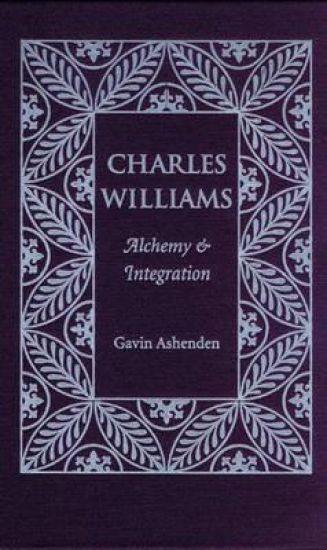
Charles Williams
Kent State University Press
2007
sidottu
He was a close friend of T. S. Eliot, deeply admired by C. S. Lewis, inspirational for W. H. Auden in his journey to faith, and a literary sparring partner for J. R. R. Tolkien. Yet, half a century after his death, much of Charles Williams' life and work remains an enigma. The questions that arose from his immersion in Rosicrucian and hermetic culture and ideology - central to understanding Williams's thought and art - remain provocatively unexplored. For a decade of his early adulthood, Williams was a member of the Fellowship of the Rosy Cross, a form of neo-Rosicrucianism. There is widespread confusion about its nature, which is to be expected given that this was a semisecret society. Though Williams left his formal association with it behind, it enriched and informed his imaginative world with a hermetic myth that expressed itself in an underlying ideology and metaphysics. In ""Charles Williams: Alchemy and Integration"", Gavin Ashenden explores both the history behind the myths and metaphysics Williams was to make his own and the hermetic culture that influenced him. He examines and interprets its expressions in Williams' novels, poetry, and the development of his ideas and relates these elements to Williams' unpublished letters to his platonic lover, Celia, written toward the end of his life. Since one of the foremost ideas in Williams's work is the interdependence or coinherence of both our humanity and the creation, understanding the extent to which he lived and achieved this in his own life is important. Williams's private correspondence with Celia is of particular interest both for its own sake, since it was previously unknown, and for the insight it offers into his personality and muse.
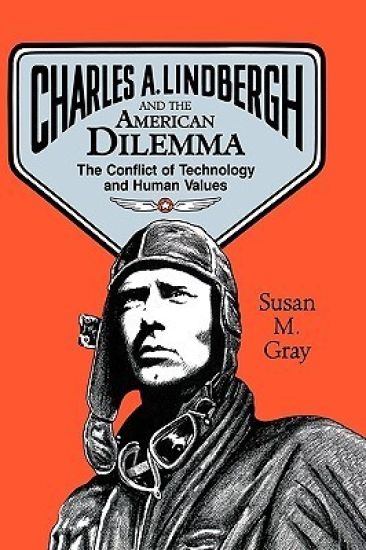
Throughout his life, Lindbergh s value structure, interests, and activities shifted and moved, yielding a conflict between instinct and intellect. Both its presence in his life and his readjustment of values in accordance with it are representative of his time and culture. He moved, with the twentieth century itself, from a faith in technology to a disenchantment with it and finally to a balanced resolution that synthesized the seeming oppositions of technology and the human spirit. This emphasis on a balance between technology and humanity, and Lindbergh s belief that maintained the complementarity rather than the opposition of the two forces, finally culminated in a post-technological mysticism, a teleological worldview of science and nature as aspects of the same physical and spiritual environment."
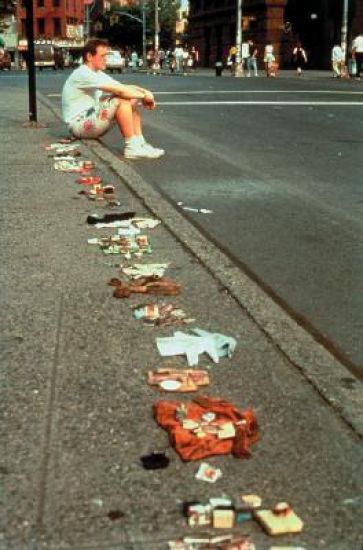
Documenting this American artist's first solo museum exhibition, Charles LeDray will focus on his obsessively crafted miniature sculptures in a variety of media, including textiles, ceramics, seashells, and bone, that reflect on childhood, gender, sexuality, and autobiography.
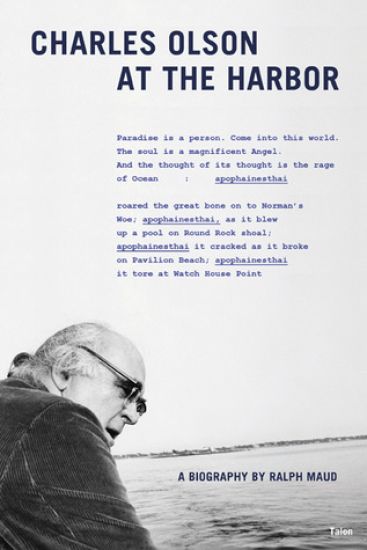
Charles Olson was quite possibly the greatest, and without question the most influential, of the "New American Poets" published by Grove Press in the mid-twentieth century. Synthesizing the experimental avant-garde of Black Mountain College with the uncompromising existentialism of the Beat generation, the new structuralism of the San Francisco Renaissance and heralding the postmodern deconstructionism of the L=A=N=G=U=A=G=E poets, his spirit, mind and intellect are ubiquitous in late-twentieth-century poetry around the world. His archaeology of language unearthed classical sources and aboriginal, principally Mayan, cultures within the history of European colonialism and resulted in an absolute insistence that the public value of the human imagination is inseparable from the particulars of both the time and place of its origins and composition.His reputation tarnished and his poetry misread 20 years after his death in Tom Clark's carelessly biased 1991 biography, Charles Olson: The Allegory of a Poet's Life, Olson and his work have been diminished in the study of poetics since Clark's creation of his grotesque caricature of this great American poet as a young hustler who he irresponsibly and falsely claims became a defeated and pathetic old man in his later years. With Charles Olson at the Harbor, Dr. Ralph Maud, a longtime Olson scholar, friend and correspondent, finally sets the record straight, insisting that Olson was as careful with his genius as any young man could be; that he achieved critical success as a Melville scholar; that his "projective verse" established an undeniable and lasting sea change in poetic thought around the world; and that he eschewed success of the ordinary kind to create a new restorative stance in the polis that can take us into a different future--all reflected in a large body of poetry that the world can no longer ignore.

Charles City County, Virginia Court Orders, 1655-1661. (Volume #1)
Beverley Fleet
Southern Historical Press
2019
nidottu
By: Beverley Fleet, Pub. 1941, Reprinted 2019, 244 pages, Index, ISBN #0-89308-368-2. Charles City County was created in 1634 and is the parent county to the counties of: Prince George, Bunswick, Dinwiddle, Amelia, Greenville, Lunenburg, Nottoway, Prince Edward, Mecklenburg, Halifax, Bedford, Charlotte, & Pittsylvania counties.

Charles City County, Virginia Court Orders, 1661-1696. (Volume #2)
Beverley Fleet
Southern Historical Press
2019
nidottu
By: Beverly Fleet, Pub. 1941, Reprinted 2019, 242 pages, Index, ISBN #0-89308-369-0. Charles City County was created in 1634 and is the parent county to the counties of: Prince George, Bunswick, Dinwiddle, Amelia, Greenville, Lunenburg, Nottoway, Prince Edward, Mecklenburg, Halifax, Bedford, Charlotte, & Pittsylvania counties.
Charles Parish, York County, Virginia, History and Register, 1648-1789.
Landon C. Bell
Southern Historical Press
2014
nidottu
By: Landon C. Bell, Orig. Pub. 1932, Reprinted 2014, 293 pages, Index, ISBN #0-89308-865-X.York County was formed in 1634 as Charles River County and renamed York County in 1643. It is the parent county for Gloucester and New Kent counties. This book includes Births 1648-1789 & Death records 1665-1787 as recorded in their original order along with a complete index.

Roger Billcliffe's groundbreaking catalogue raisonne of the furniture of Charles Rennie Mackintosh first appeared over four decades ago. This fourth edition has been completely revised and updated to take account of the host of discoveries and developments in Mackintosh scholarship that have taken place since the book's first publication. Among the 900 illustrations, many items that were previously shown in black and white now appear in colour. An impressive and stimulating work of scholarship, this is the only comprehensive work on the furniture of Charles Rennie Mackintosh, the most important British designer and architect since Robert Adam. This is essential reading and a crucial reference for anyone with an interest in twentieth-century design, this is the definitive work on a designer of world renown and influence.
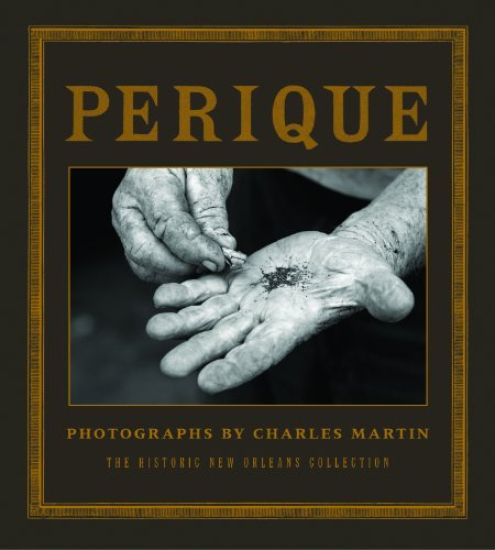
Perique: Photographs by Charles Martin
Charles Martin
Historic New Orleans Collection,U.S.
2012
sidottu
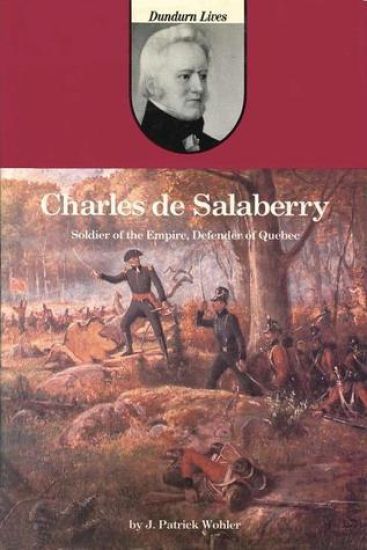
Charles de Salaberry (1778-1829) was a brilliant military figure who played a vital role in the War of 1812. A French-Canadian, he attained both rank and honour in the British army. He was a hero of Chateauguay and instrumental in the formation of the Canadian Voltigeurs and a respected advocate of French-Canadian rights. This book paints a vivid picture of a man whose pride and honour were part of an ancient family tradition, whose accomplishments were unique in the history of Lower Canada.
Charles Olson and Edward Dahlberg: A Portrait of a Friendship
John Cech
English Literary Studies
2016
nidottu
Charles Lutwidge Dodgson (Lewis Carroll)
Carroll (Lewis) Society of North America
2024
sidottu
Charles Lutwidge Dodgson, better known to the world as Lewis Carroll, contributed to literature one of its most enduring achievements in the “Alice” books, but he was a versatile and intensely prolific author who published widely in a number of fields. This book is the first fully updated, authoritative bibliography of publications by Carroll during his lifetime (1832–1898) since the previous volume, published in 1979, and the latest in a scholarly project dating back to the first volume in 1924. It will prove essential for research libraries, rare book dealers, including auction houses, and book collectors generally, but especially Carroll and Victorian literature collectors.

Charles Reiffel
San Diego Museum of Art
2012
sidottu
Charles Reiffel (1862-1942) is widely regarded today as one of the foremost figures of the California plein air school of landscape painting. This book, accompanying an exhibition of the same name at The San Diego Museum of Art and San Diego History Center, aims to reevaluate Reiffel as a leading practitioner of Post-Impressionism in the United States.Charles Reiffel trained as a lithographer and traveled, worked, and studied in Europe before establishing himself as an independent artist in Silvermine, Connecticut. He finally settled in San Diego in 1925. There, he immersed himself for the remainder of his life in the landscape of Southern California, its coast and rolling hills, discovering in its unique contours new motifs for his striking mix of Post-Impressionist and Expressionist brushwork.Charles Reiffel: An American Post-Impressionist proposes a fresh assessment of the artist, firmly reestablishing his place as a national figure in the canon of American painting and shedding light on a splendid page in the history of American Post-Impressionism and Expressionism.

207 Inspirational Quotes of Charles I. Prosper
Charles I Prosper
Global Publishing Company
2015
pokkari
The Essence of Harvard: Charles W. Eliot's Harvard Memories
Charles W. Eliot
Westphalia Press
2013
nidottu