
Kirjahaku
Etsi kirjoja tekijän nimen, kirjan nimen tai ISBN:n perusteella.
1000 tulosta hakusanalla Clive Witham

This 1980 book is designed to help university students to master the technicalities and techniques of French verse. The author assumes that part of the difficulty encountered by readers derives from the need to approach French verse through English verse; this book undertakes, therefore, a differentiation of the two verse traditions. Dr Scott's concern is to provide the groundwork of a terminology, to discuss the origins and implications of that terminology, and to show how terminological knowledge can be translated into critical speculation about poetry. After three chapters which establish the essential features of the French line of verse and outline the difficulties the student is likely to encounter in trying to describe it and deal with it, the book moves on to consider rhyme, stanzas, verse forms and free verse.

Dr Scott argues that only by attending to the precise locations of words in line or stanza, and to the specific value of syllables, or by understanding the often conflicting demands of rhythm and metre, can the reader of poetry acquire a real grasp of the intimate life of words in verse with all their fluctuations of meaning, mood, and tone. The analyses through which the book pursues its argument address two principal concerns: the way in which syllabic position projects words and colours their complicated and challenged by the relationship of rhythm to metre.

The study of structural analysis and design is a central subject in civil, aeronautical and mechanical engineering. This book presents a modern and unified introduction to structural analysis, with a strong emphasis on how structures actually behave. The unifying theme is the application of energy methods, developed without the formal mathematics of the calculus of variations. The energy approach makes it possible to articulate the logical relationship between equilibrium and compatibility; emphasise the unity of structural analysis, particularly for indeterminate structures; and identify the roles of idealization and discretization in structural modelling. Thus, energy methods also serve as a prelude to the main ideas behind modern computational approaches to structural analysis and design. As an aid to upper-level undergraduate students in mastering this material, the text includes numerous worked examples, as well as homework problems.
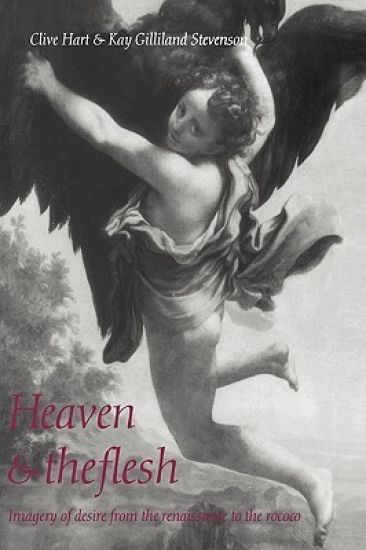
Do angels make love? Will the souls of ordinary people feel sexual pleasure in the next world? Is the aspiration to spiritual salvation helped or hindered by sexual experience? In Heaven and the Flesh Clive Hart and Kay Stevenson explore the opinions of poets and painters on such questions, from the high Renaissance to the birth of romanticism. Hart and Stevenson analyse the work not only of canonical writers and artists, such as Milton and Michelangelo, but also of lesser known figures such as John Gore and Richard Tompson, and the sometimes anguished speculations of philosophers and theologians. As the evidence of witty pornographic poems and drawings demonstrates, the relationship between sexual desire and spiritual ascension was not always treated with full seriousness. This wide-ranging survey offers new and sometimes surprising insights into material both familiar and unfamiliar.
Contrary to popular mythology, the designs of favorable products and successful systems do not appear suddenly, or magically. This second edition of Engineering Design demonstrates that symbolic representation and related problem-solving methods, offer significant opportunities to clarify and articulate concepts of design to lay a better framework for design research and design education. Artificial Intelligence (AI) provides a substantial body of material concerned with understanding and modeling cognitive processes. This book adopts the vocabulary and a paradigm of AI to enhance the presentation and explanation of design. It includes concepts from AI because of their explanatory power and their utility as possible ingredients of practical design activity. This second edition has been enriched by the inclusion of recent work on design reasoning, computational design, AI in design, and design cognition, with pointers to a wide cross section of the current literature.
The first overview of sampling for archaeologists for over twenty years, this manual offers a comprehensive account of the applications of statistical sampling theory which are essential to modern archaeological practice at a range of scales, from the regional to the microscopic. Bringing archaeologists up to date with an aspect of their work which is often misunderstood, it includes a discussion of the relevance of sampling theory to archaeological interpretation, and considers its fundamental place in fieldwork and post-excavation study. It demonstrates the vast range of techniques that are available, only some of which are widely used by archaeologists. A section on statistical theory also reviews latest developments in the field, and the formal mathematics is available in an appendix, cross-referenced with the main text.
The first overview of sampling for archaeologists for over twenty years, this manual offers a comprehensive account of the applications of statistical sampling theory which are essential to modern archaeological practice at a range of scales, from the regional to the microscopic. Bringing archaeologists up to date with an aspect of their work which is often misunderstood, it includes a discussion of the relevance of sampling theory to archaeological interpretation, and considers its fundamental place in fieldwork and post-excavation study. It demonstrates the vast range of techniques that are available, only some of which are widely used by archaeologists. A section on statistical theory also reviews latest developments in the field, and the formal mathematics is available in an appendix, cross-referenced with the main text.
A basic motivation for social and cultural life is the problem of death. By analysing the experiences of dying and bereaved people, as well as institutional responses to death, Clive Seale shows its importance for understanding the place of embodiment in social life. He draws on a comprehensive review of sociological, anthropological and historical studies, including his own research, to demonstrate the great variability that exists in human social constructions for managing mortality. Far from living in a ‘death denying’ society, dying and bereaved people in contemporary culture are often able to assert membership of an imagined community, through the narrative reconstruction of personal biography, drawing on a variety of cultural scripts emanating from medicine, psychology, the media and other sources. These insights are used to argue that the maintenance of the human social bond in the face of death is a continual resurrective practice, permeating everyday life.
A basic motivation for social and cultural life is the problem of death. By analysing the experiences of dying and bereaved people, as well as institutional responses to death, Clive Seale shows its importance for understanding the place of embodiment in social life. He draws on a comprehensive review of sociological, anthropological and historical studies, including his own research, to demonstrate the great variability that exists in human social constructions for managing mortality. Far from living in a ‘death denying’ society, dying and bereaved people in contemporary culture are often able to assert membership of an imagined community, through the narrative reconstruction of personal biography, drawing on a variety of cultural scripts emanating from medicine, psychology, the media and other sources. These insights are used to argue that the maintenance of the human social bond in the face of death is a continual resurrective practice, permeating everyday life.
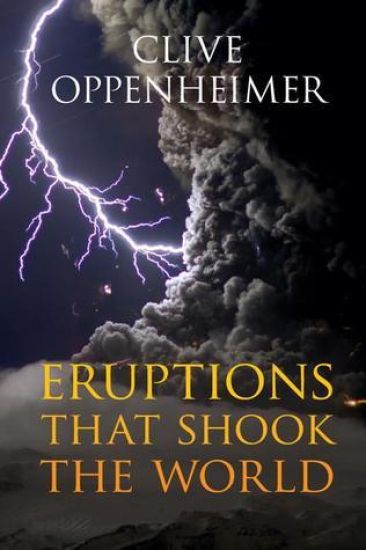
What does it take for a volcanic eruption to really shake the world? Did volcanic eruptions extinguish the dinosaurs, or help humans to evolve, only to decimate their populations with a super-eruption 73,000 years ago? Did they contribute to the ebb and flow of ancient empires, the French Revolution and the rise of fascism in Europe in the 19th century? These are some of the claims made for volcanic cataclysm. Volcanologist Clive Oppenheimer explores rich geological, historical, archaeological and palaeoenvironmental records (such as ice cores and tree rings) to tell the stories behind some of the greatest volcanic events of the past quarter of a billion years. He shows how a forensic approach to volcanology reveals the richness and complexity behind cause and effect, and argues that important lessons for future catastrophe risk management can be drawn from understanding events that took place even at the dawn of human origins.
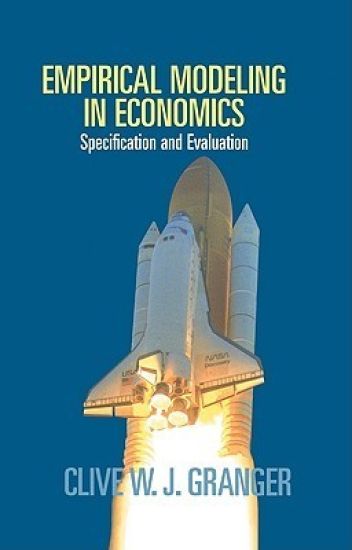
Empirical Modeling in Economics
Clive W. J. Granger; Geoff Harcourt
Cambridge University Press
1999
sidottu
In these three essays, Professor Granger explains the process of constructing and evaluating an empirical model. Drawing on a wide range of cases and vignettes from economics, finance, politics and environment economics, as well as from art, literature, and the entertainment industry, Professor Granger combines rigour with intuition to provide a unique and entertaining insight into one of the most important subjects in modern economics. Chapter 1 deals with Specification. The process of specifying a model is discussed using deforestation in the Amazon region of Brazil as an illustration. Chapter 2 considers Evaluation, and argues that insufficent evaluation is undertaken by economists, and that models should be evaluated in terms of the quality of their output. In Chapter 3, the question of how to evaluate forecasts is considered at several levels of increasing depth and using a more sophisticated, technical approach than in the earlier two chapters.

In this study Clive Gamble presents and questions two of the most famous descriptions of change in prehistory. The first is the 'human revolution', when evidence for art, music, religion and language first appears. The second is the economic and social revolution of the Neolithic period. Gamble identifies the historical agendas behind 'origins research' and presents a bold alternative to these established frameworks, relating the study of change to the material basis of human identity. He examines, through artefact proxies, how changing identities can be understood using embodied material metaphors and in two major case-studies charts the prehistory of innovations, asking, did agriculture really change the social world? This is an important and challenging book that will be essential reading for every student and scholar of prehistory.
This book, and its companion volume in the Econometric Society Monographs series (ESM number 33), present a collection of papers by Clive W. J. Granger. His contributions to economics and econometrics, many of them seminal, span more than four decades and touch on all aspects of time series analysis. The papers assembled in this volume explore topics in spectral analysis, seasonality, nonlinearity, methodology, and forecasting. Those in the companion volume investigate themes in causality, integration and cointegration, and long memory. The two volumes contain the original articles as well as an introduction written by the editors.
This book, and its companion volume in the Econometric Society Monographs series (ESM number 33), present a collection of papers by Clive W. J. Granger. His contributions to economics and econometrics, many of them seminal, span more than four decades and touch on all aspects of time series analysis. The papers assembled in this volume explore topics in spectral analysis, seasonality, nonlinearity, methodology, and forecasting. Those in the companion volume investigate themes in causality, integration and cointegration, and long memory. The two volumes contain the original articles as well as an introduction written by the editors.
Empirical Modeling in Economics
Clive W. J. Granger; Geoff Harcourt
Cambridge University Press
1999
pokkari
In these three essays, Professor Granger explains the process of constructing and evaluating an empirical model. Drawing on a wide range of cases and vignettes from economics, finance, politics and environment economics, as well as from art, literature, and the entertainment industry, Professor Granger combines rigour with intuition to provide a unique and entertaining insight into one of the most important subjects in modern economics. Chapter 1 deals with Specification. The process of specifying a model is discussed using deforestation in the Amazon region of Brazil as an illustration. Chapter 2 considers Evaluation, and argues that insufficent evaluation is undertaken by economists, and that models should be evaluated in terms of the quality of their output. In Chapter 3, the question of how to evaluate forecasts is considered at several levels of increasing depth and using a more sophisticated, technical approach than in the earlier two chapters.
This book, and its companion volume in the Econometric Society Monographs series (ESM number 32), present a collection of papers by Clive W. J. Granger. His contributions to economics and econometrics, many of them seminal, span more than four decades and touch on all aspects of time series analysis. The papers assembled in this volume explore topics in causality, integration and cointegration, and long memory. Those in the companion volume investigate themes in causality, integration and cointegration, and long memory. The two volumes contain the original articles as well as an introduction written by the editors.
Neanderthals and Modern Humans develops the theme of the close relationship between climate change, ecological change and biogeographical patterns in humans during the Pleistocene. In particular, it challenges the view that Modern Human 'superiority' caused the extinction of the Neanderthals between 40 and 30 thousand years ago. Clive Finlayson shows that to understand human evolution, the spread of humankind across the world and the extinction of archaic populations, we must move away from a purely theoretical evolutionary ecology base and realise the importance of wider biogeographic patterns including the role of tropical and temperate refugia. His proposal is that Neanderthals became extinct because their world changed faster than they could cope with, and that their relationship with the arriving Modern Humans, where they met, was subtle.

In this study Clive Gamble presents and questions two of the most famous descriptions of change in prehistory. The first is the 'human revolution', when evidence for art, music, religion and language first appears. The second is the economic and social revolution of the Neolithic period. Gamble identifies the historical agendas behind 'origins research' and presents a bold alternative to these established frameworks, relating the study of change to the material basis of human identity. He examines, through artefact proxies, how changing identities can be understood using embodied material metaphors and in two major case-studies charts the prehistory of innovations, asking, did agriculture really change the social world? This is an important and challenging book that will be essential reading for every student and scholar of prehistory.