Kirjojen hintavertailu. Mukana 11 518 949 kirjaa ja 12 kauppaa.

Kirjahaku

Etsi kirjoja tekijän nimen, kirjan nimen tai ISBN:n perusteella.

1000 tulosta hakusanalla Colin Channer

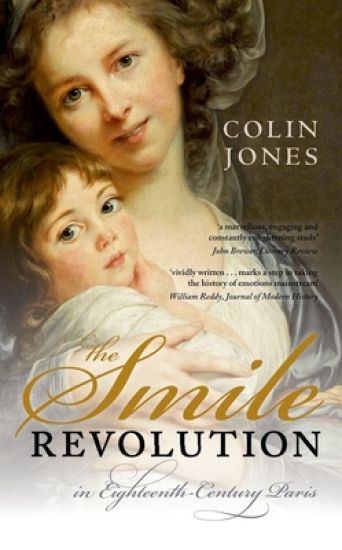
The Smile Revolution

The Smile Revolution

Colin Jones CBE

Oxford University Press
2017
nidottu
You could be forgiven for thinking that the smile has no history; it has always been the same. However, just as different cultures in our own day have different rules about smiling, so did different societies in the past. In fact, amazing as it might seem, it was only in late eighteenth century France that western civilization discovered the art of the smile. In the 'Old Regime of Teeth' which prevailed in western Europe until then, smiling was quite literally frowned upon. Individuals were fatalistic about tooth loss, and their open mouths would often have been visually repulsive. Rules of conduct dating back to Antiquity disapproved of the opening of the mouth to express feelings in most social situations. Open and unrestrained smiling was associated with the impolite lower orders. In late eighteenth-century Paris, however, these age-old conventions changed, reflecting broader transformations in the way people expressed their feelings. This allowed the emergence of the modern smile par excellence: the open-mouthed smile which, while highlighting physical beauty and expressing individual identity, revealed white teeth. It was a transformation linked to changing patterns of politeness, new ideals of sensibility, shifts in styles of self-presentation - and, not least, the emergence of scientific dentistry. These changes seemed to usher in a revolution, a revolution in smiling. Yet if the French revolutionaries initially went about their business with a smile on their faces, the Reign of Terror soon wiped it off. Only in the twentieth century would the white-tooth smile re-emerge as an accepted model of self-presentation. In this entertaining, absorbing, and highly original work of cultural history, Colin Jones ranges from the history of art, literature, and culture to the history of science, medicine, and dentistry, to tell a unique and untold story about a facial expression at the heart of western civilization.
The Fall of Robespierre

The Fall of Robespierre

Colin Jones

Oxford University Press
2021
sidottu
The day of 9 Thermidor (27 July 1794) is universally acknowledged as a major turning-point in the history of the French Revolution. At 12.00 midnight, Maximilien Robespierre, the most prominent member of the Committee of Public Safety which had for more than a year directed the Reign of Terror, was planning to destroy one of the most dangerous plots that the Revolution had faced. By 12.00 midnight at the close of the day, following a day of uncertainty, surprises, upsets and reverses, his world had been turned upside down. He was an outlaw, on the run, and himself wanted for conspiracy against the Republic. He felt that his whole life and his Revolutionary career were drawing to an end. As indeed they were. He shot himself shortly afterwards. Half-dead, the guillotine finished him off in grisly fashion the next day. The Fall of Robespierre provides an hour-by-hour analysis of these 24 hours.
The Fall of Robespierre

The Fall of Robespierre

Colin Jones

Oxford University Press
2023
nidottu
The day of 9 Thermidor (27 July 1794) is universally acknowledged as a major turning-point in the history of the French Revolution. At 12.00 midnight, Maximilien Robespierre, the most prominent member of the Committee of Public Safety which had for more than a year directed the Reign of Terror, was planning to destroy one of the most dangerous plots that the Revolution had faced. By 12.00 midnight at the close of the day, following a day of uncertainty, surprises, upsets and reverses, his world had been turned upside down. He was an outlaw, on the run, and himself wanted for conspiracy against the Republic. He felt that his whole life and his Revolutionary career were drawing to an end. As indeed they were. He shot himself shortly afterwards. Half-dead, the guillotine finished him off in grisly fashion the next day. The Fall of Robespierre provides an hour-by-hour analysis of these 24 hours.
The Character of Mind

The Character of Mind

Colin McGinn

Oxford University Press
1997
nidottu
Of what nature is the mind? So Colin McGinn starts his first chapter, and this is his guiding question. He pursues the answer with a boldness and provocativeness rarely encountered in philosophical writing. As he explains, my aim has been to give the reader something definite and stimulating to think about, rather than to present a cautious and disinterested survey of the state of the subject. The Character of Mind provides a general introduction to the philosophy of mind, covering all the main topics: the mind-body problem, the nature of acquaintance, the relation between thought and language, agency, the self. In particular, Colin McGinn addresses the issue of consciousness, and the difficulty of combining the two very different perspectives on the mind that arise from introspection and from the observation of other people. His aim throughout is to identify the recalcitrant problems clearly, and to suggest fruitful approaches to their solutions, always avoiding facile answers. The second edition of this classic book adds three completely new chapters on consciousness, mental content, and cognitive science, bringing it abreast of current developments. A distinctive viewpoint is adopted, stressing consciousness, but the intention is still to come to grips with the underlying philosophical problems, accessibly articulating the deep difficulties we face in theorizing about the mind. From the reviews of the first edition: `a very good introduction to the philosophy of mind. . . . written with confidence and authority . . . a fine text for an undergraduate course.' Jonathan Lear, The Times Literary Supplement `a lucid and impressive discussion . . . to be recommended to students and professionals alike . . . brilliant book.' Brian O'Shaughnessy, London Review of Books `clear, stimulating and thought-provoking.' Bernard Harrison, Philosophy `an impressive piece of worktough, elegant, ingenious, argumentative and controversial.' Nicholas Everitt, Times Higher Educational Supplement
Strategy and Defence Planning

Strategy and Defence Planning

Colin S. Gray

Oxford University Press
2016
nidottu
Strategy and Defence Planning: Meeting the Challenge of Uncertainty explores and examines why and how security communities prepare purposefully for their future defence. The author explains that defence planning is the product of interplay among political process, historical experience, and the logic of strategy. The theory of strategy best reveals both the nature and the working of defence planning. Political 'ends', strategic 'ways', and military 'means' all fed by reigning, if not always recognized, assumptions, organize the subject well with a template that can serve any time, place, and circumstance. The book is designed to help understanding of what can appear to be a forbiddingly complex as well as technical subject. A good part of the problem for officials charged with defence planning duties is expressed in the second part of the book's title. The real difficulty, which rarely is admitted by those tasked with defence planning duty, is that defence planning can only be guesswork. But, because defence preparation is always expensive, not untypically is politically unpopular, yet obviously can be supremely important, claims to knowledge about the truly unknowable persist. In truth, we cannot do defence planning competently, because our ignorance of the future precludes understanding of what our society will be shown by future events to need. The challenge faced by the author was to identify ways in which our problems with the inability to know the future in any detail in advance-the laws of nature, in other words-may best be met and mitigated. Professor Gray argues that our understanding of human nature, of politics, and of strategic history, does allow us to make prudent choices in defence planning that hopefully will prove 'good enough'.
Perspectives on Strategy

Perspectives on Strategy

Colin S. Gray

Oxford University Press
2016
nidottu
Perspectives on Strategy examines in depth five aspects of strategy. Strategic thought and behaviour are explored and explained from the perspectives of intellect, morality, culture, geography, and technology. Each perspective has attracted persisting controversy. Perspectives on Strategy is strongly complementary to the author's previous book, The Strategy Bridge: Theory for Practice (OUP, 2010). This new work takes a notably holistic view of strategic phenomena, which serves as a master framework within which detailed examination of strategic history and issues can usefully be pursued in the light of particular perspectives. Foundational for the argument in Perspectives on Strategy is the proposition that distinctive aspects of strategy (e.g. ethics, culture, inter alia) can only be appreciated properly when they are regarded in context. The author shares this view with T. E. Lawrence (of Arabia), who wrote of the 'whole house of war'. Perspectives on Strategy gratefully adapts Lawrence and writes about the 'whole house of strategy'. The book insists that the nature of strategy is best represented by a Venn diagram that shows overlapping perspectives. Thus, the subject of each chapter is shown as having meaning for, and in turn is influenced by, the subjects of the other chapters. For example, the book explores the importance of strategic ideas relative to the significance of the material weapons of war. The author poses the hardest of questions pertinent to each chosen perspective (e.g. do ideas matter more than muscle?--in practice how robust is the ethical code with which warfare is waged?--is geography destiny, as some theorists have claimed?--and do technically superior weapons win wars?)Perspectives on Strategy demonstrates that it is possible to look closely at strategic matters from limited but arguably powerful perspectives, without being captured by them. This book asks and answers the most challenging and rewarding questions that can be posed in order to reveal the persisting universal nature, but ever changing character, of strategy.
The Strategy Bridge

The Strategy Bridge

Colin S. Gray

Oxford University Press
2016
nidottu
The Strategy Bridge: Theory for Practice is an original contribution to the general theory of strategy. While heavily indebted to Carl von Clausewitz, Sun-tzu, and the very few other classic authors, this book presents the theory, rather than merely comments on the theory as developed by others. The author explains that the purpose of strategy is to connect purposefully politics and policy with the instruments they must use. The primary focus of attention is on military strategy, but this focus is well nested in discussion of grand strategy, for which military strategy is only one strand. The book presents the general theory of strategy comprehensively and explains the utility of this general theory for the particular strategies that strategists need to develop in order to meet their historically unique challenges. The book argues that strategy's general theory provides essential education for practicing strategists at all times and in all circumstances. As general theory, The Strategy Bridge is as relevant to understanding strategic behaviour in the Peloponnesian War as it is for the conflicts of the twenty-first century. The book proceeds from exposition of general strategic theory, to address three basic issue areas that are not at all well explained, let alone understood with a view to advancing better practice, in the extant literature. Specifically, the book tackles the problems that harass and imperil strategic performance; it probes deeply into the hugely underexamined subject of just what it is that the strategist produces-strategic effect; and it 'joins up the dots' from theory through practice to consequences by means of a close examination of command performance. The author takes a holistic view of strategy, and it is rigorously attentive to the significance of the contexts within which and for which strategies are developed and applied. The book regards the strategist as a hero, charged with the feasible, but awesomely difficult, task of converting the threat and use of force (for military strategy) into desired political consequences. He seeks some control over the rival or enemy via strategic effect, the instrumental produce of his instrumental labours. In order to maximise his prospects for success, the practicing strategist requires all the educational assistance that strategic theory can provide.
Social Change in Western Europe

Social Change in Western Europe

Colin Crouch

Oxford University Press
1999
nidottu
What do European societies look like, at the end of a turbulent millennium which saw western Europe slowly rise to global domination, and then rapidly decline to its present position, prosperous but clearly behind the USA in world influence? This is the only book by a single sociologist to make a systematic and up to date comparison of virtually all west European countries across a wide range of social institutions. These include: work and occupations, the structure of the economy, the family, education, religion, nationality and ethnicity, and the mechanism of citizenship in the welfare state. Particular emphasis is placed on the place of gender and social class. By including basic details on Japan and the United States throughout, the author is able to draw attention to any shared west European specificities. The book also develops a theory of change in contemporary societies. Starting from a model of a mid-century social compromise based on certain balances between industrialism, capitalism, traditional community institutions, and community it traces its subsequent destabilization and places particular importance on the resurgence of capitalism in shaping a new social order. This important new study of the social structure of western Europe will be essential reading for all students of comparative sociology and European sociology.
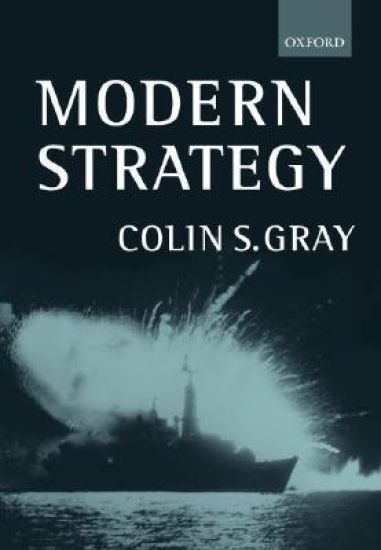
Modern Strategy

Modern Strategy

Colin Gray

Oxford University Press
1999
nidottu
Modern Strategy explains the permanent nature, but ever changing character, of strategy in light of the whole strategic experience of the twentieth century. The book is a major contribution to the general theory of strategy; it makes sense of the strategic history of the twentieth century, and provides understanding of what that strategic history implies for the century to come. The book offers a uniquely comprehensive analysis of the different facets of modern strategy. The classic writings of Carl von Clausewitz are reconsidered for their continuing relevance, while possible successors are appraised. In addition to arguing that Clausewitz figured out what strategy was, and how it worked, the book probes deeply into strategy's political, ethical, and cultural dimension. The book explains how strategic behaviour in the twentieth century has expanded from the two-dimensional world of the land and the surface of the sea, to include the ocean depths, the air, space, and most recently the 'cyberspace' environments. It also offers details analyses both of nuclear matters and of the realm of irregular violence. This is the first comprehensive account of all aspects of modern strategy since the Cold War ended and will be essential reading for all students of modern strategy and security studies.
Theory of Strategy

Theory of Strategy

Colin S. Gray

Oxford University Press
2018
sidottu
This book provides a short and accessible introduction to the theory of strategy, examines the general theory of strategy in accordance with 23 key Principles and explains its nature, functions, and intended consequences. Theory of Strategy makes the radical argument that the familiar structure of strategy's general theory (political ends, strategic ways, military means - and assumptions) holds as sound for security at all times and in all places, of human necessity. Strategy is ever-varying in its character, but not in its nature, which is unchanging.
Theory of Strategy

Theory of Strategy

Colin S. Gray

Oxford University Press
2018
nidottu
This book provides a short and accessible introduction to the theory of strategy, examines the general theory of strategy in accordance with 23 key Principles and explains its nature, functions, and intended consequences. Theory of Strategy makes the radical argument that the familiar structure of strategy's general theory (political ends, strategic ways, military means - and assumptions) holds as sound for security at all times and in all places, of human necessity. Strategy is ever-varying in its character, but not in its nature, which is unchanging.
Compassionate Moral Realism

Compassionate Moral Realism

Colin Marshall

Oxford University Press
2018
sidottu
Colin Marshall offers a ground-up defense of objective morality, drawing inspiration from a wide range of philosophers, including John Locke, Arthur Schopenhauer, Iris Murdoch, Nel Noddings, and David Lewis. Marshall's core claim is compassion is our capacity to perceive other creatures' pains, pleasures, and desires. Non-compassionate people are therefore perceptually lacking, regardless of how much factual knowledge they might have. Marshall argues that people who do have this form of compassion thereby fit a familiar paradigm of moral goodness. His argument involves the identification of an epistemic good which Marshall dubs "being in touch". To be in touch with some property of a thing requires experiencing it in a way that reveals that property - that is, experiencing it as it is in itself. Only compassion, Marshall argues, lets us be in touch with others' motivational mental properties. This conclusion about compassion has two important metaethical consequences. First, it generates an answer to the question "Why be moral?", which has been a central philosophical concern since Plato. Second, it provides the keystone for a novel form of moral realism. This form of moral realism has a distinctive set of virtues: it is anti-relativist, naturalist, and able to identify a necessary connection between moral representation and motivation. The view also implies that there is an epistemic asymmetry between virtuous and vicious agents, according to which only morally good people can fully face reality.
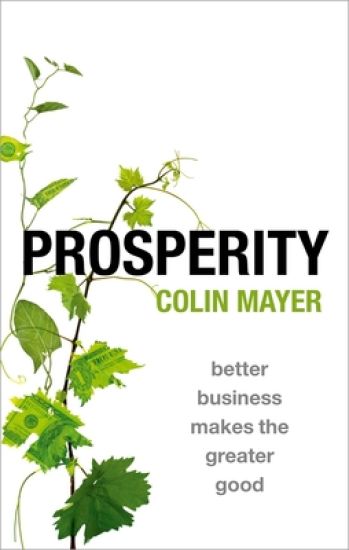
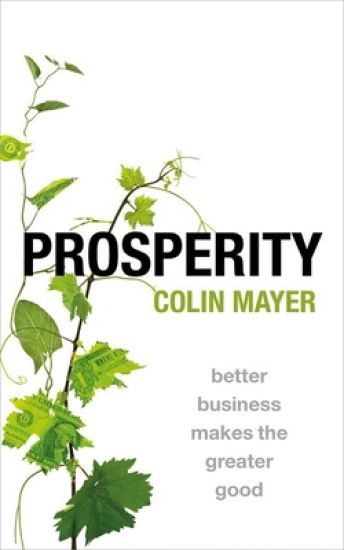
Prosperity

Prosperity

Colin Mayer

Oxford University Press
2018
sidottu
What is business for? Day one of a business course will tell you: it is to maximise shareholder profit. This single idea pervades all our thinking and teaching about business around the world but it is fundamentally wrong, Colin Mayer argues. It has had disastrous and damaging consequences for our economies, environment, politics, and societies. In this urgent call for reform, Prosperity challenges the fundamentals of business thinking. It sets out a comprehensive new agenda for establishing the corporation as a unique and powerful force for promoting economic and social wellbeing in its fullest sense - for customers and communities, today and in the future. First Professor and former Dean of the Säid Business School in Oxford, Mayer is a leading figure in the global discussion about the purpose and role of the corporation. In Prosperity, he presents a radical and carefully considered prescription for corporations, their ownership, governance, finance, and regulation. Drawing together insights from business, law, economics, science, philosophy, and history, he shows how the corporation can realize its full potential to contribute to economic and social wellbeing of the many, not just the few. Prosperity tells us not only how to create and run successful businesses but also how policy can get us there and fix our broken system.
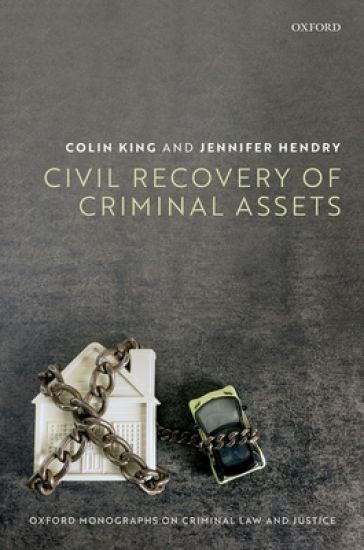
Civil Recovery of Criminal Property

Civil Recovery of Criminal Property

Colin King; Jennifer Hendry

Oxford University Press
2023
sidottu
Follow-the-money' approaches are increasingly being adopted to tackle organized crime, corruption, and terrorist activities. The rationale behind such an approach is oft stated: to show that crime does not pay, to reinforce confidence in a fair and effective criminal justice system, and to deter criminal activity. Civil Recovery of Criminal Property is an in-depth analysis of the confiscation of the proceeds of crime in the absence of criminal conviction in Ireland and England & Wales, more than two decades since the introduction of this civil/criminal hybrid procedure. This book considers the development of civil recovery in both jurisdictions, providing a comprehensive comparative account and critical examination of its legislative context and framework, judicial reception, and case law development. It leads the argument that civil recovery—like other civil/criminal hybrids—straddles civil and criminal procedure in a manner that takes advantage of the resultant legal ambiguity, to the detriment of due process, civil liberties, and human rights. Through interviews with practitioners professionally engaged with civil recovery proceedings, both in defence and in enforcement, King and Hendry remedy what has until now been a lack of empirical engagement with the operation of civil recovery in practice. The authors provide a comprehensive analysis of civil recovery in terms of its procedural hybridity, its 'follow-the-money' approach, its questionable compliance with the requirements of due process, its property-specific character, and its supposed pragmatism in tackling the problem of serious and organized crime. Blending doctrinal, socio-legal, and theoretical perspectives, Civil Recovery of Criminal Property will appeal both to academics and practitioners engaged with civil recovery.
Principles of International Financial Law

Principles of International Financial Law

Colin Bamford

Oxford University Press
2019
nidottu
This book explains the legal principles, rules, concepts, and developments that underpin the practice of financial law in common law countries, and by extension across the world. One of the aims of the book is to explain clearly the basis of the concepts applied by the common law to financial transactions. As part of this aim the third edition analyses in detail the interface between common-law and civil law approaches in areas such as the distinction between property and personal rights. The section on the ability of States to control the use of their money has also been substantially rewritten to address increasing demands in the US that sanctioned persons and states should be denied access to the US monetary system, recording both the increased incidence of activity by the US authorities, and also explaining in more detail the rationale of these actions. Since the last edition was written there have been a number of developments in the technology used in the financial markets that question the legal principles on which they operate. In particular, the impact of Distributed Ledger Technology (e.g. Blockchain) on the transfer of intangible assets and the effect on the rights of parties involved is considered from both a legal and practical position. Additionally, the legal implications of the use of cryptocurrencies, including their use as Initial Coin Offerings, are also considered. This is an essential work for both experienced lawyers and those who are relatively new to international financial law. It provides the more experienced lawyer with an aide memoire on the existing law and a reference source for new ideas when tackling innovative structures or products. For those new to practice or postgraduate students this book delivers a firm foundation upon which to build knowledge of the law and practice of financial law.
Principles of International Financial Law

Principles of International Financial Law

Colin Bamford

Oxford University Press
2019
sidottu
This book explains the legal principles, rules, concepts, and developments that underpin the practice of financial law in common law countries, and by extension across the world. One of the aims of the book is to explain clearly the basis of the concepts applied by the common law to financial transactions. As part of this aim the third edition analyses in detail the interface between common-law and civil law approaches in areas such as the distinction between property and personal rights. The section on the ability of States to control the use of their money has also been substantially rewritten to address increasing demands in the US that sanctioned persons and states should be denied access to the US monetary system, recording both the increased incidence of activity by the US authorities, and also explaining in more detail the rationale of these actions. Since the last edition was written there have been a number of developments in the technology used in the financial markets that question the legal principles on which they operate. In particular, the impact of Distributed Ledger Technology (e.g. Blockchain) on the transfer of intangible assets and the effect on the rights of parties involved is considered from both a legal and practical position. Additionally, the legal implications of the use of cryptocurrencies, including their use as Initial Coin Offerings, are also considered. This is an essential work for both experienced lawyers and those who are relatively new to international financial law. It provides the more experienced lawyer with an aide memoire on the existing law and a reference source for new ideas when tackling innovative structures or products. For those new to practice or postgraduate students this book delivers a firm foundation upon which to build knowledge of the law and practice of financial law.
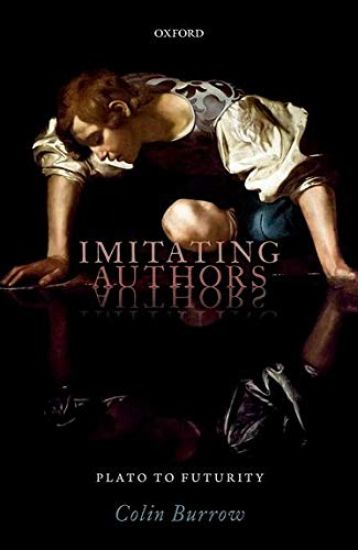
Imitating Authors

Imitating Authors

Colin Burrow

Oxford University Press
2019
sidottu
Imitating Authors is a major study of the theory and practice of imitatio (the imitation of one author by another) from antiquity to the present day. It extends from early Greek texts right up to recent fictions about clones and artificial humans, and illuminates both the theory and practice of imitation. At its centre lie the imitating authors of the English Renaissance, including Ben Jonson and the most imitated imitator of them all, John Milton. Imitating Authors argues that imitation was not simply a matter of borrowing words, or of alluding to an earlier author. Imitators learnt practices from earlier writers. They imitated the structures and forms of earlier writing in ways that enabled them to create a new style which itself could be imitated. That made imitation an engine of literary change. Imitating Authors also shows how the metaphors used by theorists to explain this complex practice fed into works which were themselves imitations, and how those metaphors have come to influence present-day anxieties about imitation human beings and artificial forms of intelligence. It explores relationships between imitation and authorial style, its fraught connections with plagiarism, and how emerging ideas of genius and intellectual property changed how imitation was practised. In refreshing and jargon-free prose Burrow explains not just what imitation was in the past, but how it influences the present, and what it could be in the future. Imitating Authors includes detailed discussion of Plato, Roman rhetorical theory, Virgil, Lucretius, Petrarch, Cervantes, Ben Jonson, Milton, Pope, Wordsworth, Mary Shelley, and Kazuo Ishiguro.
Prosperity

Prosperity

Colin Mayer

Oxford University Press
2021
nidottu
What is business for? Day one of a business course will tell you: it is to maximise shareholder profit. This single idea pervades all our thinking and teaching about business around the world but it is fundamentally wrong, Colin Mayer argues. It has had disastrous and damaging consequences for our economies, environment, politics, and societies. In this urgent call for reform, Prosperity challenges the fundamentals of business thinking. It sets out a comprehensive new agenda for establishing the corporation as a unique and powerful force for promoting economic and social wellbeing in its fullest sense - for customers and communities, today and in the future. First Professor and former Dean of the Säid Business School in Oxford, Mayer is a leading figure in the global discussion about the purpose and role of the corporation. In Prosperity, he presents a radical and carefully considered prescription for corporations, their ownership, governance, finance, and regulation. Drawing together insights from business, law, economics, science, philosophy, and history, he shows how the corporation can realize its full potential to contribute to economic and social wellbeing of the many, not just the few. Prosperity tells us not only how to create and run successful businesses but also how policy can get us there and fix our broken system.
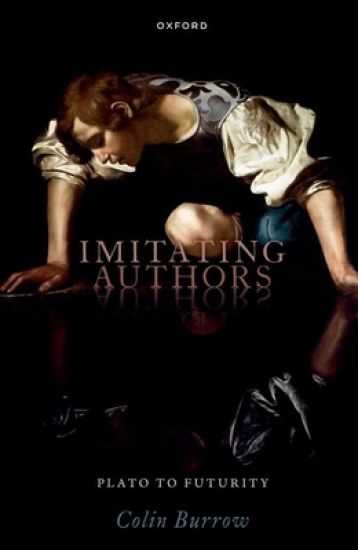
Imitating Authors

Imitating Authors

Colin Burrow

Oxford University Press
2023
nidottu
Imitating Authors is a major study of the theory and practice of imitatio (the imitation of one author by another) from antiquity to the present day. It extends from early Greek texts right up to recent fictions about clones and artificial humans, and illuminates both the theory and practice of imitation. At its centre lie the imitating authors of the English Renaissance, including Ben Jonson and the most imitated imitator of them all, John Milton. Imitating Authors argues that imitation was not simply a matter of borrowing words, or of alluding to an earlier author. Imitators learnt practices from earlier writers. They imitated the structures and forms of earlier writing in ways that enabled them to create a new style which itself could be imitated. That made imitation an engine of literary change. Imitating Authors also shows how the metaphors used by theorists to explain this complex practice fed into works which were themselves imitations, and how those metaphors have come to influence present-day anxieties about imitation human beings and artificial forms of intelligence. It explores relationships between imitation and authorial style, its fraught connections with plagiarism, and how emerging ideas of genius and intellectual property changed how imitation was practised. In refreshing and jargon-free prose Burrow explains not just what imitation was in the past, but how it influences the present, and what it could be in the future. Imitating Authors includes detailed discussion of Plato, Roman rhetorical theory, Virgil, Lucretius, Petrarch, Cervantes, Ben Jonson, Milton, Pope, Wordsworth, Mary Shelley, and Kazuo Ishiguro.
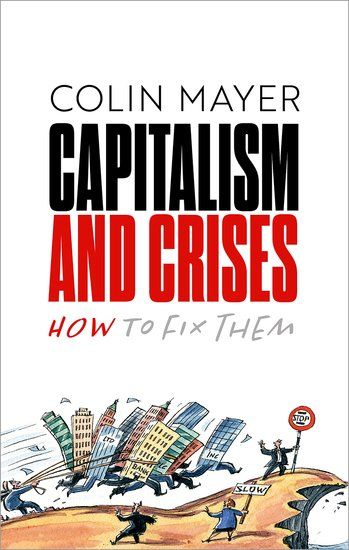
Capitalism and Crises

Capitalism and Crises

Colin Mayer

Oxford University Press
2024
sidottu
The world is encountering multiple crises - climate, droughts, floods, energy, food, and pandemics, to name a few. We have a problem, this is the solution. Capitalism and Crises is about how capitalism can fix them - how it can solve not cause them. The reason why it has caused them is that we have misconceived the nature of our capitalist system. We have failed to understand the key institution at the heart of it - business - and as a result we have allowed it to cause as well as solve problems. This book describes why this has happened and what needs to change to address it: it will take you through how the capitalist system operates, where it fails and why, and it will demonstrate that at the core of the problem is the key driver of capitalism and that is profit - the way in which we resource and reward those who run the system. Currently, profit comes from causing as well as solving problems. It must not, if we are to prevent the problems. Drawing on history, philosophy, psychology, and biology as well economics, law, and finance, Mayer describes what has gone wrong, what needs to change, and how to fix it. He sets out the big challenges that capitalism must address and how it should set about doing that, and discusses how financial institutions should be at the heart of this, and how the public sector can work with the private on a common purpose of solving problems and creating shared prosperity. Capitalism and Crises provides an inspiring and motivational roadmap of how we as practitioners, policymakers, consumers, employees, communities, students, and citizens of the world can together tackle the challenges of the 21st century - to flourish and survive.