Kirjojen hintavertailu. Mukana 12 016 292 kirjaa ja 12 kauppaa.

Kirjahaku

Etsi kirjoja tekijän nimen, kirjan nimen tai ISBN:n perusteella.

1000 tulosta hakusanalla Colin Tudge

Contemporary Politics and Classical Chinese Thought

Contemporary Politics and Classical Chinese Thought

Colin J. Lewis; Jennifer Kling

OXFORD UNIVERSITY PRESS INC
2025
sidottu
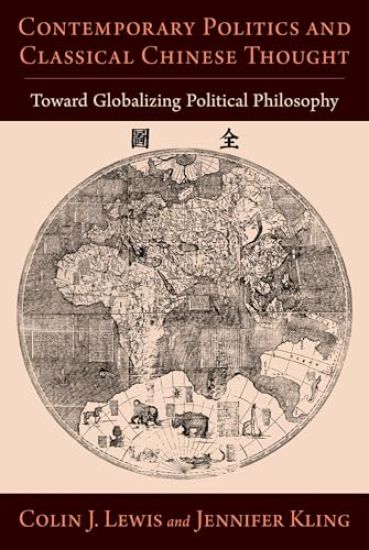
Current approaches to contemporary political philosophy are disproportionately western, and the need for more diverse and global perspectives is urgent. To address this imbalance Colin J. Lewis and Jennifer Kling take up a series of contemporary topics in political philosophy and consider how the application of classical Chinese thought can engender new insights and enable progress on some of the thorniest sociopolitical issues. They argue that classical Chinese political theories and views have much to say that is relevant to our contemporary life, and buttress their argument with case studies. Each chapter takes up a particular contemporary sociopolitical issue, describes standard Western approaches to it, and then applies classical Chinese thought to the task of either re-framing it, or suggesting a novel solution. The book engages with and makes progress on several current sociopolitical issues, including the construction and deconstruction of political narratives, the legal standing of robots, the relationships between people, communities, and the environment, the funding (or defunding) of police, the status of private militias, and the question of justified revolution in liberal democracies, among others. While classical Chinese philosophy has been previously dismissed in some circles as inaccessible or banal, Lewis and Kling argue that, to the contrary, it is a powerful lens through which to view and dissect today's challenges.
Martial Sound

Martial Sound

Colin P. McGuire

OXFORD UNIVERSITY PRESS INC
2024
nidottu
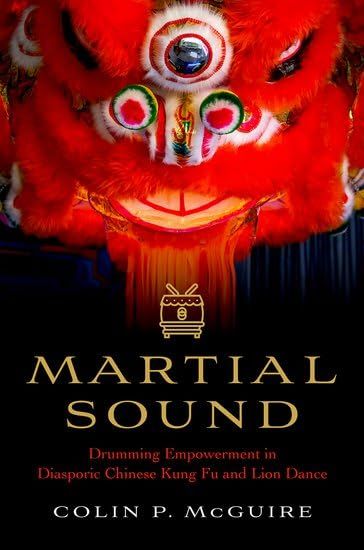
Martial Sound examines the performance and function of music in the martial arts traditions of Chinese Canadians. Author Colin P. McGuire's novel theory of martial sound identifies the ways in which one can hear music as martial arts and listen to hand combat as musicking. In doing so, McGuire both outlines how to discuss fighting rhythms in musical terms and provides a conceptual framework for analyzing how music can function as a form of self-defence. Throughout, McGuire closely studies the gong and drum percussion music that accompany the lion dance and kung fu, all of which are practised together as a single blurred genre by members of the Hong Luck Kung Fu Club in Toronto, Canada. While Hong Luck's history and character are distinctive, the club's practices and approaches are typical of many styles of Southern Chinese martial arts, both in China and abroad. During the eight years of participant observation fieldwork completed for this book, both of Hong Luck's founding masters passed away, marking the end of an era. The first female lion dancers also began performing during the fieldwork period, which reconfigured traditional constructions of gender. Through highlighting recent developments within this community and the diaspora, McGuire shows that while kung fu practitioners have traditionally used their interdisciplinary performances as a ritual to disperse negative energy for patrons, they now extend that martial function to become an empowering performance that challenges a history of race-based discrimination in Canada.
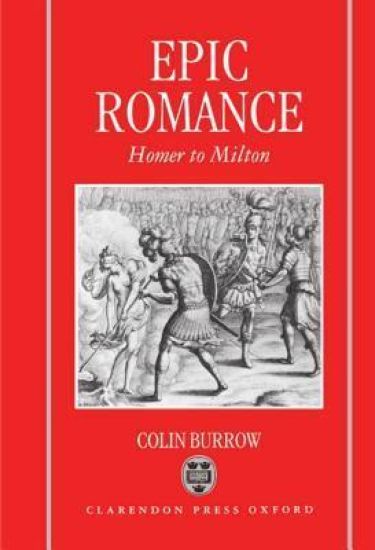
Epic Romance: Homer to Milton

Epic Romance: Homer to Milton

Colin Burrow

Clarendon Press
1993
sidottu
Epic Romance: Homer to Milton presents a comprehensive view of the epic tradition from Homer, through Virgil, Ariosto, Tasso, Spenser, and the host of minor writers who helped create the idiom within which these writers worked, to the idiom within which these writers worked, to the indiviudal authors in historical context link to develop a powerful explanation of how and why the epic changed from Homer to Milton. Dr Burrow shows how the romance hero, whose prime motives are love and pity, emerged from a sequence of reinterpretations of Homer which runs from Virgil's Aeneid and its medieval redactions to Ariosto's Orlando Furioso. Relating the emergence of the romance hero to the digressive, decentred form of romance, the author explores how later writers sought to control the digressive energies of the romance hero and to create a language and form of heroism more like those of classical epic. This analysis leads to a fresh account of the way in which Renaissance writers responded to, and moved tentatively towards, the writing of the past. Arguing against the view that Ariosto, Tasso, Spenser, and Milton were engaged ina battle for mastery over their predecessors, Dr Burrow reveals how they transformed they received intrepreations of past epic in order to draw closer to the narrative forms of their classical forebears.
Collected Essays

Collected Essays

Colin Macleod

Clarendon Press
1996
nidottu
Colin Macleod died in December 1981 at the age of 38. Many regarded him as already one of the most profound interpreters in our times of Greek and Latin literature and ideas; and it was widely felt that his essays should be collected together in a single volume. There are twenty longer essays, including two previously unpublished, on Homer's poetics and on Thucydides' tragic vision, and some dozen shorter pieces. The three most prominent authors are Thucydides, Horace, and Gregory of Nyssa; but Macleod's extraordinary range included Aeschylus, Catullus, Propertius, and Origen, among many others. He left marginal notes towards any second edition, and these have been collected as an appendix. There is also a list of his many book reviews. This volume has a powerful coherence which comes from Macleod's fusion of scrupulous scholarship with a passionately intense search for wisdom in the creations of the past. He sees great writers, of prose and verse, as using myth, history, theology, and rhetoric as access to some understanding of the human condition. Careful readers will find that these essays have within them deeply-felt insights into society, love, suffering, and death.
Deciding What We Watch

Deciding What We Watch

Colin Shaw

Clarendon Press
1999
nidottu
The recent history of broadcasting on both sides of the Atlantic, characterized by a great increase in the number of services on offer to the public, has been brought about by technological advances and economic pressures. This has inevitably affected traditional forms of content regulation. The book explores the moral basis and history of such regulation as it has until now been applied to major issues of taste and decency. These include the protection of children, obscenity and bad language, offences against religious sensibility, `reality' television, and stereotyping. What Should We Watch? considers the different constraints (in the law, cultural customs, and self-regulation) affecting broadcasters in the two societies and the means by which they have responded to them. The book describes, with examples, the operations of compliance regulations and standard controls. It also looks at the impact of the First Amendment on American broadcasting in this area. It looks at the arguments for the practicality of maintaining appropriate forms of restraint into the future. What Should We Watch? poses the question of how divided and diverse societies decide what is permissible to broadcast and how the issue might continue to evolve in the future.
Deciding What We Watch

Deciding What We Watch

Colin Shaw

Clarendon Press
1999
sidottu
The recent history of broadcasting on both sides of the Atlantic, characterized by a great increase in the number of services on offer to the public, has been brought about by technological advances and economic pressures. This has inevitably affected traditional forms of content regulation. The book explores the moral basis and history of such regulation as it has until now been applied to major issues of taste and decency. These include the protection of children, obscenity and bad language, offences against religious sensibility, `reality' television, and stereotyping. Deciding What we Watch? considers the different constraints (in the law, cultural customs, and self-regulation) affecting broadcasters in the two societies and the means by which they have responded to them. The book describes, with examples, the operations of compliance regulations and standard controls. It also looks at the impact of the First Amendment on American broadcasting in this area. It looks at the arguments for the practicality of maintaining appropriate forms of restraint into the future. Deciding What we Watch? poses the question of how divided and diverse societies decide what is permissible to broadcast and how the issue might continue to evolve in the future.
French Fiction in the Mitterrand Years

French Fiction in the Mitterrand Years

Colin Davis; Elizabeth Fallaize

Oxford University Press
2000
nidottu
In the 1980s and 1990s French Fiction has emerged from the towering shadow of the formalist literary debates of the fifties and sixties and has reclaimed the ground of history, or narrative, of the individual self which has been the thrust of artistic endeavour for much of European history. The Author has returned from the dead to entertain and tell stories, as well as to negotiate a path through traumatic experiences such as the legacy of Frances colonial and wartime past, the Holocaust, the spectre of Aids, the labyrinths of desire and personal identity. Colin Davis and Elizabeth Fallaize examine some of the most popular and some of the most challenging of texts which emerged during François Mitterrand's presidency of France (1981-1995) and relate them to the dominant literary and cultural trends of the period. The book will appeal to students at all levels who are engaged in courses in twentieth-century fiction and to readers with an interest in contemporary French culture.
French Fiction in the Mitterrand Years

French Fiction in the Mitterrand Years

Colin Davis; Elizabeth Fallaize

Oxford University Press
2000
sidottu
In the 1980s and 1990s French Fiction has emerged from the towering shadow of the formalist literary debates of the fifties and sixties and has reclaimed the ground of history, or narrative, of the individual self which has been the thrust of artistic endeavour for much of European history. The Author has returned from the dead to entertain and tell stories, as well as to negotiate a path through traumatic experiences such as the legacy of Frances colonial and wartime past, the Holocaust, the spectre of Aids, the labyrinths of desire and personal identity. Colin Davis and Elizabeth Fallaize examine some of the most popular and some of the most challenging of texts which emerged during François Mitterrand's presidency of France (1981-1995) and relate them to the dominant literary and cultural trends of the period. The book will appeal to students at all levels who are engaged in courses in twentieth-century fiction and to readers with an interest in contemporary French culture.
The Moravian Church in England, 1728-1760

The Moravian Church in England, 1728-1760

Colin Podmore

Clarendon Press
1998
sidottu
The effects of the great Evangelical Revival in eighteenth-century England were felt throughout the world, not least in America. It has long been accepted that the Revival owed much of its initial impetus to the Moravian Church, but previous accounts of the Moravians' role have been inadequate and overly dependent on Wesleyan sources. Colin Podmore uses original material, from German as well as British archives to dispel common misunderstandings about the Moravians, and to reveal that their influence was much greater than has previously been acknowledged. Dr Podmore discusses what motivated people to join the Church, analyses the Moravians' changing relationships with John Wesley and George Whitefield, and shows how Anglican bishops responded to the Moravians' successive ecumenical stategies. His analysis of the successful campaign to secure state recognition (granted in 1749) sheds light on the inner workings of the Hanoverian parliament. In conclusion, he examines how acclaim quickly turned to ridicule in a crisis of unpopularity which was to affect the Moravian Church for a generation.
The Diamond Ring

The Diamond Ring

Colin Newbury

Clarendon Press
1989
sidottu
This is a history of the production and marketing of diamonds from the period of the `rush' to Kimberley and the rise of De Beers to the formation of the Central Selling Organization by South African producers and London and South African merchants. Based on a wide variety of original sources from public and mining company archives, it is both a business and a political study of a South African monopoly which became an international cartel. The Diamond Ring departs from previous histories by emphasizing the key role of the merchants in financing and organizing the trade in opposition to the South African state, as each struggled to gain control of production in the 1920s and 1930s. It explains the reasons for state interest in diamond production and the eventual co-operation of politicians, officials, and diamond magnates in regulating supply and sales. It includes much new material on the ways in which the British government strengthened the hand of the Diamond Syndicate and the Diamond Corporation to maintain and extend central selling beyond South Africa to other states - Zaire, Angola, Ghana, and Sierra Leone - before independence, as the `Ring' expanded into a world-wide brokerage based in London.
Class, Ethnicity, and Community in Southern Mexico

Class, Ethnicity, and Community in Southern Mexico

Colin Clarke

Oxford University Press
2000
sidottu
The state of Oaxaca has been studied intensively by archaeologists, historians, and anthropologists, but this is the first comprehensive overview of rural communities in the twentieth century. The study is rooted in the colonial and post-independence periods; but the text concentrates primarily on the post-revolutionary period, and on the land reform which allowed peasantries to be reconstituted in the lowland areas of the state, as a complement to the traditional peasantries which still existed on communal lands at high altitudes. Peasant lifestyles and production systems are examined, in particular to distinguish between those activities which are subsistence orientated, and those which are geared to the market. In the last thirty years rural life has been transformed by improved communications, and by services provided by the federal state, but above all by migration to Oaxaca City, other Mexican cities, and the USA. The outcome has been the emergence of class differences at the level of the community; the development of ethnic identities, based on language and regional differences; and the emergence of opposition to the hegemony of the party of government, the PRI. The wide range of issues under discussion will make this volume of interest to geographers, historians, anthropologists, and those involved in development studies.
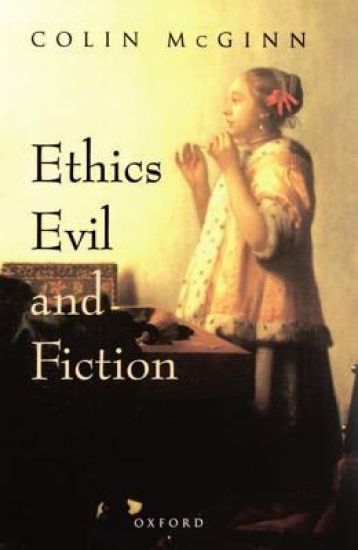
Ethics, Evil, and Fiction

Ethics, Evil, and Fiction

Colin McGinn

Clarendon Press
1997
sidottu
Ethics, Evil, and Fiction brings together moral philosophy and literary analysis in a way that offers original new insights for both. Its central aim is to enrich the domain of moral reflection, by showing the value of literary texts as sources of moral illumination. Colin McGinn starts by setting out an uncompromisingly realist ethical theory, arguing that morality is an area of objective truth and genuine knowledge. He goes on to address such subjects as the nature of goodness, evil character, and the meaning of monstrosity, in the context of an aesthetic theory of virtue, which maintains that goodness of character is the same thing as beauty of soul. Works discussed include Billy Budd, Lolita, The Picture of Dorian Gray, and Frankenstein; and McGinn draws upon examples from film and painting as well as literature. The originality of his approach, the clarity and forthrightness of his writing, and his conviction that fiction and philosophy have much enlightenment to offer each other, make this a compelling and fascinating book.
Knowledge and Reality

Knowledge and Reality

Colin McGinn

Clarendon Press
1999
sidottu
Knowledge and Reality brings together a selection of Colin McGinn's philosophical essays from the 1970s to the 1990s, whose unifying theme is the relation between the mind and the world. The essays range over a set of prominent topics in contemporary philosophy, including the analysis of knowledge, the a priori, necessity, possible worlds, realism, mental representation, appearance and reality, and colour. McGinn has written a new postscript to each essay, placing it in its philosophical context by sketching the background against which it was written, explaining its relations to other notable work, and offering his current reflections on the topic. The volume thus traces the development of McGinn's ideas and their role in some central philosophical debates. Seen together the essays offer a many-sided defence of realism, while emphasizing the epistemological price that realism exacts.
Ethics, Evil, and Fiction

Ethics, Evil, and Fiction

Colin McGinn

Clarendon Press
1999
nidottu
Ethics, Evil, and Fiction brings together moral philosophy and literary analysis in a way that offers original new insights for both. Its central aim is to enrich the domain of moral reflection, by showing the value of literary texts as sources of moral illumination. Colin McGinn starts by setting out an uncompromisingly realist ethical theory, arguing that morality is an area of objective truth and genuine knowledge. He goes on to address such subjects as the nature of goodness, evil character, and the meaning of monstrosity, in the context of an aesthetic theory of virtue, which maintains that goodness of character is the same thing as beauty of soul. Works discussed include Billy Budd, Lolita, The Picture of Dorian Gray, and Frankenstein; and McGinn draws upon examples from film and painting as well as literature. The originality of his approach, the clarity and forthrightness of his writing, and his conviction that fiction and philosophy have much enlightenment to offer each other, make this a compelling and fascinating book. 'A book which I hope will start a new fashion . . .it has all the qualities modern philosophical writing tends to lack. I found it substantial, absorbing and relevant.' Times Higher Education Supplement
The Subjective View

The Subjective View

Colin McGinn

Oxford University Press
1983
nidottu
This book investigates subjective and objective representations of the world. Analogies between secondary qualities and indexical thoughts are developed, and subjective representations are argued to be ineliminable.
Hume's Problem

Hume's Problem

Colin Howson

Clarendon Press
2000
sidottu
Colin Howson offers a solution to one of the central, unsolved problems of Western philosophy, the problem of induction. In the mid-eighteenth century David Hume argued that successful prediction tells us nothing about the truth of the predicting theory. No matter how many experimental tests a hypothesis passes, nothing can be legitimately inferred about its truth or probable truth. But physical theory routinely predicts the values of observable magnitudes to many places of decimals and within very small ranges of error. The chance of this sort of predictive success without a true theory seems so remote that the possibility should be dismissed. This suggests that Hume's argument must be wrong; but there is still no consensus on where exactly the flaw in the argument lies. Howson argues that there is no flaw, and examines the implications of this disturbing conclusion for the relation between science and its empirical base.
Hume's Problem

Hume's Problem

Colin Howson

Clarendon Press
2003
nidottu
Colin Howson offers a solution to one of the central, unsolved problems of Western philosophy, the problem of induction. In the mid-eighteenth century David Hume argued that successful prediction tells us nothing about the truth of the predicting theory. No matter how many experimental tests a hypothesis passes, nothing can be legitimately inferred about its truth or probable truth. But physical theory routinely predicts the values of observable magnitudes to many small places of decimals and within very small ranges of error. The chance of this sort of predictive success without a true theory seems so remote that the possibility should be dismissed. This suggests that Hume's argument must be wrong; but there is still no consensus on where exactly this flaw lies. Howson argues that there is no flaw, and examines the implications of this disturbing conclusion for relation between science and its empirical base.
The Papal Monarchy

The Papal Monarchy

Colin Morris

Clarendon Press
1991
nidottu
The two centuries covered in this volume were among the most creative in the history of the Church. Colin Morris charts the emergence of much that is considered characteristic of European culture and religion, including universities and commercial cities, the crusades, the friars, chivalry, marriage, and church architecture. In all these developments, the Roman Church played an important and often fundamental role. A re-evaluation of that role is now particularly apt given the dissolution of Christendom in its old form witnessed by today's generation.
The Sepulchre of Christ and the Medieval West

The Sepulchre of Christ and the Medieval West

Colin Morris

Oxford University Press
2005
sidottu
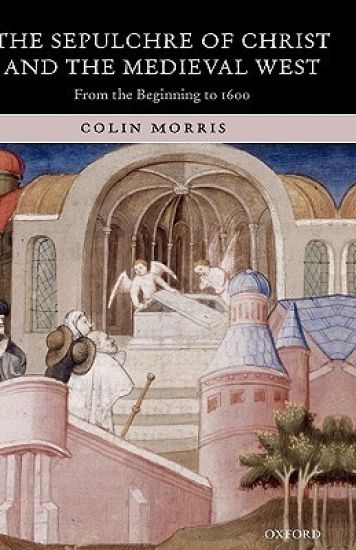
The tomb of Christ at Jerusalem was a vital influence in the making of Western Europe. Pilgrimage there influenced the development of society and its structures. The desire to 'bring the Sepulchre to the West' in copies or memorials shaped art and religion, while the ambition to control Christ's tomb was a central objective of the crusades. Western Europe responded to the loss of Jerusalem by creating a new pilgrimage to the East, by making kingdoms 'holy lands' for their subjects, and by creating new pilgrim centres at home. This book brings together social, political, and religious themes often considered in isolation.