Kirjojen hintavertailu. Mukana 11 699 587 kirjaa ja 12 kauppaa.

Kirjahaku

Etsi kirjoja tekijän nimen, kirjan nimen tai ISBN:n perusteella.

1000 tulosta hakusanalla Conrad Mbewe

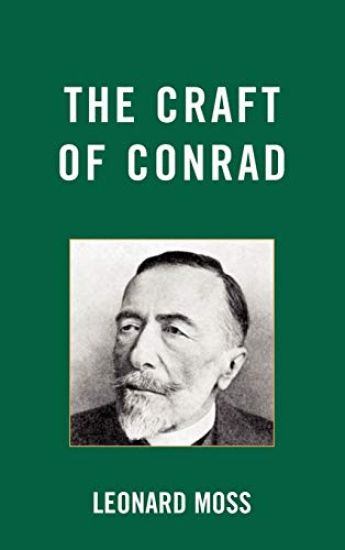
The Craft of Conrad

The Craft of Conrad

Leonard Moss

Lexington Books
2010
sidottu
Driven by his concern for the tortuous human pursuit of “ideal values,” Joseph Conrad sometimes tells more than he shows. He indulged his talent for philosophical speculation, and critics usually follow that lead. They fix their attention on broad themes (imperialism, nihilism, etc.), with only passing reference to literary strategies. But fiction is not philosophy. This study, rather than rehash the “big ideas” that preoccupy most commentators, focuses on technique, Conrad’s ingenious variations on a recurring narrative plan animated by images mingling light with darkness and by exhilarating rhetoric. Paradox shapes the narrative plan, the images, and the rhetoric. The story “design” unfolds a test of manhood with ironic consequences; characters oscillate between impulsive desires and elevated moral convictions, degrading the shadowy standard they desperately try to enact; the rhetoric proposes certainties and yet uncovers negations, vacillations, and contradictions. As one of Shakespeare’s characters says, “I would by contraries execute all things.” Appropriately, Conrad’s images bring together, or alternate between, clarity and obscurity. The geographical settings are often exotic, but nature’s most “common everyday” visual facts, light and darkness, become the author’s chief pictorial reference. Conrad exploits the coupling of “sunshine and shadows” not only as antagonists but also, surprisingly, as paradoxical partners. That coupling may be his most original artistic contribution.
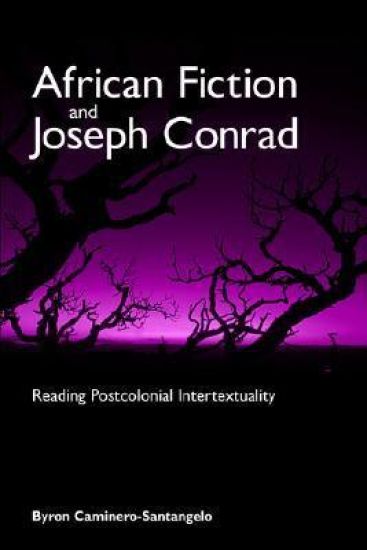
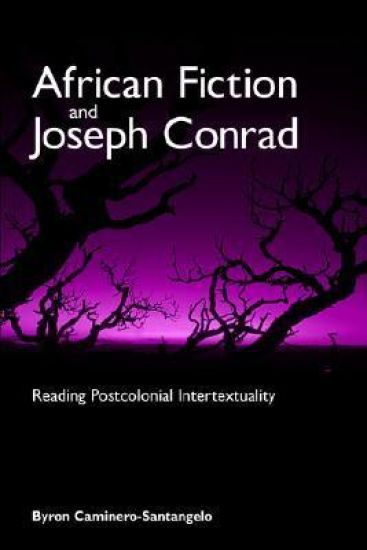
African Fiction and Joseph Conrad

African Fiction and Joseph Conrad

Byron Caminero-Santangelo

State University of New York Press
2004
sidottu
Interrogates the "writing back to the center" approach to intertextuality and explores alternatives to it.By exploring the relationships between African novels and Joseph Conrad's fiction, this book examines the many discontinuous functions postcolonial revisions of "the canon" can serve. While contemporary literary studies too often represent such revisions merely as a means for postcolonial writers to challenge a colonial worldview, Caminero-Santangelo explores how African authors engage with a wide range of historically specific ideologies generated by particular histories of national independence and the development of postcolonial nations. The shift in focus away from a single colonial moment enables Caminero-Santangelo to detect a complex interweaving of convergence and divergence between Conrad and African writers such as Chinua Achebe, Ngugi wa Thiong'o, Nadine Gordimer, Tayeb Salih, and Ama Ata Aidoo, who use Conradian intertexts to intervene in repressive situations in late-twentieth-century Africa. By emphasizing the need to contextualize acts of writing and rewriting in precise historical terms, the author points to the limitations-even the dangers-of the standard cultural binary (Western-colonial/African-postcolonial) and the static dialectic of colonial domination and postcolonial resistance embraced by much recent cultural criticism.
African Fiction and Joseph Conrad

African Fiction and Joseph Conrad

Byron Caminero-Santangelo

State University of New York Press
2004
pokkari
Interrogates the "writing back to the center" approach to intertextuality and explores alternatives to it.By exploring the relationships between African novels and Joseph Conrad's fiction, this book examines the many discontinuous functions postcolonial revisions of "the canon" can serve. While contemporary literary studies too often represent such revisions merely as a means for postcolonial writers to challenge a colonial worldview, Caminero-Santangelo explores how African authors engage with a wide range of historically specific ideologies generated by particular histories of national independence and the development of postcolonial nations. The shift in focus away from a single colonial moment enables Caminero-Santangelo to detect a complex interweaving of convergence and divergence between Conrad and African writers such as Chinua Achebe, Ngugi wa Thiong'o, Nadine Gordimer, Tayeb Salih, and Ama Ata Aidoo, who use Conradian intertexts to intervene in repressive situations in late-twentieth-century Africa. By emphasizing the need to contextualize acts of writing and rewriting in precise historical terms, the author points to the limitations-even the dangers-of the standard cultural binary (Western-colonial/African-postcolonial) and the static dialectic of colonial domination and postcolonial resistance embraced by much recent cultural criticism.
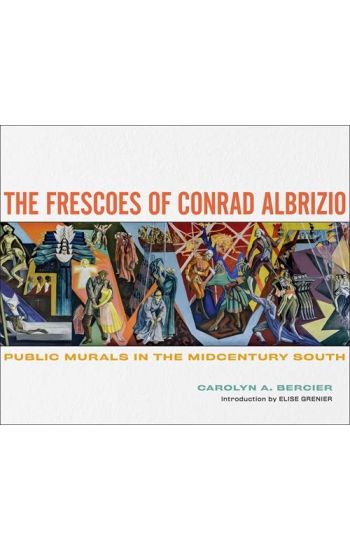
The Frescoes of Conrad Albrizio

The Frescoes of Conrad Albrizio

Carolyn A. Bercier

Louisiana State University Press
2019
sidottu
The artist Conrad Albrizio (1894- 1973), a New York City native who studied internationally, made his home in New Orleans for more than a half century. To the people of Louisiana and Alabama, he bestowed the lasting gift of large-scale public frescoes, a form he championed long after the general popularity of communal art waned. From regional realism in his New Deal- commissioned works of the 1930s to his abstract-influenced, socially conscious interpretations of the 1950s, Albrizio's creations exemplify the midcentury period while showcasing the ancient technique of fresco. In this lavishly illustrated volume, Carolyn A. Bercier analyzes Albrizio's frescoes against the backdrop of the artist's life. In her introduction, Elise Grenier, who has restored several of Albrizio's murals, acquaints readers with the demands of painting in fresco, a method also employed by Albrizio's contemporaries the Mexican muralists. By 1936, Albrizio had completed six fresco panels in the Louisiana State Capitol and his first federally funded mural, in the DeRidder, Louisiana, post office. That same year he joined the faculty of Louisiana State University's new department of art, where his students depicted him within their murals in Allen Hall. Albrizio continued his fresco commissions for another eighteen years, including scenes in the post office in Russellville, Alabama; the State Fair Exhibits Building in Shreveport, Louisiana; the Capitol Annex Building in Baton Rouge; and the parish courthouse in New Iberia, Louisiana. His culminating accomplishments are an epic cycle portraying shipping, the elements, and the constellations in the lobby of the Waterman Building (now Wachovia Building) in Mobile, and a monumental rendition of Louisiana's history in the New Orleans Union Passenger Terminal. Both visually lush and richly informative, The Frescoes of Conrad Albrizio pays deserved homage and brings fresh awareness to the under-recognized public murals of a passionate and prolific artist of the twentieth century.
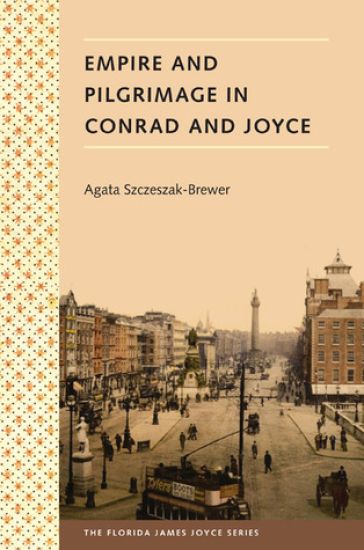
Empire and Pilgrimage in Conrad and Joyce

Empire and Pilgrimage in Conrad and Joyce

Agata Szczeszak-Brewer

University Press of Florida
2010
sidottu
Though they were born a generation apart, Joseph Conrad and James Joyce shared similar life experiences and similar literary preoccupations. Both left their home countries at a relatively young age and remained lifelong expatriates.Empire and Pilgrimage in Conrad and Joyce offers a fresh look at these two modernist writers, revealing how their rejection of organized religion and the colonial presence in their native countries allowed them to destabilize traditional notions of power, colonialism, and individual freedom in their texts. Throughout, Agata Szczeszak-Brewer ably demonstrates the ways in which these authors grapple with the same issues--the grand narrative, paralysis, hegemonic practices, the individual's pilgrimage toward unencumbered self-definition--within the rigid bounds of imperial ideologies and myths. The result is an engaging and enlightening investigation of the writings of Conrad and Joyce and of the larger literary movement to which they belonged.
Empire and Pilgrimage in Conrad and Joyce

Empire and Pilgrimage in Conrad and Joyce

Agata Szczeszak-Brewer; Sebastian D. G. Knowles

University Press of Florida
2017
nidottu
Though they were born a generation apart, Joseph Conrad and James Joyce shared similar life experiences and similar literary preoccupations. Both left their home countries at a relatively young age and remained lifelong expatriates.Empire and Pilgrimage in Conrad and Joyce offers a fresh look at these two modernist writers, revealing how their rejection of organized religion and the colonial presence in their native countries allowed them to destabilize traditional notions of power, colonialism, and individual freedom in their texts. Throughout, Agata Szczeszak-Brewer ably demonstrates the ways in which these authors grapple with the same issues--the grand narrative, paralysis, hegemonic practices, the individual's pilgrimage toward unencumbered self-definition--within the rigid bounds of imperial ideologies and myths. The result is an engaging and enlightening investigation of the writings of Conrad and Joyce and of the larger literary movement to which they belonged.
Weary Sons of Conrad

Weary Sons of Conrad

Brenda Cooper

Peter Lang Publishing Inc
2002
nidottu
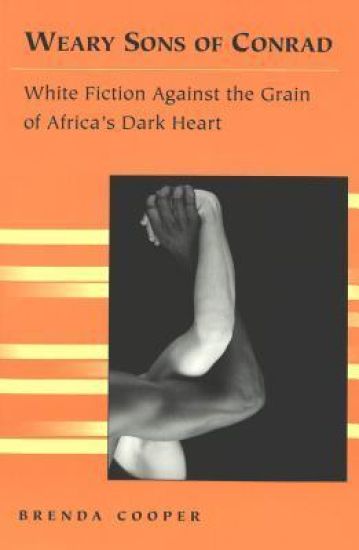
"Weary Sons of Conrad" poses the question, how is Africa represented in some late twentieth-century European and North American fiction written by white men? Its contribution is to unearth a rich treasure of such fiction that opposes imperialism and struggles with patriarchy and gender stereotypes. These writers go to battle against the stranglehold of myths about Africa, its lands, and its people, which are deeply embedded in the language itself. The writers struggle for new tongues and original ways of telling their stories but cannot be totally free of history, family, language, and tradition. Written in a lively, accessible style, this book is of great interest to a broad range of readers in the fields of postcolonial literary theory, gender, and cultural and African studies.
Reminiscences of Conrad S. Babcock

Reminiscences of Conrad S. Babcock

University of Missouri Press
2012
sidottu
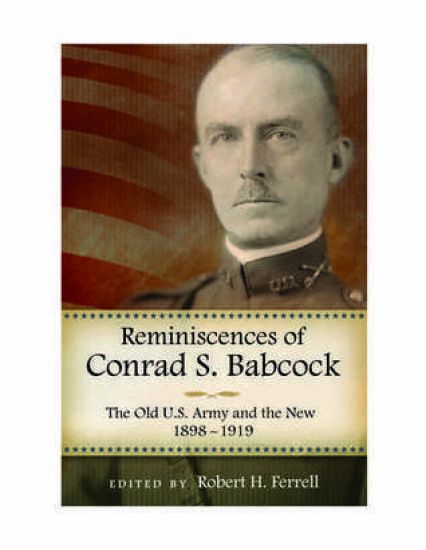
The son of an army officer, Conrad S. Babcock graduated from West Point in 1898, just in time for the opening of the Spanish-American War. Because of his father's position, he managed to secure a place in the force that Major General Wesley Merritt led to Manila to secure the city. The Philippine Insurrection, as Americans described it, began shortly after he arrived. What Babcock observed in subsequent months and years, and details in his memoir, was the remarkable transition the U.S. Army was undergoing. From after the Civil War until just before the Spanish War, the army amounted to 28,000 men. It increased to 125,000, tiny compared with those of the great European nations of France and Germany, but the great change in the army came after its arrival in France in the summer of 1918, when the German army compelled the U.S. to change its nineteenth-century tactics. Babcock's original manuscript has been shortened by Robert H. Ferrell into eight chapters which illustrate the tremendous shift in warfare in the years surrounding the turn of the century. The first part of the book describes small actions against Filipinos and such assignments as taking a cavalry troop into the fire-destroyed city of San Francisco in 1906 or duty in the vicinity of Yuma in Arizona when border troubles were heating up with brigands and regular troops. The remaining chapters, beginning in 1918, set out the battles of Soissons (July 18-22) and Saint-Mihiel (September 12-16) and especially the immense battle of the Meuse-Argonne (September 26-November 11), the largest (1.2 million troops involved) and deadliest (26,000 men killed) battle in all of American history. By the end of his career, Babcock was an adroit battle commander and an astute observer of military operations. Unlike most other officers around him, he showed an ability and willingness to adapt infantry tactics in the face of recently developed technology and weaponry such as the machine gun. When he retired in 1937 and began to write his memoirs, another world war had begun, giving additional context to his observations about the army and combat over the preceding forty years. Until now, Babcock's account has only been available in the archives of the Hoover Institution, but with the help of Ferrell's crisp, expert editing, this record of army culture in the first decades of the twentieth century can now reach a new generation of scholars.
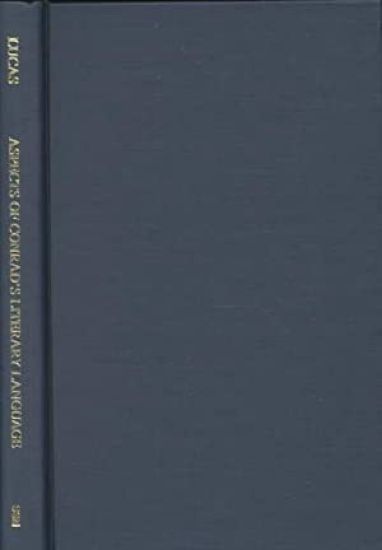
Aspects of Conrad's Literary Language

Aspects of Conrad's Literary Language

Michael Lucas

East European Monographs
2000
sidottu
Why did Joseph Conrad avoid using English, except when it came to the arduous task of writing fiction? And how do we account for his extensive "borrowing" from French writers? This psycholinguistic examination delves into the creative mind of Conrad in an attempt to decipher his learning and use of three languages, Polish, French, and English. Following a trail of syntactical eccentricities and considerable stylistic variations, Lucas shows how these features interact to produce Conrad's idiosyncratic style.
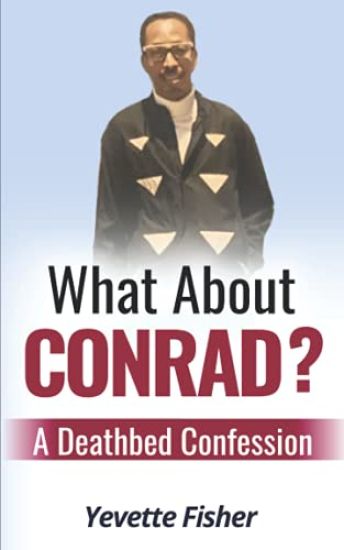
What About Conrad?

What About Conrad?

Yevette Fisher

Globeshakers, LLC
2021
pokkari
"What About Conrad," recounts the fascinating testimony of Yevette Fisher's endearing friendship with a co-worker named Conrad. This narrative reveals the lighthearted affection between them that is comparable to the care one feels toward a sibling. While multitasking marriage, parenting, and a new career; their relationship drifted apart apart over the years. Yevette always pondered over, 'What About Conrad' A mutual friend of theirs contacted Yevette, which prompted her to check on Conrad. The AIDS epidemic recently had surfaced. Yevette soon discovered her good friend Conrad was fighting for his life. As the story unfolds, the following events convey a beautiful reflection of God's love and mercy. Yevette was commissioned by God to reunite with her dear friend and lead him to Christ. This act of faith and courage afforded Conrad to enter into the Kingdom of God (Acts 2:38).
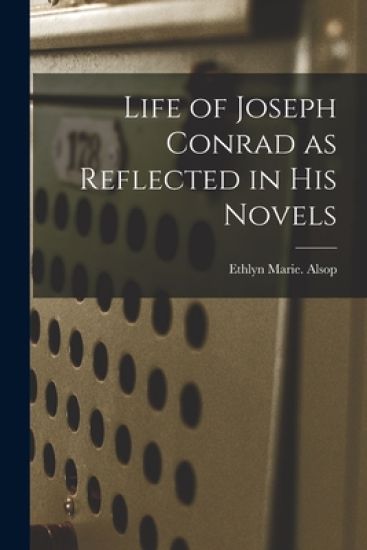
Life of Joseph Conrad as Reflected in His Novels

Life of Joseph Conrad as Reflected in His Novels

Ethlyn Marie Alsop

Hassell Street Press
2021
nidottu
This work has been selected by scholars as being culturally important and is part of the knowledge base of civilization as we know it.This work is in the public domain in the United States of America, and possibly other nations. Within the United States, you may freely copy and distribute this work, as no entity (individual or corporate) has a copyright on the body of the work.Scholars believe, and we concur, that this work is important enough to be preserved, reproduced, and made generally available to the public. To ensure a quality reading experience, this work has been proofread and republished using a format that seamlessly blends the original graphical elements with text in an easy-to-read typeface.We appreciate your support of the preservation process, and thank you for being an important part of keeping this knowledge alive and relevant.
The Joseph Conrad Family.

The Joseph Conrad Family.

Martha E. Conrad 1880- Graber

Hassell Street Press
2021
nidottu
This work has been selected by scholars as being culturally important and is part of the knowledge base of civilization as we know it.This work is in the public domain in the United States of America, and possibly other nations. Within the United States, you may freely copy and distribute this work, as no entity (individual or corporate) has a copyright on the body of the work.Scholars believe, and we concur, that this work is important enough to be preserved, reproduced, and made generally available to the public. To ensure a quality reading experience, this work has been proofread and republished using a format that seamlessly blends the original graphical elements with text in an easy-to-read typeface.We appreciate your support of the preservation process, and thank you for being an important part of keeping this knowledge alive and relevant.