Kirjojen hintavertailu. Mukana 12 016 292 kirjaa ja 12 kauppaa.

Kirjahaku

Etsi kirjoja tekijän nimen, kirjan nimen tai ISBN:n perusteella.

1000 tulosta hakusanalla D C Gilbert

Shelters, Shacks and Shanties

Shelters, Shacks and Shanties

D C Beard

Dover Publications Inc.
2004
nidottu
Practical, hands-on guide by one of the founders of the Boy Scouts of America contains a wealth of information and advice on how to build everything from a bark teepee and tree-top house to a log cabin and beaver mat hut. Over 332 illustrations and clear, easy-to-follow text make this an invaluable book.
Modern Interest Rate Theory

Modern Interest Rate Theory

D.C. Brody; L.P. Hughston

Cambridge University Press
2020
sidottu
The theory of interest rates is presented here from a modern perspective, along with a variety of applications. The book begins with an exposition of the probabilistic foundations needed later. The mathematical framework develoepd is sufficiently rich to cover a wide variety of applicable financial models. The theory of asset pricing is developed from the modern pricing kernel viewpoint rather than the usual hedging approach. Various types of interest rates, the associated market conventions and interest rate derivative structures can then be tackled.
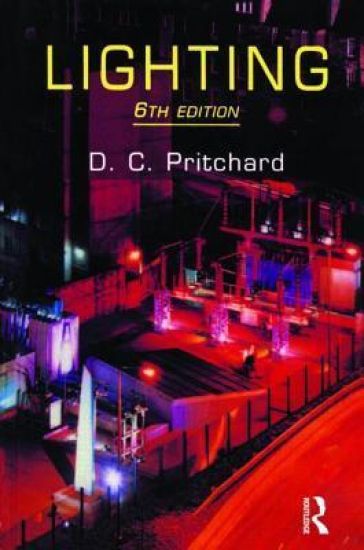
Lighting

Lighting

D.C. Pritchard

Routledge
1999
nidottu
Lighting, now in its sixth edition, is the standard text on the principles and practice of lighting interiors and exteriors. The book introduces all the main principles of light and colour, along with the design of general lighting schemes. It complies with the CIBSE lighting code and guides, covers the main calculations that a lighting designer needs to do and includes worked examples.The book starts with the theory of light and how it is perceived by the eye. It looks at the units used and the subjective effect of colour. The characteristics of various types of lamp are described along with luminaires (the equipment that contains the lamps). The effects of daylight on light levels indoors are described before going on to look at the design of general lighting schemes. The book concludes with chapters looking at lighting for specific applications including roadway lighting, floodlighting, and the interior of specific building types.
Japanese Enthronement Ceremonies

Japanese Enthronement Ceremonies

D.C. Holtom

Kegan Paul
1996
sidottu
First Published in 1996. This volume contains the finest and most detailed descriptions of the Japanese enthronement ceremonies and imperial regalia available in the English language. Privately printed in 1928, it has never before been widely available. In an approach that combines history and anthropology, it presents meticulous description of the rituals, costumes, offerings and buildings in which the ceremonies - mostly enacted in private - are held.
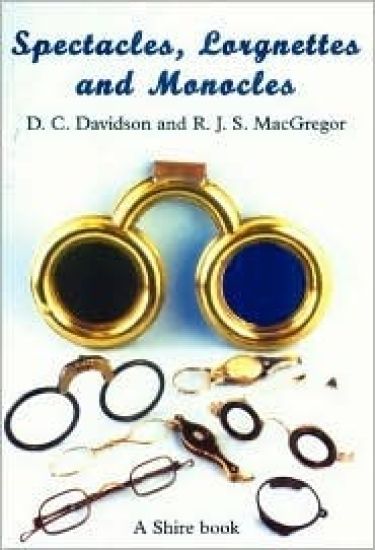
Spectacles, Lorgnettes and Monocles

Spectacles, Lorgnettes and Monocles

D.C. Davidson

Shire Publications
2002
nidottu
Spectacles have been used since the thirteenth century, at first by the few people who needed to read, such as churchmen and clerks. This book traces the development and use of eyeglasses from the fourteenth century onwards. In the eighteenth century lorgnettes and quizzing glasses became elegant accessories of upper-class dress and fashion began to influence design. This new edition is illustrated with many new colour photographs.
Large-Scale Regional Water Resources Planning

Large-Scale Regional Water Resources Planning

D.C. Major; S.E. Schwarz

Springer
1990
sidottu
While creativity plays an important role in the advancement of computer science, great ideas are built on a foundation of practical experience and knowledge. This book presents programming techniques which will be useful in both AI projects and more conventional software engineering endeavors. My primary goal is to enter­ tain, to introduce new technologies and to provide reusable software modules for the computer programmer who enjoys using programs as models for solutions to hard and interesting problems. If this book succeeds in entertaining, then it will certainly also educate. I selected the example application areas covered here for their difficulty and have provided both program examples for specific applications and (I hope) the method­ ology and spirit required to master problems for which there is no obvious solution. I developed the example programs on a Macintosh ™ using the Macintosh Common LISP ™ development system capturing screen images while the example programs were executing. To ensure portability to all Common LISP environments, I have provided a portable graphics library in Chapter 2. All programs in this book are copyrighted by Mark Watson. They can be freely used in any free or commercial software systems if the following notice appears in the fine print of the program's documentation: "This program contains software written by Mark Watson." No royalties are required. The program miniatures contained in this book may not be distributed by posting in source code form on public information networks, or in printed form without my written permission.
Universal Grammar and American Sign Language
AMERICAN SIGN LANGUAGE American Sign Language (ASL) is the visual-gestural language used by most of the deaf community in the United States and parts of Canada. On the surface, this language (as all signed languages) seems radically different from the spoken languages which have been used to formulate theories of linguistic princi­ ples and parameters. However, the position taken in this book is that when the surface effects of modality are stripped away, ASL will be seen to follow many of the patterns proposed as universals for human language. If these theoretical constructs are meant to hold for language in general, then they should hold for natural human language in any modality; and ifASL is such a natural human language, then it too must be accounted for by any adequate theory of Universal Grammar. For this rea­ son, the study of ASL can be vital for proposed theories of Universal Grammar. Recent work in several theoretical frameworks of syntax as well as phonology have argued that indeed, ASL is such a lan­ guage. I will assume then, that principles of Universal Gram­ mar, and principles that derive from it, are applicable to ASL, and in fact that ASL can serve as one of the languages which test Universal Grammar. There is an important distinction to be drawn, however, be­ tween what is called here 'American Sign Language', and other forms of manual communication.
Universal Grammar and American Sign Language
AMERICAN SIGN LANGUAGE American Sign Language (ASL) is the visual-gestural language used by most of the deaf community in the United States and parts of Canada. On the surface, this language (as all signed languages) seems radically different from the spoken languages which have been used to formulate theories of linguistic princi­ ples and parameters. However, the position taken in this book is that when the surface effects of modality are stripped away, ASL will be seen to follow many of the patterns proposed as universals for human language. If these theoretical constructs are meant to hold for language in general, then they should hold for natural human language in any modality; and ifASL is such a natural human language, then it too must be accounted for by any adequate theory of Universal Grammar. For this rea­ son, the study of ASL can be vital for proposed theories of Universal Grammar. Recent work in several theoretical frameworks of syntax as well as phonology have argued that indeed, ASL is such a lan­ guage. I will assume then, that principles of Universal Gram­ mar, and principles that derive from it, are applicable to ASL, and in fact that ASL can serve as one of the languages which test Universal Grammar. There is an important distinction to be drawn, however, be­ tween what is called here 'American Sign Language', and other forms of manual communication.

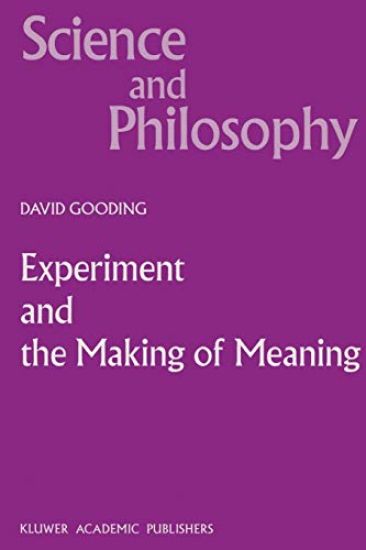
Experiment and the Making of Meaning
. . . the topic of 'meaning' is the one topic discussed in philosophy in which there is literally nothing but 'theory' - literally nothing that can be labelled or even ridiculed as the 'common sense view'. Putnam, 'The Meaning of Meaning' This book explores some truths behind the truism that experimentation is a hallmark of scientific activity. Scientists' descriptions of nature result from two sorts of encounter: they interact with each other and with nature. Philosophy of science has, by and large, failed to give an account of either sort of interaction. Philosophers typically imagine that scientists observe, theorize and experiment in order to produce general knowledge of natural laws, knowledge which can be applied to generate new theories and technologies. This view bifurcates the scientist's world into an empirical world of pre-articulate experience and know­ how and another world of talk, thought and argument. Most received philosophies of science focus so exclusively on the literary world of representations that they cannot begin to address the philosophical problems arising from the interaction of these worlds: empirical access as a source of knowledge, meaning and reference, and of course, realism. This has placed the epistemological burden entirely on the predictive role of experiment because, it is argued, testing predictions is all that could show that scientists' theorizing is constrained by nature. Here a purely literary approach contributes to its own demise. The epistemological significance of experiment turns out to be a theoretical matter: cruciality depends on argument, not experiment.