Relativität ist ein Teil der Allgemeinbildung – davon ist der Autor N. David Mermin überzeugt, denn schließlich geht es um die Zeit, eine Sache, die nun wirklich jeder kennt. Mermins Zugang zum Thema ist sehr einfallsreich, aber dennoch exakt und vollständig. Diese gut lesbare Vorstellung der Grundgedanken von Albert Einsteins Relativitätstheorie richtet sich an alle, die sich noch zumindest vage an die Mathematik der Mittelstufe erinnern (quadratische Gleichungen und rechtwinklige Dreiecke reichen völlig aus). Klar, lebendig und unkompliziert spricht dieses Buch neugierige Leserinnen und Leser aus allen Fächern und Berufen an, einschließlich Physiker, die von Mermins originellen Ansätzen positiv überrascht sein werden.
Crossroads of Cuisine provides a history of foods, and foodways in terms of exchanges taking place in Central Asia and in surrounding areas such as China, Korea or Iran during the last 5000 years, stressing the manner in which East and West, West and East grew together through food. It provides a discussion of geographical foundations, and an interlocking historical and cultural overview going down to the present day, with a comparative country by country survey of foods and recipes. An ethnographic photo essay embracing all parts of the book binds it all together, and helps make topics discussed vivid and approachable. The book is important for explaining key relationships that have not always been made clear in past scholarship.
The Huihui Yaofang was an encyclopaedia of Near Eastern medicine compiled under the Mongol Yuan Dynasty for the benefit of themselves and Chinese medical establishments. We translate the surviving material and context it in the history and ethnobiology of the medicine described.
Create affordable solid fuel blends that will burn efficiently while reducing the carbon footprint. Solid Fuel Blending Handbook: Principles, Practices, and Problems describes a new generation of solid fuel blending processes. The book includes discussions on such topics as flame structure and combustion performance, boiler efficiency, capacity as influenced by flue gas volume and temperature, slagging and fouling, corrosion, and emissions. Attention is given to the major types of combustion systems including stokers, pulverized coal, cyclone, and fluidized bed boilers. Specific topics considered include chlorine in one or more coals, alkali metals (e.g., K, Na) and alkali earth elements, and related topics. Coals of consideration include Appalachian, Interior Province, and Western bituminous coals; Powder River Basin (PRB) and other subbituminous coals; Fort Union and Gulf Coast lignites, and many of the off-shore coals (e.g., Adaro coal, an Indonesian subbituminous coal with very low sulfur; other off-shore coals from Germany, Poland, Australia, South Africa, Columbia, and more). Interactions between fuels and the potential for blends to be different from the parent coals will be a critical focus of this of the book.
Scientists' understanding of two central problems in neuroscience, psychology, and philosophy has been greatly influenced by the work of David Hubel and Torsten Wiesel: What is it to see? This relates to the machinery that underlies visual perception, How do we acquire the brain's mechanisms for vision? This is the nature-nurture question as to whether the nerve connections responsible for vision are innate or whether they develop through experience in the early life of an animal or human. This is a book about the collaboration between Hubel and Wiesel, which began in 1958, lasted until about 1982, and led to a Nobel Prize in 1981. It opens with short autobiographies of both men, describes the state of the field when they started, and tells about the beginnings of their collaboration. It emphasizes the importance of various mentors in their lives, especially Stephen W. Kuffler, who opened up the field by studying the cat retina in 1950, and founded the department of neurobiology at Harvard Medical School, where most of their work was done. The main part of the book consists of Hubel and Wiesel's most important publications. Each reprinted paper is preceded by a foreword that tells how they went about the research, what the difficulties and the pleasures were, and whether they felt a paper was important and why. Each is also followed by an afterword describing how the paper was received and what developments have occurred since its publication. The reader learns things that are often absent from typical scientific publications, including whether the work was difficult, fun, personally rewarding, exhilarating, or just plain tedious. The book ends with a summing-up of the authors' view of the present state of the field. This is much more than a collection of reprinted papers. Above all it tells the story of an unusual scientific collaboration that was hugely enjoyable and served to transform an entire branch of neurobiology. It will appeal to neuroscientists, vision scientists, biologists, psychologists, physicists, historians of science, and to their students and trainees, at all levels from high school on, as well as anyone else who is interested in the scientific process.
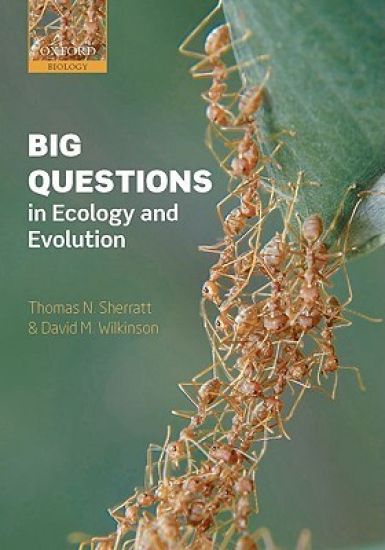
Why do we age? Why cooperate? Why do so many species engage in sex? Why do the tropics have so many species? When did humans start to affect world climate? This book provides an introduction to a range of fundamental questions that have taxed evolutionary biologists and ecologists for decades. Some of the phenomena discussed are, on first reflection, simply puzzling to understand from an evolutionary perspective, whilst others have direct implications for the future of the planet. All of the questions posed have at least a partial solution, all have seen exciting breakthroughs in recent years, yet many of the explanations continue to be hotly debated. Big Questions in Ecology and Evolution is a curiosity-driven book, written in an accessible way so as to appeal to a broad audience. It is very deliberately not a formal text book, but something designed to transmit the excitement and breadth of the field by discussing a number of major questions in ecology and evolution and how they have been answered. This is a book aimed at informing and inspiring anybody with an interest in ecology and evolution. It reveals to the reader the immense scope of the field, its fundamental importance, and the exciting breakthroughs that have been made in recent years.
Why do we age? Why cooperate? Why do so many species engage in sex? Why do the tropics have so many species? When did humans start to affect world climate? This book provides an introduction to a range of fundamental questions that have taxed evolutionary biologists and ecologists for decades. Some of the phenomena discussed are, on first reflection, simply puzzling to understand from an evolutionary perspective, whilst others have direct implications for the future of the planet. All of the questions posed have at least a partial solution, all have seen exciting breakthroughs in recent years, yet many of the explanations continue to be hotly debated. Big Questions in Ecology and Evolution is a curiosity-driven book, written in an accessible way so as to appeal to a broad audience. It is very deliberately not a formal text book, but something designed to transmit the excitement and breadth of the field by discussing a number of major questions in ecology and evolution and how they have been answered. This is a book aimed at informing and inspiring anybody with an interest in ecology and evolution. It reveals to the reader the immense scope of the field, its fundamental importance, and the exciting breakthroughs that have been made in recent years.
Entrepreneurs generally lack the marketing capabilities necessary to bring their new product to market. To engage the resources required to do this, they must somehow place a value on the enterprise. However, all of the methods of valuation currently available are based on the use of historical or current revenues, and therefore are not applicable to an entrepreneurial enterprise with a first-time product. In Valuing an Entrepreneurial Enterprise, Audretsch and Link present a valuation method uniquely tailored to emerging technology-based ventures that have no revenue history to lean on. Unlike many traditional methods, theirs does not take into account the track record of companies and products similar to that being valuated. Instead, it draws on economic theory to formulate a solution to the problem. The book develops conceptual ground, including trends in entrepreneurship, models of innovation, and the economics of standards and entrepreneurship policy. The authors review the traditional valuation methods and illustrate them numerically with case studies to show how the traditional approach produces an incorrect valuation. The core of the book presents the new methodology and demonstrates how it avoids the pitfalls of past approaches. The authors also show how public policy on technology and infrastructure changes valuations of start-up firms in areas such as stem-cell products and renewable fuels projects. Valuing an Entrepreneurial Enterprise will serve as a valuable resource for advanced students, economists, financial planners, and valuators interested in new valuation methods and the theory behind them, as well as those interested in entrepreneurship.
This work describes a programme, "Creating Lasting Family Connections", which is based on COPE's demonstration programme, "Creating Lasting Connections" (CLC). CLC was designed as an ecumenical, community based programme that focused on increasing community, family and individual (youth) protective factors that would lead to delaying the onset and reducing the frequency of alcohol and other drug use among at-risk 12-14 year olds. CLC received the Center for Substance Abuse Pre vention's Exemplary Prevention Program Award for 1994; it has been included in the International Youth Foundation's YouthNet International, a directory of youth programmes worldwide; finally, it was selected as one of only seven model prevention programs by the Center for Substance Abuse Prevention for national dissemination. While the programme focuses on alcohol and other drug-related issues and outcomes, much of this approach is applicable to youth and families across a larger spectrum of issues and behaviours, including violence and inappropriate sexual behaviour.
Youth have nearly always exhibited behaviors that frustrate adults. It can be diffi cult to understand why young people engage in risky or destructive behavior, and it is challenging to develop strategies to encourage more healthy and responsible behavior among our youth. However, it is helpful to realize that despite the fact that large numbers of youth engage in frightful and destructive behaviors for pe riods of time during adolescence and early adulthood, a large proportion of youth find a way not only to survive but also to bounce back and contribute significantly to the furtherance of human development. We are not the first generation of adults to experience the pain, fear, and frustration of dealing with our youth. More important, we recognize that we are not helpless when faced with the problems youth experience. While it is true that adolescents have always exhibited problem behaviors, a number of effective tools and approaches have always been at our disposal to assist with appropriate youth development. Of course, the most effective approaches require a tremendous amount of focused time and energy.
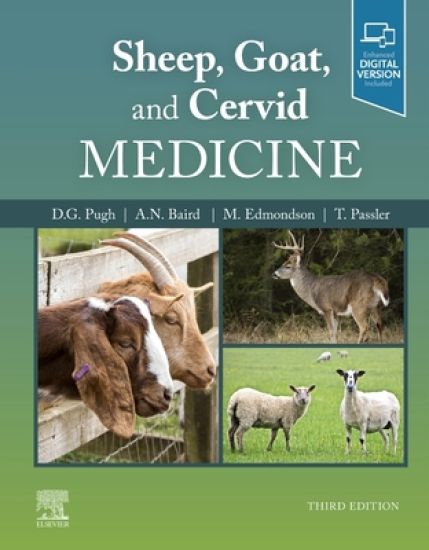
**Selected for Doody’s Core Titles® 2024 in Veterinary Medicine** Get practical answers from the only guide on the care of sheep, goats, and cervids! Authoritative yet easy to read, Sheep, Goat and Cervid Medicine, 3rd Edition covers all the latest advances in the field, including diseases and medical treatment, surgery, pain management, theriogenology, and nutrition. Clear instructions and hundreds of full-color photographs guide you step by step through common procedures including restraint for examination, administration of drugs, blood collection, and grooming. New to this edition is coverage of deer and elk medicine, reflecting the growing interest in these ruminants. Written by an expert team led by Dr. D.G. Pugh, this comprehensive reference is ideal for veterinarians and also for owners of sheep and goats. Clear writing style and consistent organization makes the book easy to understand and use, with disease chapters including pathogenesis, clinical signs, diagnosis, treatment, and prevention. Coverage of both surgery and medicine in each body systems chapter makes it easier to choose between treatment options for specific disorders. Superbly illustrated surgical procedures clearly demonstrate the steps to follow in performing medical and reproductive surgery. Diverse, expert contributors include the most experienced authorities, each providing current information on the care of valuable breeding stock as well as pets. Useful appendixes, now including veterinary feed directives, offer convenient access to information on drugs and drug dosages, fluid therapy, and normal values and conversions. Consistent, logical format in each body systems chapter makes information easy to find by beginning with physical examination and diagnostic procedures, followed by discussions of common diseases that involve the system. Comprehensive Feeding and Nutrition chapter covers diet evaluation, method of balancing rations, total parenteral nutrition, and examples of nutritious diets. Explanation of the differences in normal behavior between sheep and goats shows how they are not the same, and require different methods of treatment. NEW! Coverage of cervids has been added to chapters throughout the book, reflecting the growing popularity of deer and elk. NEW! Thorough content updates are made throughout the book and reflect the latest research evidence. NEW! 170 new clinical photos have been added. NEW! Anesthesia and Pain Management chapter includes a new section on pain management strategies, reflecting the emphasis on controlling pain in small ruminants. NEW! Expert Consult website offers an online version of the book, making it easy to search the entire book electronically. NEW! Two new authors are respected and well-known veterinary medicine experts and educators: Dr. Misty Edmondson and Dr. Thomas Passler.
As business schools expand their entrepreneurship programs and organizations seek people with entrepreneurial skills, it has become clear that the skills and mindset of an entrepreneur are highly valued in all business contexts. This latest edition of Entrepreneurship Skills for New Ventures continues to focus on helping students develop entrepreneurial skills, whether they seek to become entrepreneurs or employees.Focusing on the entrepreneurial start-up process, the fourth edition of Entrepreneurship Skills for New Ventures takes the reader through the steps of selecting, planning, financing, and controlling the new venture. The authors cover multiple forms of new ventures, as well as ways to utilize entrepreneurial skills in other contexts, encouraging students to engage with the material and apply it to their lives in ways that make sense for them. Skill development features include: New exercise on analyzing the lean entrepreneurship option Entrepreneurial profiles of small-business owners Personal applications for students to apply questions to their new venture or a current business Global and domestic cases Elevator pitch assignments that put students in the venture capitalist position Application exercises and situations covering specific text concepts Business plan prompts to help students construct a business plan over the course of a semesterFeaturing pedagogical tools like review questions and learning outcomes, as well as online materials that expand upon skill development and offer instructor resources, the fourth edition of Entrepreneurship Skills for New Ventures is the perfect resource for instructors and students of entrepreneurship.
As business schools expand their entrepreneurship programs and organizations seek people with entrepreneurial skills, it has become clear that the skills and mindset of an entrepreneur are highly valued in all business contexts. This latest edition of Entrepreneurship Skills for New Ventures continues to focus on helping students develop entrepreneurial skills, whether they seek to become entrepreneurs or employees.Focusing on the entrepreneurial start-up process, the fourth edition of Entrepreneurship Skills for New Ventures takes the reader through the steps of selecting, planning, financing, and controlling the new venture. The authors cover multiple forms of new ventures, as well as ways to utilize entrepreneurial skills in other contexts, encouraging students to engage with the material and apply it to their lives in ways that make sense for them. Skill development features include: New exercise on analyzing the lean entrepreneurship option Entrepreneurial profiles of small-business owners Personal applications for students to apply questions to their new venture or a current business Global and domestic cases Elevator pitch assignments that put students in the venture capitalist position Application exercises and situations covering specific text concepts Business plan prompts to help students construct a business plan over the course of a semesterFeaturing pedagogical tools like review questions and learning outcomes, as well as online materials that expand upon skill development and offer instructor resources, the fourth edition of Entrepreneurship Skills for New Ventures is the perfect resource for instructors and students of entrepreneurship.
From the Center for Creative Leadership's most popular and best known leadership program Leadership Development Program comes a book for anyone who wants to have a competitive edge in today's complex marketplace. Discovering the Leader in You shows what it looks like to fit in a leadership role and provides a system of self-discovery that allows for exploration into the roles within an organization. The book includes illustrative cases examples and puts the spotlight on the transition from "the decision to lead" to "how to implement the decision to lead."
Discovering the Leader in You Workbook From the Center for Creative Leadership (CCL) comes a highly accessible workbook based on the concepts outlined in the revised and updated edition of Discovering the Leader in You. The workbook contains a variety of questions and exercises designed to help professionals reflect on, examine, explore, and discover concepts and issues related to their role as leaders. Most of the activities can be completed while working through the book, others require more time, and some involve other people. To gain the greatest benefit, it is suggested that all the activities be done as thoughtfully and as honestly as possible. Once you have completed the exercises and tasks outlined in the workbook, you will be able to Clarify your purpose for leading, based on a clear leadership vision and a core set of valuesArticulate your leadership strengths and areas for developmentUnderstand who you are as a leader in the context of both your work and your personal lifeDetermine when and why you feel unclear or stuck in your leadership journey While you may want to tackle this workbook on your own, leaders often find that the leadership journey is more rewarding when they work with other people. You can review the workbook with a coach or mentor, or work with colleagues who are also using the workbook in order to discuss ideas and gain feedback. If you are a leader (or an aspiring leader) who works in a highly complex and competitive environment and wants to tap into the qualities that characterize success, this is the resource for you. The Center for Creative Leadership (CCL) is the world's largest institution devoted exclusively to leadership research and education. Since 1970, CCL has studied and trained hundreds of thousands of executives and worked with them to create practical models, tools, and publications for the development of effective leaders and leadership.