Kirjojen hintavertailu. Mukana 11 717 486 kirjaa ja 12 kauppaa.

Kirjahaku

Etsi kirjoja tekijän nimen, kirjan nimen tai ISBN:n perusteella.

1000 tulosta hakusanalla David a. Edwards

Speaking of Sadness

Speaking of Sadness

David A. Karp

Oxford University Press Inc
1996
sidottu
Speaking of Sadness explores depression as a human experience, not just as a disease. Each of the pieces of the depression puzzle is examined, including interactions with family and friends, experiences with anti-depressant drugs, and the interplay of biology, family and society in depression's definition and treatment. The book includes extensive interviews with depressed individuals and the author's own experiences with depression.
Competing by Design

Competing by Design

David A. Nadler; Michael L. Tushman

Oxford University Press Inc
1997
sidottu
If the defining goal of modern-day business can be isolated to just one item, it would be the search for competitive advantage. And, as everyone in business knows, it's a lot harder than it used to be. On the one hand, competition is more intense than ever--technological innovation, consumer expectations, government deregulation, all combine to create more opportunities for new competitors to change the basic rules of the game. On the other hand, most of the old reliable sources of competitive advantage are drying up: the hallowed strategies employed by GM, IBM, and AT&T to maintain their seemingly unassailable positions of dominance in the 1960s and 70s are as obsolete as the calvary charge. So in this volatile, unstable environment, where can competitive advantage be found? As David Nadler and Michael Tushman show, the last remaining source of truly sustainable competitive advantage lies in `organizational capabilities': the unique ways each organization structures its work and motivates its people to achieve clearly articulated strategic objectives. For too long, too many managers have thought about "organization" merely in terms of rearranging the boxes and lines on an organizational chart--but as Competing by Design clearly illustrates, organizational strength is found far beyond one-dimensional diagrams. Managers must, argue Nadler and Tushman, understand the concepts and learn the skills involved in designing their organization to exploit their inherent strengths. All the reengineering, restructuring, and downsizing in the world will merely destabilize a company if the change doesn't address the fundamental patterns of performance--and if the change doesn't recognize the unique core competencies of that company. In this landmark volume, the authors draw upon specific cases to illustrate the design process in practice as they provide a set of powerful, yet simple tools, for using strategic organization design to gain competitive advantage. They present a design process, explore key decisions managers face, and list the guiding principles for incorporating the design function as a continuing and integral process in organizations that are looking to the future. In 1918, Henry Ford's Dearborn assembly plant was the model of the new assembly-line technology. Today, the assembly plant is an aging relic, but, incredibly, the organizational architecture it spawned lives on in steep hierarchies, centralized bureaucracies, and narrowly defined jobs. As companies are coming to realize they can't compete successfully in the 21st century with organizations based on 19th century ideas, Competing by Design shows clearly and persuasively why--and, most importantly how--to harness the power of organizational architecture to unleash the competitive strengths embedded in each organization.
Speaking of Sadness

Speaking of Sadness

David A. Karp

Oxford University Press Inc
1997
nidottu
"Even though depression has periodically made me feel that my life was not worth living, has created havoc in my family, and sometimes made the work of teaching and writing seem impossible," writes David Karp, "by some standards, I have been fortunate." Indeed, depression can be devastating, leading to family breakups, loss of employment, even suicide. And it is a national problem, with some ten to fifteen million Americans suffering from it, and the number is growing. In Speaking of Sadness, Karp captures the human face of this widespread affliction, as he illuminates his experience and that of others in a candid, searching work. Combining a scholar's care and thoroughness with searing personal insight, Karp brings the private experience of depression into sharp relief, drawing on a remarkable series of intimate interviews with fifty depressed men and women. By turns poignant, disturbing, mordantly funny, and wise, Karp's interviews cause us to marvel at the courage of depressed people in dealing with extraordinary and debilitating pain. We hear what depression feels like, what it means to receive an "official" clinical diagnosis, and what depressed persons think of the battalion of mental health experts--doctors, nurses, social workers, sociologists, psychologists, and therapists--employed to help them. We learn the personal significance that patients attach to beginning a prescribed daily drug regimen, and their ongoing struggle to make sense of biochemical explanations and metaphors of depression as a disease. Ranging in age from their early twenties to their mid-sixties, the people Karp profiles reflect on their working lives and career aspirations, and confide strategies for overcoming paralyzing episodes of hopelessness. They reveal how depression affects their intimate relationships, and, in a separate chapter, spouses, children, parents, and friends provide their own often overlooked point of view. Throughout, Karp probes the myriad ways society contributes to widespread alienation and emotional exhaustion. Speaking of Sadness is an important book that pierces through the terrifying isolation of depression to uncover the connections linking the depressed as they undertake their personal journeys through this very private hell. It will bring new understanding to professionals seeking to see the world as their clients do, and provide vivid insights and renewed empathy to anyone who cares for someone living with the cruel unpredictability of depression.
Satellites of the Outer Planets

Satellites of the Outer Planets

David A. Rothery

Oxford University Press Inc
2000
nidottu
Extensively revised and updated, this new edition of David A. Rothery's acclaimed geological guide to the outer solar system includes results and close-up color and black and white images from the 1995-1999 Galileo mission to Jupiter and from the Voyager space probe. Rothery, a noted planetary scientist, explains the geological aspects of the major satellites of the outer bodies, from Jupiter to Neptune to the Pluto-Charon system. In particular he shows how tectonic and volcanic processes, driven by heat from within, have shaped the rigid outer layers of these bodies. Rothery also discusses the similarities and differences among these planets, and reveals how they resemble Earth-like planets. This fascinating book is written in an introductory style ideal for first- or second-year college courses. Amateur geologists and astronomers will also find its insights rewarding.
Streptomyces in Nature and Medicine

Streptomyces in Nature and Medicine

David A. Hopwood

Oxford University Press Inc
2007
sidottu
This is an insider's account of 50 years of genetic studies of the soil-inhabiting microbes that produce most of the antibiotics used to treat infections, as well as anti-cancer, anti-parasitic and immunosuppressant drugs. The book begins by describing how these microbes - the actinomycetes - were discovered in the latter part of the nineteenth century, but remained a 'Cinderella' group until, in the 1940s, they shot to prominence with the discovery of streptomycin, the first effective treatment for tuberculosis and only the second antibiotic after penicillin to become a medical marvel. There followed a massive effort over several decades to find further treatments for infectious diseases and cancer, tempered by the rise of antibiotic resistance consequent on antibiotic misuse and over-use. The book goes on to describe the discovery of gene exchange in the actinomycetes in the context of the rise of microbial genetics in the mid-20th century, leading to determination of the complete DNA sequence of a model member of the group at the turn of the millennium. There follow chapters in which the intricate molecular machinery that adapts the organisms' metabolism and development to life in the soil, including antibiotic production, is illuminated by the DNA blueprint. Then comes an up-to-the minute account of the use of genetic engineering to make novel, hybrid antibiotics and a topical description of techniques to learn the roles of the thousands of genes in a genome sequence, throwing a powerful light on the biology of the organisms and their harnessing for increasing antibiotic prductivity. In the final chapter we return to the mycobacteria that cause tuberculosis and leprosy, the first actinomycetes to be discovered, and how methodology, in part derived from the study of the streptomycetes, is being applied to understand and control these still deadly pathogens.
Learning to Live Together

Learning to Live Together

David A. Hamburg; Beatrix A. Hamburg

Oxford University Press Inc
2004
sidottu
The aim of the book is to enhance understanding of the great danger and some sources of animosity between human groups and to focus on developmental processes by which it should be possible to diminish orientations of ethnocentrism, prejudice and hatred. Teaching prejudice and ethnocentrism to children has, all too often in so many places, been virtually automatic and has been conducive to terrible harm in the past. The dangers of hateful outlooks are likely to be much greater as the twenty-first century unfolds. Scholarship and practice in international relations, including war and peace issues, have gravely neglected the crucial psychological aspects of these terrible problems and the educational opportunities. There is a fruitful conjunction of developmental and social psychology in understanding such vital issues and in working toward a more humane, democratic and safe course of adolescent and child development than can in turn affect the safety of humanity in the long run. There are many intriguing examples of research, educational innovations, and visionary leadership in several countries. Most of the book is devoted to promising lines of inquiry and innovation that foster a more humane and less violent development in childhood and adolescence. It should be of interest to scholars, to the education community, and to a well-educated and socially concerned segment of the community.
High Stakes

High Stakes

David A. Shore; Eric D. Kupferberg

Oxford University Press Inc
2011
sidottu
The United States health care system is broken. Critics and commentators point to the staggering costs of health care, the shrinking insurance coverage, and the diminishing access that many U.S. citizens have to essential services and treatments. These problems are compounded by a growing realization that the quality of care across the country is uneven at best, with the goal of finding the appropriate kind and level of care proving elusive. High Stakes enters into the health care debates at a critical time, offering an analysis that homes in on factors that account for many of the inefficiencies and shortcomings of our unsystematic system, and putting forth recommendations that are ideologically blind. Using real-world examples to illustrate the fragile state of health care today, Drs. Shore and Kupferberg enlist a powerful analytic frame to bear on these conflicts: stakeholder management. That involves addressing the present system of conflicts, in which key groups in the field pursue their own interests at the risk of the system at large. Insurance providers want to reduce their payments, hospitals want higher reimbursements, patients want access to unlimited services, and no one wants to work together. The fights are constant and financially disastrous, for every dollar earned by one group is one less dollar earned by another. For health care to succeed as an enterprise, key stakeholder groups must come to appreciate their dependence on other groups. More importantly, they must find ways to align their interests and move beyond entrenched behaviors. As the authors point out, all constituency groups must begin by acknowledging that where people stand on an issue depends on where they sit, and that greater stakeholder alignment and engagement are prerequisites for more effective and efficient health care. Drawing equally from both scholarly studies and real world examples, High Stakes offers health care leaders the necessary tools to both map their current stakeholder relationships and fashion concrete steps to produce greater stakeholder engagement, collaboration, and cooperative competition.
The Jewish Teachers of Jesus, James, and Jude

The Jewish Teachers of Jesus, James, and Jude

David A. DeSilva

Oxford University Press Inc
2012
sidottu
Jews have sometimes been reluctant to claim Jesus as one of their own; Christians have often been reluctant to acknowledge the degree to which Jesus' message and mission were at home amidst, and shaped by, the Judaism(s) of the Second Temple Period. In The Jewish Teachers of Jesus, James, and Jude David deSilva introduces readers to the ancient Jewish writings known as the Apocrypha and Pseudepigrapha and examines their formative impact on the teachings and mission of Jesus and his half-brothers, James and Jude. Knowledge of this literature, deSilva argues, helps to bridge the perceived gap between Jesus and Judaism when Judaism is understood only in terms of the Hebrew Bible (or ''Old Testament''), and not as a living, growing body of faith and practice. Where our understanding of early Judaism is limited to the religion reflected in the Hebrew Bible, Jesus will appear more as an outsider speaking ''against'' Judaism and introducing more that is novel. Where our understanding of early Judaism is also informed by the Apocrypha and Pseudepigrapha, Jesus and his half-brothers appear more fully at home within Judaism, and giving us a more precise understanding of what is essential, as well as distinctive, in their proclamation. This comparative study engages several critical issues. How can we recover the voices of Jesus, James, and Jude from the material purporting to preserve their speech? How can we assess a particular text's influence on Jews in early first-century Palestine? How can we be sufficiently sensitive to the meanings and nuances in both the text presumed to influence and the text presumed to be influenced so as not to distort the meaning of either? The result is a portrait of Jesus that is fully at home in Roman Judea and Galilee, and perhaps an explanation for why these extra-biblical Jewish texts continued to be preserved in Christian circles.
The Living Constitution

The Living Constitution

David A. Strauss

Oxford University Press Inc
2010
sidottu
Supreme Court Justice Antonin Scalia once remarked that the theory of an evolving, "living" Constitution effectively "rendered the Constitution useless." He wanted a "dead Constitution," he joked, arguing it must be interpreted as the framers originally understood it. In The Living Constitution, leading constitutional scholar David Strauss forcefully argues against the claims of Scalia, Clarence Thomas, Robert Bork, and other "originalists," explaining in clear, jargon-free English how the Constitution can sensibly evolve, without falling into the anything-goes flexibility caricatured by opponents. The living Constitution is not an out-of-touch liberal theory, Strauss further shows, but a mainstream tradition of American jurisprudence--a common-law approach to the Constitution, rooted in the written document but also based on precedent. Each generation has contributed precedents that guide and confine judicial rulings, yet allow us to meet the demands of today, not force us to follow the commands of the long-dead Founders. Strauss explores how judicial decisions adapted the Constitution's text (and contradicted original intent) to produce some of our most profound accomplishments: the end of racial segregation, the expansion of women's rights, and the freedom of speech. By contrast, originalism suffers from fatal flaws: the impossibility of truly divining original intent, the difficulty of adapting eighteenth-century understandings to the modern world, and the pointlessness of chaining ourselves to decisions made centuries ago. David Strauss is one of our leading authorities on Constitutional law--one with practical knowledge as well, having served as Assistant Solicitor General of the United States and argued eighteen cases before the United States Supreme Court. Now he offers a profound new understanding of how the Constitution can remain vital to life in the twenty-first century.
Community Practice

Community Practice

David A. Hardcastle; Patricia R. Powers; Stanley Wenocur

Oxford University Press Inc
2011
nidottu
For almost two decades, Community Practice has been a definitive text for social workers, community practitioners, and students eager to help individuals contribute to and use community resources or work to change oppressive community structures. In this third edition, a wealth of new charts and cases spotlight the linkages between theoretical orientations and practical skills, with an enhanced emphasis on the inherently political nature of social work and community practice. Boxes, examples, and exercises illustrate the range of skills and strategies available to savvy community practitioners in the 21st century, including networking, marketing and staging, political advocacy, and leveraging information and communication technologies. Other features include: - New material on community practice ethics, critical practice skills, community assessment and assets inventory and mapping, social problem analysis, and applying community practice skills to casework practice - Consideration of post-9/11 community challenges - Discussion on the changing ethnic composition of America and what this means for practitioners - An exploration of a vastly changed political landscape following the election of President Obama, the Great Recession, the rise of the Tea Party, and the increasing political and corporate use of pseudo-grassroots endeavors - A completely revamped instructor's manual available online at www.oup.com/us/companion.websites/communitypractice This fully revised classic text provides a comprehensive and integrated overview of the community theory and skills fundamental to all areas of social work practice. Broad in scope and intensive in analysis, it is suitable for undergraduate as well as graduate study. Community Practice offers students and practitioners the tools necessary to promote the welfare of individuals and communities by tapping into the ecological foundations of community and social work practice.
Fundamentals of Electric Circuits

Fundamentals of Electric Circuits

David A. Bell

Oxford University Press, Canada
2009
kierre
The laboratory investigations in this manual are designed to demonstrate the theoretical principles set out in the book Fundamentals of Electric Circuits, 7th edition. A total of 27 laboratory investigations are offered, demonstrating the circuits and theories discussed in the textbook. Each investigation can normally be completed within a two-hour period. The procedures contain some references to the textbook; however, all necessary circuit and connection diagrams are provided in the manual so that investigations can also be preformed without the textbook.
Lawyers and Citizens

Lawyers and Citizens

David A. Bell

Oxford University Press Inc
2020
nidottu
David Bell's book traces the development of the French legal profession between the reign of Louis XIV and the French Revolution, showing how lawyers influenced, and were influenced by, the period's passionate political and religious conflicts. Bell analyzes how these key "middling" figures in French society were transformed from the institutional technicians of absolute monarchy into the self-appointed "voices of public opinion," and leaders of opposition political journalism. He describes the birth of an independent legal profession in the late seventeenth century, its alienation from the monarchy under the pressure of religious disputes in the early eighteenth century, and its transformation into a standard-bearer of "enlightened" opinion in the decades before the Revolution. His work illuminates the workings of politics under a theoretically absolute monarchy, and the importance of long-standing constitutional debates for the ideological origins of the Revolution. It also sheds new light on the development of the modern professions, and of the middle classes in France.
American Immigration

American Immigration

David A. Gerber

Oxford University Press Inc
2021
nidottu
An updated, penetrating, and balanced analysis of one of the most contentious issues in America today, offering a historically informed portrait of immigration. Americans have come from every corner of the globe, and they have been brought together by a variety of historical processes--conquest, colonialism, the slave trade, territorial acquisition, and voluntary immigration. In this Very Short Introduction, historian David A. Gerber captures the histories of dozens of American ethnic groups over more than two centuries and reveals how American life has been formed in significant ways by immigration. He discusses the relationships between race and ethnicity in the life of these groups and in the formation of American society, as well as explaining how immigration policy and legislation have helped to form those relationships. Moreover, by highlighting the parallels that contemporary patterns of immigration and resettlement share with those of the past - which Americans now generally regard as having had positive outcomes - the book offers an optimistic portrait of current immigration that is at odds with much present-day opinion. Newly updated, this book speaks directly to the ongoing fears of immigration that have fueled the debate about both illegal immigration and the need for stronger immigration laws and a border wall.
World Mythology

World Mythology

David A. Leeming

OXFORD UNIVERSITY PRESS INC
2023
nidottu
The mythologies of the world are collective cultural dreams, and as such should be analyzed first from cultural perspectives. How do myths of the ancient Egyptians or Greeks, for instance, reflect the realities of the Egyptian and Greek cultures? When compared, however, mythologies reveal certain universal themes or motifs that point to larger trans-cultural issues such as the place of the human species in creation or the nature of deity as a concept. World Mythology: A Very Short Introduction is organized around the universal motifs. Creation, the Flood, the Hero Quest, the Trickster/Culture Hero, the Pantheons, the High God, the Great Goddess. Veteran mythology scholar David Leeming examines examples of each motif from a variety of cultures--Greek, Egyptian, Norse, American Indian, African, Polynesian, Jewish, Christian, Hindu--treating them as reflections of the cultures that "dreamed" them. He compares and analyzes them, exposing their universal significance and creating a "world mythology."
The New Addiction Treatment

The New Addiction Treatment

David A. Patterson Silver Wolf

Oxford University Press Inc
2021
sidottu
Addiction is the United States' most pervasive and damaging public health problem, yet most Americans receive care that results in a failure rate that is both astronomically high and shielded from public view. The New Addiction Treatment examines the current state of the addiction treatment business and explores the reasons why (unlike those for all other behavioral, psychological, or neurological disorders) the treatment of addiction has been stagnant and little improved since the founding of Alcoholics Anonymous in 1935. After describing the size and scope of the problem and examining actual recovery rates for those who undergo treatment, David A. Patterson Silver Wolf asserts that there are effectively two kinds of treatment regimes in the United States: those that medical doctors receive, and those for the rest of us. The former has about an 80% success rate, the latter about an 80% failure rate. Drawing from his own experience as a former patient and person in long-term recovery, as well as his 22 years as a clinician, professor, and researcher, Patterson Silver Wolf describes many of the impediments to effective treatment today. This book offers a plausible and cost-effective way to disrupt the dismal status quo and realistically aspire to a higher success rate for everyone who receives professional help for a substance use disorder.
The Origins of the Federal Theology in Sixteenth-Century Reformation Thought
The development of the Federal theology of the late sixteenth and early seventeenth centuries was a significant transformation in Reformed theological thinking. According to the Federal theologians, all of human history could be described using the rubric of a series of covenants, or foedera, beginning with a `covenant of works' in the perfection of Eden and concluding with the new covenant fulfilled by Jesus Christ in the New Testament. The new covenant was in effect the conclusion of the `covenant of grace', and it was this which united the Old and New Testaments into one continuous epic of God's grace and mercy. While John Calvin and many earlier Reformers discussed the importance of the postlapsarian covenant of grace, they never taught the Federal theology with its key identifying feature of a prelapsarian covenant. This book traces the prelapsarian covenant idea in Reformed theology from its first use by Zacharias Ursinus in 1562 to its flowering in 1590. Besides its origins, the implications of the Federal theology for Reformed thinking are made clear, and it is shown that the idea of covenant could have important implications for areas such as church and state, the sacraments, the Puritan doctrine of conversion, the Christian Sabbath, and the doctrine of justification and Christian ethics. The Federal theology is of considerable historical importance in intellectual history and forms the framework for much of the Reformed theology in the English-speaking world for three centuries. The doctoral thesis out of which this book developed won the Frank S. and Elizabeth D. Brewer Prize of the American Society of Church History.
The Practical Christology of Philoxenos of Mabbug

The Practical Christology of Philoxenos of Mabbug

David A. Michelson

Oxford University Press
2014
sidottu
Philoxenos of Mabbug (c. 440-523) was a prolific late-antique theologian and polemicist who produced the largest literary corpus to have survived in Syriac. He earned a reputation as the leading Syriac opponent of the Council of Chalcedon (451) and its two-nature Christology. In The Practical Christology of Philoxenos of Mabbug, David A. Michelson offers a new understanding of Philoxenos one-nature Christology by interpreting the post-Chalcedonian doctrinal disputes through a holistic analysis of Philoxenos life and works. Michelson's close reading of the entire Philoxenian corpus reveals a miaphysite perspective on the Christological controversies in which the intellectual clash was not primarily over defining doctrine. As a metropolitan bishop, sponsor of a revised New Testament, and monastic theologian, Philoxenos was principally concerned with matters of Christian praxis and the ascetic pursuit of divine knowledge. This book shows how he opposed Chalcedonian Christology because he was convinced its intellectual theological method was inimical to the mystical pursuit of divine knowledge through liturgical and ascetic practice. Philoxenos polemical engagement drew upon a theological epistemology that he had adapted from Pro-Nicene theologians including Ephrem, the Cappadocians, and Evagrius. Philoxenos argued that divine knowledge was not to be achieved through human understanding or doctrinal inquiry. Instead, true divine knowledge was attained through practice, specifically contemplation, reading of scripture, participation in the liturgical mysteries, and ascetic discipline. Michelson considers each of these practices in turn to show how Philoxenos thought of opposition to Chalcedon as part of a larger vision of ascetic and spiritual struggle. In short, for Philoxenos conflict over Christology was foremost a practical matter.
Moons

Moons

David A. Rothery

Oxford University Press
2015
nidottu
Proving to be both varied and fascinating, moons are far more common than planets in our Solar System. Our own Moon has had a profound influence on Earth, not only through tidal effects, but even on the behaviour of some marine animals. Many remarkable things have been discovered about the moons of the giant outer planets from Voyager, Galileo, Cassini, and other spacecraft. Scientists have glimpsed volcanic activity on Io, found oceans of water on Titan, and captured photos of icy geysers bursting from Enceladus. It looks likely that microbial life beyond the Earth may be discovered on a moon rather than a planet. In this Very Short Introduction David Rothery introduces the reader to the moons of our Solar System, beginning with the early discoveries of Galileo and others, describing their variety of mostly mythological names, and the early use of Jupiter's moons to establish position at sea and to estimate the speed of light. Rothery discusses the structure, formation, and influence of our Moon, and those of the other planets, and ends with the recent discovery of moons orbiting asteroids, whilst looking forward to the possibility of finding moons of exoplanets in planetary systems far beyond our own. ABOUT THE SERIES: The Very Short Introductions series from Oxford University Press contains hundreds of titles in almost every subject area. These pocket-sized books are the perfect way to get ahead in a new subject quickly. Our expert authors combine facts, analysis, perspective, new ideas, and enthusiasm to make interesting and challenging topics highly readable.
The Library of Paradise

The Library of Paradise

David A. Michelson

Oxford University Press
2022
sidottu
Contemplative reading is a spiritual practice developed by Christian monks in sixth- and seventh-century Mesopotamia. Mystics belonging to the Church of the East pursued a form of contemplation which moved from reading, to meditation, to prayer, to the ecstasy of divine vision. The Library of Paradise tells the story of this Syriac tradition in three phases: its establishment as an ascetic practice, the articulation of its theology, and its maturation and spread. The sixth-century monastic reform of Abraham of Kashkar codified the essential place of reading in East Syrian ascetic life. Once established, the practice of contemplative reading received extensive theological commentary. Abraham's successor Babai the Great drew upon the ascetic system of Evagrius of Pontus to explain the relationship of reading to the monk's pursuit of God. Syriac monastic handbooks of the seventh century built on this Evagrian framework. 'Enanisho' of Adiabene composed an anthology called Paradise that would stand for centuries as essential reading matter for Syriac monks. Dadisho' of Qatar wrote a widely copied commentary on the Paradise. Together, these works circulated as a one-volume library which offered readers a door to "Paradise" through contemplation. The Library of Paradise is the first book-length study of East Syrian contemplative reading. It adapts methodological insights from prior scholarship on reading, including studies on Latin lectio divina. By tracing the origins of East Syrian contemplative reading, this study opens the possibility for future investigation into its legacies, including the tradition's long reception history in Sogdian, Arabic, and Ethiopic monastic libraries.
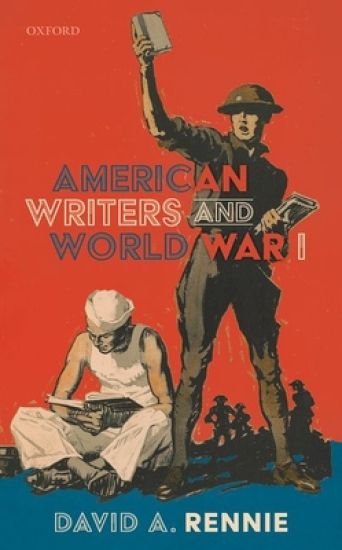
American Writers and World War I

American Writers and World War I

David A. Rennie

Oxford University Press
2020
sidottu
Looking at texts written throughout the careers of Edith Wharton, Ellen La Motte, Mary Borden, Thomas Boyd, F. Scott Fitzgerald, Laurence Stallings, and Ernest Hemingway, American Writers and World War I argues that authors' war writing continuously evolved in response to developments in their professional and personal lives. Recent research has focused on constituencies of identity--such as gender, race, and politics--registered in American Great War writing. Rather than being dominated by their perceived membership of such socio-political categories, this study argues that writers reacted to and represented the war in complex ways which were frequently linked to the exigencies of maintaining a career as a professional author. War writing was implicated in, and influenced by, wider cultural forces such as governmental censorship, the publishing business, advertising, and the Hollywood film industry. American Writers and World War I argues that even authors' hallmark 'anti-war' works are in fact characterized by an awareness of the war's nuanced effects on society and individuals. By tracking authors' war writing throughout their entire careers--in well-known texts, autobiography, correspondence, and neglected works--this study contends that writers' reactions were multifaceted, and subject to change--in response to their developments as writers and individuals. This work also uncovers the hitherto unexplored importance of American cultural and literary precedents which offered writers means of assessing the war. Ultimately, the volume argues, American World War I writing was highly personal, complex, and idiosyncratic.